

Leading the Charge: A Comprehensive Look at Publicly Traded 3D Printing Companies
The landscape of additive manufacturing (AM) has undergone a transformative period, demonstrating remarkable growth and resilience, particularly during global challenges like the COVID-19 pandemic. This expansion isn’t just evident in significant investments and strategic mergers and acquisitions within the industry, but also in the increasing number of 3D printing companies choosing to go public. A publicly traded company is one whose shares are bought and sold on a stock exchange, making ownership accessible to the broader investment community. These companies are listed on various global stock markets, such as the New York Stock Exchange (NYSE) and Nasdaq in the United States, or the London Stock Exchange, Deutsche Börse, and Euronext in Europe, with even more exchanges spanning Asia. The past few years have seen a notable surge in such listings, reflecting growing investor confidence and the maturation of the additive manufacturing sector. For investors and industry enthusiasts alike, understanding these key players is crucial. Below, you will find an alphabetical list of prominent companies actively involved in 3D printing that are currently publicly traded, offering insights into their contributions to this dynamic industry. We invite you to explore this list and share any companies you believe we might have overlooked!
3D Systems
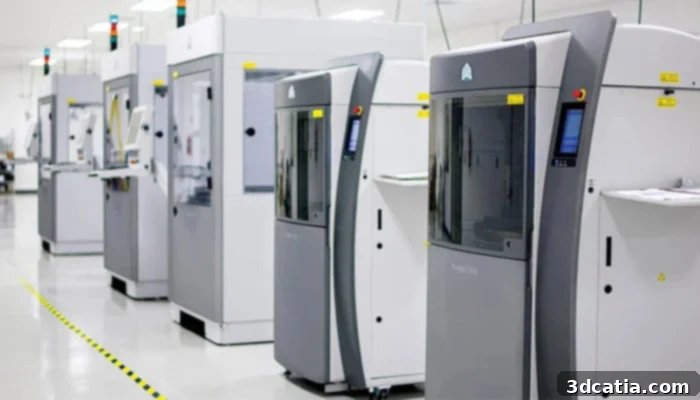
As a pioneering force in additive manufacturing, 3D Systems boasts a long and storied history, being one of the first 3D printing companies to debut on the New York Stock Exchange (NYSE). The company has navigated significant fluctuations in its share price over the years, a testament to its enduring presence and adaptability in the market. 3D Systems is renowned for its mastery across a diverse portfolio of additive manufacturing processes, ranging from stereolithography (SLA) and metal 3D printing to selective laser sintering (SLS). More recently, the company expanded its capabilities into fused deposition modeling (FDM), notably through strategic acquisitions of Titan Robotics and Kumovis. Since its inception, 3D Systems has successfully raised over $260 million in capital and integrated more than 30 companies into its expansive operations, solidifying its position as a comprehensive solution provider in the AM space. Currently, its stock is valued at $10.74 per share.
Autodesk
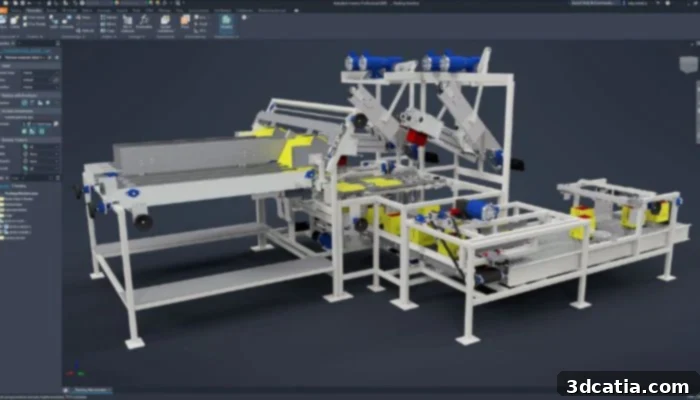
Established in 1982, Autodesk stands as a cornerstone in the additive manufacturing ecosystem, primarily as a leading publisher of design and modeling software. Headquartered in San Francisco, the company’s powerful tools, such as Fusion 360 and Autodesk Inventor, are indispensable to countless large corporations for their complex design and engineering projects. Autodesk is traded on the NASDAQ, with a share price currently estimated at $196.38. Over its decades of operation, Autodesk has made numerous strategic acquisitions, including Netfabb, to continually enhance its offerings and integrate advanced capabilities relevant to 3D printing and digital manufacturing. To foster a vibrant community and facilitate knowledge sharing among its vast user base, the company hosts Autodesk University, a blend of physical and virtual events designed to educate and inspire. Autodesk’s software solutions are fundamental to the design phase of additive manufacturing, enabling innovation from concept to production.
Conformis
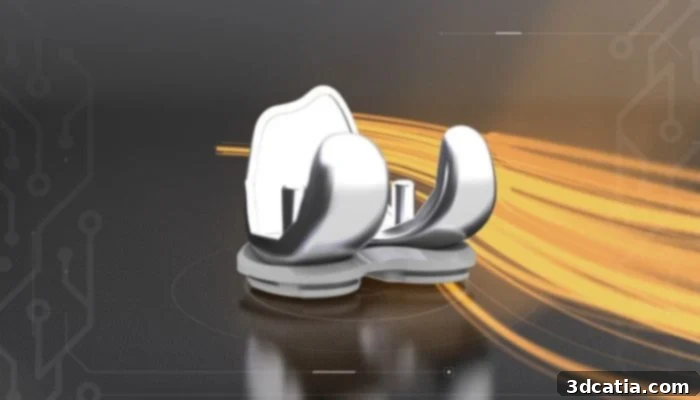
Conformis, a medical device company based in Massachusetts, has carved out a unique niche by leveraging innovative technologies, including additive manufacturing, to produce highly customized orthopedic implants for knees and hips. Founded in 2004 by Harvard professor Dr. Phillip Lang, this award-winning company quickly scaled into a global enterprise. Conformis made its public debut on the NASDAQ stock exchange on July 1, 2015, signaling its significant market potential in personalized healthcare solutions. The company’s focus on patient-specific implants represents a critical application of 3D printing in the medical field, offering improved fit and potentially better outcomes. Today, Conformis maintains a market capitalization of $53.05 million, with its shares trading at $0.29.
Dassault
The Dassault Aviation Group is a prominent French manufacturer known for its business jets, military aircraft, and historical involvement in regional aircraft production. Headquartered in Saint-Cloud, near Paris, Dassault is a global leader in the aerospace industry and ranks among the top five producers of business jets worldwide. The corporation holds an impressive 40 percent share of the upscale business jet market. While primarily known for aerospace, Dassault plays a critical role in the broader industrial design and manufacturing sector, especially through its subsidiary Dassault Systèmes, which develops market-leading software solutions like SolidWorks and CATIA. These tools are extensively used in various stages of additive manufacturing, from complex design to simulation and production planning. The company’s current market capitalization stands at €11.55 billion (approximately $11.77 billion), with shares valued at €138.30 (around $140.92) each.

Desktop Metal
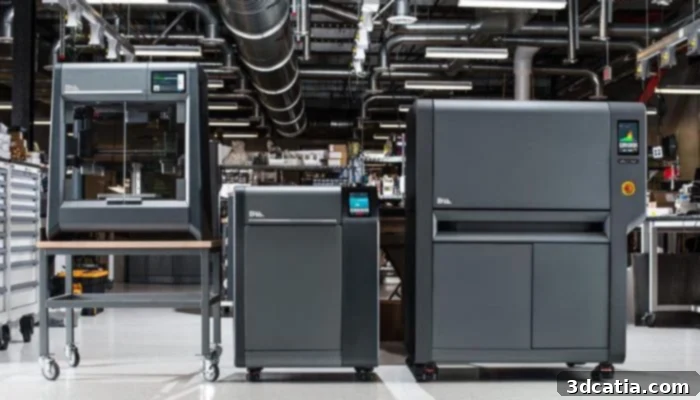
Despite being a relatively young American company, founded just seven years ago in 2015 in Massachusetts, Desktop Metal has rapidly distinguished itself within the 3D printing sector. The company’s core mission is to specialize in the development and sale of additive manufacturing technologies that make metal 3D printing more accessible to designers, manufacturers, and engineers globally. They revolutionized the industry by introducing desktop metal solutions, significantly lowering the barrier to entry for metal additive manufacturing. Desktop Metal has attracted substantial investment, securing $438 million in equity funding from high-profile investors including Google, BMW, Ford Motor Company, and Kleiner Perkins Caufield & Byers. Recognized as one of the world’s 30 most promising pioneering technology companies, Desktop Metal continues to drive innovation in metal AM. Its shares currently trade at $2.51, reflecting a market capitalization of $0.78 billion.
Fast Radius
In February 2022, 3D printing startup Fast Radius successfully completed a merger with the special purpose acquisition company (SPAC) ECP Environmental Growth Opportunities Corp, subsequently commencing trading on Nasdaq under the ticker FSRD. This strategic move initially valued the company at an impressive $1.4 billion. Fast Radius, a Chicago-based 3D printing service provider, is recognized for its innovative Cloud Manufacturing Platform™. This platform empowers users to manage the entire part creation lifecycle, from initial design and prototyping through production and post-processing. The company offers a comprehensive suite of services, including on-demand manufacturing, the establishment of custom micro-factories, and a virtual warehouse for digital inventory. Fast Radius aims to streamline manufacturing processes and make advanced production techniques more accessible. Currently, its market capitalization stands at $48,790,833, with stock prices fluctuating between $0.62 and $0.66, having reached a 52-week high of $10.01.
Fathom Digital Manufacturing
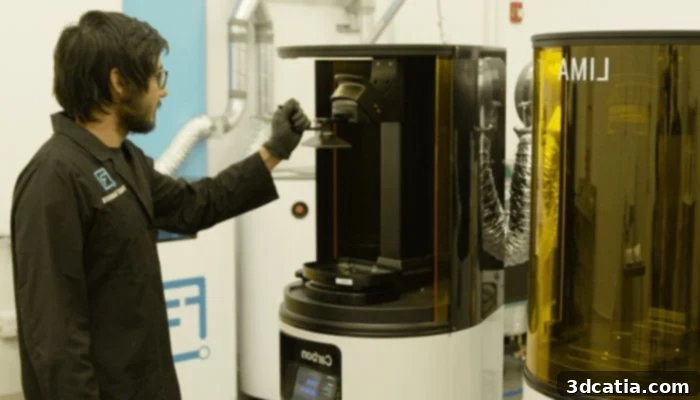
Founded in 1984, Fathom Digital Manufacturing is a well-established printing service provider listed on the New York Stock Exchange. With a current market capitalization of $547.83 million and shares trading at $4.02, Fathom has raised $80 million in funding and completed two significant acquisitions to expand its capabilities. The company offers a comprehensive range of manufacturing services, expertly combining various additive manufacturing processes such as FDM, PolyJet, SLS, Multi Jet Fusion, and powder bed fusion. Beyond 3D printing, Fathom also excels in traditional subtractive and formative manufacturing techniques, providing a versatile solution for diverse production needs. Their broad expertise allows them to support customers across multiple industries, from rapid prototyping to low-volume production.
HP
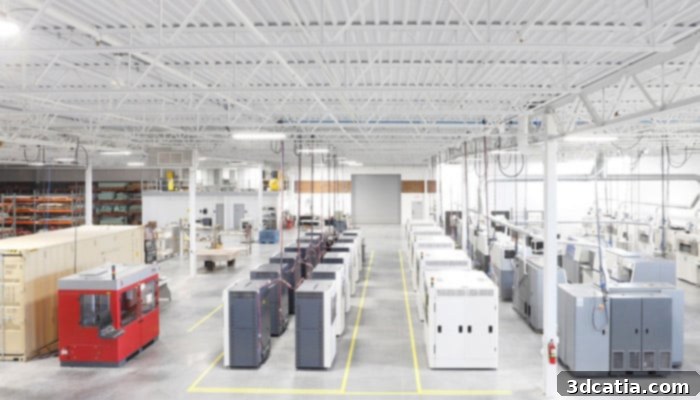
Hewlett-Packard, globally recognized as HP, is a tech giant listed on the New York Stock Exchange, one of the world’s largest financial markets, with its shares currently priced at $32.94. HP has been a significant player in the 3D printing arena for many years, needing no introduction due to its pervasive influence across various technology sectors. The company is the proprietor of the innovative Multi Jet Fusion (MJF) technology, which has made substantial inroads in industrial 3D printing. HP has consistently invested in a wide array of projects related to additive manufacturing, fostering advancements in both hardware and materials. Their diverse portfolio of 3D printers and solutions cater to an extensive range of industries, including jewelry, automotive, architecture, and healthcare, showcasing the versatility and impact of their technologies in revolutionizing production processes.
Markforged
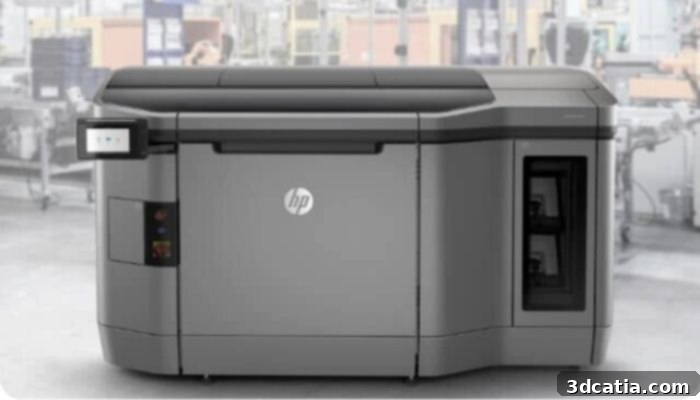
Markforged has rapidly ascended to become a leader in composite 3D printing, particularly for desktop applications, while also offering robust metal 3D printing solutions. Established just nine years ago in 2013 as a startup, the company has diligently worked its way to becoming a major force in the additive manufacturing sector. Markforged is highly regarded for its innovative range of 3D printers and specialized filaments, as well as its advanced platform, The Digital Forge. This trajectory mirrors that of other successful 3D printing startups, such as Desktop Metal, demonstrating rapid growth through technological innovation. Markforged became publicly traded on July 14, 2021, and its shares are listed on the New York Stock Exchange (NYSE). The company’s current market capitalization stands at $407.81 million, with shares priced at $22.17.
Materialise
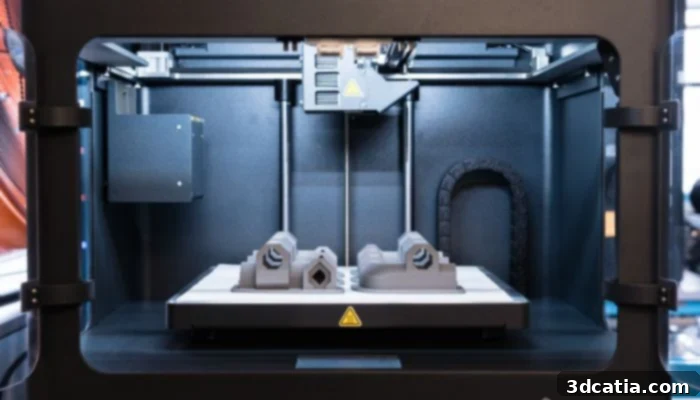
Founded in 1990 in Belgium, Materialise began with a clear vision: to unlock new applications and realize the extraordinary potential of 3D printing. Since then, the company has leveraged its extensive experience to develop a highly regarded suite of software solutions and comprehensive 3D printing services, making it a cornerstone of the industry. Materialise uniquely combines the largest concentration of software developers in the AM sector with one of the world’s most extensive 3D printing facilities. Its open and flexible platforms empower stakeholders across diverse industries—including healthcare, automotive, aerospace, art and design, and consumer goods—to develop groundbreaking 3D printing applications. This integrated approach ensures that Materialise not only provides tools but also facilitates innovation across the entire additive manufacturing value chain. The company currently holds a market capitalization of $857.01 million, with its shares valued at $14.51.
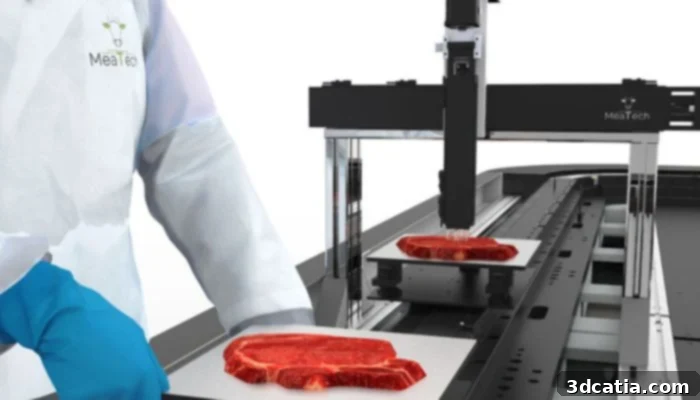
Meatech 3D
Meatech 3D, formerly known as Meat-Tech 3D, is an Israeli company founded in 1992 that is at the forefront of revolutionizing the meat sector. Notably, it holds the distinction of being the first publicly traded cultured meat company, marking a significant milestone in sustainable food production. Meatech 3D specializes in applying advanced biotechnology, bioprinting, and agrotechnology to develop innovative cultured meat products. Their approach involves the 3D printing of cells and scaffolds to create meat, offering an ethical and environmentally conscious alternative to traditional animal agriculture. This pioneering work positions Meatech 3D at the intersection of additive manufacturing and food technology, addressing global challenges related to food security and sustainability. The company’s current market capitalization is $44.285 million, with shares valued at $3.44.
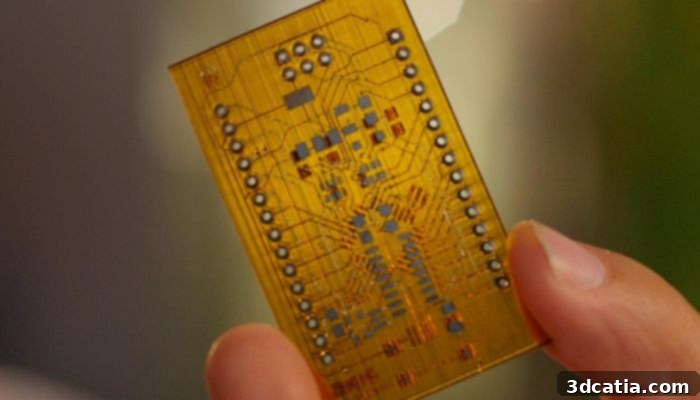
Nano Dimension
The Israeli-American 3D printing powerhouse, Nano Dimension, is widely recognized for its cutting-edge solutions in the industrial 3D printing of electronics. Its flagship product, the DragonFly LDM system, employs proprietary inkjet printing technology and specialized nano-inks to fabricate highly precise electronic components. Demonstrating robust growth and strategic expansion, Nano Dimension acquired fellow Israeli nano 3D printing firm Nanofabrica (now rebranded as Fabrica Group) last year. More recently, the company made headlines by announcing the acquisition of a 12% stake in Stratasys, signaling its growing influence and strategic vision within the AM industry. Nano Dimension has been publicly traded on NASDAQ since 2016 under the ticker NNDM. It commands a market capitalization of $876,491,578, with its stocks currently trading between $3.20 and $3.44, having experienced a 52-week high of $6.98.
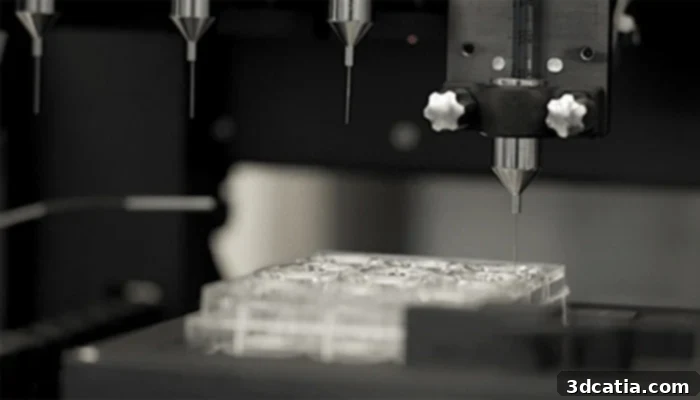
Organovo
Organovo, a California-based company, has been at the forefront of designing advanced bioprinting solutions since its establishment in 2007. The company is publicly listed on the NASDAQ, with its shares currently valued at $2.98. To fuel its growth and expand its technological reach, Organovo has successfully raised over $110 million and forged strategic partnerships with leading players in the market. Its innovative bioprinting platform, named NovoGen, enables the precise design and fabrication of functional tissues using custom bio-inks that incorporate patient-specific cells. This capability positions Organovo as a significant contributor to regenerative medicine, drug discovery, and personalized healthcare, leveraging additive manufacturing to create complex biological structures for research and therapeutic applications.
Parametric Technology Corporation (PTC)
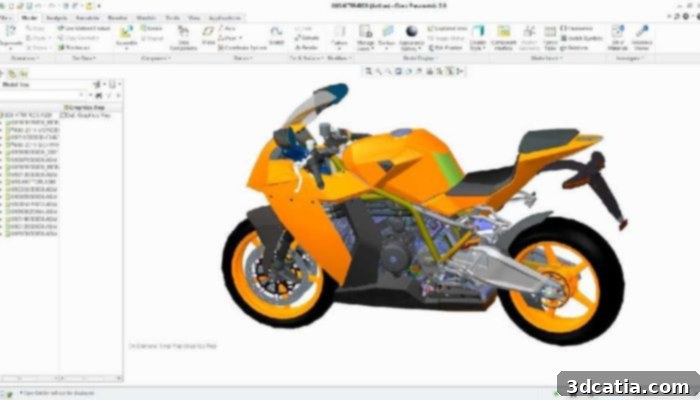
Parametric Technology Corporation (PTC) has solidified its position as a market leader in product design and development, notably after developing its iconic Creo CAD software more than three decades ago. Founded in 1985 and headquartered in Boston, PTC is listed on the NASDAQ, with its stock price currently at $110.89. Throughout its history, PTC has strategically acquired numerous companies, many of which specialize in 3D model design, thereby complementing its core offerings. While not exclusively an additive manufacturing company, PTC’s software solutions, including CAD, PLM (Product Lifecycle Management), and IoT platforms, are indispensable tools within the AM workflow. They enable engineers and designers to create, optimize, and manage complex 3D models critical for additive manufacturing processes, demonstrating PTC’s indirect yet profound impact on the sector.
Prodways
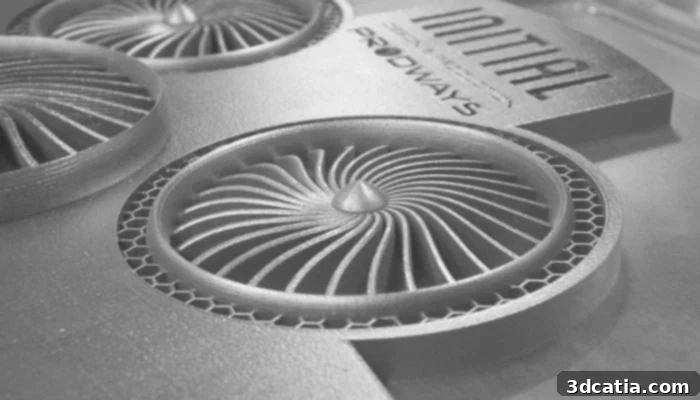
French 3D printing company Prodways Technologies is a versatile European leader, providing comprehensive additive manufacturing solutions that utilize both Digital Light Processing (DLP) and Selective Laser Sintering (SLS) technologies. As a specialist in industrial and professional 3D printing, Prodways’ solutions find applications across a wide array of sectors, including automotive, dental, footwear, and medical. The company is part of the larger Prodways Group and is publicly traded on the Euronext Paris stock exchange. Prodways is committed to advancing industrial 3D printing through innovative materials and high-performance machines. The company currently boasts a market capitalization of €150.203 million (approximately $153.049 million), with its shares trading at €2.94 (around $3.00).
Protolabs
Protolabs was founded in 1999 by Larry Lukis with a revolutionary vision: to automate traditional manufacturing processes, particularly for injection-molded plastic prototypes. Lukis developed a sophisticated computer program capable of interfacing directly with a network of milling machines and presses, ushering in a technical revolution that drastically reduced production times for plastic and metal parts. In 2014, Protolabs expanded its offerings by launching industrial 3D printing services, further supporting designers and engineers from early-stage prototyping to low-volume production. This strategic move solidified its position as a comprehensive digital manufacturing hub. By blending automation with advanced manufacturing techniques, Protolabs empowers customers to accelerate product development cycles. The company’s robust market capitalization stands at $1.35 billion, with its shares trading at $49.15.
Ricoh
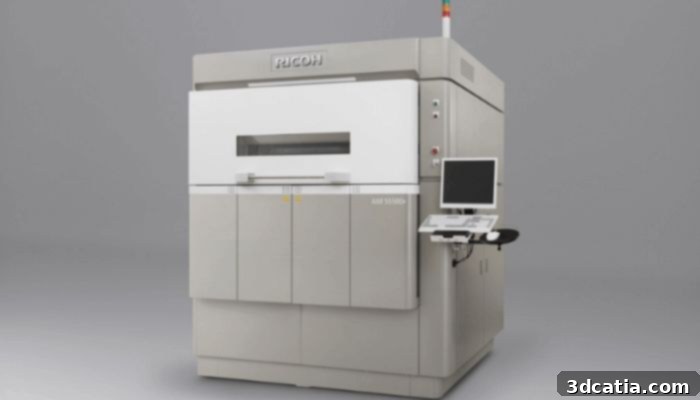
Ricoh is a distinguished Japanese multinational company, founded in 1936 by Riken Kankoshi. Originally a family business focused on photographic paper, Ricoh evolved to become a leading supplier of office equipment, including cameras, scanners, copiers, and printers. Today, with over 108,000 employees worldwide, Ricoh has significantly diversified its portfolio to include extensive services and products in additive manufacturing. These offerings encompass prototyping, consulting, quality control, production of end-use parts, design optimization, and post-processing. Ricoh leverages various technologies such as FDM, injection molding, HSS/MJF, and SLS, and works with a range of materials including nylon 12, PP, and PC. This comprehensive approach positions Ricoh as a formidable player in industrial 3D printing, contributing to various stages of the manufacturing workflow. The company’s current market capitalization is $679.675 billion, with its shares priced at $7.81.
Shapeways
New York-based Shapeways stands out as a leading 3D printing marketplace and service provider, distinguished by its proprietary OTTO software. This comprehensive ordering system efficiently “manages the entire production process from secure uploading of 3D models to expedited delivery in customized packaging.” The company operates ISO 9001-compliant manufacturing facilities in Long Island, and notably, it is one of the few additive manufacturing companies to hold an IATF 16949 certification. This certification underscores its commitment to quality management, particularly in automotive part manufacturing, across its facilities in Eindhoven and Livonia. Shapeways is traded on the New York Stock Exchange (NYSE) under the ticker SHPW. Its market capitalization currently sits at $47.24 million, with shares trading at an average of $0.96. The stock has seen a 52-week high of $12.81 and a low of $0.93.
Siemens
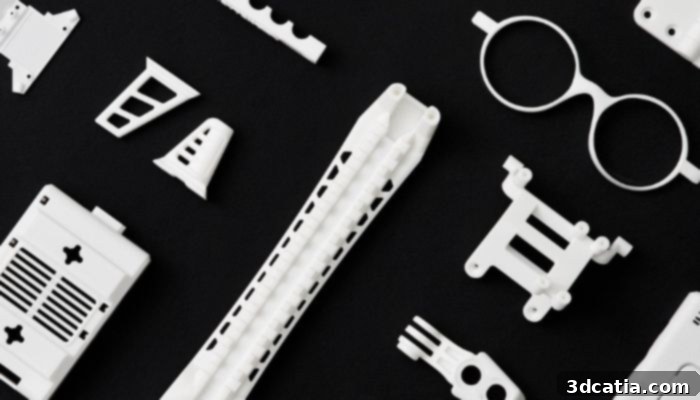
The Siemens Group, a global technology powerhouse, specializes in vital sectors such as energy, health, industry, and construction. Within its expansive operations, Siemens has emerged as a recognized and influential player in the additive manufacturing sector, primarily through its development of advanced software solutions for AM. The German conglomerate went public in 1899 and is currently listed on the Frankfurt Stock Exchange and Xetra, forming a significant component of the DAX 40 index, with its shares valued at $106.9. While additive manufacturing constitutes only a segment of Siemens’ vast business portfolio, its contributions to AM software, digital twin technology, and industrial automation are crucial. Siemens’ comprehensive digital enterprise suite facilitates optimized workflows for 3D printing, from design and simulation to production and post-processing, underscoring its pivotal role in enabling industrial adoption of AM technologies.
SLM Solutions
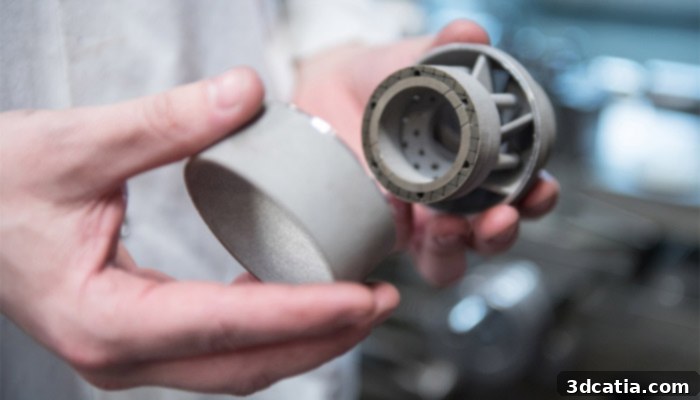
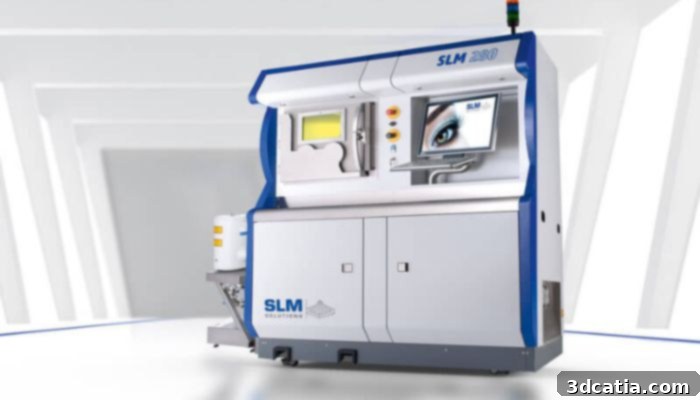
SLM Solutions is a distinguished pioneer and specialist in metal 3D printing, particularly renowned for its expertise in powder laser melting technology. Headquartered in Germany, the company’s shares are traded on XETRA, a Frankfurt-based financial exchange, currently valued at €12.44 (approximately $12.68). SLM Solutions manufactures and markets industrial 3D printers that serve critical industries such as aerospace, energy, healthcare, and automotive, enabling the production of high-performance metal parts with complex geometries. To bolster its global presence and capabilities, SLM Solutions has strategically expanded its international footprint in recent years, establishing offices in key regions including Shanghai and Moscow. This global strategy reinforces its commitment to delivering advanced metal additive manufacturing solutions worldwide, contributing significantly to industrial innovation.
Stratasys
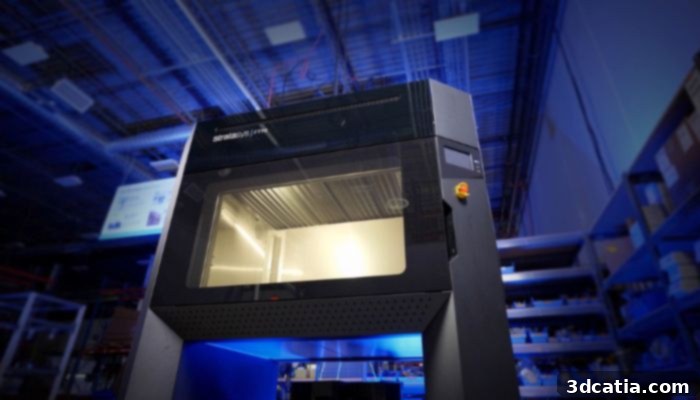
The American-Israeli additive manufacturing company Stratasys stands as one of the true pioneers of the 3D printing industry. Founded in 1989, it was among the very first companies to develop and commercialize 3D printing technologies. Since then, Stratasys has grown into one of the leading 3D printer manufacturers globally, offering a vast array of systems and filaments that cater to almost every sector. Its technologies are widely adopted across automotive, aerospace, industrial, recreational, electronic, medical, consumer goods, and business applications. This extensive reach and consistent innovation have cemented Stratasys’s status as one of the most prominent and influential companies within the AM community. Stratasys made its public debut on NASDAQ in October 1994. It currently maintains a robust market capitalization of $1.273 billion, with its shares valued at $19.62.
Tinkerine
Tinkerine, founded in 2012 by a group of passionate students at a Canadian university, is an evolving company built upon the shared conviction of its young founders in applied design, creative problem-solving, and 3D technology solutions. A core objective of the company is to empower inquisitive children and youth by preparing them for an increasingly technology-driven world through accessible 3D printing education. Tinkerine holds the notable distinction of being the first Canadian 3D printing company to be publicly traded, marking a significant milestone for the Canadian AM sector. The company’s market capitalization is $2.037 million, with its shares currently valued at $0.04. This focus on educational outreach and user-friendly technology positions Tinkerine uniquely within the additive manufacturing landscape.
Velo3D
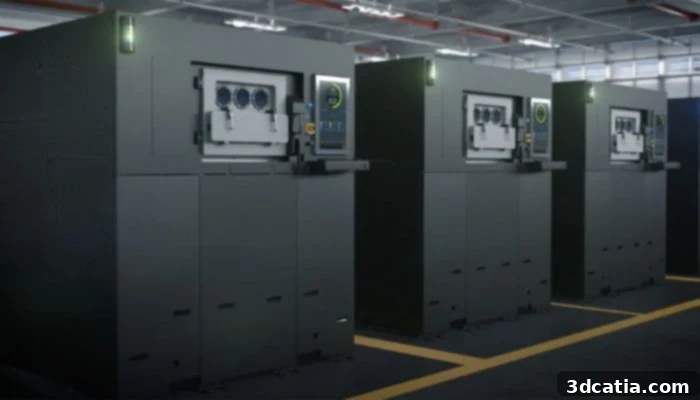
Velo3D is widely recognized for its advanced metal 3D printing expertise, which is leveraged for critical applications such as space missions, enhancing transportation efficiency, and contributing to cleaner energy solutions. The company was founded in 2014 by Benny Buller, who continues to serve as its CEO. Velo3D is particularly known for its innovative Sapphire line of printers, which employ sophisticated powder bed fusion technology, and its proprietary Flow software, also developed in-house. Based in California, the manufacturer offers a comprehensive suite of printers, software, and specialized materials like aluminum F357 and Inconel 718. Velo3D’s commitment to enabling the production of previously impossible geometries and ensuring part repeatability has made it a key partner for industries demanding high-performance metal additive manufacturing. Currently, its shares are valued at $3.01, and the company’s market capitalization stands at $553.42 million.
Voxeljet
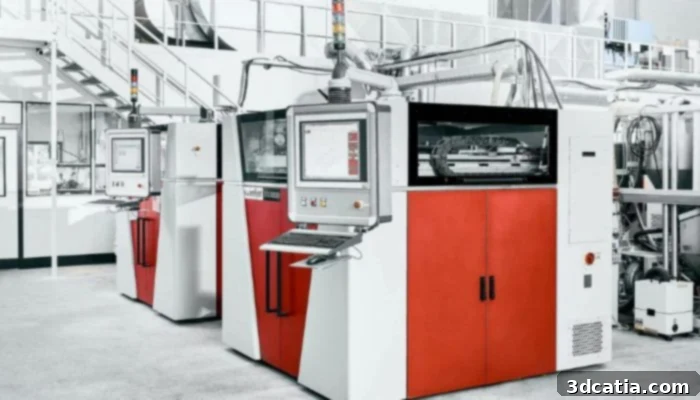
Voxeljet AG is a prominent German manufacturer of industrial 3D printing solutions, particularly renowned for its leadership in binder jetting technology. The company primarily focuses on technical ceramics and sands through its comprehensive VX line of printers, which are engineered for both rapid prototyping and serial production. Voxeljet has been trading on NASDAQ under the ticker VJET since 2020, having previously been listed on the New York Stock Exchange following its IPO in 2013. This dual listing history underscores its long-standing presence in public markets. Voxeljet’s binder jetting solutions are vital for industries requiring large-format molds and cores for casting, as well as functional ceramic parts. Its stock price is currently $4.04, with a 52-week high of $10.14 and a low of $3.11, reflecting market dynamics for industrial AM providers.
Xometry
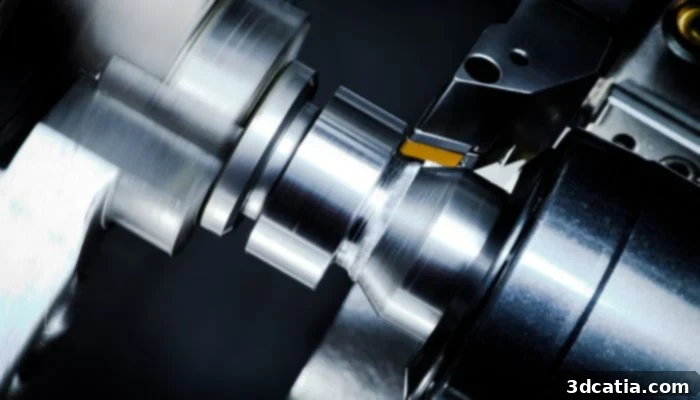
Xometry operates as a leading on-demand industrial parts marketplace, offering a wide array of manufacturing services, including rapid prototyping and high-volume part production. The Derwood, Maryland-based company was co-founded in 2013 by Randy Altschuler and Laurence Zuriff. Since its inception, Xometry has rapidly expanded to become one of the foremost companies in the on-demand industrial parts manufacturing sector, connecting customers with a vast network of manufacturing partners. This platform model leverages additive manufacturing alongside traditional techniques to provide efficient and flexible production solutions. Xometry began trading its shares on NASDAQ on June 30, 2021, and has since achieved a market capitalization of $1.82 billion, with a current price of $38.80 per share. Its innovative approach is transforming how companies source and produce custom parts globally.
The burgeoning list of publicly traded additive manufacturing companies underscores the industry’s significant growth, increasing maturity, and expanding investor appeal. From foundational software providers to specialized bioprinting firms and industrial hardware innovators, these companies represent the diverse and dynamic future of 3D printing. Their presence on major stock exchanges provides transparency, access to capital, and a clear benchmark for the sector’s performance. As additive manufacturing continues to integrate further into mainstream industrial processes, these public entities will undoubtedly play a pivotal role in shaping its evolution and broader economic impact. We value your insights—what are your thoughts on publicly traded additive manufacturing companies? Share your opinions in the comments below or connect with us on our LinkedIn, Facebook, and Twitter pages! Don’t forget to subscribe to our free weekly Newsletter here to receive the latest 3D printing news directly in your inbox. You can also discover all our videos on our YouTube channel.