
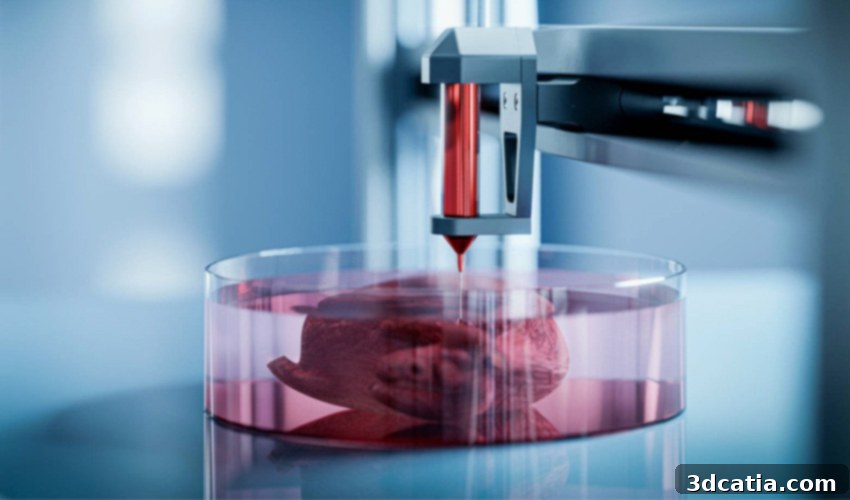
The Dawn of De-extinction: 3D Bioprinting Pioneers Revive Velociraptor Embryo
Imagine a world where the echoes of ancient giants once again rumble through our daily lives. While it sounds like the premise of a blockbuster film, groundbreaking developments in 3D bioprinting technology are reportedly making this fantastical vision a potential reality. A team of visionary researchers at the prestigious University of Isla Nublar has recently announced an astonishing feat: the successful recreation of a velociraptor embryo using a sophisticated 3D bioprinter. This monumental achievement, they claim, marks a significant leap forward in the burgeoning field of de-extinction, pushing the boundaries of what was once thought impossible.
The innovative approach involved the development of a unique bio-ink, formulated from the genetic material of a living bird. Specifically, the team utilized DNA from the shoebill (Balaeniceps rex), a truly imposing member of the Balaenicipitidae family, renowned for its prehistoric appearance. While the nascent dinosaur embryo survived only a few days post-printing, the Isla Nublar researchers express immense optimism regarding the prospects of future trials. This incredible scenario, though seemingly plucked from the pages of science fiction, stands as compelling evidence of bioprinting’s transformative potential, signaling the very beginning of a profound scientific revolution.
The concept of reanimating extinct animal species is not entirely new to the scientific community. For several years, ambitious projects have aimed to reverse the tide of extinction. For instance, by 2021, the American start-up Colossal Biosciences had already garnered significant attention for its extensive research dedicated to bringing back the woolly mammoth. Such efforts hold potential implications not only for ecological restoration but also for understanding and potentially combating the adverse effects of climate change. In the specific case of the Isla Nublar velociraptor project, the overarching aim is to meticulously study the behavior of these ancient predators and to critically assess the ecological niche they might occupy in contemporary society. This endeavor, however, irrevocably raises a myriad of profound ethical and existential questions that demand careful consideration.
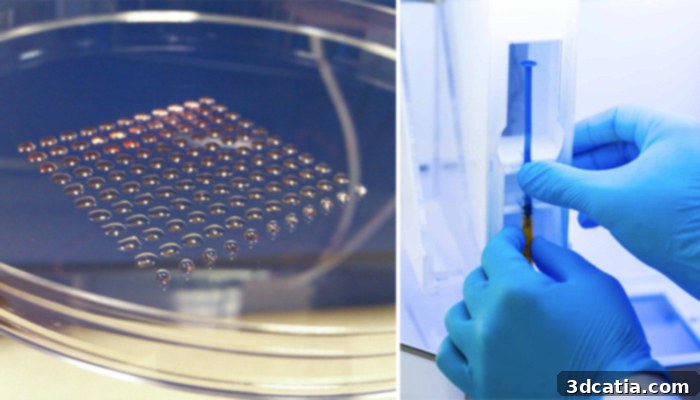
It took researchers at the University of Isla Nublar exactly three years to create a viable embryo.
Pioneering Bioprinting: The Genesis of a Velociraptor
The journey to this unprecedented achievement began with the intricate development of the bioprinter itself. According to a recent press release from the University of Isla Nublar, the team ingeniously adapted a standard Fused Filament Fabrication (FFF) machine, transforming it into a precision instrument capable of handling delicate biological inks. This adaptation was a critical first stage, requiring immense engineering prowess to ensure the machine could accurately deposit living cells without causing damage.
Central to the project’s success was the creation of the bespoke bio-ink. This revolutionary substance was meticulously crafted from living cells painstakingly harvested from the shoebill, or Balaeniceps rex. This magnificent bird, known for its distinctive, shoe-shaped bill and formidable presence, can reach an imposing width of up to 23 cm, a length of 10 cm for its head, and boast a wingspan of up to 2.3 meters. The researchers explain that they embarked on a complex process of modifying the bird’s molecular structure, meticulously reverse-engineering and replicating the intricate DNA pattern characteristic of a velociraptor. While the precise details of this sophisticated genetic manipulation procedure remain confidential, the team assures the public of its scientific rigor. What is certain is the extraordinary capability of the specialized 3D printer, which can deposit these modified cells with unparalleled precision, layer by infinitesimal layer, to construct the complex three-dimensional structure of an embryo.
Dr. Ross Geller, a distinguished paleontologist at the University of Isla Nublar and a key figure in this groundbreaking research, elaborated on the scientific journey. “Drawing on the latest advances in both paleontology and molecular biology, we have painstakingly formulated a biological ink,” he stated. “This ink utilizes DNA extracted from a bird that, remarkably, shares numerous genetic similarities with its ancient dinosaur ancestors. The subsequent incubation phase proved to be the most delicate and challenging aspect of the entire project. After years of relentless research and countless experimental iterations, we are immensely proud to have achieved this monumental milestone. Without the precision and adaptability offered by bioprinting technology, such an achievement would have remained utterly impossible.” His words underscore the profound synergy between traditional paleontology and cutting-edge additive manufacturing.
From Embryo to Hatchling: A Fragile New Beginning
The culmination of this tireless scientific endeavor saw the successful hatching of a velociraptor egg on March 29, following a critical four-month period of embryonic development within the controlled environment. This significant event marked a pivotal moment for the team, transforming a theoretical possibility into a tangible, albeit delicate, reality. Today, the young dinosaur, brought into existence with the unparalleled assistance of 3D printing, is under the most stringent and meticulous monitoring. Scientists at Isla Nublar emphasize that its continued survival hinges entirely on maintaining extremely strict environmental conditions and providing constant, specialized care.
Professor Ellie Sattler, another leading mind from the University of Isla Nublar, provided further insight into the post-hatching challenges. “Our paramount concern has been to sustain an environment perfectly conducive to the embryo’s survival,” she explained. “We achieved this by meticulously reproducing the climatic and dietary conditions that characterized the dinosaurs’ original habitat millions of years ago. By maintaining a precisely controlled warm climate and supplying a carefully selected diet rich in proteins, including small, tender pieces of meat, we have been able to closely observe and facilitate its development. Every detail, from humidity levels to light cycles, is continuously optimized to mimic the conditions that allowed these creatures to thrive in prehistory.” This level of detailed environmental control highlights the scientific commitment to giving the revived creature the best possible chance at life, however fleeting.
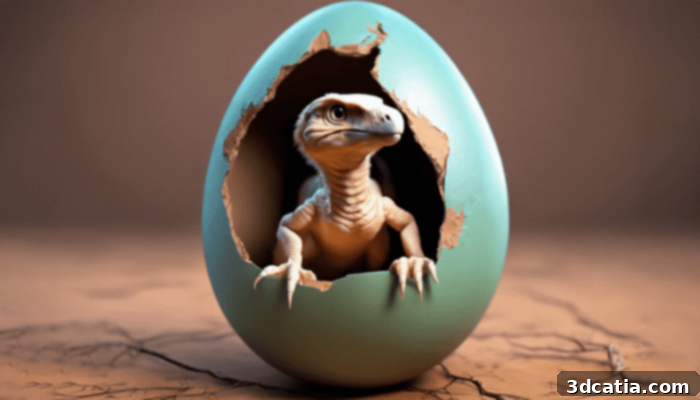
The researchers are hopeful that the young velociraptor will continue to grow so that they can study it over a long period.
Ethical Dilemmas and Future Horizons
Despite the scientific marvel, profound ethical questions inevitably persist. Does humanity truly possess the right to resurrect a form of life that has been extinct for millions of years? The possibility of bringing extinct species back to life, while generating immense enthusiasm for scientific research and a deeper understanding of Earth’s ancient history, also ignites serious concerns regarding our responsibility towards these newly created creatures. Their rightful place in our complex and rapidly evolving modern world, the potential ecological impacts, and the unforeseen consequences of such biological intervention remain hotly debated topics within scientific and philosophical circles.
Professor Alan Grant, the distinguished lead of the velociraptor project, maintains a resolutely positive outlook. “Now, with the sophisticated genetic tools at our disposal today and the extraordinary evolution of 3D printing technology,” he asserts, “we are uniquely positioned to fundamentally change our perspective on both our planet’s distant past and its unfolding future. This technology isn’t just about recreating; it’s about understanding, learning, and potentially even righting past wrongs, or at least gaining unprecedented insights into ancient ecosystems.” His vision speaks to a bold future where technology bridges vast spans of time.
By continuing to integrate cutting-edge 3D printing technology into ongoing dinosaur research efforts, scientists aspire to unlock new and profound aspects of their biology, behavior, and evolutionary pathways. This pioneering work also holds the promise of inspiring future generations to delve deeper into exploration, fostering a renewed appreciation for the wonders and mysteries of Prehistory. For more detailed information, you can explore the University of Isla Nublar’s official website HERE.
At 3Dnatives, we are big fans of April Fools’ Day! So this article was just a little joke for the occasion. As far as we know, researchers have not used bioprinting to bring velociraptors back to life, though the underlying technology continues to advance rapidly in many exciting fields.
What are your thoughts on the fascinating potential of 3D printing in scientific breakthroughs, even the ones still in the realm of fiction? Let us know your perspective in a comment below or join the conversation on our LinkedIn, Facebook, and Twitter pages! Don’t forget to sign up for our free weekly newsletter here to get the latest 3D printing news delivered straight to your inbox! You can also find all our compelling videos on our YouTube channel.
*All Photo Credits: University of Isla Nublar