
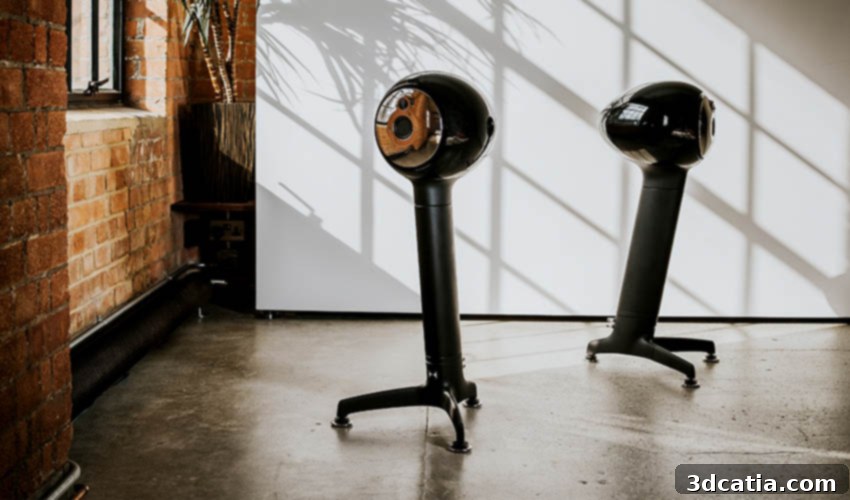
Node Audio & Hylixa: Revolutionizing High-Fidelity Audio with Cutting-Edge 3D Printing
In an era dominated by convenience over quality, two visionary British industrial designers, Ashley May and David Evans, embarked on a mission to redefine the landscape of high-fidelity audio. Their company, Node Audio, stands at the forefront of this revolution, leveraging advanced 3D printing technologies to achieve acoustic designs previously deemed impossible. Their debut product, the Hylixa speaker, is a testament to this innovative approach, not only boasting a visually stunning, organic form but also delivering an unparalleled sonic experience. Despite its compact and aesthetically pleasing appearance, the Hylixa speaker performs with the robust clarity and deep bass typically associated with much larger, traditional box speakers.
The team at 3DNatives was eager to delve deeper into the intricate design and sophisticated production processes behind the Hylixa. We had the distinct pleasure of speaking with Ashley May, one of the brilliant minds driving Node Audio’s vision. During our conversation, May shed light on the company’s journey, the profound impact of additive manufacturing on acoustic engineering, and its broader implications for consumer goods across various industries. This interview provides a comprehensive look into how Node Audio is challenging conventional audio design and pushing the boundaries of what’s achievable with modern manufacturing techniques.
The Genesis of Node Audio and Its Additive Manufacturing Roots
Node Audio represents the culmination of David Evans’ and Ashley May’s shared aspiration: to unlock unprecedented opportunities in acoustic design by fully harnessing the power of additive manufacturing (AM). This ambitious research endeavor commenced over three years ago, though their engagement with AM extends back more than a decade. Both designers previously operated Studio17, a successful product design and innovation consultancy that they continue to oversee today. This extensive background provided a fertile ground for their subsequent venture into high-end audio.
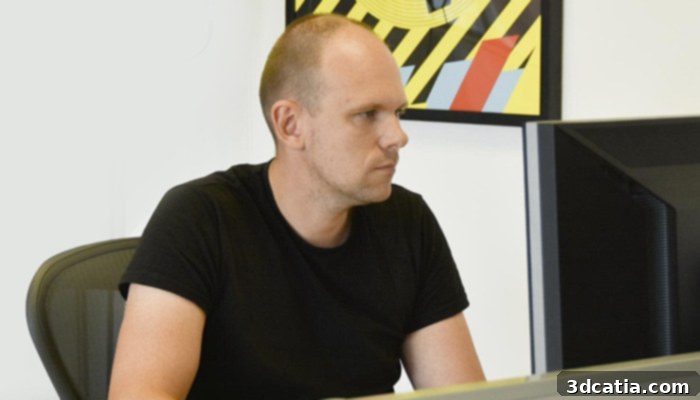
Ashley May, Co-founder of Node Audio, leading the charge in 3D printed speaker innovation.
Historically, 3D printing served primarily as a prototyping tool within their consultancy business, facilitating the development of products destined for mass manufacture. While undeniably valuable for iterating designs and testing concepts, May and Evans always recognized the far greater, untapped potential of additive manufacturing. They envisioned a future where AM wouldn’t just create prototypes, but would produce intricate, high-performance end-use parts, fundamentally rewriting the rulebook of what’s technically and creatively possible in product design and engineering. This foundational belief became the cornerstone of Node Audio, guiding them toward applications where additive manufacturing could deliver truly transformative benefits, moving beyond simple form validation to actual functional superiority.
Node Audio’s Vision: Redefining High-Quality Home Audio
In our modern, fast-paced world, the pursuit of convenience has inadvertently led to a disconnect from the profound emotional experience of music. The traditional HiFi system, once a centerpiece of home entertainment, has largely receded from mainstream culture, becoming the exclusive domain of dedicated ‘audiophiles’. Consequently, vast segments of society have never truly experienced their favorite music as it was originally intended – with pristine clarity, expansive soundstages, and rich, uncompromised detail. Node Audio was founded precisely to address this gap, aiming to bridge the divide between cutting-edge technology and a deeply satisfying auditory experience.
At its very core, Node Audio exists to empower individuals to rediscover their cherished music in a manner previously unimaginable. The company’s overarching mission is to bring a new relevance to high-quality home audio, making it accessible and appealing to a broader audience without sacrificing performance. Through extensive research and meticulous acoustic engineering, Node has demonstrated that by fully exploiting additive manufacturing alongside innovative acoustic principles, they can deliver unparalleled musical realism. This is achieved without the imposing size, aesthetic complexity, or esoteric nature often associated with large, high-end HiFi systems.
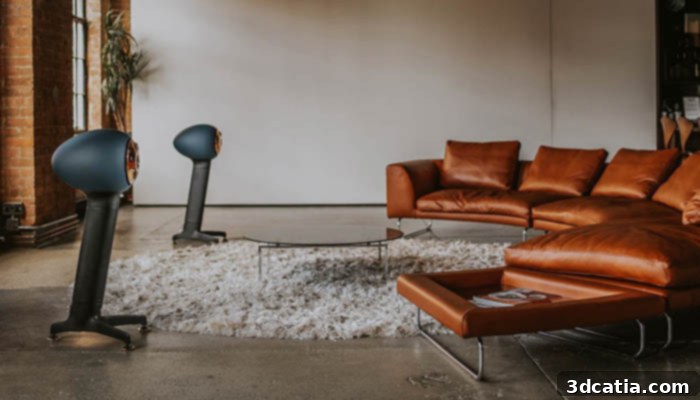
Node Audio exists to bring a new relevance to high quality audio, blending art and acoustics. | Image via Node Audio
Node Audio’s ambition extends beyond mere sound reproduction; their aim is to create category-defining products that transcend the conventional definition of ‘HiFi’. They aspire for their speakers to be regarded as exquisite pieces of art in their own right – sculptures that enhance any living space while simultaneously delivering an auditory experience that captivates and moves the listener. This holistic approach to design and performance positions Node Audio as a true innovator in the home audio market, setting new benchmarks for aesthetic integration and acoustic excellence, made possible by the unique capabilities of 3D printing.
Unveiling Hylixa: A Paradigm Shift in Acoustic Design
The Hylixa speaker, Node Audio’s seminal offering, serves as a powerful demonstration of what can be achieved when every facet of acoustic design is pushed to its absolute maximum potential. Traditional speaker enclosures are inherently acoustically compromised. Their ubiquitous flat panels and sharp, square edges create diffraction and reflections that negatively ‘colour’ the sound, introducing unwanted resonances and distortions. The human ear, being exquisitely sensitive, is particularly adept at detecting this colouration, especially within the critical vocal frequency range, which can detract significantly from the clarity and naturalness of music.
To counteract these fundamental limitations, the Hylixa speakers feature a uniquely small, meticulously sculpted, rounded enclosure. This innovative design choice is not merely aesthetic; it acoustically replicates the sonic signature of a human head, a shape naturally optimized for sound propagation and perception. By meticulously removing the vocal colouration that a large, boxy speaker typically imparts, Hylixa dramatically enhances intelligibility and realism in audio reproduction. However, a smaller enclosure typically presents a challenge for bass performance. To overcome this, Node Audio engineered a brilliant solution.
The Hylixa design ingeniously integrates an advanced acoustic waveguide, commonly known as a transmission line. This exceptionally long, convoluted acoustic pathway is designed to absorb higher frequencies while efficiently outputting only the lowest frequencies, thereby significantly augmenting the speaker’s bass response. The true innovation lies in Node Audio’s patented design, which ingeniously coils this extensive pathway within the speaker’s compact head in a complex, helix-like spiral – hence the evocative name, Hylixa. This intricate internal geometry, with its precise curves and pathways, is utterly impossible to fabricate using conventional manufacturing methods such as machining, casting, or molding. Consequently, additive manufacturing, specifically 3D printing, emerged as the only viable solution capable of realizing this groundbreaking design and delivering its extraordinary performance gains. This fusion of advanced acoustic theory and cutting-edge manufacturing defines Hylixa as a truly revolutionary product in the high-fidelity audio market.
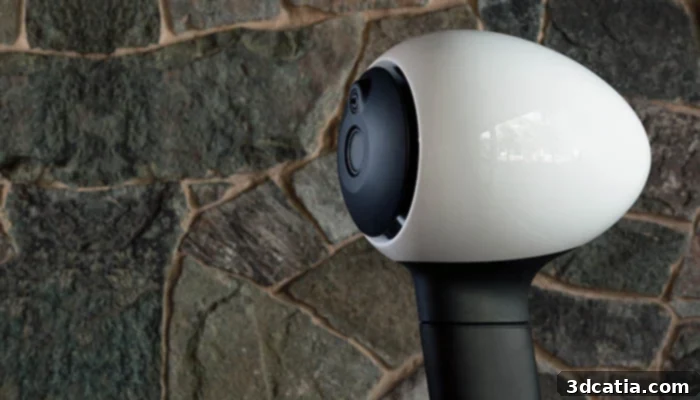
Hylixa, Node’s debut speaker, showcases revolutionary design enabled by 3D printing. | Image via Node Audio
The Power of SLS 3D Printing: Crafting Hylixa’s Acoustic Core
The material selection and manufacturing process are paramount to achieving Hylixa’s exceptional acoustic performance. Node Audio meticulously chose laser-fused Glass Nylon for the speaker’s critical ‘head’ component due to its remarkable inherent acoustic properties. This material, characterized by a high glass content, boasts a naturally elevated resonant frequency, imparting an almost ceramic-like feel and density. These attributes are ideal for minimizing unwanted vibrations and resonances within the speaker enclosure, which are detrimental to sound purity.
A significant advantage of the Selective Laser Sintering (SLS) process is the complete design and manufacturing freedom it affords. This capability allows Node Audio to make extensive and confident use of sophisticated acoustic and stress analysis simulation software. By simulating various design iterations, they can precisely engineer out acoustic colouration before physical production. For instance, the SLS process enables the creation of complex, organic geometries that entirely avoid flat surfaces prone to resonance. This ensures that the speaker structure does not store vibrational energy, allowing musical notes to start and stop precisely as they should, without any lingering ‘overhang’ or blurring, delivering pristine transient response and unparalleled clarity.
Another practical benefit of the SLS process is its self-supporting nature within the build chamber. Unlike many other 3D printing methods, SLS does not require rigid support structures to be printed alongside the component, simplifying post-processing significantly. However, the tortuous and incredibly difficult-to-access internal geometry of the Hylixa speaker’s transmission line presents a unique challenge for powder removal. To overcome this, Node Audio developed and even laser-sintered special tools specifically tailored to the application’s unique geometry. The thoroughness of powder removal is rigorously validated by weighing the components against a known reference and by utilizing an endoscopic ‘keyhole’ camera for internal inspection, ensuring that no residual powder remains to compromise acoustic performance or structural integrity.
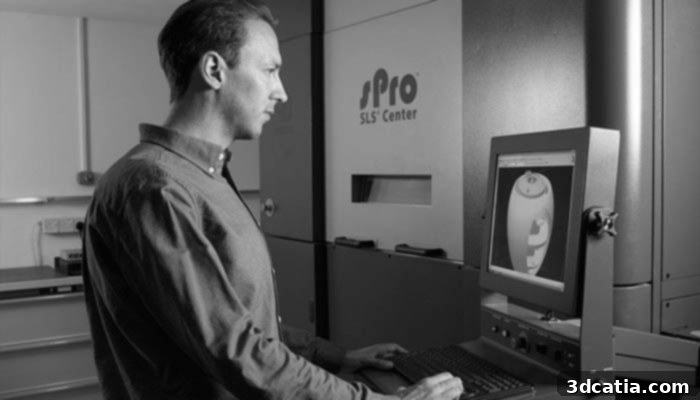
The intricately designed head of Hylixa was meticulously produced using advanced SLS technology, post-design finalization.
3D Printing’s Transformative Impact on Consumer Product Design
The capabilities of additive manufacturing technologies are in a state of continuous and rapid advancement. Significant strides are being made, progressively positioning 3D printing as a genuine, compelling alternative to more traditional manufacturing techniques. Ashley May emphasizes that additive manufacturing truly comes into its own when products or components are conceived from the outset with complete manufacturing freedom. This means designing specifically for the strengths of AM, allowing for complex geometries and intricate internal structures that deliver clear, demonstrable benefits over parts produced by conventional methods and materials.
However, it’s crucial to understand that additive manufacturing is not a universal ‘silver bullet’ for achieving successful product innovation. While it often eliminates the substantial initial setup costs associated with tooling for other manufacturing methods, the per-part cost can remain comparatively high, particularly for larger volumes or when specialized materials are required. Node Audio’s strategy is to judiciously employ the right types of 3D printing for appropriate applications where genuine performance benefits can be delivered. This includes making individual parts significantly more functional, often consolidating multiple components into a single, integrated print, which in turn saves on complex assembly processes further down the production stream. This strategic application of AM ensures that its adoption is both technically advantageous and commercially viable, leading to truly innovative and differentiated consumer products.
Navigating the Challenges of Additive Manufacturing Integration
The journey of integrating additive manufacturing into Node Audio’s production process was not without its complexities, requiring a sophisticated interplay between product design and process design. A prime example of this iterative approach can be seen in the development of the Hylixa’s cabinet head and neck sections. Initially, the ‘neck’ of the Hylixa was designed to be seamlessly integrated with the rounded head. However, achieving the required high-quality, flawless paint finish on such a complex, integrated surface proved incredibly labor-intensive, demanding an excessive amount of manual filling and sanding – a process that was both time-consuming and inconsistent.
Node Audio’s innovative solution involved a significant process design adjustment: sintering the head section slightly oversize, with the neck as a separate, distinct component. This separation allowed the head to be subsequently turned back on a Computer Numerical Control (CNC) lathe, providing a vastly superior surface quality and consistency. This refined approach dramatically reduced the manual sanding effort required to achieve the desired high-gloss, piano-grade paint finish, significantly streamlining production while elevating aesthetic quality. It demonstrates a profound understanding of how to adapt design to leverage the strengths and mitigate the weaknesses of AM for high-end finishes.
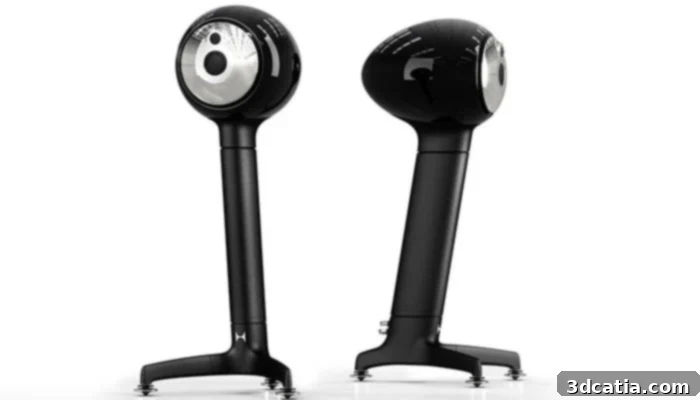
The sleek legs and neck of the Hylixa speaker are produced using an HP JetFusion machine, showcasing multi-process AM integration. | Image via Node Audio
In stark contrast to the painted SLS cabinet, the neck and legs of the Hylixa speaker are produced as black, vibro-polished components using an HP JetFusion machine. While JetFusion offers excellent mechanical properties and a fine surface finish, Node Audio proactively engaged a specialized company to simulate prolonged UV exposure. This foresight revealed that a certain degree of color fading could occur over years of sun exposure, particularly for black components. To ensure the long-term aesthetic integrity of their premium speakers, all these JetFusion components are meticulously sprayed with automotive-grade lacquers containing potent UV inhibitors. This crucial post-processing step ensures that their appearance is maintained flawlessly over many years, a testament to Node Audio’s commitment to durability and lasting quality.
Ashley May points out that there are still relatively few companies effectively integrating additive-built components into such visible and high-performance end-use parts, particularly in a luxury consumer market. This means Node Audio is continuously learning and innovating not only in how to design and build these components but also in how to process and treat them. Their ongoing commitment is to ensure that the exceptional performance and aesthetic benefits delivered by 3D printing remain undiminished for many years to come, setting a high standard for the entire industry.
The Future of High-Fidelity and Additive Manufacturing
In a global marketplace saturated with an overwhelming array of product choices, additive manufacturing emerges as a powerful enabler, offering unparalleled opportunities for genuine innovation and clear differentiation from competitors. Ashley May passionately believes that this technology can unlock remarkable product advances, but only if designers and engineers are willing to mentally unshackle themselves from the constraints and conventions of traditional manufacturing paradigms. Embracing design freedom inherent in AM is the first step towards revolutionary products.
However, he stresses the critical importance of a thorough understanding of additive manufacturing. One must fully comprehend the unique possibilities, inherent limitations, and precise cost implications that each specific type of additive process delivers. This comprehensive knowledge is essential to ensure that any innovation driven by AM possesses true commercial merit and can be successfully brought to market. It’s a balance between creative freedom and practical feasibility.
The landscape of 3D printing technology is evolving at an astonishing pace, rapidly moving beyond merely ‘clever’ applications towards larger-scale production. This includes significant advancements in both pre-processing (design optimization, material science) and post-processing (surface finishing, quality control) techniques, making AM increasingly viable for mainstream manufacturing. With this exciting progression in mind, while the Hylixa speaker represents the ultimate expression of what is currently possible with cutting-edge 3D printing and acoustic design, its core technologies and innovations are destined to trickle down into future Node Audio products. These future offerings will aim for more accessible price points, thereby enabling a wider audience to experience and enjoy their music with the purity and realism it truly deserves. As Ashley May aptly concludes, “Watch this space!” Node Audio is clearly poised to continue its pioneering work, shaping the future of high-fidelity audio one beautifully engineered, 3D printed speaker at a time. For more information about Node Audio and their groundbreaking products, readers are encouraged to visit their official website.
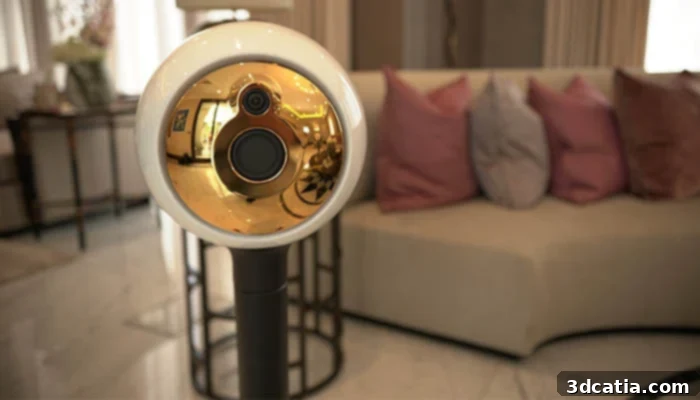
Node Audio’s innovative approach, leveraging additive manufacturing for enhanced acoustic design and performance, marks a significant milestone in the audio industry. What are your thoughts on their pioneering work and the potential of 3D printing in high-end consumer products? We invite you to share your insights in the comments section below or engage with us on our Facebook and Twitter pages! Don’t forget to subscribe to our free weekly Newsletter to receive all the latest news and updates in the dynamic world of 3D printing directly in your inbox!