
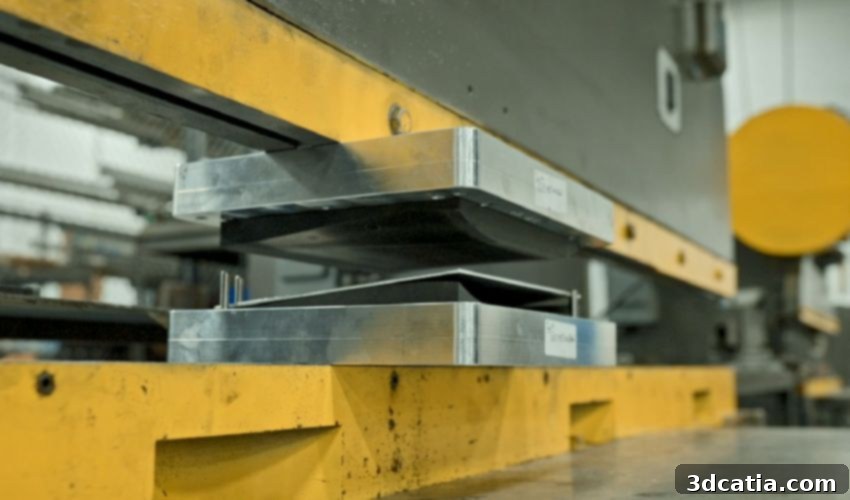
Revolutionizing Tooling: How 3D Printing with High-Performance Polymers Drives Efficiency and Innovation
The manufacturing landscape is undergoing a profound transformation, largely driven by advancements in additive manufacturing (AM), particularly when utilizing high-performance polymers. This innovative technology is rapidly enabling the production of more durable, precise, and sophisticated tools, jigs, and fixtures. For industries historically reliant on conventional machining, AM presents an unprecedented opportunity to significantly reduce lead times, labor costs, and overall production expenses, thereby streamlining operations and fostering greater agility.
Leading enterprises across various sectors, including automotive giants like Ford and aerospace innovators such as Moog Aircraft Group, have swiftly recognized the immense potential of this shift. Beyond these industry titans, smaller businesses and machine shops are also increasingly integrating additive manufacturing into their production workflows, eager to harness its competitive advantages. This article delves into compelling real-world examples of companies that have partnered with additive manufacturing leader Stratasys to produce tooling fixtures more rapidly and cost-effectively. We will explore how 3D printing effectively addresses common tooling challenges and the tangible benefits these forward-thinking organizations are already realizing.
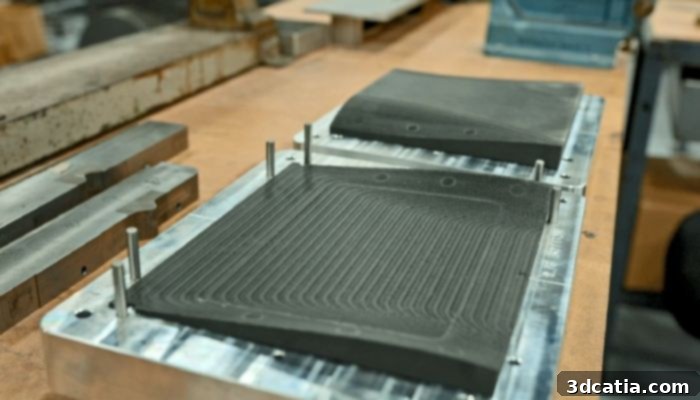
East/West Industries prints metal forming dies using the Fortus 450 3D printer and Nylon 12CF, achieving 80% cost savings and a production time of 1 week, compared to 8 weeks for machining.
Overcoming the Core Challenges of Traditional Tooling with Additive Manufacturing
Traditional methods for creating tooling fixtures, such as milling, welding, and complex assembly processes, are deeply entrenched in manufacturing. While proven, these conventional approaches are frequently hampered by inherent limitations that can significantly impede production efficiency and escalate operational costs. Key challenges include:
- Skilled Labor Shortages: The manufacturing sector faces a persistent shortage of highly skilled machinists and CNC operators. Training new personnel is time-consuming and expensive, creating bottlenecks in production schedules, particularly for specialized tooling.
- Extended Lead Times: Conventional tooling fabrication often involves multiple steps, from design and material procurement to complex machining operations, finishing, and assembly. This multi-stage process invariably leads to long lead times, delaying product development and market entry.
- Prohibitive Costs: Machined tooling can be exceptionally expensive, especially for low-volume production runs or highly customized fixtures. Material waste during subtractive manufacturing, along with high labor and machine operating costs, contribute to significant financial outlays.
- Design Constraints: Traditional manufacturing methods impose geometric limitations, making it challenging to produce tools with intricate internal structures, optimized lattice designs, or highly ergonomic forms. This often results in compromises that prioritize manufacturability over optimal performance or user comfort.
- Inefficient Inventory Management: Maintaining a physical inventory of diverse tools, jigs, and fixtures requires substantial storage space and incurs associated costs. Furthermore, tools can become obsolete, requiring costly disposal, or break, leading to extended downtime while replacements are manufactured.
These challenges, which can halt or severely slow down production lines, underscore the urgent need for more agile, efficient, and cost-effective solutions. This is precisely where additive manufacturing emerges as a game-changer.
Additive manufacturing provides a compelling alternative by enabling the direct creation of tooling equipment with the precise dimensions and complexities required, often at a significantly reduced cost, particularly for complex or low-volume applications. It fundamentally overcomes the inherent design limitations of traditional methods. While conventional tooling often favors designs that are easiest to machine, frequently leading to tools that are bulky, heavy, or not optimally ergonomic, AM liberates designers. It allows for the creation of intricate, customized geometries, incorporating features like internal channels for weight reduction or optimized grips, resulting in tools that are perfectly tailored for specific tasks and operators, enhancing both efficiency and safety.
The contrast in production timelines is equally dramatic. Traditional fabrication can involve lead times spanning weeks or even months. In stark contrast, 3D printing, whether performed in-house or through specialized service providers, can produce the same high-quality parts in a matter of hours or days, leading to drastically reduced time-to-market and lower associated costs. This speed provides unparalleled responsiveness to production demands.
Moreover, the challenges of physical storage space, associated inventory costs, and end-of-life disposal are largely mitigated by additive manufacturing. By embracing on-demand production, companies can transition from maintaining extensive physical inventories to storing old or infrequently used tool designs in digital libraries. This paradigm shift not only frees up valuable physical storage space but also eliminates the need for large capital investments in inventory and reduces manufacturing time and costs by printing tools only when and where they are needed.
Finally, the persistent issue of attracting and retaining skilled manufacturing labor finds a viable solution in additive manufacturing. The learning curve and operational effort required for 3D printers, especially user-friendly FDM (Fused Deposition Modeling) systems, are minimal compared to the extensive skills and training necessary for machine tool and CNC operators. Crucially, modern 3D printers are capable of operating autonomously throughout the printing process, requiring significantly less supervision and allowing skilled personnel to focus on higher-value tasks.
Engineering-Grade Thermoplastics: A Powerful Alternative to Machined Metal Fixtures?
Having explored the general advantages of employing 3D printing over traditional fabrication methods for fixtures, the crucial question of materials arises. Additive manufacturing empowers the production of robust and high-performing tools, including those historically crafted from metal, through the utilization of advanced engineering-grade thermoplastics. These polymers are truly exceptional; despite not being metal, they possess a remarkable array of mechanical and thermal properties that meet the rigorous demands of industrial applications. It is paramount, however, to continuously consider the specific performance requirements of the end part when selecting both the additive manufacturing technology and the appropriate material.
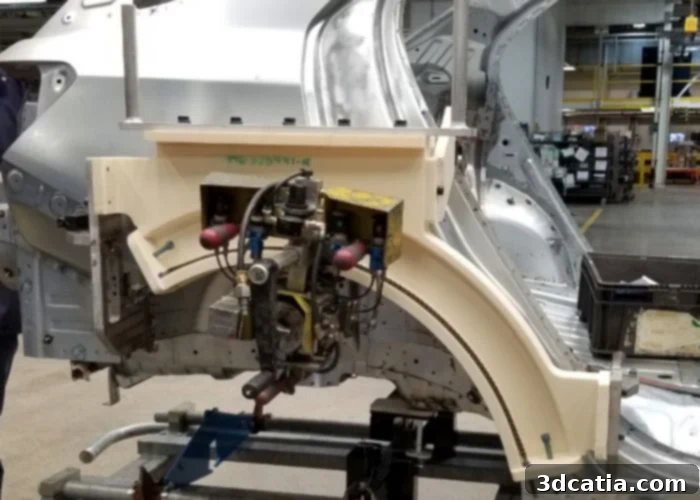
General Motors printed with an FDM rear hemming tool, resulting in 56% weight reduction, 77% lead time savings and 74% cost savings compared to the aluminum version.
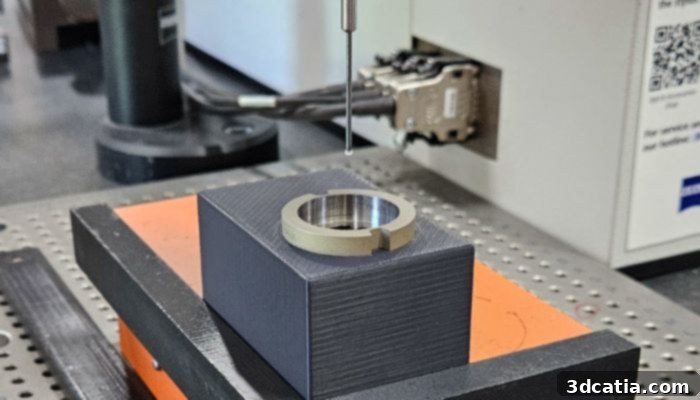
Technologies such as FDM and DLP (Digital Light Processing) are particularly well-suited for a vast spectrum of unique tooling applications. This suitability stems from their compatibility with a wide and ever-expanding range of versatile thermoplastics and photopolymers, many of which exhibit remarkable mechanical properties. Contrary to long-held misconceptions, these advanced polymeric materials can provide excellent strength, hardness, and durability comparable to, and in some cases even surpassing, certain metals for specific applications. For scenarios demanding even greater strength and stiffness, specialized carbon fiber-filled materials – such as ABS-CF10, FDM® Nylon-CF10, and FDM® Nylon 12CF – offer robust solutions that effectively meet these stringent performance needs. Moreover, certain thermoplastics like ASA (Acrylonitrile Styrene Acrylate) offer distinct advantages over metal, particularly for manufacturing Coordinate-Measuring Machine (CMM) substrates, due to their superior thermal stability and dimensional accuracy.
Real-World Impact: Transformative Case Studies in Advanced Tooling
The theoretical benefits of additive manufacturing for tooling are best understood through practical application. Let’s examine how several prominent companies have leveraged 3D printing to revolutionize their tooling processes:
Ford Motor Company: Enhancing Ergonomics and Efficiency
Ford Motor Company, a global leader in automotive manufacturing, sought a lighter and more ergonomic fixture for installing window glass on its assembly lines. Traditional metal fixtures were heavy and cumbersome, leading to operator fatigue and potential ergonomic issues. Ford engineers turned to Stratasys’ FDM technology, specifically utilizing Nylon 12CF material. This choice enabled them to 3D print a fixture that was significantly lighter yet maintained the crucial strength and rigidity required for the task. A unique advantage of 3D printing was the ability to internally reinforce the fixture with a higher material density only in critical stress areas, while keeping non-critical sections lighter. This level of material optimization is simply unachievable with conventional machining methods. The outcome was a triumph: a fixture that was 15% lighter, 70% cheaper to produce, and significantly easier for assembly line workers to use, dramatically improving ergonomics and operational efficiency.
Moog Aircraft Group: Streamlining Aerospace Inspection
Moog Aircraft Group, a key designer of sophisticated flight control systems for both commercial and military aircraft, faced challenges with its in-house CMM inspection capabilities. Previously, Moog relied on expensive tool-steel fixtures procured from third-party suppliers, which often entailed significant costs and lead times spanning several weeks. This bottleneck hindered rapid prototyping and efficient quality control. By adopting FDM 3D printing, Moog gained the ability to rapidly produce dedicated CMM holders for each machined component directly in-house. This strategic shift yielded substantial benefits in terms of production speed and cost reduction. In many instances, Moog reported savings exceeding 80% compared to their traditional fixture procurement methods, significantly enhancing their operational agility and reducing dependence on external vendors.
Valiant TMS: Optimized Hand Tools for Automotive Assembly
Valiant TMS, a company renowned for developing intelligent manufacturing automation systems for the automotive and aerospace industries, required a specialized hand tool for attaching an automotive A-pillar door latch. The effectiveness of this tool hinged on a critical combination of operator ergonomics, inherent strength, and minimal weight. Engineers at Valiant TMS concluded that 3D printing offered a superior solution compared to a machined metal alternative, which would have compromised on one or more of these essential criteria. A paramount aspect of the ergonomic design was achieving an exceptionally smooth, defect-free surface finish, combined with robust mechanical strength. Valiant TMS’s AM lab utilized Stratasys’ Origin 3D printer, employing P3™ DLP technology, which is known for producing surface finishes comparable to injection molding. They selected Dura™56 material for its rapid printing speed and excellent impact resistance. This strategic choice resulted in a remarkable 78% reduction in cost and a 79% shorter production time when compared to other additive processes, showcasing the power of combining advanced technology with optimized materials.
East/West Industries: Cost-Effective Metal Forming Dies
Beyond custom fixtures, additive manufacturing is proving invaluable for more demanding applications. East/West Industries, for instance, dramatically improved its process for creating metal forming dies. By employing the Fortus 450 3D printer with Nylon 12CF material, they achieved an astounding 80% cost savings. What previously took 8 weeks to machine was now produced in just 1 week through 3D printing. This not only accelerated their production schedule but also significantly reduced the financial burden associated with traditional die manufacturing.
General Motors: Lightweighting and Time Savings for Production Tools
General Motors exemplifies how FDM technology can transform production tooling. For a rear hemming tool, they achieved a remarkable 56% weight reduction compared to its aluminum predecessor. This weight saving directly translates to reduced operator fatigue and improved handling. Furthermore, the FDM-printed tool delivered an impressive 77% lead time savings and a 74% cost reduction, showcasing the profound impact of additive manufacturing on efficiency and expenditure in large-scale automotive production.
German Aerospace Center builds functional prototypes of a robot able to withstand the extreme conditions of Mars.
Embracing the Future of Tooling: Maximizing Potential and Overcoming Barriers
In conclusion, the advent of 3D printing with engineering-grade thermoplastics marks a pivotal moment for manufacturing. This technology now enables the production of tooling, jigs, and fixtures that are faster to acquire, more cost-effective to produce, and require less labor-intensive processes. Critically, it also unlocks unprecedented levels of customization and design freedom, leading to tools that are perfectly optimized for their intended function and user ergonomics.
Beyond these core benefits, 3D printing provides greater flexibility in material selection, facilitates the creation of highly complex geometries previously impossible to manufacture, and drastically shortens processing times. While initial hesitation may arise from a lack of experience or a natural fear of adopting new technologies, these roadblocks are quickly overcome by the tangible and strategic advantages offered by additive manufacturing. Once integrated, businesses can leverage this technology to realize substantial cost savings, significantly increase production throughput, and rapidly obtain efficient, high-performance tools tailored to their precise needs.
To delve deeper into how polymer 3D printing can fundamentally transform your tooling fixture production and to explore Stratasys’ cutting-edge technology, you can find more information HERE.
Have you already adopted 3D printing for tooling production in your operations? We invite you to share your experiences and insights in a comment below or connect with us on our LinkedIn, Facebook, and Twitter pages! Don’t forget to sign up for our free weekly Newsletter here to receive the latest 3D printing news straight to your inbox! You can also find all our informative videos on our YouTube channel.
All Photo Credits: Stratasys