
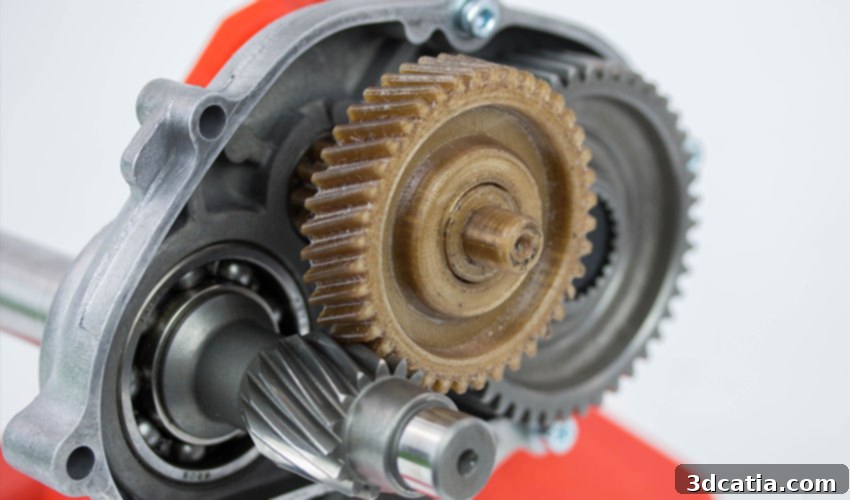
Unlocking the Potential of PEEK 3D Printing: A Deep Dive into High-Performance Polymer Applications and Metal Replacement
The landscape of additive manufacturing (AM), commonly known as 3D printing, is experiencing an unprecedented period of growth and innovation. This rapid evolution is not just about new machine capabilities, but profoundly about the development and diversification of materials. According to recent industry reports, the number of material suppliers has dramatically increased, particularly over the last two years, reflecting a surging demand for specialized filaments, resins, and powders. While metallic materials continue to lead in certain areas of innovation, the polymer sector is rapidly catching up, with high-performance polymers (HPPs) emerging as a crucial category. Among these advanced plastics, PEEK (polyetheretherketone) stands out as a material offering exceptional properties. Its unique combination of characteristics makes it highly sought after in demanding sectors such as aerospace, medical, and automotive, solidifying its position as one of the most recognized and influential materials within the 3D printing plastics industry.
PEEK is celebrated for its remarkable resistance to extreme heat, aggressive chemicals, and mechanical wear. Critically, its impressive strength-to-weight ratio allows it to effectively replace traditional materials like certain metals, providing significant advantages in weight reduction and performance optimization. Despite these compelling benefits, many companies remain largely unaware of the full potential and transformative opportunities that PEEK 3D printing can unlock across various production lines and product development cycles. To shed light on these advantages, address common misconceptions, and explore the vast possibilities, we engaged with three leading experts in advanced additive manufacturing thermoplastics. Their insights offer a comprehensive understanding of PEEK’s capabilities and its growing impact on modern manufacturing.
-

- Mateusz Sidorowicz

-
- Thomas Collet

-
- Charles Han
Our expert panel includes Charles Han, the visionary CEO of INTAMSYS. Charles embarked on his journey in 3D printing over six years ago, co-founding the company with a team of engineers dedicated to developing high-speed, high-precision additive manufacturing equipment capable of handling advanced materials. Joining him is Thomas Collet, the esteemed Director of 3D Printing Materials and Marketing within the Customized Polymer Materials Business Unit at the LEHVOSS Group. This globally recognized German company, established in 1983, stands as a leading manufacturer of sophisticated polymer materials, boasting eight years of dedicated experience in pioneering materials for the rapidly evolving 3D printing industry. Completing our panel is Mateusz Sidorowicz, Marketing Director at 3DGence. With over six years of direct experience in the additive manufacturing sector, Mateusz represents a Polish company renowned for its focus on advanced materials AM technology, distinguished by its innovative use of interchangeable print modules that enhance versatility and performance.
Unveiling the Core Properties of PEEK in 3D Printing
For industries considering the integration of PEEK 3D printing into their operations, a thorough understanding of the material’s intricate characteristics and specific processing requirements is paramount. PEEK, like many advanced thermoplastics, presents certain demands during the 3D printing process. Achieving optimal mechanical properties and structural integrity necessitates specialized equipment. For instance, it typically requires an extruder capable of reaching exceptionally high temperatures, often up to 400ºC, to properly melt and deposit the material. Furthermore, the use of 3D printers equipped with heated build chambers is highly recommended. These chambers maintain a controlled, elevated ambient temperature around the printed part, which is critical for managing thermal stresses, ensuring excellent layer adhesion, minimizing warping, and facilitating the proper crystallization of the semi-crystalline polymer structure. This controlled environment is vital for the part to achieve its desired mechanical strength, dimensional stability, and overall performance.
However, advancements in material science are continuously pushing boundaries. Dedicated PEEK materials, such as those ingeniously developed by the LEHVOSS Group, are specifically engineered to offer greater processing flexibility, even allowing for successful printing in non-heated chamber machines under certain conditions. Post-processing techniques, such as annealing of printed parts, may also be applied to further enhance mechanical properties, relieve internal stresses, and improve crystallinity. While PEEK has traditionally been most prevalent in filament form for the widely adopted Fused Filament Fabrication (FFF) process, its versatility is expanding. We are increasingly seeing PEEK slowly becoming available in powder form for the Selective Laser Sintering (SLS) process, opening new avenues for complex geometries and larger batch production.
Delving deeper into its material science, Charles Han from INTAMSYS elaborates on PEEK’s impressive specifications: “This semi-crystalline polymer exhibits a melting point of approximately 343°C, while its continuous use temperature—the maximum temperature at which it can perform reliably over an extended period—is around 260°C. PEEK’s exceptional integral properties allow it to outperform and replace conventional materials like metals and ceramics in a multitude of demanding applications. Its inherent high temperature resistance, combined with self-lubrication, superior wear resistance, and excellent fatigue resistance, collectively establish PEEK as one of the most popular and critically important high-performance engineering plastics available today.”
Mateusz Sidorowicz from 3DGence further highlights PEEK’s unique attributes: “Beyond its mechanical robustness, PEEK is also one of the rare materials that exhibits virtually no outgassing when subjected to a high vacuum environment. This particular characteristic makes it indispensable for sensitive scientific instrumentation and space applications where material stability in vacuum is non-negotiable. Furthermore, its remarkably low coefficient of friction and outstanding creep resistance contribute significantly to its utility in demanding dynamic applications, making it a top choice for components exposed to constant stress and motion where material deformation over time must be minimized. These combined properties ensure its suitability for the most critical engineering challenges.” Its chemical resistance is also noteworthy, providing resilience against a wide range of organic solvents, acids, and bases, which broadens its applicability in harsh industrial environments.
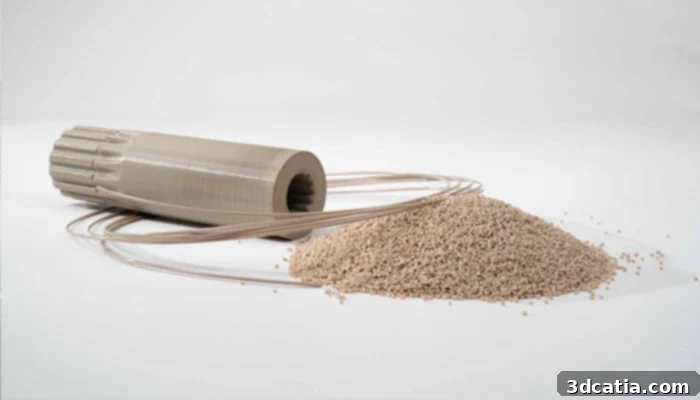
LUVUCOM PEEK by LEHVOSS Group (no need for a heated chamber for this material) | Credits: LEHVOSS Group
While this article primarily focuses on PEEK, it is essential to acknowledge another prominent high-performance material that often enters the conversation and can sometimes cause confusion: PEKK (polyetherketoneketone). Like PEEK, PEKK also belongs to the broader PAEK (Polyaryletherketone) family of polymers, sharing many excellent properties. The primary distinction between the two lies in their chemical structure, specifically the ratio of ether to ketone linkages along their polymer chains. Thomas Collet from LEHVOSS explains: “PEKK is uniquely structured as a copolymer, which provides manufacturers with greater control over its crystallinity. This chemical distinction allows for the production of PEKK materials with varying crystallinity levels, leading to different mechanical and thermal properties. Depending on the specific PEKK variant, it can offer higher melting temperatures and glass transition temperatures than PEEK. A significant advantage is the ability to produce parts that are either completely amorphous or semi-crystalline without encountering common issues like warpage, simply by selecting the appropriate PEKK material and processing parameters. However, it’s worth noting that PEKK is generally more expensive than standard PEEK, which is an important consideration for cost-sensitive applications.” Mateusz adds to the comparison, stating: “There are notable similarities in their processing conditions, which makes transitioning between the two somewhat manageable, and they even share a common range of high-performance applications. However, printing with PEKK is often considered slightly easier due to the material’s reduced propensity for deformation during the printing and cooling phases, offering a smoother production experience for certain geometries.” This flexibility in processing and tunable properties makes PEKK an attractive alternative for specific, highly specialized applications where its unique characteristics can be fully leveraged.
Key Applications: Where PEEK 3D Printing Shines
One of PEEK’s most highly valued attributes is its exceptional combination of mechanical capabilities and impressive heat resistance. These properties make it an ideal candidate for applications requiring robust, durable, and thermally stable components. Consequently, industries with stringent performance demands have rapidly adopted additive manufacturing technologies compatible with PEEK. Charles Han affirms, “PEEK’s superior properties position it as a direct replacement for traditional materials such as metals and ceramics across a wide spectrum of industries. This includes critical sectors like aerospace, where lightweight and high-temperature performance are paramount; automotive, for demanding under-the-hood components; electronics, for high-performance insulators and connectors; and particularly within medical equipment and implantable devices, due to its biocompatibility and mechanical similarity to bone.”
Expanding on specific uses, the 3DGence team offers concrete examples of where PEEK truly excels: “For manufacturing environments, spare parts for high-volume production lines are ideal candidates for PEEK 3D printing. These parts often require excellent wear resistance and dimensional stability, attributes PEEK inherently possesses. Its very low coefficient of friction is especially beneficial in such applications, reducing wear on mating surfaces and extending part lifespan, thereby minimizing downtime and maintenance costs. Furthermore, laboratories and universities engaged in research that requires high vacuum environments can produce custom-designed parts for their equipment without concerns about outgassing, ensuring the integrity of their experiments. Moreover, PEEK is unequivocally the material of choice for the highly demanding oil & gas and aerospace industries, where components must withstand extreme pressures, corrosive chemicals, and fluctuating temperatures without compromising performance. Specific aerospace applications include brackets, clips, and interior components, while in oil & gas, PEEK is used for seals, valves, and pump components due to its resistance to hydrocarbons and high temperatures.”
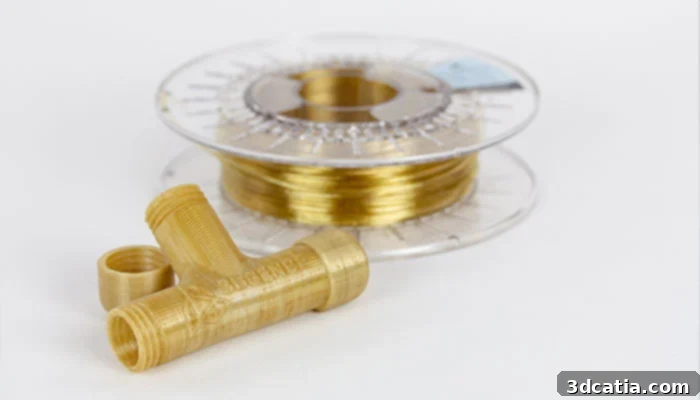
PEKK has some similar properties to PEEK | Credits: 3DGence
PEEK vs. Metal: Making the Right Material Choice for Your Company
The extraordinary strength and performance characteristics of materials like PEEK have empowered numerous companies to strategically replace traditionally metal parts with components produced using PEEK 3D printers. This trend sparks a critical question for many enterprises contemplating the adoption of PEEK additive manufacturing: Is it truly cost-effective and beneficial to substitute a metal component with one fabricated from a high-performance polymer? This is a fundamental consideration, moving beyond mere material cost to encompass total lifecycle costs, performance gains, and manufacturing efficiencies. Thomas Collet from LEHVOSS Group addresses this directly: “PEEK is widely regarded as a quintessential metal replacement material, primarily due to its exceptional performance envelope. Like all advanced polymers, it offers a monumental advantage in weight saving compared to metals, which is invaluable in sectors where every gram counts, such as aerospace and automotive. As an additional and significant benefit, PEEK delivers outstanding tribological properties—meaning it exhibits excellent friction, wear, and lubrication characteristics. This makes it superior to many metals in applications involving moving parts where reduced friction and extended component life are critical.”
Beyond direct mechanical comparison, the advantages of PEEK extend into areas where metals fall short. For instance, PEEK offers inherent corrosion resistance, electrical insulation capabilities, and damping properties that can reduce noise and vibration, making it suitable for environments where metals would require additional coatings or design modifications. The design freedom afforded by 3D printing also allows for optimization of part geometries that are impossible or prohibitively expensive with traditional metal manufacturing methods, leading to parts with superior performance and functionality at lower overall system costs.
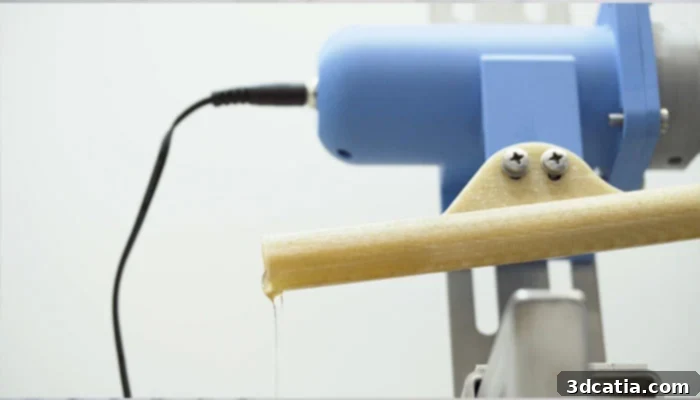
Oil separator created with PEEK 3D printing | Credits: 3DGence
Charles Han provides a compelling, concrete example demonstrating the superiority of PEEK 3D printing over traditional metal materials, particularly in the medical field: “In the specialized domain of medical implants, the elastic modulus of PEEK closely mimics that of human cortical bone. This physiological compatibility is crucial because it promotes osseointegration, facilitating a natural bond between the implant and the surrounding bone tissue. This harmonious interaction minimizes stress shielding—a phenomenon where stiffer metal implants bear too much load, causing the bone to weaken—thereby ensuring the long-term stability and success of PEEK implants within the body.” Indeed, as highlighted in previous discussions, the inherent biocompatibility of PEEK implants, coupled with their radiolucency (allowing clearer imaging without artifact interference), represents an immense and often unparalleled benefit to the medical sector, leading to better patient outcomes and innovative surgical solutions.
The past few years have clearly demonstrated a consistent and accelerating increase in the number of additive manufacturing applications leveraging PEEK. This growing adoption signals a broader recognition within various industries of PEEK’s tangible benefits and vast potential. We anticipate this positive trend will not only continue but accelerate as more sectors fully comprehend the strategic advantages of integrating this high-performance polymer into their design and production processes. “What we observe among our diverse customer base is a serious and active consideration of PEEK 3D printing as a viable, often superior, alternative to conventional manufacturing methods,” Thomas Collet concludes. This widespread re-evaluation underscores a paradigm shift in material selection and manufacturing strategies, driven by PEEK’s unmatched combination of performance, design flexibility, and efficiency.
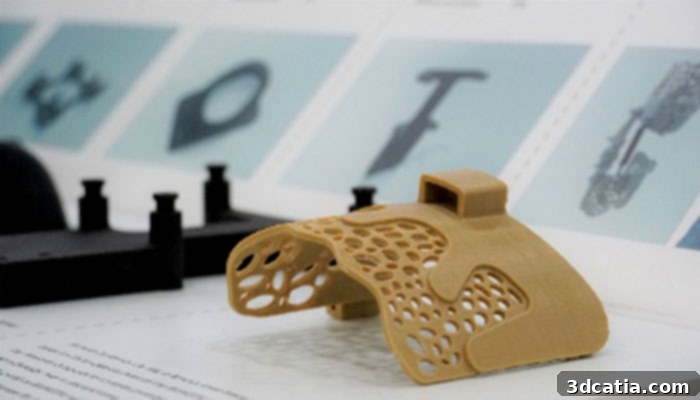
Medical devices can be 3D printed with PEEK | Credits: INTAMSYS
Are you interested in exploring the transformative potential of PEEK 3D printing for your specific industry or application? We invite you to share your insights and questions in the comments below or engage with our community on our Facebook and Twitter pages! Don’t miss out on the latest advancements and news in additive manufacturing—sign up for our free weekly Newsletter to receive all the essential updates directly in your inbox!