
Formnext 2023 Review: Key Trends Shaping the Future of Additive Manufacturing and Industrial 3D Printing
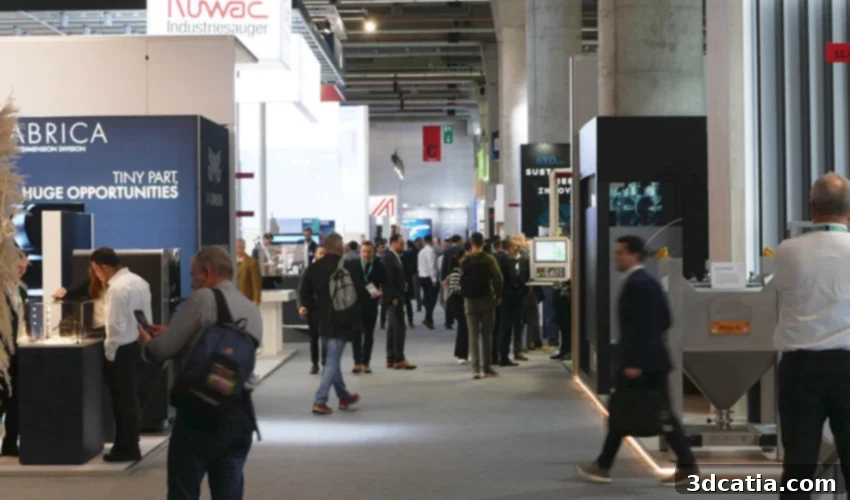
Formnext 2023, the premier global exhibition and conference for additive manufacturing and industrial 3D printing, once again captivated the industry, closing its doors last Friday after an immensely successful run. This annual gathering served as a vibrant nexus for professionals, manufacturers, innovators, and enthusiasts, fostering thousands of hours of invaluable exchanges, unveiling groundbreaking product launches, announcing strategic new partnerships, and showcasing hundreds of state-of-the-art machines. Despite the prevailing geopolitical complexities, Formnext 2023 emphatically demonstrated the resilience and robust growth of the additive manufacturing sector, impressively reaching attendance and exhibitor figures comparable to pre-pandemic levels. The event attracted a total of 859 exhibitors, with a substantial 60% hailing from international markets, highlighting the truly global scope of the industry. These exhibitors presented innovative solutions tailored for diverse critical verticals, including the rapidly expanding medical, transport, and defense sectors. As the dust settles and the machines are carefully repacked, a clearer picture emerges of the pivotal trends that dominated Formnext 2023 and the significant takeaways that will undoubtedly shape the future trajectory of additive manufacturing. This comprehensive review delves into the most impactful developments and discussions from this landmark event, offering insights into where the industry is heading.
Building on the momentum of previous years, Formnext 2023 saw a notable surge in participation, surpassing 2022 figures with an additional fifty exhibitors, totaling an impressive roster of 859 companies. The vibrancy of the exhibition halls was further underscored by a significant increase in visitor numbers, reaching 32,851 attendees – an encouraging 11.1% rise from the previous year. Across the four expansive exhibition halls, a prominent theme emerged: the prevalence and sophistication of hybrid manufacturing solutions. This trend unequivocally demonstrated that an increasing number of manufacturers are strategically embracing the combination of additive manufacturing with traditional machining or other established production processes. While the complementary nature of these technologies has been recognized for some time, Formnext 2023 solidified this understanding, showcasing how seamlessly additive manufacturing can be integrated into a broader manufacturing ecosystem. The industry’s evolving focus is clearly on comprehensive, all-in-one solutions that streamline production workflows, enhance efficiency, and unlock new capabilities. This strategic shift was evident in the abundance of machines designed for rapid tool-head changes, allowing for agile transitions between additive and subtractive operations. Furthermore, the ubiquitous presence of advanced robotic arms highlighted the increasing demand for automation and integrated systems that minimize manual intervention and optimize precision across various manufacturing stages. These hybrid systems are not merely a fusion of technologies; they represent a holistic approach to manufacturing, promising unprecedented levels of design freedom, material efficiency, and production flexibility, ultimately paving the way for more innovative and cost-effective product development.
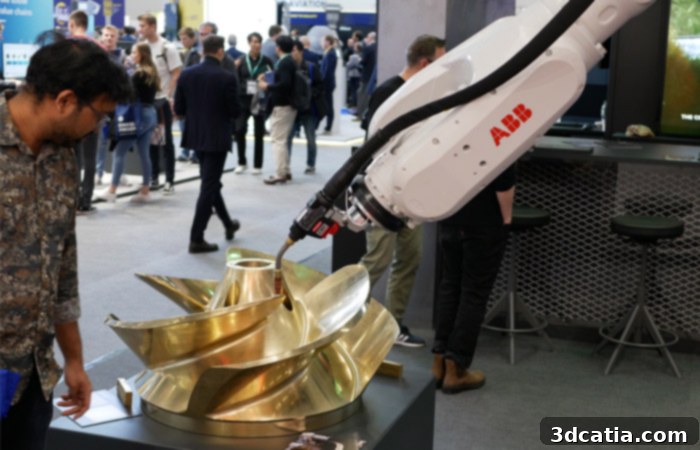
Robotic arms were in abundance this year, signaling increased automation in AM.
Beyond the integrated hybrid systems, another compelling innovation that captured attention was the manual injection press showcased by HoliMaker. Their HoliPress machine represents a fascinating convergence of traditional and additive manufacturing, designed to melt plastic granules and inject them into molds. Crucially, this system is perfectly compatible with 3D-printed molds, underscoring the powerful synergy between these two distinct manufacturing processes. The ability to rapidly produce molds using 3D printing significantly reduces lead times and costs associated with traditional tooling, enabling faster iteration and customization in injection molding applications. This complementary relationship was a recurring theme throughout Formnext 2023, with numerous exhibitors demonstrating enhanced 3D printing applications for casting and various types of molds. Furthermore, the broader landscape of pellet 3D printing garnered substantial buzz this year. Pellet materials, often more cost-effective and available in a wider range of engineering grades than filaments, are increasingly becoming a preferred choice for large-format and industrial additive manufacturing. We observed a notable increase in dedicated machine manufacturers specializing in pellet 3D printing solutions compared to previous editions, indicating a maturing market and growing confidence in the technology’s potential for sustainable and high-volume production. This shift towards pellets offers manufacturers greater material versatility, reduced material costs, and the ability to process recycled plastics, aligning perfectly with the industry’s broader focus on sustainability and efficiency.
Formnext 2023 also served as a comprehensive showcase for the vast and evolving world of additive manufacturing materials. Exhibitors specializing in a diverse array of materials, including advanced filaments, meticulously engineered powders, high-performance resins, flexible silicones, and robust ceramics, demonstrated the breadth of possibilities for various industrial applications. However, a particularly striking observation this year was the heightened emphasis on sophisticated machines and technologies dedicated to material characterization, with a distinct focus on powders and their associated manufacturing processes. This trend highlights the industry’s growing maturity and its imperative for stringent quality control and process optimization. We had the opportunity to speak with Dr. André Klicpera from Microtrac MRB, a recognized leader in powder characterization solutions for additive manufacturing. He emphasized the critical role of their work, stating, “3D printing is one of the biggest sectors where we are seeing the need for this work since both size and shape of the particles is so important for quality control. This is used for metals, polymers and even ceramics. And we are just seeing the demand grow and grow. Research and development as well is a major field for this type of work.” This insight underscores that precise characterization of material properties, such as particle size distribution and morphology, is fundamental to ensuring the consistency, reliability, and performance of 3D printed parts across all material types. Furthermore, the importance of material characterization extends directly to the burgeoning field of powder recycling. In an era where sustainability and circular economy principles are paramount, the ability to accurately assess and re-qualify recycled powders is crucial for reducing waste, optimizing resource utilization, and driving environmentally responsible additive manufacturing practices. This focus on material science and rigorous quality assurance reinforces the industry’s commitment to delivering high-quality, repeatable results for demanding industrial applications.
Machines and Printing Speed: Accelerating Additive Manufacturing
The exhibition halls of Formnext 2023 were a vibrant panorama of 3D printing machines, spanning an impressive spectrum of sizes and capabilities. From monumental large-format systems to incredibly precise micro-printing solutions, the diversity was astounding. Companies like BigRep and Hage3D, notably announcing their strategic merger, showcased colossal parts and equally impressive machines, signaling continued advancements in industrial-scale additive manufacturing for applications requiring significant build volumes. Conversely, innovators such as UpNano demonstrated the cutting edge of micro-printing, opening doors for intricate designs in fields like medical devices and micro-electronics. However, a particularly salient observation this year was the renewed prominence and sheer volume of FDM (Fused Deposition Modeling) desktop solutions. These weren’t just standard desktop printers; they were advanced systems specifically engineered to deliver significantly higher print speeds. This resurgence indicates a clear market demand for rapid, repeatable, and accessible 3D printing capabilities, reflecting the evolving needs of both professional users and prosumers. The drive for speed is not merely about novelty; it’s a critical factor in accelerating design iterations, producing functional prototypes faster, and even enabling the efficient production of end-use parts, thereby shortening product development cycles and time-to-market.
The industry’s collective pursuit of speed was vividly illustrated by several key players. The immense popularity surrounding Bambu Lab’s offerings, known for their groundbreaking print speeds and multi-material capabilities, clearly demonstrated the market’s appetite for rapid and efficient desktop 3D printing. This sentiment was echoed by major manufacturers like Creality, who unveiled new machines boasting impressive speed enhancements, catering to a user base increasingly focused on productivity without compromising quality. The innovation wasn’t limited to hardware; material manufacturers are also rising to the challenge. Polymaker, a leading name in 3D printing filaments, proudly showcased its high-speed filament range, PolySonic™ PLA. This specialized material is meticulously engineered to perform optimally at elevated print speeds, minimizing common issues like extrusion inconsistencies and layer adhesion problems, thus ensuring reliable and high-quality results even under accelerated printing conditions. This concerted effort from both machine and material developers underscores a fundamental shift in user expectations, where speed and efficiency are becoming as crucial as precision and material variety in the desktop 3D printing landscape.
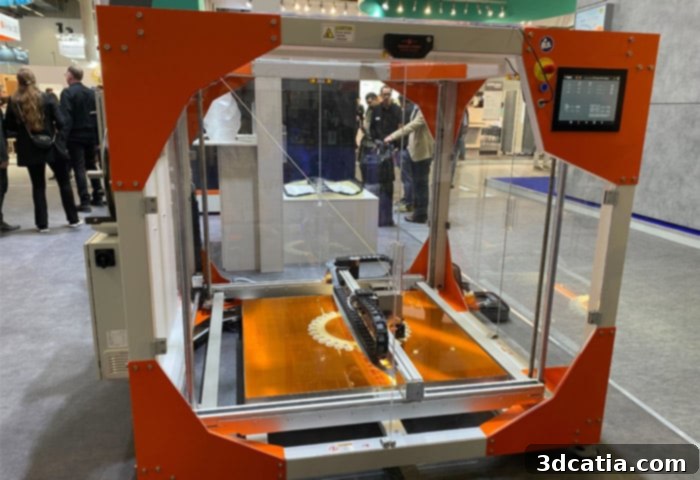
BigRep’s large-format 3D printer showcased impressive industrial scale capabilities.
Shifting focus to the industrial segment, Stratasys, a titan in the additive manufacturing space, made a significant announcement with the unveiling of its latest extrusion 3D printing solution, the F3330. This industrial-grade system represents a substantial leap forward in production capabilities, boasting speeds twice as fast as comparable models currently available in the market. The F3330 is engineered for high throughput and reliability, featuring multiple extruders that enable complex multi-material or multi-color prints, as well as significantly enhanced efficiency. A redesigned head movement mechanism further contributes to its exceptional reliability and precision, crucial for demanding industrial applications where consistency is paramount. All these advanced features are integrated within a generously sized print volume of 600 x 600 x 800 mm, allowing manufacturers to produce large, complex parts or batch-produce smaller components with unprecedented speed and accuracy. This unveiling by Stratasys highlights the ongoing evolution of industrial FDM technology, pushing the boundaries of what’s possible in terms of speed, scale, and part quality for end-use parts and production tools.
Artificial Intelligence on Show at Formnext 2023: Beyond the Buzzword
During any extensive tour through the bustling aisles of Formnext 2023, it was virtually impossible to miss the pervasive presence of “Artificial Intelligence” banners and slogans adorning numerous exhibitor stands. This signifies a clear and accelerating trend within the additive manufacturing industry: an increasing number of companies are actively integrating AI principles and technologies into their offerings. The fundamental appeal of AI lies in its capacity to enable machines to mimic human cognitive functions, leading to significant reductions in manual human intervention, optimization of complex processes, and ultimately, a substantial decrease in labor costs. While artificial intelligence continues to be a subject of vigorous debate, particularly concerning its ethical implications and societal impact, its transformative potential as a powerful tool across all industrial sectors remains undeniable. However, the omnipresence of AI as a ‘buzzword’ also necessitated a discerning eye, prompting attendees to look beyond the hype and evaluate the concrete applications and true technological depth behind these claims.
Despite the potential for superficial claims, Formnext 2023 showcased several genuinely innovative applications that leverage AI and machine learning to deliver tangible benefits in additive manufacturing. A standout example was the Australian company Automation Acoustics, which is pioneering the development of highly sophisticated sensors capable of detecting defects in 3D printed parts. What makes their approach unique is its reliance on acoustic signatures; these sensors analyze the subtle sounds emitted by the 3D printing machine during operation. Backed by seven years of intensive research and extensive data collection from listening to the operational noises of various manufacturing machines, their technology can identify anomalies indicative of potential print failures or material defects in real-time. This proactive defect detection capability is revolutionary, enabling early intervention, reducing material waste, and significantly improving part quality. Currently, Automation Acoustics is concentrating its efforts on Direct Energy Deposition (DED) and Wire Arc Additive Manufacturing (WAAM) solutions, areas where precise process control and defect prevention are particularly critical due to the scale and complexity of the parts being produced. This innovative use of AI transforms raw auditory data into actionable intelligence, showcasing the practical power of machine learning in advanced manufacturing.
Further demonstrating the practical application of AI, the software domain also presented compelling solutions. The PRINT&GO solution, for instance, exemplifies how artificial intelligence can optimize the additive manufacturing workflow. This intelligent software leverages AI algorithms to diligently detect printing errors as they occur, providing real-time feedback and potentially even autonomous adjustments to mitigate issues. Beyond error detection, PRINT&GO is designed to systematically gather and analyze comprehensive data on every print job. The overarching objective of collecting this rich dataset is multi-faceted: it aims to foster a deeper understanding of machine behavior under various operating conditions, thereby facilitating more predictable and reliable outcomes. Furthermore, by identifying patterns and optimizing parameters, the solution significantly streamlines the entire workflow, from design to final part. Ultimately, this AI-driven approach contributes directly to increased productivity, reduced waste, and enhanced quality control across the additive manufacturing process, moving the industry closer to truly intelligent and autonomous production.
Formnext 2023 Focuses on Verticals and Local Production
A compelling and increasingly evident trend at Formnext 2023 was the profound emphasis on application-specific additive manufacturing. It is widely acknowledged that additive manufacturing truly unlocks its full transformative potential when tailored to meet the unique demands and requirements of specific industries and use cases. While previous Formnext editions have certainly showcased a variety of demonstrator parts and their potential applications, this year saw an even more pronounced and sophisticated focus on the ‘applications dimension’. Exhibitors moved beyond generic demonstrations, presenting highly specialized components and integrated solutions designed explicitly for particular industrial verticals. This strategic shift highlights the maturation of additive manufacturing, transitioning from a general-purpose technology to a suite of highly refined tools capable of solving complex challenges within specialized sectors. The strong focus on different verticals underscores the industry’s commitment to providing targeted, high-value solutions that address specific market needs, from performance enhancement to supply chain optimization.
Reflecting this vertical-centric approach, Formnext 2023 shone a particularly bright spotlight on the automotive sector, as detailed in a previously dedicated article. A specially curated area, organized in close collaboration with industry giant Daimler, featured a remarkable array of additive manufacturing solutions and parts specifically designed for automotive applications. This dedicated space underscored how 3D printing is revolutionizing vehicle design, prototyping, tooling, and even end-use component production, leading to lighter, more efficient, and customizable vehicles. The medical sector also received significant attention, with numerous exhibitors showcasing groundbreaking innovations in healthcare. From patient-specific implants and prosthetics to advanced surgical tools and biocompatible devices, additive manufacturing is transforming medical care, offering unprecedented levels of customization and functional complexity. Furthermore, the show’s organizers made a concerted effort to emphasize the critical importance of the defense and aeronautics sectors. These industries, driven by rigorous performance standards, lightweighting imperatives, and complex geometries, are increasingly relying on additive manufacturing for high-performance components, rapid prototyping, and sophisticated repair solutions, highlighting AM’s strategic value in critical national infrastructure and security.
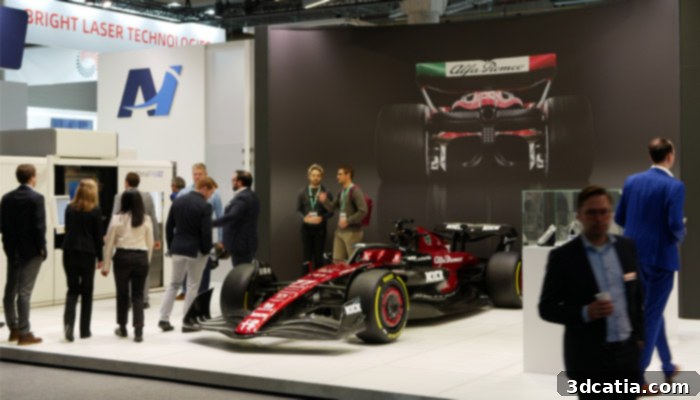
Automotive applications took center stage at Formnext 2023.
Another significant takeaway from Formnext 2023 was the undeniable emphasis on fostering local manufacturing capabilities. This global event increasingly featured dedicated zones and pavilions highlighting additive manufacturing ecosystems within specific countries or regions. This year, the Nordic countries were prominently in the spotlight, showcasing their unique contributions and innovations. Beyond this, there were distinct areas dedicated to the USA, Australia, and Canada, alongside specific zones for South Korea and China, among a multitude of others. This growing trend towards localized focus underscores a broader industry shift driven by several factors. Conversations with various technology users revealed a strong preference and strategic necessity for finding local partners. This desire is rooted not only in social considerations, such as supporting local economies and fostering closer collaborative relationships, but also in critical environmental concerns. Localized production significantly reduces complex global supply chains, thereby decreasing transportation costs and carbon footprints, enhancing supply chain resilience, and allowing for faster responses to market demands. This dual benefit of social responsibility and environmental sustainability, coupled with economic advantages like reduced lead times and greater customization, positions local manufacturing as a key strategic pillar for the future of additive manufacturing.
In conclusion, Formnext 2023 unequivocally reaffirmed the deep and expanding interest in additive manufacturing across the entire industrial landscape. Despite the current geopolitical tensions, which inevitably ripple through global markets, the additive manufacturing sector proved its remarkable dynamism and continued robust growth. This resilience was visibly demonstrated by the diverse strategies of exhibitors: while some opted to optimize their presence with more focused, albeit smaller, stands, many others significantly expanded their exhibition spaces, and a considerable number of new companies chose Formnext as their platform to make their mark. This nuanced picture reflects an industry in a pivotal phase of evolution, characterized by both strategic adaptation and ambitious expansion. The coming months are poised to be decisive for many players within this rapidly advancing sector, as they navigate technological advancements, market demands, and global economic shifts. The collective enthusiasm, innovation, and strategic foresight displayed at Formnext 2023 leave us eagerly anticipating next year’s event, scheduled between November 19 and 22, confident that the additive manufacturing revolution will continue its impressive trajectory.
Were you at Formnext 2023? What did you think of the event? Let us know in a comment below or on ourLinkedIn,Facebook, andTwitter pages! Don’t forget to sign up for our free weeklyNewsletter here, the latest 3D printing news straight to your inbox! You can also find all our videos on ourYouTube channel.
*All Photo Credits: 3Dnatives