
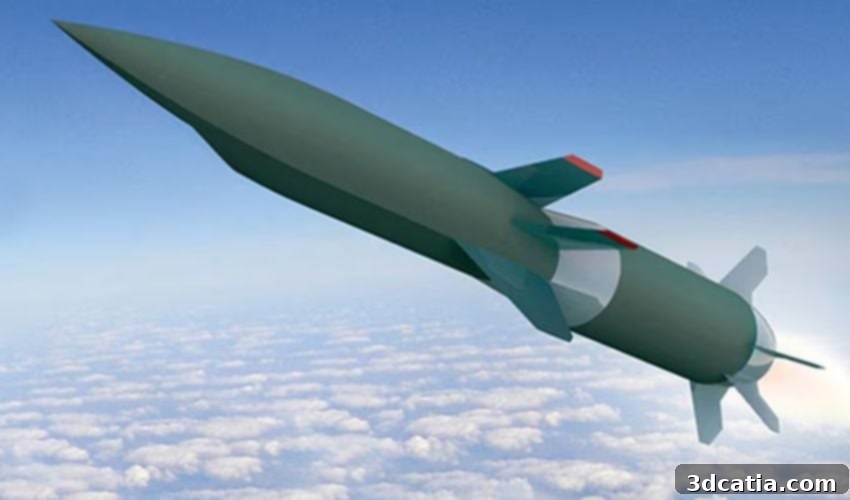
3D Printing in Defense: Pioneering Hypersonic Weapons and Submarine Manufacturing
The United States Department of Defense (DoD) has a long and evolving history with additive manufacturing, strategically integrating this cutting-edge technology into the design and production of its most advanced weapon systems and vehicle platforms. This embrace of 3D printing signifies a transformative shift in military procurement and development, aiming to enhance capabilities, streamline supply chains, and accelerate innovation. One prominent example of this integration is the crucial collaboration between Newport News Shipbuilding and General Dynamics Electric Boat (GDEB). This partnership is embedding additive manufacturing directly into the rigorous construction process of the Virginia-class nuclear submarines, a move primarily driven by the imperative to address persistent supply chain shortages and bolster production efficiency for these vital naval assets. Beyond the depths of the ocean, the Pentagon’s ambitions extend to the skies, as recently highlighted by Defense News. The DoD has announced its intention to leverage 3D printing extensively within its groundbreaking Hypersonic Air-breathing Weapon Concept (HAWC) program. This ambitious initiative specifically targets the fabrication of direct-flow air-jet engines, critical components found in a wide array of aerial platforms, from advanced aircraft to sophisticated missiles. These engines represent a pinnacle of engineering, distinguished by their extraordinary capacity to achieve and sustain speeds exceeding Mach 24 – an astonishing velocity of over 18,400 mph (29,000 kph).
The strategic importance of additive manufacturing in defense cannot be overstated. According to Keith DeVries, the deputy director of the Office of the Secretary of Defense’s Manufacturing Technology Program, this technology is poised to revolutionize the development of new military systems. By enabling the rapid and precise creation of exceptionally complex components, 3D printing significantly accelerates prototyping cycles and shortens lead times for critical parts. DeVries emphasizes that recent advancements in additive manufacturing technologies are particularly impactful. He notes, “these manufacturing techniques create objects from high-entropy metals that are particularly strong and stand up to wear and tear, using lasers to melt metals that can withstand high temperatures and allowing more complex shapes to be crafted.” This capability to work with high-performance, temperature-resistant alloys and to form intricate geometries previously deemed impossible through traditional methods unlocks unprecedented design freedom and functional integration for next-generation defense applications.
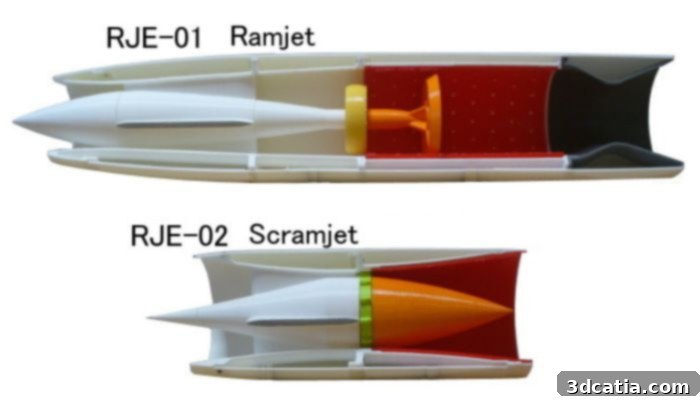
Visual representation of the differences between the U.S. Army’s traditional Ramjet engines and the innovative Scramjet engines manufactured with 3D printing (photo credits: Cults3D)
A cornerstone application for this advanced technology, as highlighted by DeVries, lies in the creation of Scramjet propulsion systems. These engines are fundamental to achieving sustained hypersonic flight and present formidable manufacturing challenges. Scramjet engines are characterized by their extremely complex internal chambers and precise geometries, which are notoriously difficult and costly to produce using conventional fabrication methods. Historically, the intricate nature of these components has been a significant bottleneck in the development and deployment of hypersonic vehicles. However, with the advent of 3D printing, the entire paradigm of manufacturing these engines is undergoing a profound transformation. Additive manufacturing offers the precision and versatility needed to construct these highly specialized components with unprecedented accuracy. The integration of these systems is already taking place in cutting-edge programs, such as the Hypersonic Air-breathing Weapon Concept (HAWC), signaling a new era for defense capabilities. DeVries further explains that additive manufacturing technology empowers engineers to fabricate Scramjet components from advanced metals capable of withstanding extremely high temperatures directly, eliminating the need for the complex and labor-intensive welding processes that are inherent to traditional manufacturing techniques. This not only simplifies production but also significantly enhances the integrity and performance of the finished components, crucial for the extreme operational demands of hypersonic flight.
The operational advantages of 3D printing technologies extend far beyond mere component creation; they fundamentally accelerate the entire part manufacturing process, particularly where complex assemblies are concerned. In traditional manufacturing, components that rely on intricate welded joints demand extensive expert approval and rigorous non-destructive testing to ensure their structural reliability and performance under extreme conditions. This multi-stage validation process can be incredibly time-consuming, expensive, and often introduces significant delays into critical production timelines. In stark contrast, parts produced through additive manufacturing often circumvent many of these traditional hurdles. The inherent nature of 3D printing—building parts layer by layer directly from a digital design—means that many complex geometries, which would otherwise require multiple components to be joined, can be fabricated as a single, monolithic piece. This eliminates the need for creating separate joints, drastically reducing the necessity for time-consuming and tedious testing procedures traditionally associated with welded assemblies. The result is a much faster path from design to deployment, a critical factor in rapidly evolving defense landscapes. While the benefits of 3D printing seem overwhelmingly positive for manufacturing processes, Keith DeVries offers a crucial perspective, advocating for a judicious and strategic implementation of these technologies. He believes that additive manufacturing should be utilized organically and with a clear purpose, emphasizing that it ought to be deployed only where its unique capabilities can deliver maximum benefits and solve specific, complex challenges, rather than serving as a universal replacement for all existing manufacturing methods. This approach ensures that resources are optimized and that the technology is applied where it provides the most significant strategic advantage.
The adoption of additive manufacturing in the defense sector is not merely about technological advancement; it’s about building a more resilient, agile, and cost-effective defense industrial base. For complex platforms like the Virginia-class submarines, where thousands of unique parts are required, 3D printing offers a pathway to on-demand production of critical components, reducing reliance on external suppliers and vulnerable global supply chains. This localized manufacturing capability enhances national security by ensuring a steady flow of parts, even in times of geopolitical instability. For hypersonic weapons, the advantages are even more pronounced. The extreme operating environments of these systems demand materials and designs that push the boundaries of conventional engineering. 3D printing, especially with high-entropy alloys, provides the ability to create components that can withstand incredible temperatures and pressures, enabling the development of propulsion systems like Scramjets that are otherwise impossible to mass-produce efficiently. Furthermore, the iterative design capabilities offered by additive manufacturing allow for rapid prototyping and testing, dramatically shortening the research and development cycles for these revolutionary weapons. This means that improvements and new designs can be implemented and validated much faster, keeping pace with evolving threats and technological breakthroughs.
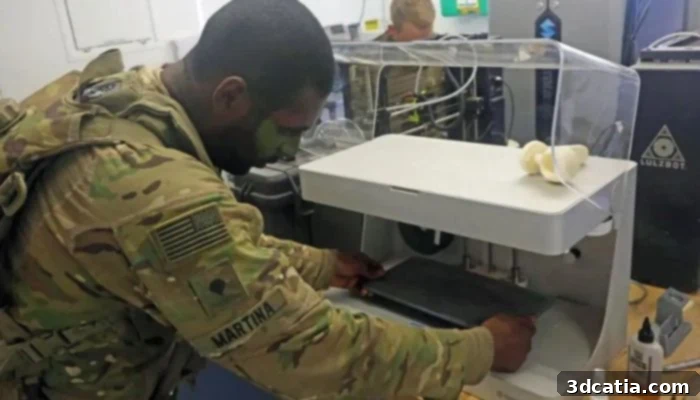
The U.S. Department of Defense has consistently demonstrated its commitment to adopting diverse 3D printing processes across various branches of the US armed forces (photo credits: Defense Media Network)
The strategic deployment advocated by Keith DeVries implies a careful consideration of where additive manufacturing truly shines. While it offers unparalleled advantages for custom, complex, and high-performance components, it may not always be the most economical or efficient solution for simpler, high-volume parts traditionally produced by casting or machining. The DoD’s approach is therefore nuanced, focusing on integrating 3D printing in areas where it addresses critical vulnerabilities, enhances performance, or unlocks entirely new capabilities. This includes not only direct production but also rapid repair solutions in forward operating environments, enabling military personnel to print replacement parts on-site, significantly reducing downtime and logistics burdens. The emphasis on qualification and certification of 3D printed parts for military use remains paramount, ensuring that every component meets the stringent safety and performance standards required for defense applications. This rigorous process, while essential, is continuously evolving as the technology matures and becomes more reliable. Ultimately, the DoD’s investment in 3D printing is a testament to its commitment to maintaining technological superiority and ensuring the readiness of its forces in an increasingly complex global landscape. It marks a paradigm shift from traditional mass production to agile, precision manufacturing, shaping the future of defense for decades to come.
What are your thoughts on the transformative use of 3D printing in the creation of these advanced hypersonic weapons and critical naval components? We invite you to share your insights and comments below or engage with us on our LinkedIn, Facebook, and Twitter pages! Don’t miss out on the latest advancements and breaking news in the additive manufacturing world – sign up for our free weekly Newsletter here to receive direct updates to your inbox. You can also explore all our informative videos and engaging content on our YouTube channel.
*Cover Photo Credits: Defensenews