
Revolutionizing Industries: Latest Advancements in 3D Printing and Additive Manufacturing
In this comprehensive edition of #3DExpress, we delve into a series of groundbreaking developments that are rapidly reshaping various industries through additive manufacturing. From critical naval applications ensuring national security to innovative medical solutions enhancing patient well-being, the scope and impact of 3D printing continue to expand. This week, we highlight the historic installation of a 3D printed metal valve manifold on a U.S. Navy aircraft carrier, signifying a major leap in defense technology. We’ll also explore how Eplus3D has unlocked the potential for large-scale copper additive manufacturing, a game-changer for high-performance applications. Discover how 3D scanning is streamlining boat maintenance, offering unprecedented accuracy and efficiency. Furthermore, we examine Bosch’s significant investment in a new center for additive manufacturing to bolster its automotive sector presence in Europe, and celebrate a major medical breakthrough by Lattice Medical with its 3D printed breast prostheses. These stories collectively underscore the transformative power of additive manufacturing, pushing the boundaries of what’s possible and paving the way for more efficient, sustainable, and innovative solutions across the globe. Join us as we explore these exciting advancements and their far-reaching implications.
The First-Ever Installed 3D-Printed Valve Manifold on a U.S. Navy Aircraft Carrier Marks a New Era for Naval Shipbuilding
A landmark achievement in defense additive manufacturing has been announced by DM3D Technology, a pioneer in direct metal deposition (DMD) additive manufacturing. For the first time ever, an additively manufactured valve manifold assembly has been successfully installed on a U.S. Navy aircraft carrier at Newport News Shipbuilding (NNS). This significant milestone underscores the growing adoption and trust in 3D printed components for critical maritime applications.
Newport News Shipbuilding has long been at the forefront of embracing advanced manufacturing technologies. Their commitment to innovation is evident in their previous integration of 3D printed components into new nuclear submarines and their dedicated efforts to develop advanced Copper-Nickel (CuNi) and Nickel-Copper (NiCu) alloy powders specifically for 3D printing. These materials are highly valued for their exceptional suitability for demanding maritime environments, offering superior corrosion resistance and mechanical strength vital for naval vessels.
The recently installed component, a valve manifold assembly, is crucial for distributing a single source of fluid to multiple points throughout a ship. This particular assembly was produced using cutting-edge metal 3D printing techniques and has been integrated into a pump room aboard the Gerald R. Ford-class aircraft carrier Enterprise (CVN 80). The successful installation on such a sophisticated vessel represents a significant validation of additive manufacturing’s reliability and potential for naval applications.
Dave Bolcar, NNS Vice President of Engineering and Design, emphasized the rapid progression and impact of this initiative, stating, “What started as a proof of concept quickly turned into a tangible result that is making a meaningful difference to improve efficiencies in shipbuilding.” He further elaborated on the broader implications, highlighting that “The benefits of this innovation will extend well beyond Enterprise (CVN 80), as we incorporate our expertise in additive manufacturing into the fundamentals of shipbuilding.” This statement signals a future where 3D printing could become a standard practice in naval construction, offering advantages in design flexibility, faster production cycles, optimized supply chains, and reduced material waste. The ability to rapidly produce complex, custom parts on demand could significantly enhance the readiness and maintenance capabilities of the U.S. Navy fleet, promising a new era of efficiency and technological superiority in naval engineering.
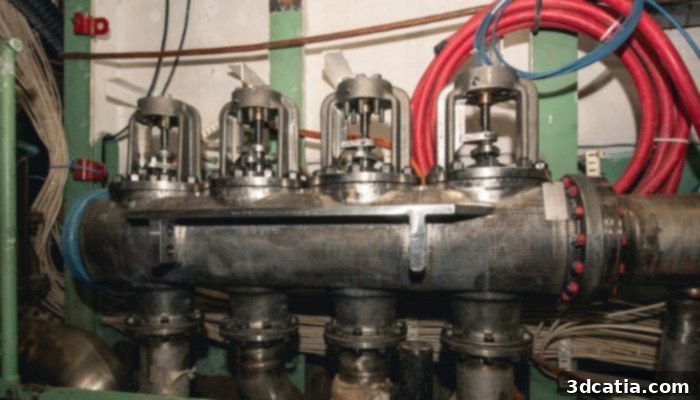
The 3D printed valve manifold assembly successfully installed in the pump room on the Gerald R. Ford-class aircraft carrier Enterprise (CVN 80) (Photo credits: DM3D Technology)
Eplus3D Unveils Meter-Scale, Red-Laser Copper AM: A Breakthrough for High-Performance Applications
The recent TCT Asia 2025 event, a prominent gathering in the additive manufacturing sector, showcased numerous incredible advancements, reflecting the booming Asian AM market. Among the most notable revelations was Eplus3D’s groundbreaking capability for large-scale 3D printing of pure copper and its alloys. Building upon the robust foundation of its successful 64-laser EP-M2050 system, Eplus3D has now introduced an advanced red-laser technology that effectively addresses the inherent challenges of copper additive manufacturing.
Copper, known for its exceptional thermal and electrical conductivity, has historically been a notoriously difficult material to 3D print. Its high reflectivity to traditional infrared lasers (commonly used in metal PBF systems) and low energy absorption often lead to process instability, poor material properties, and limited print quality. Eplus3D has ingeniously overcome these hurdles with its proprietary red-laser technology. This innovative solution is fully compatible with the company’s existing large-format, multi-laser metal powder bed fusion (PBF) machines, including the acclaimed EP-M2050, EP-M1550, and EP-M1250 series.
To demonstrate the efficacy of this new technology, Eplus3D proudly displayed several large parts at TCT Asia. A standout example was a φ1030×175 mm CuCrZr (Copper-Chromium-Zirconium) impeller, which boasted an impressive density of 99.97%. Crucially, this high density was achieved while retaining copper’s critical thermal and electrical conductivity properties, making it an ideal material for demanding industrial applications. The ability to 3D print meter-scale copper parts with such high precision and material integrity opens up vast possibilities across several high-tech sectors.
Industries such as aerospace, automotive, and electronics stand to benefit immensely from this advancement. In aerospace, meter-scale copper parts could revolutionize the design and manufacturing of heat exchangers, rocket engine components, and electrical systems where thermal management and lightweighting are paramount. For the automotive sector, applications include advanced battery cooling systems, high-efficiency motor windings, and intricate heat sinks. In electronics, the precision and conductivity offered by 3D printed copper can lead to superior interconnects, passive components, and thermal management solutions for high-power devices. Eplus3D’s red-laser copper AM technology represents a significant leap forward, promising to unlock new levels of performance and design freedom for next-generation products.
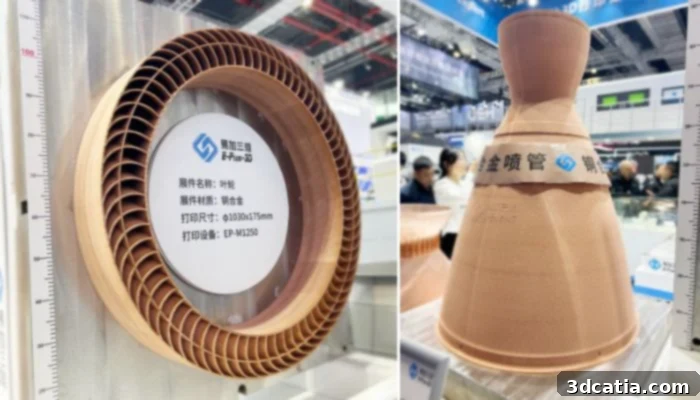
Caption: Impressive meter-scale copper parts successfully printed with Eplus3D metal PBF systems using red-laser technology (Photo credits: Eplus3D)
Revolutionizing Boat Maintenance: The Power of 3D Scanning for Precision and Efficiency
Blaupause Bootsbau, a German company renowned for its specialized services in the repair and maintenance of pleasure boats, has recently integrated advanced 3D scanning technology from Artec3D to significantly enhance its operational efficiency and precision. This strategic adoption addresses a long-standing challenge in marine maintenance: accurately capturing the intricate and often uniquely curved surfaces inherent in boat designs.
Traditionally, measuring these complex geometries involved labor-intensive methods, often relying on single-point lasers or manual templates, which were both time-consuming and prone to inaccuracies. The highly reflective and irregularly shaped surfaces of boat hulls, decks, and cockpits made precise data capture a formidable task. By leveraging the power of Artec Leo and Artec Ray II scanners, Blaupause Bootsbau has achieved remarkable improvements, proudly claiming to have cut their turnaround times by an astounding two-thirds.
Martin Dittmer, CEO of Blaupause Bootsbau, articulated the tangible benefits of this technological shift: “Before, to measure a deck or a small cockpit, it would take me five or six hours. With Leo, I can scan it in ten minutes. With costs rising across the board, we need to be more efficient, and measurement is a key part of that process.” This dramatic reduction in measurement time not only translates into significant cost savings but also allows the company to undertake more projects, improve customer satisfaction, and allocate skilled labor to more complex repair tasks.
Beyond sheer speed and accuracy, the integration of Artec Studio software further amplifies the utility of these 3D scanners. This powerful tool efficiently transforms the raw scanned data into clean, highly detailed 3D meshes. These digital models are invaluable for a multitude of applications within boat maintenance and customization. They can be used for precise reverse engineering of damaged or obsolete parts, creating custom fittings and accessories, accurately assessing damage for repairs, and even facilitating the design of bespoke interiors or modifications. The ability to quickly generate accurate digital twins of boat components ensures perfect fit and finish, minimizes rework, and elevates the overall quality of maintenance services, firmly establishing 3D scanning as an indispensable tool in modern marine care.
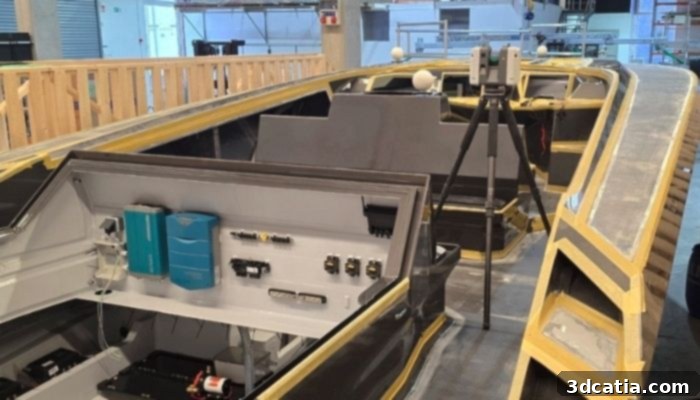
Photo Credits: Blaupause Bootsbau utilizing Artec3D scanners for efficient boat maintenance
Bosch Invests 6 Million Euros in New Metal 3D Printing Center to Propel Automotive Innovation
Bosch, a powerhouse and one of Europe’s most critical suppliers of automotive parts and technology, is reinforcing its market leadership through a substantial strategic investment. The company has committed 6 million Euros to establish a cutting-edge metal 3D printing center at its Nuremberg plant. This significant move underscores Bosch’s dedication to leveraging advanced manufacturing techniques to secure its long-term supremacy in the dynamic automotive sector.
Central to this new facility is the acquisition of a state-of-the-art, high-performance 3D printer: the NXG XII 600 system from Nikon SLM Solutions. This formidable metal printer is equipped with twelve powerful lasers, enabling it to achieve an impressive production rate of up to 1,000 cubic centimeters per hour. This advanced capability allows Bosch to manufacture complex metal components with unprecedented speed and precision, dramatically increasing its in-house production capacity for critical automotive parts.
With this strategic purchase and the establishment of the dedicated center, Bosch aims to achieve several key objectives. Foremost among them is to significantly increase the production volume of metal parts, thereby reducing reliance on external suppliers and enhancing supply chain resilience. Simultaneously, the direct integration of additive manufacturing will drastically reduce manufacturing lead times, allowing Bosch to respond more flexibly to market demands and accelerate the time-to-market for new innovations and product iterations. This agility is crucial in the fast-evolving automotive industry, particularly with the transition to electric vehicles and new mobility solutions.
Sustainability is another core driver behind Bosch’s investment, as emphasized by Alexander Weichsel. “Using the 3D printer to manufacture components not only increases sustainability in production, but also enables Bosch to respond flexibly to fluctuations in batch sizes and offer everything from a single source.” By embracing additive manufacturing, Bosch can optimize material usage, reduce waste through near-net-shape production, and consolidate multiple parts into single, more efficient components. This approach aligns with broader industry trends towards greener manufacturing practices and a more circular economy, ensuring that Bosch not only remains competitive but also leads the way in environmentally responsible production methods for the future of automotive technology.
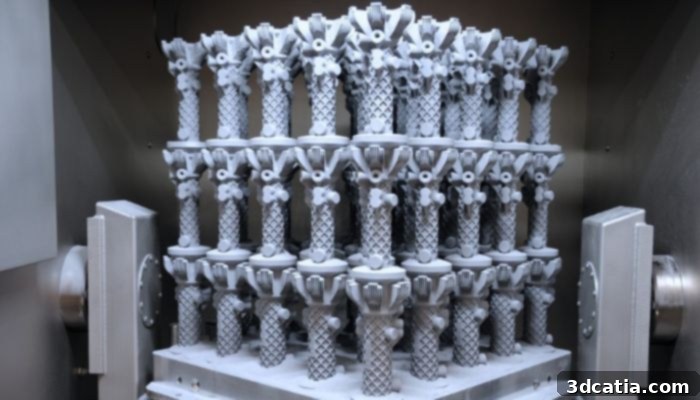
Photo Credits: Bosch’s state-of-the-art metal 3D printing center for automotive innovation
A Major Breast Cancer Medical Advancement: Lattice Medical’s Resorbable Bioprosthesis
Lille, France-based start-up LATTICE MEDICAL has announced a monumental new milestone in the medical 3D printing sector, offering renewed hope for breast cancer survivors. Its innovative 3D-printed, resorbable breast bioprosthesis has been successfully implanted as a crucial part of the ongoing TIDE clinical trial, which is expertly coordinated by Lille University Hospital. This groundbreaking operation was successfully carried out at the esteemed Centre Léon Bérard, marking a significant step forward in reconstructive surgery.
The French medtech company also proudly announced the “completion of patient enrollment in Phase I of its TIDE clinical trial for breast reconstruction.” This critical first phase of the study involved a total of ten women across France and Spain, who bravely participated in evaluating the safety and preliminary efficacy of this pioneering medical device. The successful completion of this phase is a testament to the rigorous planning, ethical considerations, and collaborative efforts of the medical teams involved.
LATTICE MEDICAL’s breast bioprosthesis represents a paradigm shift in breast reconstruction options. Unlike traditional silicone implants, this device is designed to be fully resorbable, meaning it gradually dissolves within the body over time. Its unique 3D printed scaffold provides a framework that encourages the patient’s own tissues to regenerate and grow into the desired breast shape, eventually leaving behind only natural tissue. This innovative approach aims to overcome common issues associated with permanent implants, such as rupture, capsular contracture, and the need for revision surgeries, while offering a more natural and integrated reconstruction outcome.
The potential impact of this advancement on breast cancer survivors is profound. It promises not only an improved aesthetic outcome but also significant psychological benefits, enhancing quality of life for women undergoing mastectomy. The successful progression through Phase I of the TIDE clinical trial brings the medical community closer to offering a safer, more natural, and durable breast reconstruction solution. The entire medical and additive manufacturing community eagerly anticipates the further results and subsequent phases of this vital trial, hopeful for a future where this innovative 3D printed bioprosthesis can transform lives globally.
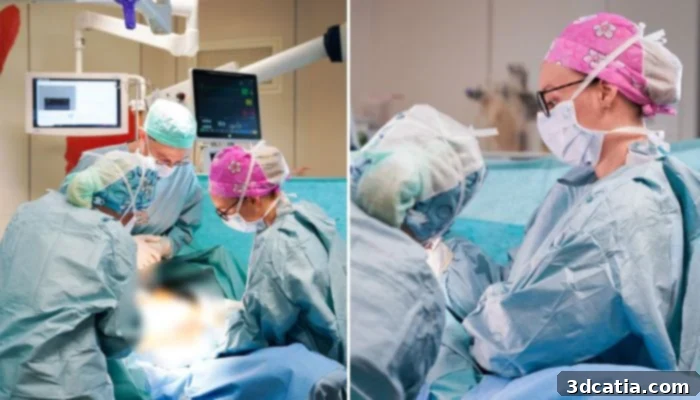
Photo Credits: Centre Léon Bérard showcasing Lattice Medical’s innovative 3D printed bioprosthesis
These remarkable developments collectively paint a vibrant picture of an industry constantly pushing the boundaries of innovation. From reinforcing national defense capabilities with robust 3D printed components for aircraft carriers to delivering life-changing medical solutions for breast cancer survivors, and from optimizing industrial production processes to streamlining specialized maintenance, additive manufacturing and 3D scanning are proving to be indispensable technologies across diverse sectors. Each advancement highlighted here not only solves existing challenges but also opens up new avenues for future development, promising a more efficient, sustainable, and technologically advanced world.
What do you think of these exciting advancements, particularly the first 3D printed metal Valve Manifold Assembly on a U.S. Navy aircraft carrier or Lattice Medical’s groundbreaking bioprosthesis? Let us know your thoughts and insights in a comment below or join the conversation on our LinkedIn, Facebook, and Twitter pages! Don’t forget to sign up for our free weekly Newsletter here, to receive the latest 3D printing news straight to your inbox! You can also find all our compelling videos and interviews on our YouTube channel for deeper insights into the world of additive manufacturing.