
Revolutionizing 3D Printing: UBQ Materials and Plastics App Pioneer Sustainable Filaments from Waste
The manufacturing industry is undergoing a profound transformation, driven by an increasing global imperative for more sustainable and environmentally responsible practices. At the forefront of this evolution, a groundbreaking partnership has emerged between UBQ Materials and Plastics App. These two visionary companies have collaboratively developed and launched a novel material specifically engineered to significantly enhance both the functionality and ecological footprint of sustainable 3D printing. This strategic alliance is a direct response to the escalating market demand for zero-waste supply chain manufacturing solutions, which are indispensable for businesses committed to achieving their ambitious sustainable development goals. UBQ Materials brings unparalleled expertise to this endeavor, having pioneered what they assert is the most climate-positive thermoplastic material available on the market. Complementing this, Plastics App is recognized as a leading research and development firm, renowned for its tailor-made innovations in polymers and plastics applications. Together, their combined capabilities have culminated in the successful introduction of a new filament that promises to enable truly sustainable and eco-conscious manufacturing. This material boasts a considerably reduced carbon footprint and expands the possibilities for additive manufacturing, moving beyond mere theoretical sustainability to practical, high-performance applications that address critical environmental challenges while simultaneously boosting industrial capabilities.
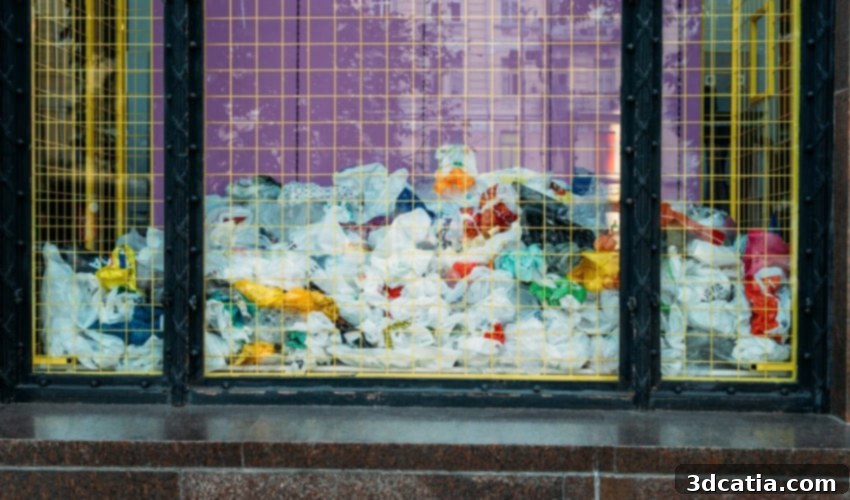
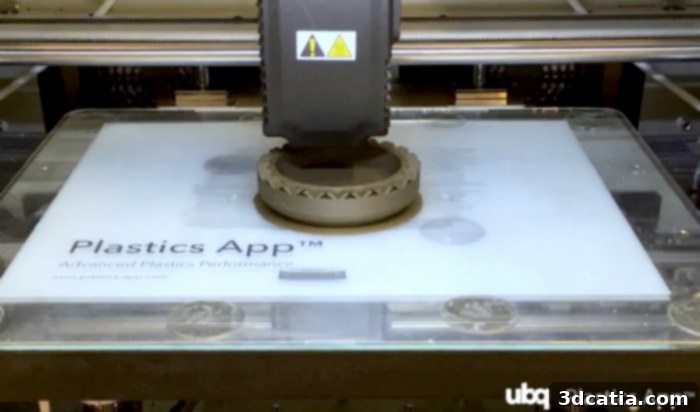
Additive manufacturing, commonly known as 3D printing, has long been lauded for its inherent environmental benefits, especially when juxtaposed with traditional production methods. Its advantages are manifold, including substantially lower energy consumption, efficient utilization of raw materials, and a significant reduction in waste generation throughout the production cycle. However, until now, the landscape of sustainable 3D printing filaments has been largely constrained. Most eco-friendly options have primarily been based on materials such as PETG. While PETG offers a degree of sustainability, its limited material properties have historically confined its applications to non-functional items, such as dimensional models, aesthetic prototypes, and display dummies. This limitation has prevented sustainable 3D printing from fully penetrating industrial and performance-critical applications. Addressing this crucial gap, UBQ Materials has engineered a revolutionary substitute for conventional oil-based resins. This innovative material is derived from unsorted municipal solid waste, biomass, and other discarded items that would otherwise contribute to overflowing landfills. This raw UBQ™ material then undergoes an advanced development process by Plastics App, transforming it into a high-performance 3D printing filament. When integrated into additive manufacturing processes, this new filament significantly broadens the scope of sustainable applications. It now enables the creation of highly functional components including jigs, fixtures, tooling, and even robust spare parts, effectively overcoming the previous constraints of eco-conscious 3D printing and pushing the boundaries of what’s possible.
The transformative potential of this partnership extends far beyond the mere creation of a new material; it is about unlocking unprecedented opportunities across a diverse array of industries. By dramatically expanding the spectrum of functional applications for sustainable 3D printing, the collaboration between UBQ Materials and Plastics App is poised to empower a greater number of sectors to fully harness the power of additive manufacturing technologies. Dr. Yanir Shaked, Founder & General Manager of Plastics App, eloquently articulated this ambitious vision: “Combining our end-to-end filament development capabilities with UBQ’s climate-positive material has opened sustainable opportunities for industries like automotive and housing, where fully functional prototyping is an essential part of both R&D and small-scale production.” He further emphasized the profound practical advantages, asserting, “Using eco-conscious material to 3D-print functional prototypes from the early stages of development helps companies meet their sustainability goals without compromising on product functionality.” This innovative approach means that industries traditionally reliant on expensive and resource-intensive prototyping methods can now embrace a greener, more efficient alternative without sacrificing performance, durability, or design integrity. From the development of lightweight components in the automotive sector to crafting advanced housing solutions, the capability to produce robust, functional prototypes using sustainable materials from the outset significantly streamlines the entire product development cycle, minimizes waste, and seamlessly aligns with corporate environmental responsibilities. This pivotal shift not only accelerates innovation but also embeds sustainability deeply into the core of industrial design and production processes, fostering a more resilient, responsible, and environmentally conscious manufacturing ecosystem for the future.
The benefits derived from this innovative material, jointly developed by UBQ Materials and Plastics App, are extensive and far-reaching, extending well beyond immediate environmental advantages. Tato Bigio, the co-founder and CEO of UBQ Materials, illuminated the broader implications of this breakthrough, stating, “Introducing 3D-printing filaments to the market enables UBQ to test the limits and go beyond the boundaries of traditional plastic manufacturing techniques.” This statement highlights a pivotal paradigm shift in our approach to material science and production, pushing the frontiers of what is achievable with recycled and waste-derived inputs. He further elaborated on the remarkable versatility of UBQ™ material: “The versatile applications of UBQ™ allow for its incorporation into a wide range of products, decreasing emissions and preventing landfill buildup. This partnership will expand the scope of companies that can refine their processes while reducing their energy use.” This novel material offers a concrete and impactful solution for tackling some of the most pressing environmental challenges of our era. By transforming mixed municipal solid waste into a valuable thermoplastic, UBQ™ directly confronts the global landfill crisis, preventing innumerable tons of waste from polluting our ecosystems. Moreover, its seamless integration into various product manufacturing processes contributes substantially to reducing overall carbon emissions, bolstering global efforts to mitigate climate change. The partnership’s ability to provide a material that not only diminishes environmental impact but also empowers companies to optimize their production processes and significantly decrease energy consumption represents a powerful synergy of sustainability and operational efficiency. It serves as an undeniable testament to the principle that ecological responsibility can indeed harmonize with economic viability and technological advancement. This groundbreaking development signifies not merely an acknowledgement of the growing demand for sustainability in manufacturing but a decisive and proactive stride forward, actively expanding technological advancements and charting a clearer, more viable course towards a greener, more resource-efficient future for industries worldwide.
Delving deeper into the environmental credentials, the UBQ™ material presents a unique and compelling proposition: it is certified as “climate positive.” This designation is more than just a marketing claim; it signifies a scientifically verified process where the production of UBQ™ actively sequesters more greenhouse gases than it emits. By effectively diverting unsorted waste from landfills, it plays a crucial role in preventing the release of methane – a potent greenhouse gas – into the atmosphere. Simultaneously, it serves as a direct replacement for virgin, oil-based plastics, thus reducing reliance on fossil fuels. This powerful dual action positions UBQ™ as an invaluable tool in global climate change mitigation efforts. When synergistically combined with the inherent efficiencies of 3D printing, which optimizes material usage and minimizes scrap, the filament developed through this partnership creates an unparalleled eco-conscious manufacturing solution. This translates directly to a significantly reduced overall carbon footprint for any product manufactured using this innovative material, offering companies a tangible and impactful way to enhance their environmental, social, and governance (ESG) performance. The capacity to utilize a waste-derived material for highly functional, high-performance applications effectively closes the loop on plastic waste, accelerating the transition towards a truly circular economy model where waste is reimagined and valued as a resource rather than merely a problem. This filament doesn’t just reduce waste; it actively transforms it into high-value components, making sustainable practices not merely an aspiration but an achievable and economically viable reality for modern industries. Companies can now leverage cutting-edge additive manufacturing techniques with a clear conscience, confident in their positive contribution to global sustainability efforts while still producing robust, reliable, and high-quality products.
The seamless integration of this novel material into the dynamic 3D printing ecosystem unlocks unprecedented opportunities for innovation across a myriad of sectors. Consider, for instance, the automotive industry, which continuously seeks lighter, stronger, and inherently more sustainable components. With UBQ-enhanced filaments, automakers can now prototype and even produce functional parts – ranging from intricate interior elements to critical under-the-hood components – with a significantly reduced environmental impact throughout their lifecycle. In the expansive housing and construction sector, custom fixtures, architectural models, bespoke structural elements, and even specialized tooling could be produced on-demand, thereby minimizing construction waste, accelerating project timelines, and crucially, utilizing eco-friendly materials. Beyond these prominent examples, diverse sectors such as consumer goods, non-implantable medical devices, and even specialized aerospace applications stand to benefit immensely from the ability to rapidly iterate and produce functional parts from genuinely sustainable sources. This expanded applicability empowers designers and engineers to transcend conventional material limitations, fostering a new era of product development where sustainability is not an afterthought but an intrinsic, fundamental part of the design and engineering process. The exceptional flexibility and robust performance of the UBQ™-enhanced filament ensure that complex geometries, customized solutions, and high-performance requirements can be realized with unprecedented ease, further solidifying 3D printing’s critical role as a cornerstone of future manufacturing. This strategic alliance thus serves as a powerful beacon of progress, vividly demonstrating how profound cross-industry collaboration and innovative material science can collectively address pressing global challenges and drive meaningful, transformative change across the entire manufacturing landscape.
In conclusion, the groundbreaking collaboration between UBQ Materials and Plastics App marks a pivotal moment for sustainable manufacturing and the wider circular economy. By masterfully transforming unsorted municipal waste into a climate-positive, highly functional 3D printing filament, they are not only addressing a critical global environmental problem but also unlocking an entirely new realm of industrial capabilities. This innovative material empowers industries to transition beyond limited sustainable prototypes to producing fully functional, high-performance components, thereby significantly broadening the adoption and impact of eco-conscious additive manufacturing. The unwavering commitment to dramatically reducing carbon footprints, actively preventing landfill buildup, and optimizing energy use collectively underscores a shared and ambitious vision for a truly sustainable future. This partnership stands as a powerful testament to how advanced material science and cutting-edge manufacturing techniques can converge harmoniously to forge solutions that are both environmentally responsible and economically viable. As industries worldwide increasingly prioritize sustainability, the revolutionary offerings from UBQ Materials and Plastics App provide a tangible, high-performance pathway to achieving these ambitious goals without ever compromising on functionality, quality, or innovation. It is a compelling testament to the fact that waste can indeed be transformed into an incredibly valuable resource, driving positive and transformative change across global supply chains and paving a clear path for a truly green industrial revolution.
If you’re eager to delve deeper into this groundbreaking collaboration and its profound implications for the future of sustainable manufacturing, we invite you to read the full press release HERE. We highly encourage you to share your valuable thoughts and insights on UBQ Materials and Plastics App’s revolutionary new material. Please let us know what you think by leaving a comment below or by engaging with us across our vibrant social media platforms, includingFacebook,Twitter andLinkedIn pages! To ensure you stay at the forefront of the latest advancements and breaking news in the dynamic world of 3D printing, be sure to sign up for our completely free weeklyNewsletter here, delivering the most up-to-date information directly to your inbox every week!
*All pictures courtesy of UBQ Materials