
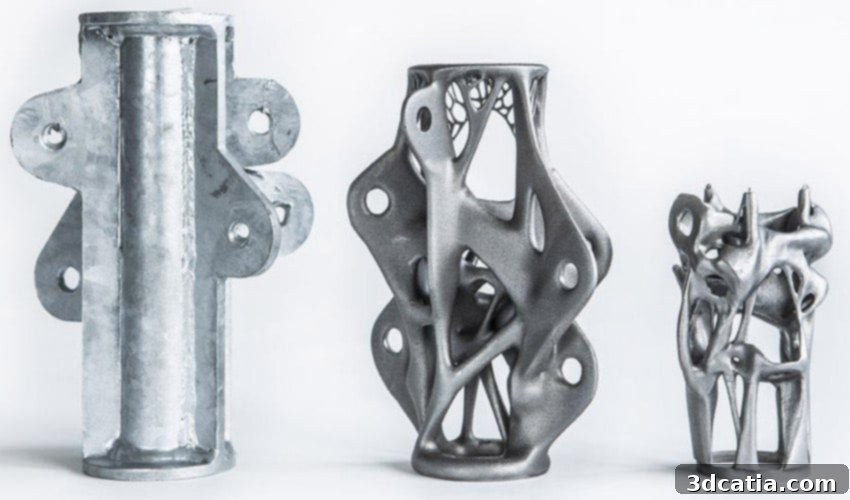
TOffeeAM: Revolutionizing Additive Manufacturing with AI-Driven Generative Design
In the rapidly evolving landscape of additive manufacturing, the initial design of a 3D model is undeniably the cornerstone of success. The methodologies employed in the design phase directly dictate critical outcomes such as the final appearance of the part, its structural integrity, overall quality, and resistance to various stresses. Beyond these performance metrics, effective design also significantly influences the success rate of the print, the total quantity of material consumed, and ultimately, the cost-effectiveness of the production. Unlike traditional manufacturing processes, where design constraints are often rigid, additive manufacturing (AM) opens up unprecedented possibilities for complex geometries and optimized structures. However, harnessing this full potential requires a departure from conventional design thinking and the adoption of specialized tools and techniques. This is precisely where cutting-edge design solutions for additive manufacturing step in, offering sophisticated capabilities tailored to create intricate shapes perfectly compatible with a diverse array of 3D printing technologies.
Among the pioneers in this transformative space is TOffeeAM, an innovative British startup that has developed an intelligent design solution leveraging the power of generative design. Their platform is engineered to unlock new levels of efficiency and performance in AM, pushing the boundaries of what’s achievable in product development. We recently had the opportunity to sit down with the visionary team behind TOffeeAM to delve deeper into the critical role of advanced design in 3D printing and to explore the distinctive features and benefits that their groundbreaking offering brings to the industry.
3DN: Can you introduce yourselves and explain your connection to additive manufacturing?
TOffeeAM specializes in optimizing product designs specifically for Additive Manufacturing (AM), which is widely known as 3D printing. The company was officially founded in 2019, emerging from the vibrant innovation ecosystem of Imperial College London. Our leadership team comprises Dr. Francesco Montomoli, our esteemed CEO, who is also a Reader at Imperial College, bringing a wealth of academic and research expertise to the helm. Dr. Marco Pietropaoli serves as COO, overseeing our operational strategies. Marco earned his PhD at Imperial College London, focusing intensively on Design for Additive Manufacturing, and was previously an EPSRC Doctoral Prize Fellow; he is currently pursuing an MBA to further strengthen his business acumen. Dr. Audrey Gaymann is our CTO, driving our technological advancements. Audrey also holds a PhD from Imperial College London in Design for Additive Manufacturing, is an EPSRC Doctoral Prize Fellow, and was notably awarded the prestigious Amelia Earhart Fellowship for her significant contributions to aviation studies. Our journey began in the Department of Aeronautics at Imperial College, where our team has been actively developing state-of-the-art software for Additive Manufacturing in close collaboration with several prominent industrial partners, ensuring our solutions are grounded in real-world application and challenges.
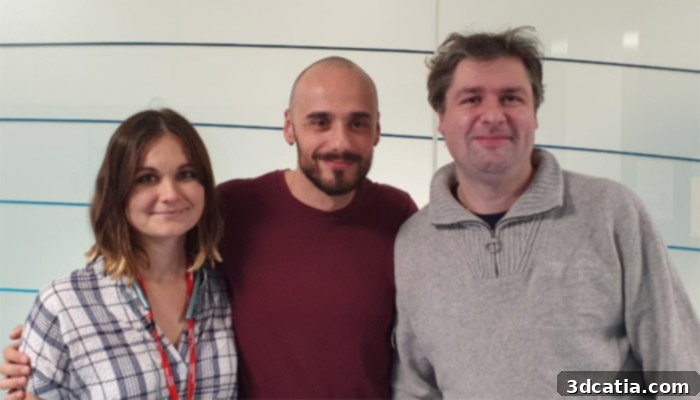
The TOffeeAM team
3DN: What inspired you to create TOffeeAM?
The genesis of TOffeeAM can be traced back to a pivotal question posed to us about six years ago by a leading manufacturer. They recognized the immense potential of Additive Manufacturing, stating, “With Additive Manufacturing, we can print almost anything. But what should we design, and how?” This query highlighted a critical disconnect: while AM offered unparalleled manufacturing freedom, the design methodologies had not yet caught up. Historically, when new manufacturing technologies emerge, there’s a natural tendency to initially apply old design paradigms to the new process. This often leads to underutilization of the technology’s full potential. A compelling historical parallel is the first Iron Bridge, which, despite being made of a revolutionary material, was designed to mimic the aesthetic and structural elements of older wooden bridges. It took centuries of innovation and understanding of metal’s capabilities before structures like the Millennium Bridge in London could fully exploit the strength and flexibility of metal solutions. This historical gap underscored the need for a similar paradigm shift in design for additive manufacturing.
It was precisely to bridge this significant design-technology gap that we embarked on developing our specialized software, initially named TOffee. This software is now actively employed by companies across diverse industrial sectors, helping them to redefine their product development. Following its widespread traction and positive reception globally, we collaborated with Imperial College London to establish TOffeeAM Ltd. as a spinout company. Our efforts and innovative approach have been recognized with substantial financial and technical backing, including the prestigious Royal Academy of Engineering Enterprise Fellowship, where we benefited from the invaluable mentorship of Adrian De Ferranti, a well-known and respected UK entrepreneur. Furthermore, we were honored with the Amazon AWS Programmable Prize in 2018 and the esteemed Amelia Earhart Fellowship. We also participated in Imperial’s Techcelerate program and received crucial guidance through the Imperial Venture Mentoring Service. Since then, our continued growth has been supported by pre-seed funding from Entrepreneur First (EF) and seed funds from IQCapital, enabling us to significantly expand our team and further enhance our capabilities.
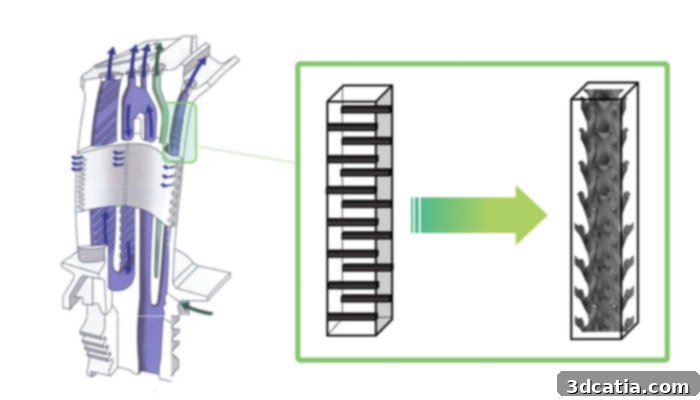
The solution enables intelligent design for additive manufacturing
3DN: Could you elaborate on the key characteristics and advantages of your software?
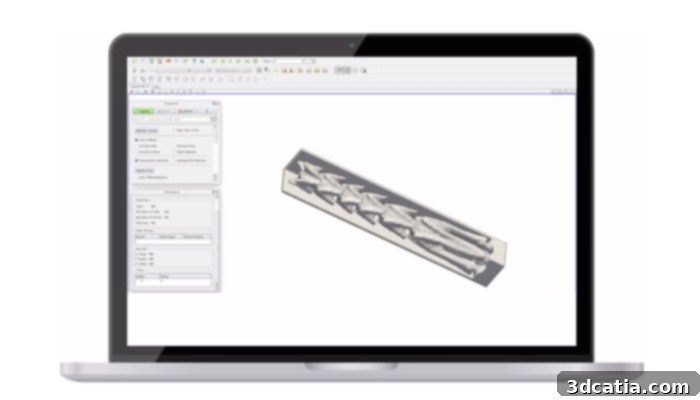
In many traditional industries, the process of part design heavily relies on human imagination, intuition, and established best practices. While valuable, these human-centric approaches are often inherently limited in their ability to fully exploit the revolutionary capabilities offered by advanced manufacturing techniques like 3D printing. TOffeeAM’s software fundamentally shifts this paradigm by enabling the creation of designs with an unprecedented level of complexity – designs that are simply beyond the scope of standard, manually-driven design processes or even conventional CAD tools. Our technology is built upon advanced generative design algorithms, which allow engineers to define design objectives, constraints (such as material type, load conditions, build volume, and manufacturing process limitations), and performance targets. The software then autonomously explores an immense design space, generating optimal geometries that meet these criteria, often resulting in highly intricate, organic, and efficient structures.
This AI-driven approach has a potentially transformative effect across the entire additive manufacturing industry. Our solutions consistently demonstrate superior performance, achieving results up to 40 percent more efficient than designs produced by competitors. This efficiency can manifest in various forms, including significant weight reduction, enhanced thermal management, improved fluid flow, or superior structural integrity, depending on the application. Furthermore, the iterative and optimization capabilities of our software allow parts to be designed and refined at an astonishing pace, leading to design cycles that are up to 20 times faster. This speed dramatically reduces time-to-market for new products and accelerates innovation cycles for complex components. Beyond merely optimizing individual 3D printed parts, TOffeeAM’s capabilities extend to optimizing entire systems. By holistically analyzing the functional requirements of a system, our software can identify opportunities to consolidate multiple components into fewer, more integrated, and performant parts, thereby reducing assembly complexity, minimizing potential failure points, and significantly increasing overall system resilience and reliability. Our primary focus is on collaborating with corporate entities that actively utilize Additive Manufacturing for their component production. Our unwavering commitment and core promise to these partners are to help them achieve parts with truly unthinkable performance capabilities, pushing the boundaries of what was previously considered possible in engineering design.
3DN: In your opinion, what is the paramount importance of design in additive manufacturing?
The role of design in additive manufacturing is not merely important; it is absolutely crucial and, in fact, foundational to fully leveraging the technology’s inherent advantages. Attempting to use AM with conventional or traditional design methods is akin to buying a high-performance sports car and only driving it in first gear – it severely limits the extraordinary flexibility, freedom, and potential this technology offers. Additive manufacturing excels at creating geometries that are impossible or cost-prohibitive to produce with subtractive or formative methods. This includes intricate lattice structures for lightweighting and energy absorption, highly optimized internal channels for efficient fluid or heat transfer, and complex, organic forms that perfectly distribute stress. Without specialized design approaches like those offered by TOffeeAM, engineers would be confined to designing parts based on what traditional machines could produce, thereby neglecting the unique design freedom that AM provides.
TOffeeAM is fundamentally about enabling the full, transformative potential of additive manufacturing. Our generative design software empowers designers and engineers to move beyond simple adaptations of existing designs and instead create truly optimized, high-performance components from the ground up. This means parts that are lighter, stronger, more efficient, and more resilient than ever before. For instance, in aerospace, lightweighting through topology optimization can lead to significant fuel savings. In medical applications, patient-specific implants with custom lattice structures can improve biocompatibility and integration. In thermal management, optimized heat sinks with complex internal geometries can dramatically enhance cooling efficiency. We are constantly innovating and, in the near future, we will be integrating even more advanced functionalities into our code. These future enhancements will allow for the design of components that are not only more efficient in terms of performance metrics like weight or flow, but also significantly more resilient to extreme conditions, capable of multi-functional integration, and designed with an even greater emphasis on sustainability and material economy. This continuous evolution ensures that TOffeeAM remains at the forefront of enabling the most sophisticated and effective additive manufacturing solutions for a wide range of industries.
3DN: Do you have any final words for our readers?
Yes, absolutely! We are experiencing significant growth and are always on the lookout for talented, passionate individuals to join our innovative team. If you’re excited by the prospect of revolutionizing additive manufacturing through intelligent design and pushing the boundaries of engineering, we encourage you to explore career opportunities with us. You can find more information about our company, our mission, and open positions on our official website. We believe that the future of manufacturing is intrinsically linked to intelligent design, and we’re building the tools and the team to lead that charge.
We’d love to hear your thoughts on TOffeeAM and the future of generative design in additive manufacturing. Please feel free to share your insights in a comment below or join the conversation on our Facebook and Twitter pages! And don’t forget to sign up for our free weekly Newsletter to receive all the latest news and innovations in 3D printing delivered directly to your inbox!