
Printrbot’s Journey Ends: A Look Back at a 3D Printing Pioneer’s Impact and Challenges
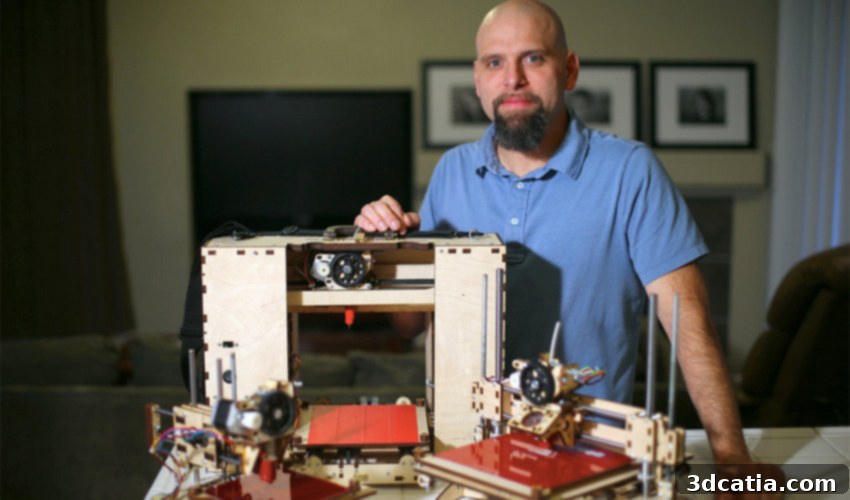
The 3D printing world bids a bittersweet farewell, at least for now, to Printrbot. The American-based company, a true pioneer in making 3D printing accessible, has officially announced the cessation of its operations. Founder Brook Drumm openly shared the intricacies behind this difficult decision, offering valuable insight into the pressures and evolution within the additive manufacturing landscape that ultimately led to Printrbot closing its doors.
Over recent years, the 3D printing market has experienced an explosive growth trajectory. What was once a niche technology has expanded dramatically, demonstrating incredible promise across a multitude of sectors. From groundbreaking applications in the health sector, enabling customized prosthetics and surgical guides, to its transformative influence in the automotive industry for rapid prototyping and lightweight components, 3D technology continues to innovate. This rapid expansion, while fostering incredible advancements, has simultaneously intensified competition to unprecedented levels. For trailblazing companies like Printrbot, navigating this hyper-competitive environment proved to be an insurmountable challenge, culminating in their difficult decision to cease operations.
The Dawn of Affordable 3D Printing: Printrbot’s Kickstarter Phenomenon
Printrbot’s story began in 2011, propelled by the immense success of a Kickstarter campaign that would become legendary in the nascent 3D printing community. Brook Drumm’s vision was refreshingly simple yet profoundly ambitious: to make 3D printing affordable and approachable for everyone, not just engineers or large corporations. The initial goal for the campaign was modest, aiming to produce just 50 printers to gauge interest. However, upon launching, the response from the global maker community was nothing short of overwhelming. Within a short period, over a thousand orders poured in, far exceeding all expectations and laying a robust foundation for the company. This early and passionate consumer base, eager to embrace a new era of personal fabrication, became the bedrock upon which Printrbot was built, proving the demand for accessible 3D printing was far greater than initially imagined.
Printrbot embarked on its mission to democratize 3D printing by focusing on affordability and user-friendliness. Their initial printers were ingeniously crafted from a combination of laser-cut wood and 3D-printed parts, a testament to their DIY ethos and commitment to keeping costs low. At a time when 3D printers were largely expensive, complex machines, this approach offered an unparalleled value proposition. To put it into perspective, a contemporary competitor like Makerbot’s CupCake retailed for around $750 and demanded over 20 hours of assembly time. In stark contrast, Printrbot’s kit cost only $500 and could be assembled in under an hour, making it an incredibly attractive option for hobbyists, educators, and small businesses alike. This significant cost-performance advantage propelled Printrbot into the spotlight, attracting a loyal following. However, the success also drew immediate attention from new companies eager to capitalize on this burgeoning market, quickly intensifying the competitive landscape.
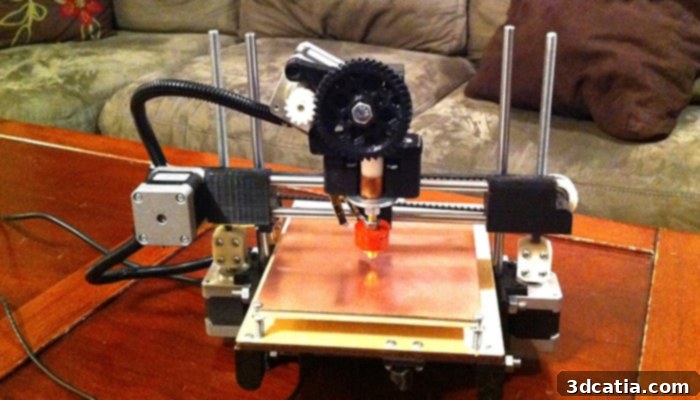
The first 3D printer from Printrbot from the Kickstarter campaign
Rapid Growth and Product Evolution: From Wood to Metal
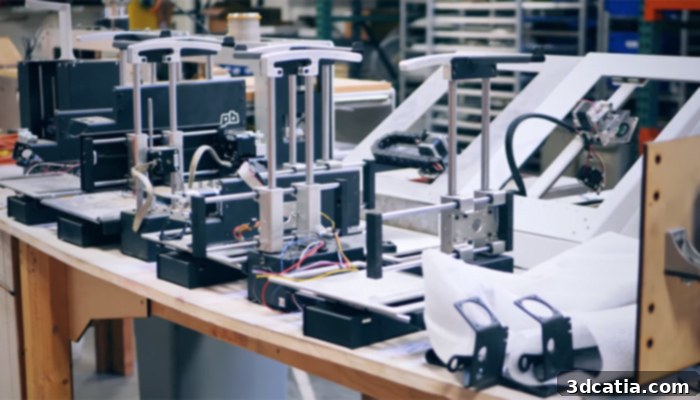
The burgeoning 3D printing market continued its upward trajectory, and for a significant period, Printrbot appeared to be thriving within it. The company demonstrated impressive financial growth, accumulating $2 million in sales by its second year of operation. This momentum accelerated dramatically, with sales soaring to $12 million over the subsequent couple of years. This financial success fueled Printrbot’s continuous product development and innovation. They judiciously moved away from the wooden frames of their initial models, transitioning to more robust and precise folded steel structures. This evolution not only enhanced the printers’ durability but also allowed for greater accuracy and reliability, reflecting a commitment to advancing their technology.
Furthermore, Printrbot was instrumental in pioneering key features that would become industry standards. Among these, the impressive innovation of automatic bed leveling stood out, drastically simplifying the user experience and reducing common print failures. In 2014, these advancements culminated in the release of the Printrbot Simple Metal, a product that quickly became their flagship offering and a favorite among the maker community. While these upgrades significantly improved performance and quality, they also inherently raised the cost of production. This increasing expense, a natural outcome of technological sophistication and higher-quality materials, began to subtly shift Printrbot’s position from its original ultra-low-cost niche.
Navigating a Shifting Landscape: The Rise of Global Competition
As the 3D printing market matured and expanded globally, it also attracted a new wave of formidable competitors, particularly from overseas. These new players quickly recognized the burgeoning opportunities and, leveraging advanced manufacturing capabilities and economies of scale, began producing 3D printers at significantly lower costs than previously seen in the industry. This influx dramatically reshaped the market, making the once revolutionary $500 price tag of Printrbot’s original printer seem comparatively high. Today, it is commonplace to find functional 3D printers available for a fraction of that cost, intensifying the pressure on established companies like Printrbot.
Faced with this new and challenging competitive landscape, Printrbot made a strategic attempt to adapt by re-evaluating its market positioning. In 2016, they introduced an enhanced version of their popular Simple Metal printer, integrating premium features such as linear rails for improved precision and cloud-based slicing software for a more streamlined workflow. This move was a clear pivot towards the premium market segment, aiming to compete with higher-end manufacturers like Ultimaker, with their new models priced upwards of $1,000. However, this shift proved challenging. Printrbot’s established consumer base, primarily drawn to their brand by its commitment to affordability and DIY accessibility, did not necessarily follow this new direction as readily. The brand identity built on cost-effectiveness clashed with the demands of a premium segment already dominated by other well-entrenched players.
The Final Act: Adaptation, Values, and Legacy
The debate over how traditional manufacturers fit into a market increasingly flooded by low-cost alternatives is ongoing. While some companies have successfully navigated this evolving landscape, creating space for both entry-level and advanced, higher-priced machines, finding and maintaining a clear market niche during rapid evolution is incredibly difficult. In a final significant effort to adapt, Printrbot even attempted a collaboration that seemed to contradict its core values. They introduced the “Printrbot Easy,” a product designed with input from overseas manufacturers like FlashForge, aiming to re-enter the very low-cost segment they had once pioneered, albeit with a different production model.
While this decision to embrace overseas manufacturing may have gone against some of their initial principles, Printrbot also continued to offer its original, domestically produced printers. Nevertheless, these strenuous attempts to adapt to a rapidly changing and highly competitive market did not yield the desired long-term results, and ultimately, Printrbot was compelled to close its doors. The company leaves behind a remarkable legacy and a dedicated following. For many within the global maker community, Printrbot’s very first machine served as their introduction to the transformative world of 3D printing. These pioneers and enthusiasts will undoubtedly miss Printrbot’s presence and its contribution to the democratization of additive manufacturing.
The Enduring Maker Spirit
Despite the closure of Printrbot, the spirit of innovation, accessibility, and DIY culture that it championed continues to thrive within the maker community. Printrbot’s impact on countless individuals, sparking creativity and empowering them to bring their digital designs into the physical world, is undeniable and enduring. The story of Printrbot is a powerful reminder of the dynamism and often brutal realities of a rapidly evolving technological market. While the company’s chapter may be closed, the legacy of its founder, Brook Drumm, and the dedication of the Printrbot team will not be forgotten. It’s highly probable that we haven’t heard the last from these passionate innovators, as the maker spirit they embodied is stronger than ever.
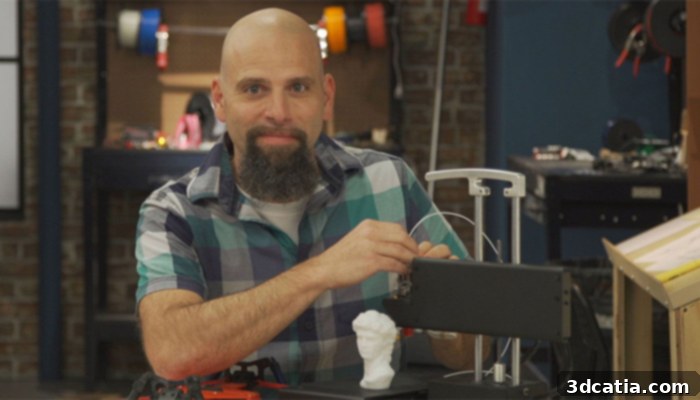
You can gain further insights into the profound reasons behind this difficult decision by watching this candid interview with founder Brook Drumm:
What are your personal thoughts on Printrbot’s journey and the broader developments in the 3D printing industry? We invite you to share your perspectives in a comment below or join the conversation on our Facebook and Twitter pages! And don’t forget to sign up for our complimentary weekly Newsletter, ensuring you receive all the latest and most relevant news in 3D printing sent directly to your inbox!