
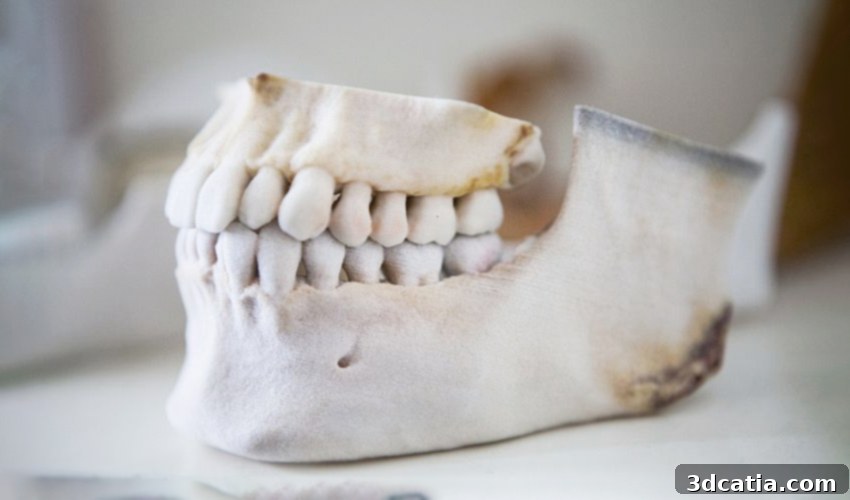
Revolutionizing Surgical Planning: How 3D Printing is Transforming Healthcare at Ciudad Salud Hospital in Mexico
In a groundbreaking stride towards modernizing healthcare, the Hospital Regional de Alta Especialidad “Ciudad Salud” in Mexico has seamlessly integrated 3D printing technology into its surgical planning processes. This innovative adoption signifies a pivotal shift in how medical interventions are conceived and executed, promising not only enhanced efficiency but also a substantial reduction in surgical errors and operative times. Ciudad Salud’s proactive embrace of additive manufacturing positions it at the forefront of medical innovation, leveraging this powerful tool to optimize outcomes across critical specialties such as Maxillofacial Surgery, Cardiology, and Orthopedics.
The impact of this technology is already evident, as demonstrated by numerous success stories emerging from the hospital. One recent case, which garnered significant attention, involved a patient requiring complex maxillofacial surgery due to a tumor in her jaw. In this challenging scenario, 3D printing proved indispensable, playing a central and transformative role in meticulously planning the intricate procedure, ensuring precision and maximizing the chances of a successful outcome.
The Unprecedented Advantages of 3D Printing in Modern Surgery
The global medical sector is rapidly acknowledging the immense potential of 3D printing, with market projections by Allied Market Research indicating an astounding value of $5.8 billion by 2030. This robust growth underscores the technology’s inherent capacity to revolutionize various aspects of healthcare, particularly surgical operations. Additive manufacturing offers a multitude of advantages that go far beyond traditional methods, primarily by providing an unparalleled understanding of patient anatomy.
Historically, surgeons relied on two-dimensional digital images, such as X-rays, CT scans, and MRIs, to visualize internal structures. While crucial, these digital representations often fell short in conveying the true three-dimensional complexity of a patient’s unique anatomy. This is precisely where 3D printing introduces a paradigm shift. By converting digital scans into tangible, life-sized replicas, surgeons can now literally hold a patient’s specific organ or bone structure in their hands before an incision is even made. Verónica Coutiño Escobar, a distinguished specialist in Radiology at Ciudad Salud, eloquently articulates this transformation: “We are not only trying to innovate by having the digital image, but we are now making the impression in the third dimension, which helps the physician to perform surgical planning, minimize errors and reduce time.” Her statement highlights the profound shift from abstract digital visualization to concrete physical interaction, enabling a level of precision and foresight previously unattainable.
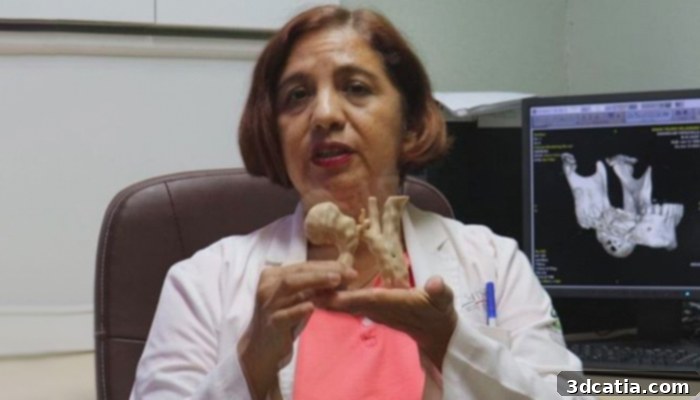
Verónica Coutiño Escobar, one of the specialists at the Ciudad Salud Hospital, with the 3D printed replica.
Ciudad Salud Hospital: Paving the Way for Advanced Surgical Care
Ciudad Salud Hospital’s strategic integration of 3D printing underscores its commitment to delivering world-class medical care. The technology’s direct application in specialties like Maxillofacial Surgery, Cardiology, and Orthopedics is particularly impactful given the intricate anatomical structures and precise interventions required in these fields. For Maxillofacial Surgery, which deals with complex facial and jaw structures, 3D printed models allow surgeons to accurately plan bone cuts, reconstructive efforts, and implant placements. In Cardiology, models of a patient’s heart can help visualize congenital defects or plan complex valve repairs. For Orthopedics, patient-specific bone models are invaluable for planning joint replacements, complex fracture repairs, and correcting deformities, leading to better functional outcomes and reduced recovery times.
The ability to pre-plan with such accuracy translates into several critical benefits. Surgeons can identify potential challenges before entering the operating room, leading to more streamlined procedures. This advanced preparation not only enhances the safety of the patient by minimizing unforeseen complications but also significantly reduces the duration of operations. Shorter operating times mean less exposure to anesthesia, lower risk of infection, and a more efficient use of valuable hospital resources. Furthermore, the capacity to rehearse complex procedures on a physical model can lead to improved surgical proficiency, benefiting both seasoned professionals and surgeons in training.
3D Printing a Tumor Replica: A Case Study in Maxillofacial Surgery
One of the most compelling demonstrations of 3D printing’s utility at Ciudad Salud involves a patient diagnosed with a benign yet aggressive tumor in her jaw. Such cases present significant surgical challenges, demanding extreme precision to remove diseased tissue while preserving vital structures and ensuring optimal functional and aesthetic outcomes. Traditionally, surgeons would rely heavily on two-dimensional images and their experience, which, while effective, left little room for physical pre-visualization and rehearsal.
Thanks to additive manufacturing, the medical team at Ciudad Salud was able to employ an advanced approach. Utilizing stereolithography (SLA) technology, a sophisticated form of 3D printing that converts digital designs into solid objects, they created a precise, life-sized replica of the patient’s jawbone, complete with an accurate representation of the tumor. María Teresa Escobar, a skilled surgeon affiliated with the hospital, elaborated on the process: “We made use of the stereolithography study, which is a computer design but in 3D, since it makes it possible to replicate any anatomical structure, in this case, the jaw.” This statement underscores the transformative power of this technology, enabling the exact replication of complex biological structures.
With this tangible replica in hand, the specialists gained an unprecedented advantage. They could now make more precise measurements for material placement, plan exact incision lines, and even practice making the necessary cuts on the model itself. This hands-on pre-surgical planning allowed the team to meticulously determine the exact amount of bone to be removed and, crucially, the precise quantity and shape of bone required for grafting in the area affected by the tumor. The ability to physically interact with a patient-specific model prior to surgery drastically reduces the likelihood of complications, ensures greater accuracy during the actual procedure, and contributes significantly to improved patient outcomes.
The benefits of this tool extend far beyond the operating table. It empowers surgeons with increased confidence, allowing them to approach complex cases with a higher degree of certainty and preparedness. For patients, this translates into safer surgeries, faster recovery times, and ultimately, a better quality of life post-intervention. As María Teresa Escobar further concluded, underscoring the broad applicability of the technology: “This tool is not only specific to my service, but all the services could use this means to make a projection of their surgery before entering the operating room, representing a high benefit for the patient.” This vision highlights 3D printing as a universal enabler for enhanced surgical planning across the entire spectrum of medical specialties within the hospital.
The Future of Personalized Medicine Through Additive Manufacturing
The adoption of 3D printing by Hospital Regional de Alta Especialidad “Ciudad Salud” is a microcosm of a larger global trend towards personalized medicine and advanced surgical techniques. The estimated growth of the medical 3D printing market to $5.8 billion by 2030 is driven by several key factors: continuous advancements in printing technologies and biocompatible materials, increasing demand for patient-specific devices and implants, and a growing recognition among healthcare professionals of the tangible benefits offered by additive manufacturing. This includes not only surgical planning models but also custom prosthetics, orthotics, dental implants, and even the nascent field of bioprinting for tissue and organ regeneration.
Hospitals like Ciudad Salud are not just implementing a new technology; they are actively shaping the future of healthcare delivery. By leveraging 3D printing, they are moving towards an era where every patient receives care tailored precisely to their unique anatomical and medical needs. This level of customization leads to more effective treatments, reduced risks, and improved long-term health outcomes. Furthermore, the educational value of these models cannot be overstated. They serve as invaluable teaching aids for medical students and residents, allowing them to learn complex anatomy and surgical procedures in a risk-free, hands-on environment, thereby accelerating the development of skilled surgeons for future generations.
Conclusion: A New Era of Surgical Excellence
The proactive integration of 3D printing at Hospital Regional de Alta Especialidad “Ciudad Salud” in Mexico marks a significant milestone in the evolution of surgical planning and patient care. By transforming digital medical images into physical, patient-specific anatomical models, the hospital is empowering its surgeons with unprecedented tools for precision, foresight, and enhanced surgical confidence. The success stories, particularly in complex maxillofacial procedures, clearly demonstrate the profound impact of this technology in minimizing errors, reducing operative times, and ultimately, improving patient safety and outcomes.
As the medical 3D printing market continues its rapid expansion, institutions like Ciudad Salud are setting a powerful precedent for healthcare facilities worldwide. Their commitment to innovation and patient-centered care, driven by the capabilities of additive manufacturing, heralds a new era of surgical excellence where personalized medicine is not just an aspiration but a tangible reality. This is more than just technological adoption; it’s a fundamental shift towards more intelligent, efficient, and compassionate healthcare.
What do you think about the transformative use of 3D printing in hospitals like Ciudad Salud in Mexico? Let us know in a comment below or on ourLinkedIn,Facebook, andTwitter pages! Don’t forget to sign up for our free weeklyNewsletter here, the latest 3D printing news straight to your inbox! You can also find all our videos on ourYouTube channel.
*Cover Photo Credits: 3D Systems