
Formnext Connect 2020: Navigating the Digital Frontier of Additive Manufacturing
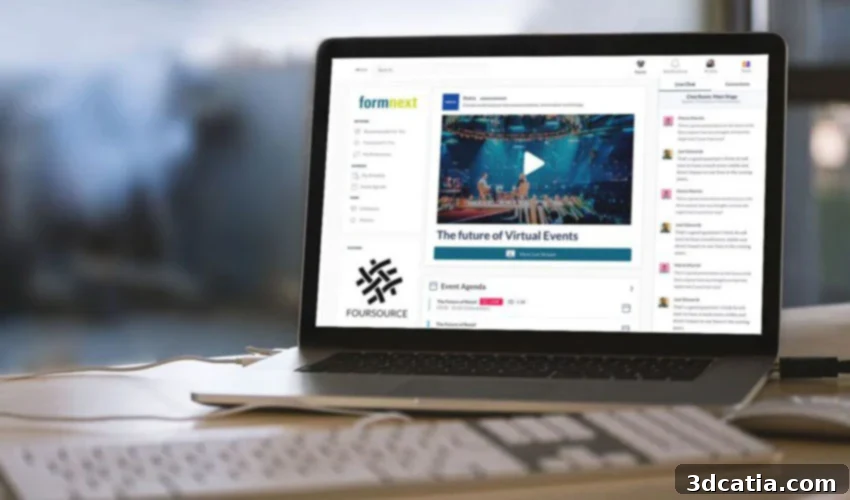
The year 2020 presented unprecedented challenges to industries worldwide, forcing many to reimagine traditional gatherings. Among these, the Formnext Connect event, a cornerstone for the global additive manufacturing (AM) industry, successfully concluded its inaugural digital edition last week. After much anticipation from the community regarding how the physical event would translate into a virtual format, the organizers delivered an experience that, while different, proved robust and engaging. Mesago Messe Frankfurt GmbH, the event organizer, proudly declared in their press release that “Formnext Connect succeeds as the digital heart of the international AM industry.” This bold statement was supported by impressive figures, indicating significant global participation despite the virtual setting. The event saw 8,541 active participants from over 100 nations engaging with the digital platform. Furthermore, 203 exhibitors were present, with approximately 2,200 representatives showcasing an extensive portfolio of 1,412 distinct products and services. The digital conference program was equally comprehensive, offering 221 lectures and presentations, which garnered an impressive 45,000 cumulative views. This marked a stark contrast to the 2019 edition, where Formnext welcomed 850 exhibitors and 34,500 participants to its physical venue in Frankfurt. The transition to a fully digital format inevitably brought about significant changes, prompting a closer look at the overall experience and its implications for the future of AM events.
A Deep Dive into the Formnext Connect Experience
The decision to transition Formnext into a virtual event was a monumental one, which the organizers, Mesago Messe Frankfurt, delayed until September, leaving them with an intense eight-week window for preparation. Transforming the industry’s largest and most anticipated trade show into a digital format in such a short timeframe was undoubtedly a formidable challenge. Nevertheless, the platform launched on November 10th showcased several innovative features designed to foster interaction and discovery. One of the standout functionalities was the implementation of AI-supported matchmaking, which aimed to intelligently connect participants with relevant peers and exhibitors, facilitating meeting requests and networking opportunities. While this feature was undoubtedly advanced and held great promise for expanding professional networks, many participants echoed the sentiment that true human connection remains unparalleled. As Ricoh aptly put it: “Naturally it is more difficult to engage with people on a virtual platform – people can simply ignore your requests, as with email, whereas it is more difficult to avoid a face-to-face approach!” This highlights the persistent challenge of replicating the spontaneous and impactful interactions inherent in physical events within a digital sphere.
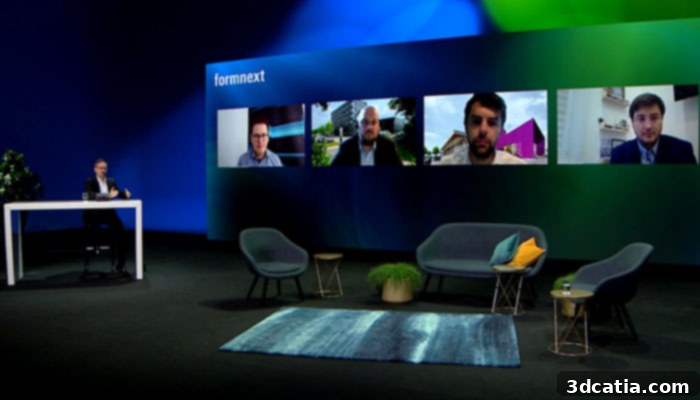
Beyond networking, Formnext Connect maintained its tradition of being a launchpad for the latest innovations in additive manufacturing. The event hosted a significant number of international product launches, spanning new materials, advanced post-processing solutions, and cutting-edge SLM machines. The comprehensive program, including Formnext Connect and the co-located TCT Conference @ Formnext, delivered in-depth insights into current trends and pivotal innovations shaping the AM landscape. These sessions provided a detailed overview of technological advancements, showcasing the industry’s resilience and rapid evolution even amidst global uncertainties. Furthermore, the main stage served as a vibrant hub for engaging panel discussions, featuring leading technology experts from diverse user industries such as aerospace, automotive, construction, and medicine. The caliber of the content presented was exceptionally high, reaffirming that the pace of innovation within the additive manufacturing sector remained undeterred by the pandemic. Attendees had access to a wealth of knowledge, from strategic market analyses to technical deep dives, all contributing to a rich learning experience.
Navigating the Digital Exhibition Space and Exhibitor Challenges
When comparing Formnext Connect to other virtual events that emerged during the pandemic, it became clear that the organizers intentionally chose not to replicate a traditional exhibition hall through a virtual 3D environment. Instead, participants navigated the platform primarily via a search function to locate exhibitors and through various sections on the left-hand menu to access planning tools, the main stage, and meeting requests. This approach, while functional, was not universally intuitive for all users. Ricoh elaborated on this design choice, stating: “The Expert Sessions were the only way to happen upon a new discovery. This did make exploring a little static – at other online events we are used to there being a virtual recreation of the exhibition space with site maps and virtual stands.” This feedback underscores a key challenge in virtual event design: balancing direct accessibility with the element of serendipitous discovery that is so integral to physical trade shows.
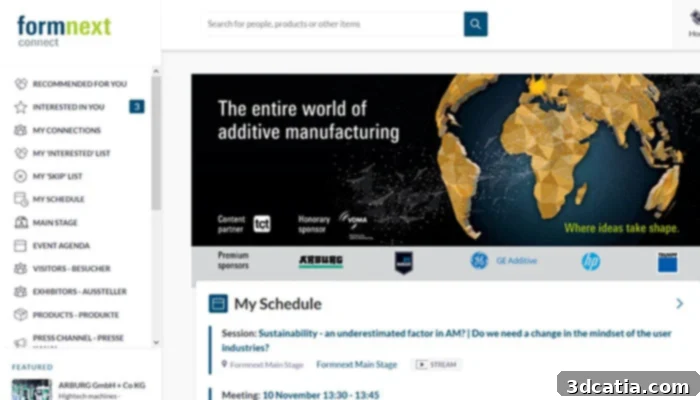
The Formnext Connect platform display | Image via Formnext Connect
For exhibitors, the transition to a virtual showcase presented a distinct set of hurdles, particularly for companies whose products demand tactile interaction or in-person demonstration. The tangible nature of additive manufacturing components – their texture, weight, and structural integrity – is often critical for potential customers to fully appreciate their value. BASF Forward AM highlighted this difficulty: “Showing a headrest designed with a lattice structure is one thing, but we think customers could understand the benefits way better when they are able to touch the part.” This sentiment was echoed by DyeMansion, a leading provider of post-processing solutions, who agreed: “The interaction with our potential customers and AM users was not comparable to when you have a physical product. Our finishing solutions and colors are something that you really have to touch and feel to perceive the added value.” These insights underscore a fundamental limitation of virtual events for industries where physical product demonstration and sensory experience are paramount for sales and engagement. High-resolution images and videos, while helpful, often fall short of replicating the full impact of an in-person product encounter.
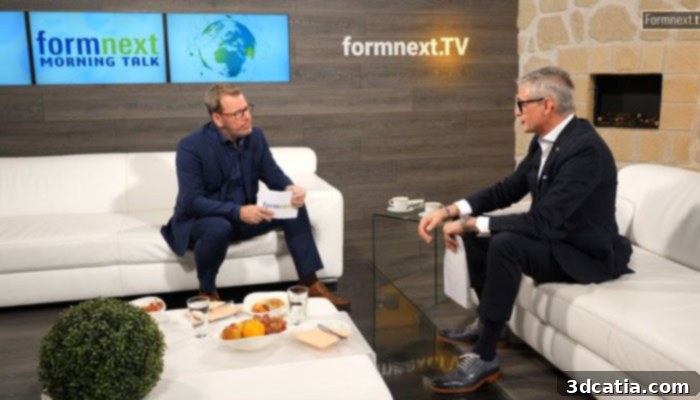
The Formnext Connect main stage | Image via Formnext Connect
Uncovering the Advantages of a Digital Trade Show
Despite the inherent challenges, the digital format of Formnext Connect also offered several compelling advantages, revolutionizing the accessibility and logistical aspects of attending a major industry event. For both attendees and exhibitors, one of the most immediate benefits was significantly “less organisation and logistics,” as observed by 3YOURMIND. This translates into substantial cost and time savings. Companies no longer needed to budget for expensive flights, hotel accommodations, and daily expenses for their teams. For exhibitors, the financial relief was even greater, eliminating the considerable costs associated with booth rental, design, construction, shipping of equipment, and on-site staff deployment. BASF Forward AM highlighted this efficiency, noting: “No flights or travel was necessary, and no carrying around of 3D printed parts.” This reduction in logistical overhead made participation viable for a broader range of companies, including smaller enterprises and startups, who might typically find the expenses of a physical show prohibitive. Even for the individual participant, the sheer simplicity of logging into a platform from anywhere in the world to attend keynotes, expert sessions, or pre-scheduled meetings represented a significant boon, removing geographical barriers and reducing the time commitment. This enhanced convenience fostered broader engagement and democratic access to crucial industry insights.
One of the most surprising and impactful benefits of the digital format was its ability to make sessions more accessible and inclusive than their physical counterparts. Ricoh provided a compelling example: “In some circumstances the digital forum gave us the opportunity to reach more people. We had 100 people attend our Expert Session on SLS printing with thermoset, when we might not have had 100 people arrive at the stand at one time to see a demonstration. It’s also really useful to have these Expert Sessions available on demand on the FN platform to catch up over the next few weeks.” This speaks volumes about the power of virtual platforms to scale attendance for specific presentations, allowing experts to reach a much larger audience simultaneously without the physical constraints of a venue. Furthermore, the availability of content on-demand after the live event greatly extended the learning opportunity, allowing participants to revisit crucial information, catch up on missed sessions due to scheduling conflicts or time zone differences, and delve deeper into topics at their own pace. This feature transforms the event from a fleeting experience into a lasting educational resource. Additionally, the reduction in travel had a positive environmental impact, significantly lowering the carbon footprint associated with a large-scale international event.
The Future of Additive Manufacturing Events: A Hybrid Approach?
Despite the clear advantages of the digital format, a predominant sentiment among participants and exhibitors was a strong desire to return to physical events. The unique energy, spontaneous networking opportunities, and tactile experiences offered by an in-person trade show remain deeply valued. DyeMansion encapsulated this feeling perfectly: “We have never felt so physically agile after a week of Formnext. On a physical event, all the drinks and talks until early in the morning are really exciting and worth it, but also sometimes kind of exhausting! However, walking around the exhibition, exploring the booths with new technologies and new companies in our industry that we did not know before, cannot be replaced!” This highlights the irreplaceable aspect of human interaction and discovery that physical events foster, from casual conversations to exploring cutting-edge hardware firsthand. The Formnext Connect 2020 experiment, while successful in many aspects, has undoubtedly laid the groundwork for future events, suggesting a potential evolution towards a hybrid model. This future could combine the global reach and accessibility of a digital platform with the invaluable face-to-face interactions, hands-on demonstrations, and vibrant atmosphere of a physical exhibition. Such an approach could offer the best of both worlds, catering to diverse needs and maximizing engagement for the ever-evolving additive manufacturing industry.
For those interested in delving deeper into the specifics of Formnext Connect 2020, more information can be found HERE. We encourage you to share your experiences: Did you participate in this pioneering digital event? What were your thoughts on the platform, the content, and the overall experience? Let us know in a comment below or connect with us on our Facebook and Twitter pages! Don’t miss out on the latest advancements and news in 3D printing; remember to sign up for our free weekly Newsletter, delivered straight to your inbox.