
RAPID + TCT 2024 Highlights: Unveiling the Future of Additive Manufacturing and 3D Printing Innovation
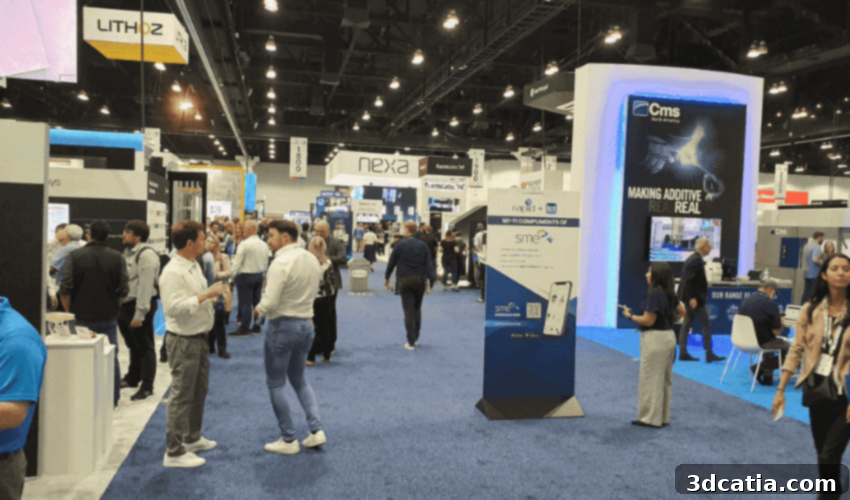
As the second day of RAPID + TCT 2024 concluded, the overwhelming sentiment was one of profound innovation and excitement. With over 400 exhibitors showcasing their latest advancements, the event served as a vibrant epicenter for the additive manufacturing industry, revealing a myriad of cutting-edge solutions. From sophisticated hardware to intelligent software, advanced materials to streamlined post-processing techniques, the exhibition floor buzzed with revolutionary products, both entirely new and significantly upgraded. For those who couldn’t attend this pivotal event, or perhaps felt overwhelmed by the sheer volume of groundbreaking technologies on display, we’ve meticulously curated a list of some of the most innovative solutions that left a lasting impression at RAPID + TCT this year, presented below in no particular order. These selected highlights underscore the rapid evolution and diverse capabilities now defining the landscape of 3D printing, promising to reshape various industries.
The UltraCraft Reflex Combo from HeyGears: A Complete Desktop MSLA Ecosystem
HeyGears, a prominent 3D printing solution provider, introduced the UltraCraft Reflex, a desktop 3D printer poised to redefine accessibility and efficiency in resin-based additive manufacturing. This innovative machine leverages advanced MSLA (Masked Stereolithography Apparatus) resin technology, offering a generous maximum build volume of 192 x 121 x 220 mm. With an impressive print speed of 27 mm/h and a manageable total weight of 25kg, the UltraCraft Reflex is engineered for both rapid prototyping and detailed production. Its versatility is further enhanced by compatibility with an extensive range of UltraPrint resins, including HeyGears’ ABS-like PAU10 for durable functional parts, transparent PAT10 for optical clarity, mixable color PAM10 for aesthetic versatility, precise detail PAP10 for intricate geometries, and heat-resistant PAH10 for demanding engineering applications. Beyond material flexibility, the UltraCraft Reflex boasts intelligent features such as automatic resin reloading, precise material level detection, and a preheated tray to ensure optimal printing conditions and reduce material viscosity for smoother prints. Achieving an exceptional accuracy of 33 μm and an impressive 95% printing success rate, this solution integrates proprietary software that provides intelligent auto-supports and advanced slicing capabilities, simplifying the entire workflow for users.
At RAPID + TCT, HeyGears emphasized not just the prowess of the UltraCraft Reflex printer itself, but the completeness of its entire product ecosystem – the UltraCraft Reflex Combo. This comprehensive package addresses the full spectrum of the manufacturing process, transforming raw digital designs into finished physical objects with unparalleled ease. The Combo includes the UltraCraft Reflex 3D printer, complemented by the UltraCraft Wash station for efficient and thorough cleaning of printed parts, and the UltraCraft Cure station for precise post-curing, which optimizes material properties and ensures final part strength. Taking additive manufacturing to the next level, the UltraCraft Pulsing Release Module is an optional yet highly impactful addition designed to significantly reduce peeling forces during each print, thereby minimizing print failures and expanding the range of printable geometries. This end-to-end production platform is meticulously designed to offer a worry-free 3D printing experience, enabling users to effortlessly bring their ideas to life. Attendees at RAPID + TCT had the exclusive opportunity to experience the UltraCraft Reflex Combo firsthand at HeyGears’ booth 2353. The UltraCraft Reflex Combo is available starting from an attractive price point of €2,770, offering an accessible entry into professional-grade resin 3D printing. Discover more about this transformative system and its capabilities by clicking HERE.
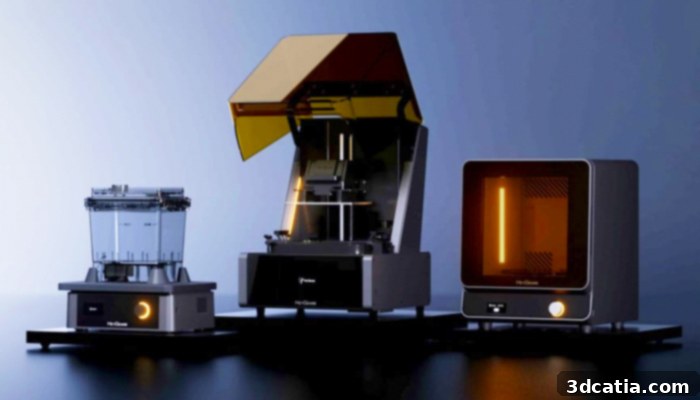
Photo Credits: HeyGears
Chemcubed’s ElectroUV3D Tabletop Printer: Revolutionizing Additive Printed Electronics
The global economy has been grappling with a persistent circuit board shortage, leading to significant challenges such as severe price escalations and production bottlenecks across critical sectors like automotive, consumer electronics, and medical devices. However, additive manufacturing is emerging as a powerful solution to these pressing issues. Chemcubed, a former Stony Brook-startup initially recognized for its innovative NanoCubed 3D printing materials, has introduced a groundbreaking new printer specifically engineered to produce additive printed electronics, including essential components like Printed Circuit Boards (PCBs). This innovative system, dubbed the ElectrovUV3D, is a UV LED flatbed tabletop printer that utilizes the company’s patented electrojetting process. This sophisticated multi-jet printing technique involves a precise layer-by-layer deposition of specialized inks. It begins with the controlled application of silver conductive inks, followed by UV-curable dielectric insulating/building inks. The printer’s advanced 8-channel inkjet head, featuring 180 nozzles per inch, enables this intricate and highly accurate deposition. This unique capability facilitates simultaneous multi-material and multi-layer printing, which is crucial for the complex architecture of modern electronics. Furthermore, the ElectrovUV3D is equipped with a heated bed that ensures instantaneous sintering of the conductive inks, securing their electrical properties, while a powerful UV-LED lamp efficiently cures the photosensitive dielectric inks. This dual-action approach streamlines the production process and enhances material integrity. The printer distinguishes itself with micron-scale resolution, achieving impressive specifications: 200µm for trace gaps, 100 µm for trace widths, and an astonishing 50µm for stand-alone trace widths. This level of precision represents a significant leap forward in the field of 3D printed electronics, offering immense potential for rapid prototyping, customized low-volume production, and even on-demand repair of electronic components, thereby addressing critical supply chain vulnerabilities and fostering innovation in product design.
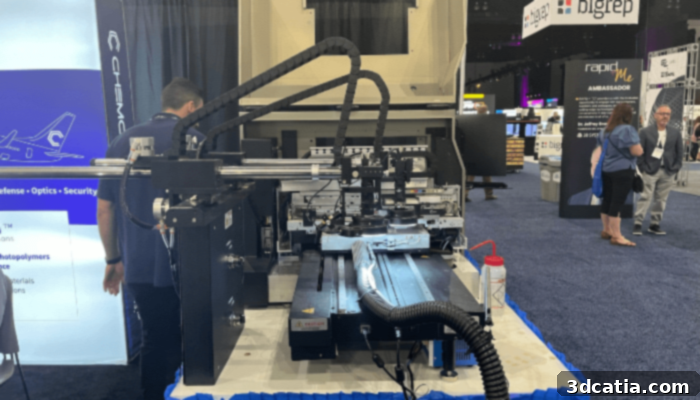
Photo Credits: 3Dnatives
Nikon Lasermeister LM300A and SB100: Merging Scanning and 3D Printing for Industrial Applications
Our next highlighted innovation from RAPID + TCT represents a visionary integration of technologies, even if the physical machine itself wasn’t on the show floor. Nikon SLM’s booth prominently showcased the capabilities and profound impact of their new Lasermeister LM300A, a testament to its strategic importance in the additive manufacturing landscape. Detailed information and numerous application parts demonstrated the vast possibilities enabled by this groundbreaking system. The star of this advancement is the new Lasermeister LM300A from Nikon SLM, an industrial-grade Directed Energy Deposition (DED) 3D printer. What truly sets this solution apart is its seamless integration with a complementary 3D scanner, the Lasermeister SB100. This powerful combination transforms the Lasermeister 100A metal AM system into a highly advanced platform specifically tailored for demanding industrial applications. The Lasermeister LM300A boasts an expanded build area, accommodating larger and more complex components, which is critical for industrial scale. The sophisticated 3D scanner, the SB100, is a game-changer for factory automation. It empowers users to precisely scan each workpiece before the additive manufacturing process begins, thereby enabling the automatic generation of an optimized tool path. This pre-scan and automated path generation capability significantly enhances accuracy, reduces manual intervention, and accelerates production cycles, especially for repair and refurbishment tasks. The solution is anticipated to excel in critical applications such as the repair of high-value turbine blades, which are often subjected to extreme operational conditions and require precise material restoration, and the creation of highly customized molds. By integrating high-precision scanning with robust DED printing, Nikon SLM is offering a comprehensive solution that not only prints new parts but also intelligently repairs and optimizes existing components, pushing the boundaries of what is achievable in metal additive manufacturing and streamlining industrial workflows.
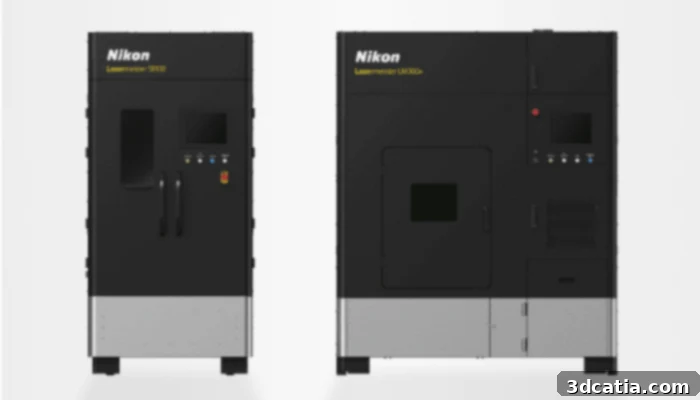
Photo Credits: Nikon
Impossible Objects’ CBAM 25: Ushering in Mass Production with Composite-Based Additive Manufacturing
Impossible Objects has firmly established its reputation as a pioneer in Composite-Based Additive Manufacturing (CBAM), a technology that combines high-performance fibers with polymer matrices to create parts with exceptional strength-to-weight ratios. At RAPID + TCT 2024, the company celebrated a significant milestone: the operational demonstration of its flagship machine, the CBAM 25. First unveiled at RAPID + TCT 2023, the CBAM 25 immediately captivated the industry with its audacious claim of being able to print an astonishing fifteen times faster than its nearest competitors. This monumental leap in speed is not merely an incremental improvement; it is a disruptive force designed to propel 3D printing beyond prototyping and into the realm of true mass production. The CBAM 25, which has been commercially available since early 2024, was showcased in full operation at the very event where its capabilities were first announced, allowing attendees to witness firsthand its groundbreaking performance. This innovative system enables the creation of parts that are not only significantly lighter but also considerably more durable than those produced by conventional methods. A key enabler of these enhanced properties is the machine’s compatibility with advanced materials like Carbon Fiber PEEK. Carbon Fiber PEEK is a high-performance thermoplastic known for its exceptional mechanical strength, stiffness, thermal stability, and chemical resistance, making it ideal for demanding applications in aerospace, automotive, and defense sectors. By leveraging such sophisticated composite materials and an unprecedented printing speed, the CBAM 25 offers manufacturers a viable pathway to rapidly produce end-use parts, tooling, and functional prototypes at scale, fundamentally altering economic models and opening new design possibilities for industries requiring high-performance, lightweight components.
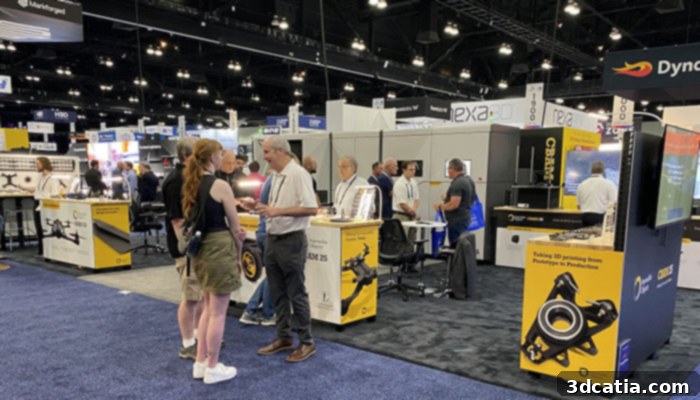
Photo Credits: Impossible Objects
Discover Dyndrite’s LPBF Pro Solution: Unlocking Precision in Metal 3D Printing Software
While hardware innovations often capture headlines at additive manufacturing events, the pivotal role of software in truly industrializing 3D printing has become increasingly clear. RAPID + TCT 2024 shone a spotlight on the critical need for more effective, intuitive, and powerful software solutions to drive the further advancement of additive manufacturing across various industries. Among the array of software advancements presented, Dyndrite’s LPBF Pro metal 3D printing software emerged as one of the most impressive and impactful. Dyndrite has consistently made a name for itself in the realm of additive manufacturing software, renowned for its GPU-accelerated computation engine that handles complex geometries with unparalleled speed. The LPBF Pro, released in November 2023, builds upon this foundation. As its name suggests, it is specifically engineered for metal Laser Powder Bed Fusion (LPBF) processes, which are central to producing high-performance metal parts. What distinguishes LPBF Pro is its robust feature set and native integration capabilities with leading hardware brands, including Aconity3D, EOS, Renishaw, and SLM Solutions. This native integration ensures seamless workflows and optimized performance across diverse machine ecosystems. At RAPID + TCT, attendees had the opportunity to witness the software in live action, observing its ability to generate incredibly complex and optimized tool paths. Users demonstrated precise control over critical print parameters, such as laser power, which can be dynamically adjusted based on the specific requirements of different regions within a part. The software’s advanced geometry region segmentation feature, for instance, allows for granular control over print parameters, enabling the creation of parts that are not only faster to produce but also significantly more optimized in terms of material properties, surface finish, and structural integrity. This level of precise control minimizes trial-and-error, reduces material waste, and ultimately facilitates the production of higher-quality, repeatable metal components, thereby accelerating the adoption of metal AM for production applications.
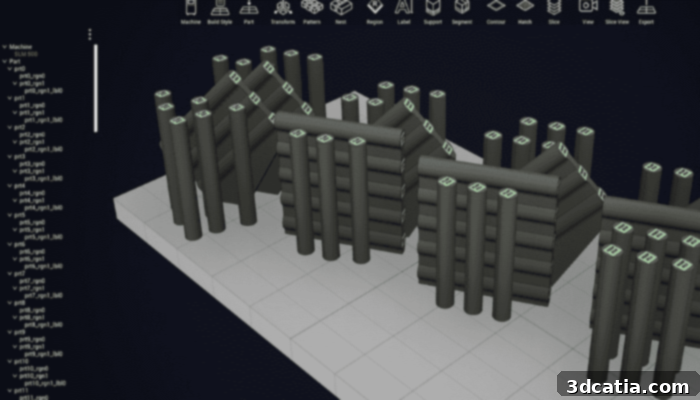
Photo Credits: Dyndrite
Grid Logic’s Multi-Material Powder 3D Printing Technology: A New Frontier in Additive Manufacturing
Multi-material 3D printing, while not entirely new to additive manufacturing, traditionally relies on filaments or resins. However, Grid Logic unveiled a truly exciting and distinct solution at RAPID + TCT this year that challenges this norm: a multi-material system specifically designed for powders. This innovative technology opens up unprecedented possibilities by enabling the selective deposition of multiple distinct powders, encompassing both metals and ceramics. The process is remarkably elegant and efficient. Unlike conventional methods where materials are sintered during the printing process, Grid Logic’s technology involves depositing all desired powders layer by layer to form a complete green part. Once the multi-material powder bed is fully constructed, it is then transferred to a sintering furnace. Here, the various particles are fused together using a specialized pressureless sintering process. This post-printing sintering approach offers several significant advantages. Foremost, the company asserts that this technology dramatically minimizes waste, particularly crucial when dealing with high-cost powders, which can be a considerable expense in traditional additive manufacturing. Furthermore, a key benefit is the absence of residual stress in the printed parts. Residual stress is a common challenge in many AM processes, often leading to warping, cracking, or reduced mechanical performance. By employing a pressureless sintering method after deposition, Grid Logic effectively mitigates these issues, resulting in more robust and dimensionally accurate components. This innovative approach expands the material palette for multi-material applications and enables the creation of functionally graded materials or complex assemblies with distinct material properties tailored to specific regions, paving the way for advanced engineering components in sectors like aerospace, defense, and custom tooling.
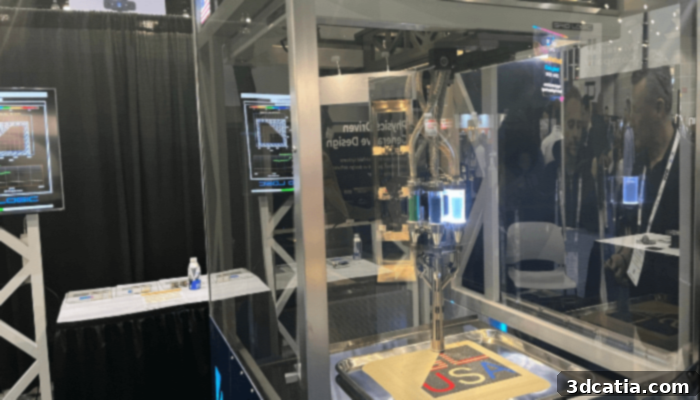
Photo Credits: 3Dnatives
Lumafield’s Neptune: Enhancing Quality Control for Industrial Additive Manufacturing
For additive manufacturing to achieve its full potential in industrial applications, the challenge of consistent and reliable quality control must be comprehensively addressed. Ensuring that 3D printed parts meet stringent performance and safety standards is paramount, and thankfully, a powerful solution was prominently showcased at Lumafield’s booth at RAPID + TCT 2024. While not exclusively designed for 3D printing, the Neptune industrial x-ray CT (Computed Tomography) scanner presents itself as an exceptionally effective tool for users across various additive manufacturing technologies. This fast and highly efficient scanner is engineered to quickly and accurately pinpoint minuscule flaws and defects embedded within a printed part that would be impossible to detect through surface inspection alone. A critical capability of the Neptune is its ability to identify internal imperfections such as keyhole pores, which are often prevalent in Laser Powder Bed Fusion (LPBF) processes and can significantly compromise a part’s structural integrity. Although the inspection process naturally occurs after a part has already been printed, the Neptune’s speed and precision are invaluable. By rapidly and effectively identifying these internal quality issues, manufacturers can gain critical insights into their printing processes. This immediate feedback loop allows users to quickly adapt and refine their AM parameters, leading to iterative improvements that result in the production of stronger, better-performing, and more reliable parts. Integrating such advanced non-destructive testing (NDT) capabilities into the additive manufacturing workflow is a vital step toward achieving the repeatability and certification required for widespread industrial adoption, ensuring that every printed component lives up to its design specifications and performance expectations.
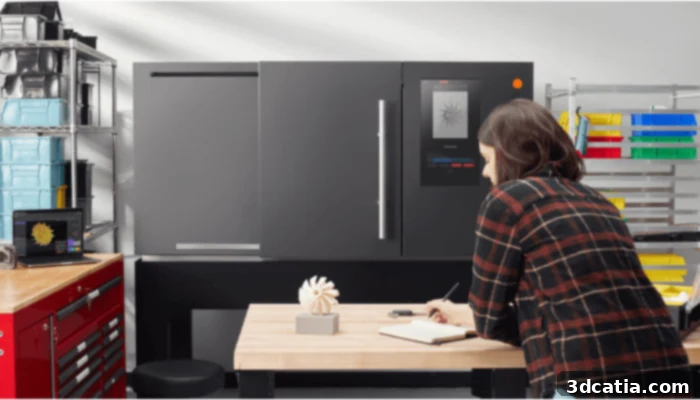
Photo Credits: Lumafields
RAPID + TCT 2024 undeniably showcased a transformative array of innovations, pushing the boundaries of what’s possible in additive manufacturing. From high-speed composite printers and integrated scanning solutions to advanced software and novel multi-material processes, the future of 3D printing looks brighter and more industrialized than ever before. We hope this curated overview provided valuable insights into the cutting-edge technologies that are set to redefine manufacturing across various sectors. Which of these groundbreaking solutions resonated most with you at RAPID + TCT 2024? We invite you to share your thoughts in a comment below or engage with us on our LinkedIn, Facebook, and Twitter pages! Don’t miss out on the latest advancements and news from the additive manufacturing world; remember to sign up for our free weekly newsletter here to receive direct updates to your inbox. You can also explore all our in-depth video content and demonstrations on our dedicated YouTube channel.