
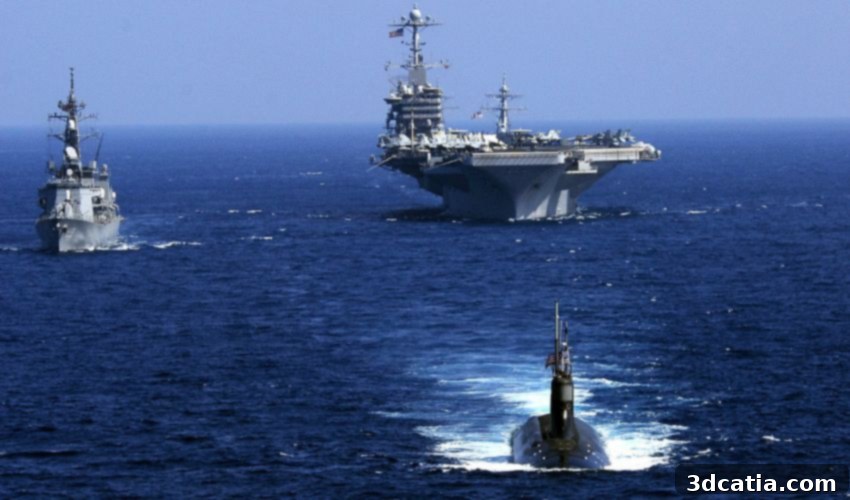
US Navy Advances Submarine Technology with First 3D Printed Impeller Delivered by Curtiss-Wright and Sintavia
The U.S. Navy’s unwavering commitment to embracing cutting-edge technologies like additive manufacturing, commonly known as 3D printing, continues to redefine its operational capabilities, particularly within its critical submarine fleet. A significant leap forward in this ongoing technological evolution has been announced by Curtiss-Wright’s EMS Division. In collaboration with additive manufacturing specialist Sintavia, Curtiss-Wright has successfully delivered what is considered the first submarine component featuring a qualified, metal 3D printed impeller. This pioneering component is slated for installation in a U.S. Navy vessel, marking a monumental achievement that underscores the growing reliability and strategic importance of advanced manufacturing processes in national defense. This development not only highlights the innovative spirit driving naval technology but also sets a new precedent for the integration of complex, high-performance 3D printed parts into vital military hardware.
The Groundbreaking Delivery: A Milestone for Naval Additive Manufacturing
The delivery of this first-of-its-kind submarine component signifies a critical validation of additive manufacturing for highly demanding naval applications. This particular part, crucial for the operational integrity of a submarine, incorporates a metal impeller fabricated through advanced 3D printing techniques. The successful development, manufacturing, and rigorous testing of this component involved a powerful consortium of industry leaders. Curtiss-Wright Corporation, a renowned provider of sophisticated solutions for the aerospace and defense markets, spearheaded the project. Their EMS (Engineered Materials and Services) Division, a leading supplier of pumps and components for naval fleets, brought unparalleled expertise in maritime technology to the forefront.
Partnering with Curtiss-Wright was Sintavia, recognized globally as the world’s first all-digital aerospace and defense component manufacturer. Sintavia’s specialized capabilities in precision metal additive manufacturing were instrumental in bringing the innovative impeller design to fruition. Further strengthening this collaborative effort was Bechtel Plant Machinery Inc. (BPMI), a key participant in the U.S. Naval Nuclear Propulsion Program. BPMI’s role involves supplying vital nuclear power plant components for the nation’s submarines and aircraft carriers, ensuring that the new 3D printed component meets the stringent safety and performance standards required for nuclear naval vessels. Together, these entities meticulously developed, manufactured, tested, and supplied this groundbreaking submarine component, affirming the viability and readiness of qualified metal 3D printing for critical defense applications.
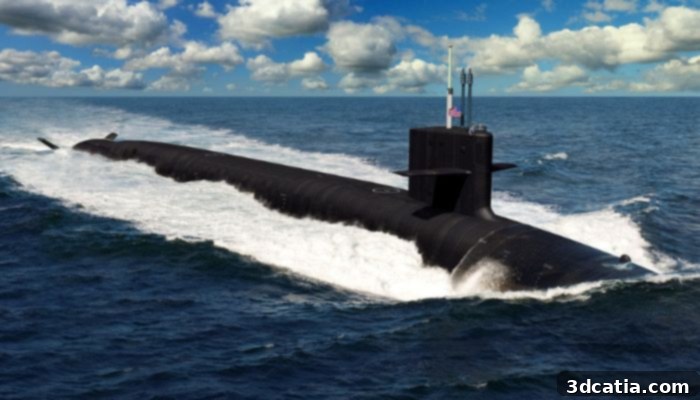
An artist’s rendition of a Columbia-class ballistic submarine (photo credits: Curtiss-Wright)
The Strategic Alliance: Pioneers in Defense Manufacturing Innovation
The collaboration between Curtiss-Wright, Sintavia, and BPMI represents a strategic alignment of leaders in their respective fields, collectively pushing the boundaries of what is achievable in naval defense manufacturing. Curtiss-Wright’s EMS Division, through its EPD (Electro-Mechanical Products) business, has a long-standing history of delivering cutting-edge naval and maritime technological products, particularly as a dominant supplier of pumps and various components essential for both surface and submerged fleets. Their deep understanding of naval operational requirements and robust engineering capabilities formed the bedrock of this project.
Sintavia, on the other hand, brings a unique, all-digital approach to aerospace and defense component manufacturing. Their state-of-the-art facilities and expertise in metal additive manufacturing processes allow for the creation of intricate, high-performance parts that are often impossible or prohibitively expensive to produce using traditional methods. This synergy enabled the successful qualification and production of the 3D printed impeller, demonstrating a powerful blend of traditional engineering prowess and advanced manufacturing innovation.
“Sintavia has proven to be an invaluable industry partner, and we are excited about the opportunity to further solidify our partnership by increasing the number of additively manufactured parts for this application and other critical naval defense components,” expanded David Micha, Sr. Vice President and General Manager of the EMS Division. Micha further highlighted the significance of this achievement: “In addition, we are proud to be providing the first critical service equipment utilizing an additively manufactured component to the U.S. Navy’s submarine program and look forward to expanding these capabilities in the future to more efficiently serve our customer.” These remarks underscore a clear vision for expanding the integration of additive manufacturing into more critical naval components, promising greater efficiency, innovation, and responsiveness in meeting the U.S. Navy’s evolving needs.
Advancements in Additive Manufacturing Technologies for Naval Applications
While the specific 3D printing process employed for this groundbreaking impeller was not explicitly detailed in the press release, industry observers familiar with Sintavia’s extensive capabilities can infer the likely technologies involved. Sintavia’s headquarters house a diverse array of advanced additive manufacturing systems, with a prominent focus on various forms of laser powder bed fusion (LPBF). This technology, which uses a laser to selectively melt and fuse metallic powders layer by layer, is renowned for its ability to produce highly complex geometries with excellent material properties and high precision, making it an ideal candidate for critical aerospace and defense components that demand robust performance and intricate designs.
The choice of LPBF aligns well with the U.S. Navy’s prior experience and successful implementation of additive manufacturing on its submarines. However, the naval sector’s adoption of 3D printing is not limited to LPBF alone. Other sophisticated techniques are also being actively explored and integrated for various applications. Directed Energy Deposition (DED), for instance, involves melting material as it is deposited, often used for repair, large-scale fabrication, or adding features to existing components due to its versatility and ability to work with various material forms. Liquid metal jetting, another promising technology, offers unique capabilities for high-speed, high-resolution printing of metal parts, potentially opening doors for even faster and more detailed production. The U.S. Navy’s multifaceted approach to additive manufacturing showcases its commitment to leveraging the most suitable technology for each specific challenge, ensuring maximum performance, cost-efficiency, and strategic advantage across its fleet. These diverse technologies collectively contribute to expanding the design space for naval engineers and accelerating the development cycle for mission-critical parts, from prototype to qualified production.
The Unmistakable Advantages of Additive Manufacturing in Defense
The compelling rationale behind the U.S. Navy’s increasing reliance on additive manufacturing remains unequivocally clear: it empowers the development and production of components that would otherwise be exceedingly difficult, time-consuming, or prohibitively costly to manufacture using conventional methods. For the defense sector, and particularly for the construction and maintenance of American submarines, these advantages translate into tangible benefits, significantly enhancing operational readiness and strategic independence.
One of the foremost advantages is the ability to produce highly complex internal geometries and optimize designs for superior performance, such as the intricate structure of an impeller, which can be tailored for maximum hydrodynamic efficiency and reduced weight. Beyond design freedom, additive manufacturing offers a powerful solution to persistent supply chain vulnerabilities and delays, a major concern for the extensive and often custom manufacturing requirements of naval vessels. By enabling on-demand production and reducing reliance on lengthy traditional procurement cycles, AM can significantly shorten lead times for critical spare parts and new components. This capability is particularly vital for submarines, where specialized parts may have limited suppliers or long production schedules, potentially causing prolonged operational downtime and costly delays.
Furthermore, Curtiss-Wright, Sintavia, and BPMI emphasize that additive manufacturing provides a reliable and high-quality domestic source for these types of specialized parts. This ensures greater control over the manufacturing process, enhances national security by reducing dependence on foreign suppliers, and fosters job creation within the U.S. industrial base. The successful qualification and delivery of this 3D printed impeller stand as irrefutable proof of AM’s capability to deliver robust, mission-ready components that meet the rigorous standards of naval defense. This paradigm shift in manufacturing methodologies is not merely about creating parts; it’s about building a resilient, agile, and technologically superior defense industrial base for the future, capable of rapid innovation and self-sufficiency.
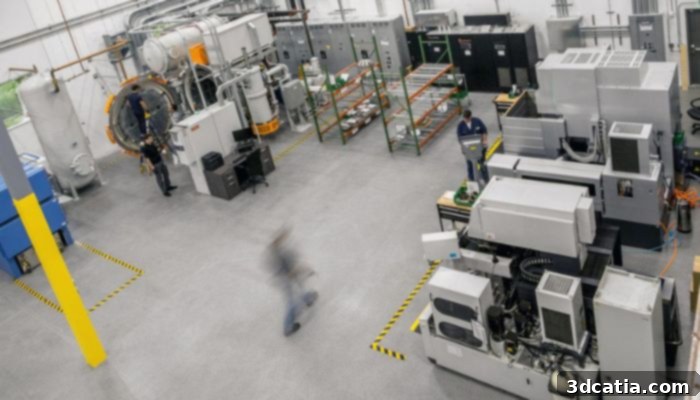
Sintavia has a number of metal 3D printing capabilities (photo credits: Sintavia)
Looking Ahead: The Future of 3D Printing in Naval Defense
This milestone delivery of a 3D printed impeller for a U.S. Navy submarine is more than just a single achievement; it’s a powerful indicator of the transformative potential of additive manufacturing across the entire naval defense landscape. The successful qualification of such a critical component paves the way for a broader adoption of AM technologies, fundamentally altering how naval vessels are designed, built, maintained, and even repaired at sea. This achievement acts as a catalyst for further exploration and integration of AM into various facets of naval operations.
Lindsay Lewis, Sintavia’s Corporate Vice President, underscored this forward-looking perspective, concluding, `“We would like to thank both Curtiss-Wright and BPMI for the opportunity to leverage Sintavia’s additive technology in the production of this critical component. Leading-edge manufacturing processes such as AM will continue to be key differentiators in developing superior defense components in the years to come.”` Her statement highlights the strategic importance of AM not just as an alternative manufacturing method, but as a critical differentiator that confers a competitive edge in defense capabilities, ensuring the U.S. Navy maintains its technological superiority.
The future for AM in the U.S. Navy is exceptionally bright and expansive. We can anticipate an increased application of 3D printing for a wide range of components, from intricate engine parts and hydraulic systems to specialized tools and on-demand spare parts. This could include further exploration of different metal alloys and composite materials, enabling lighter, stronger, and more durable components specifically designed for the harsh marine environment. The ability to customize parts for specific operational needs, rapidly iterate designs, and even print repairs directly on naval bases or aboard ships holds immense promise for improving fleet readiness, reducing maintenance costs, and extending the operational life of vital assets. This success story with the impeller will likely catalyze further investment and innovation, solidifying additive manufacturing’s role as an indispensable pillar of modern naval engineering and national security.
Conclusion:
The collaborative success of Curtiss-Wright, Sintavia, and Bechtel Plant Machinery Inc. in delivering the first qualified metal 3D printed impeller for a U.S. Navy submarine marks a pivotal moment in defense manufacturing. This achievement not only demonstrates the advanced capabilities and reliability of additive manufacturing but also reinforces its strategic value in enhancing supply chain resilience, improving part performance, and ensuring domestic production of critical naval components. As the U.S. Navy continues to explore and integrate these innovative technologies, the future of its submarine fleet and broader defense capabilities appears increasingly reliant on the agility, precision, and efficiency offered by 3D printing. This development is a testament to the power of collaboration and technological foresight in addressing the complex challenges of modern naval defense, promising a more secure and technologically advanced future for the nation’s fleet.
You can read more details in the official press release HERE.
What do you think of this first submarine component with a 3D printed impeller? What future AM projects do you think we can expect from the U.S. navy? Let us know in a comment below or on ourLinkedIn,Facebook, andTwitter pages! Don’t forget to sign up for our free weeklyNewsletter here, the latest 3D printing news straight to your inbox! You can also find all our videos on ourYouTube channel.
*Cover Photo Credits: Curtiss-Wright