
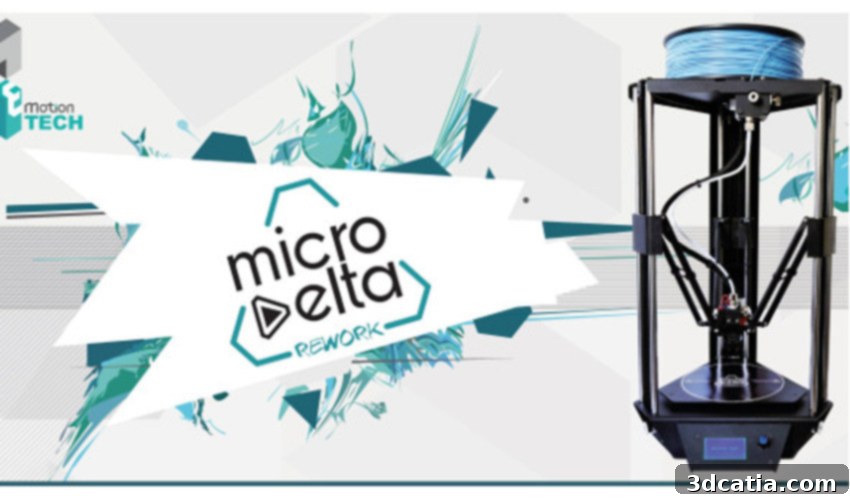
MicroDelta Rework 3D Printer Kit Review: An Affordable DIY Delta for Quality Prints
In our ongoing quest at the 3Dnatives Lab to thoroughly evaluate both high-end prosumer models and more accessible, budget-friendly 3D printers, we turn our attention to the MicroDelta Rework. This latest iteration in the MicroDelta series, hailing from the Toulouse-based manufacturer eMotion Tech, is an intriguing option for enthusiasts looking to dive into the world of 3D printing without breaking the bank. Retailing at approximately $430, the MicroDelta Rework distinguishes itself as a self-assembly 3D printer kit, offering a hands-on experience from start to finish. Our comprehensive review delves into every aspect of this delta printer, from its initial assembly and technical specifications to its software integration and, most importantly, its print quality.
Designed primarily for the DIY enthusiast, the MicroDelta Rework is exclusively available as a kit. This means that users must undertake the complete assembly process themselves, a characteristic that makes it particularly appealing to those who enjoy building and understanding their machines from the ground up. However, individuals who are less inclined towards intricate DIY projects, or who prefer an out-of-the-box solution, might find the assembly process a significant undertaking. In this detailed review, we will explore whether the rewarding experience of building your own machine, coupled with the promise of a fully functional and capable 3D printer, justifies the effort required to construct it.
Unpacking the MicroDelta Rework: Technical Specifications & Design Enhancements
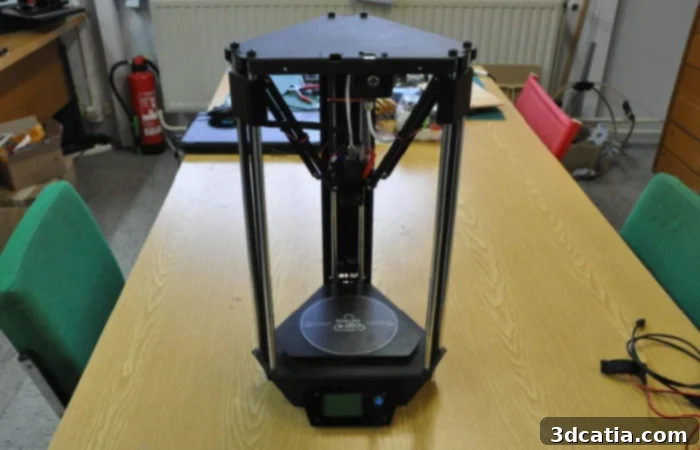
Before we delve into the hands-on experience of assembly and the ultimate test of print quality, let’s thoroughly examine the core technical specifications that define the MicroDelta Rework. This updated model represents a substantial improvement over its predecessor, featuring several key enhancements designed to boost performance, usability, and overall user experience. The printer boasts an impressive build volume of 150 x 150 x 200 mm, which is a significant expansion from the original MicroDelta’s 110 x 110 x 170 mm. This expanded capacity allows for larger prints and greater creative freedom, all while maintaining relatively compact overall dimensions of 530 x 261 x 285 mm. For a budget-friendly delta printer, such a build area is quite generous, making it suitable for a wide range of personal projects, prototypes, and hobbyist creations.
Print speed is another area where the Rework shines, now capable of reaching speeds up to 80mm/s. This increased velocity translates to faster prototyping cycles and quicker turnaround times for your prints, a crucial advantage for many users. Precision is also a highlight, with the MicroDelta Rework achieving a minimum layer thickness of 100 microns on the X and Y axes, and an even finer 50 microns on the Z axis. This capability allows for highly detailed prints with remarkably smooth surfaces, a quality that can rival many printers found in higher price brackets. The ability to achieve such fine layers opens up possibilities for intricate models where surface finish is paramount.
A notable and welcome upgrade in this low-cost 3D printer kit is its robust chassis, which is crafted entirely from folded aluminum. This sturdy construction not only provides enhanced stability and durability to the entire printer but also ensures precise alignment of components, which is critical for consistent and accurate print quality. The base price includes all necessary parts and features auto-calibration, a significant convenience that simplifies the initial setup for a DIY machine. Additionally, eMotion Tech offers several optional upgrades to further enhance the printer’s capabilities and versatility. These include a heating plate kit for €40, which is essential for printing with more demanding materials like ABS, and an LCD screen, also priced at €40, which offers greater independence from a computer during operation. Considering its competitive price point and the comprehensive features offered, the MicroDelta Rework presents itself as a highly compelling and versatile package for aspiring and experienced makers alike.
1. The Assembly Experience: A Rewarding DIY Journey
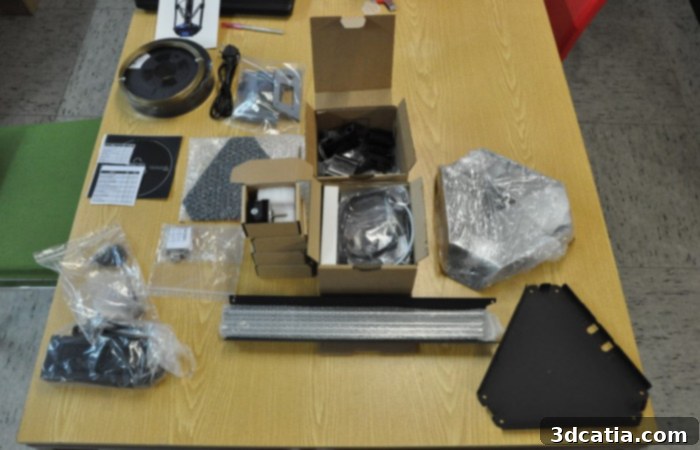
The assembly of a 3D printer kit is often considered as much a part of the overall experience as the printing itself, and the MicroDelta Rework is certainly no exception. The manufacturer confidently states that the full printer can be assembled in just 3 hours. While this claim might indeed be achievable for highly experienced builders or individuals intimately familiar with the intricacies of 3D printer mechanics, our experience suggests that newcomers to the world of 3D printer kits should realistically budget considerably more time. With over 200 individual parts to meticulously assemble, this project demands patience, unwavering attention to detail, and a thorough willingness to follow instructions carefully. Rushing through the process is strongly ill-advised; taking your time to understand each step ensures correct assembly, which is absolutely paramount for the printer’s optimal performance, reliability, and long-term longevity.
Fortunately, the MicroDelta Rework truly excels in its documentation. The instruction manual is exceptionally well-written, clear, and remarkably easy to follow, transforming the potentially daunting task of assembling over two hundred parts into a significantly more manageable and enjoyable process. All instructions are also readily available in PDF format, providing users with the flexibility to access them on various digital devices or even print them out for convenient physical reference. Each step is accompanied by detailed explanations, vivid diagrams, and helpful illustrations, all designed to minimize the risk of confusion or error. This exemplary level of clarity and detail in the documentation is a major advantage, particularly for those venturing into their very first 3D printer build, effectively transforming what could be a frustrating experience into an educational and profoundly rewarding one.
The Aluminum Chassis: Precision Engineering for Effortless Fit
One of the most significant and welcome novelties of the MicroDelta Rework is its revamped aluminum chassis. Unlike some other kit printers that might require considerable force, bending, or fiddling to get parts to align correctly, the precision engineering of this folded aluminum frame ensures that everything fits together perfectly, down to the millimetre. This exceptional level of fit and finish negates the need for any undue force during assembly, making the process remarkably smoother and substantially reducing the likelihood of damaging delicate components. Furthermore, all the various screws, nuts, and fasteners integrate seamlessly, contributing to an overall assembly experience that is surprisingly straightforward, satisfying, and reminiscent of assembling a high-quality product. The inherent rigidity and stability of the aluminum frame also contribute significantly to the printer’s performance during operation, which is crucial for achieving consistent and high-quality prints without unwanted vibrations or flex.
Extruder Assembly and a Timely Test of Customer Service
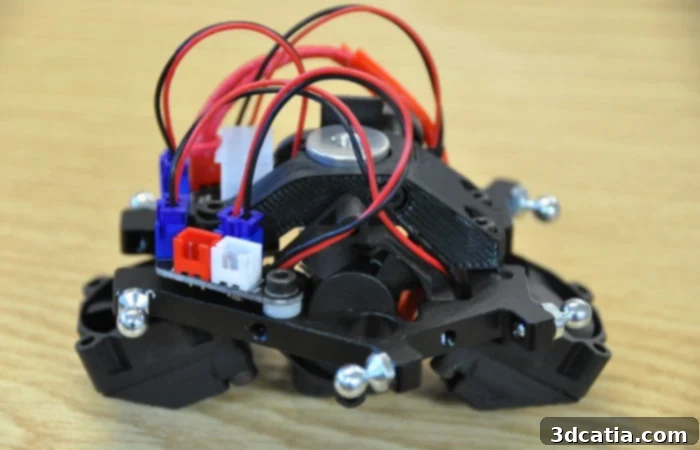
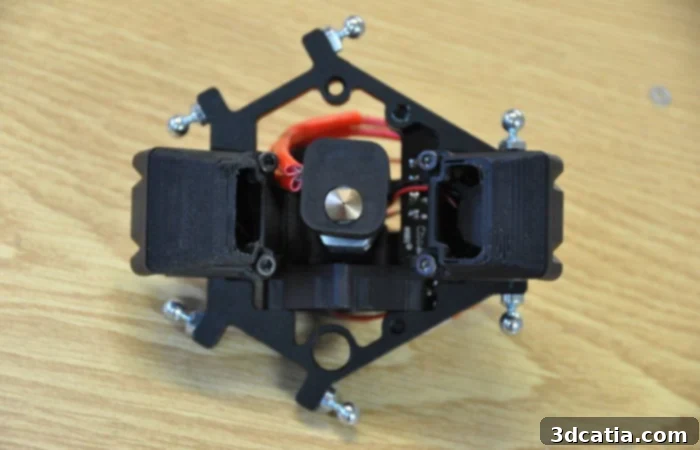
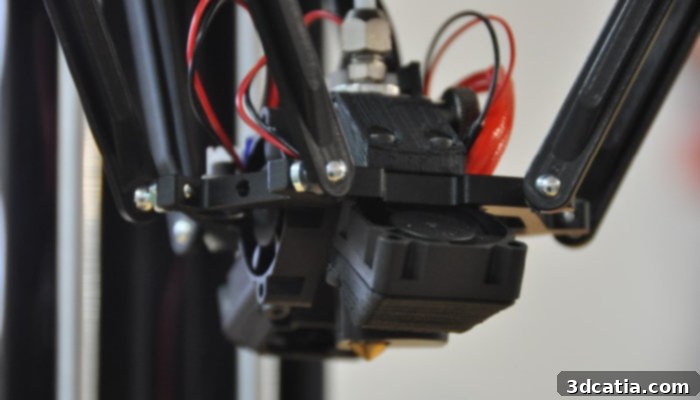
The comprehensive documentation proved to be an invaluable aid when it came to assembling and mounting the extruder system, which is arguably one of the most critical components of any FDM 3D printer. The MicroDelta Rework features a Hexagon extrusion head, a well-regarded component known for its reliability and consistent performance, equipped with interchangeable nozzles (with a standard 0.4mm included) and two cooling fans. These fans are strategically positioned to ensure optimal cooling of the printed filament immediately after extrusion, particularly at higher print speeds, and are directly connected to the interface board for straightforward integration. During our assembly of the extruder, however, we encountered a minor hiccup: a crucial ball bearing was unexpectedly missing from the kit. While initially a minor setback that halted progress, this provided an unforeseen but valuable opportunity to rigorously test eMotion Tech’s after-sales service. A quick phone call was all it took; within a mere two days, the missing part arrived at our lab, delivered promptly and without any fuss or additional charge. This highly efficient and responsive customer support was incredibly reassuring, allowing us to complete the printer’s assembly without any significant delay and reinforcing our confidence in the manufacturer’s commitment to user satisfaction.
Motherboard and Wiring: Unexpected Simplicity and Minor Quirks
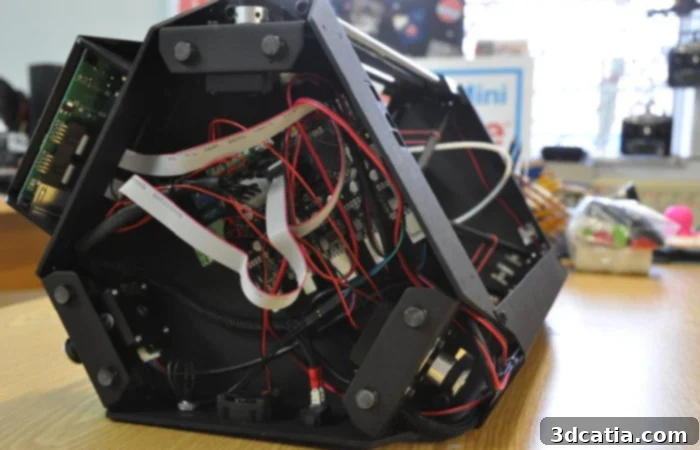
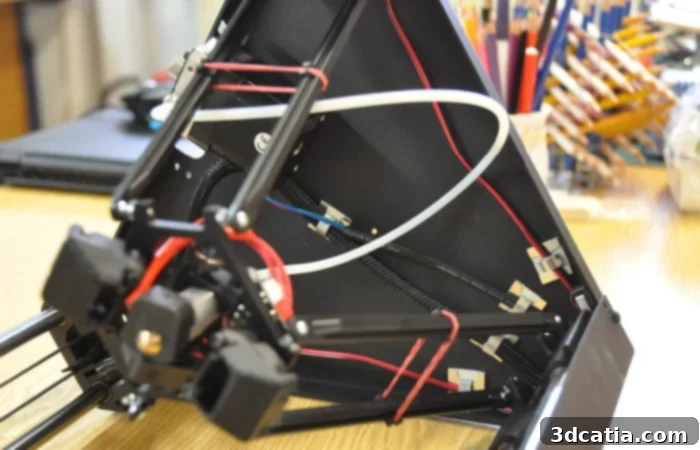
Connecting the motherboard and managing the intricate wiring proved to be surprisingly simple and intuitive, provided the detailed documentation was followed carefully. The various cables are thoughtfully color-coded, effectively eliminating much of the guesswork and making the connections straightforward and virtually foolproof. Everything snaps into place securely, resulting in a neat, organized, and robust internal setup that inspires confidence. This unexpected ease of wiring was a pleasant surprise, significantly exceeding our initial expectations for a complex kit printer. The only minor inconvenience we encountered relates to the SD card slot; it can be somewhat difficult to access due to its placement, and the card occasionally gets slightly stuck within or near its port on the motherboard. While not a frequent necessity during day-to-day operation, removing the SD card does, on occasion, require a bit of patience and dexterity when it is needed.
Optional Upgrades: Enhancing Functionality and User Experience
Our review unit came generously equipped with two popular and highly functional optional upgrades: the heated print bed and the LCD screen. The heated plate, priced at an additional €40, is often considered a standard and indispensable feature on many modern 3D printers, particularly for enhanced material compatibility and improved print adhesion. However, after conducting extensive test prints, we found ourselves pleasantly divided on its absolute necessity when primarily printing with PLA filament. The MicroDelta Rework comes standard with a high-quality “BuildTak” type print surface, which offers truly excellent and reliable adhesion for PLA. For printing solely with PLA, the adhesion was so consistent and strong that a heated bed felt somewhat redundant. That being said, if your ambitions extend beyond PLA to more demanding materials like ABS, PETG, Nylon, or other engineering plastics, a heated bed becomes virtually indispensable for preventing warping, ensuring layer adhesion, and generally achieving successful prints. Thus, its value largely depends on your intended filament usage and printing aspirations.
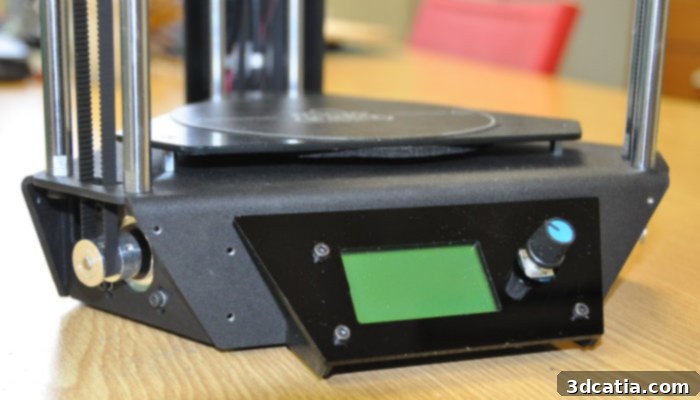
The LCD screen, also an additional €40, significantly enhances the overall user experience by allowing for standalone operation of the printer. While not strictly essential for the printer’s core functionality or print quality, it liberates you from the need for a constant computer connection during printing. This intuitive screen displays vital information at a glance, such as the estimated printing time remaining, current nozzle and bed temperatures, and allows for direct control over print jobs, loading/unloading filament, and various printer settings without needing external software. For convenience, a more fluid workflow, and especially if you plan to print frequently or remotely from your computer, the LCD screen is a highly recommended addition that adds a polished, professional touch to this otherwise budget-friendly and DIY-focused kit, making it feel more like a premium machine.
2. Software and Calibration: Preparing for Precision
With the hardware meticulously assembled and all components in place, the next critical step involves preparing the software for printing and meticulously calibrating the machine. For this review, we utilized a modified version of Repetier, specifically tailored and optimized by eMotion Tech for seamless integration with the MicroDelta Rework. This customized software proved incredibly practical and user-friendly, especially its intuitive step-by-step guide for calibration. Calibration is a foundational process for any 3D printer, ensuring accurate movement across all axes and consistent layer placement, and it’s particularly important for delta kinematics where precision is key.
The MicroDelta Rework simplifies this crucial process through its inclusion of an auto-calibration feature, but there’s a unique and clever preparatory step involved that highlights its DIY spirit. During the assembly phase, users are instructed to construct a small, custom-designed switch with its own 3D printed support. This ingenious device is then temporarily mounted onto the printer during the initial calibration phase. The specialized software then guides the printer to interact precisely with this switch, accurately measuring distances and making micro-adjustments to settings to achieve optimal bed leveling and perfect delta arm alignment. This methodical approach, combined with the crystal-clear instructions embedded within the Repetier software, transforms a potentially complex and intimidating procedure into an accessible one, ensuring that even first-time users can achieve accurate and reliable calibration, which is absolutely fundamental for producing high-quality and consistent prints.
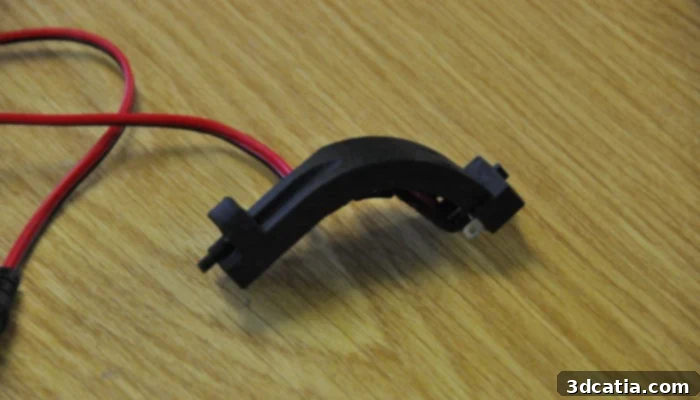
The MicroDelta Rework’s clever 3D printed support for calibration.
3. The Printing Experience: From First Layer to Final Object
Once the MicroDelta Rework is fully assembled, meticulously calibrated, and thoroughly prepared, the true fun and creative potential of 3D printing begins. One of the first and most practical prints you can undertake with this machine is the filament spool holder itself. This clever design allows the filament spool to be conveniently placed directly on top of the 3D printer’s frame, conserving valuable desktop space and contributing to a tidier workspace – a thoughtful design choice that immediately highlights the printer’s user-centric approach and practical utility. This immediate utility sets a positive and encouraging tone for the entire printing journey, showcasing the printer’s ability to create functional objects right out of the gate.
Test Prints and Quality Evaluation: Pushing the Limits
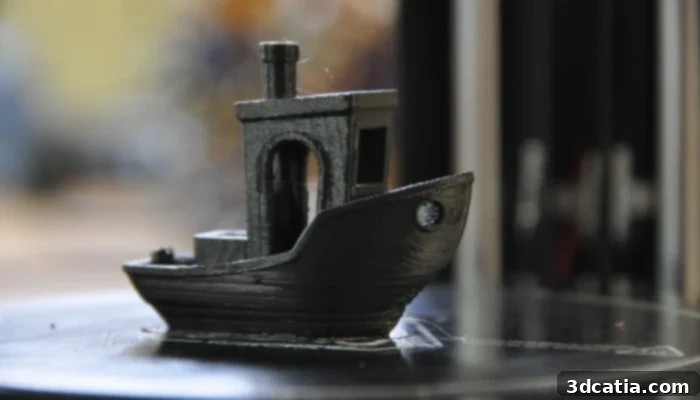
To thoroughly assess the MicroDelta Rework’s print capabilities and identify its strengths and weaknesses, we began our testing with the infamous 3D Benchy, a universally recognized torture test for FDM 3D printers that pushes various aspects of a printer’s performance. Our initial print, executed at a layer height of 200 microns, yielded a fairly good result, particularly when considering the printer’s budget category. The fundamental details of the Benchy were mostly present, and the overall structure was sound and dimensionally accurate. However, we did observe some minor imperfections in the finish, particularly in areas requiring fine detail or overhangs, which we initially attributed to the default calibration settings being optimized more for speed rather than ultimate print quality. This is a common phenomenon with new printers and highlights the importance of fine-tuning settings for specific print requirements and desired outcomes. After making the necessary adjustments to slightly reduce print speed and optimize retraction settings, we launched the same 3D Benchy print at a finer resolution of 100 microns.
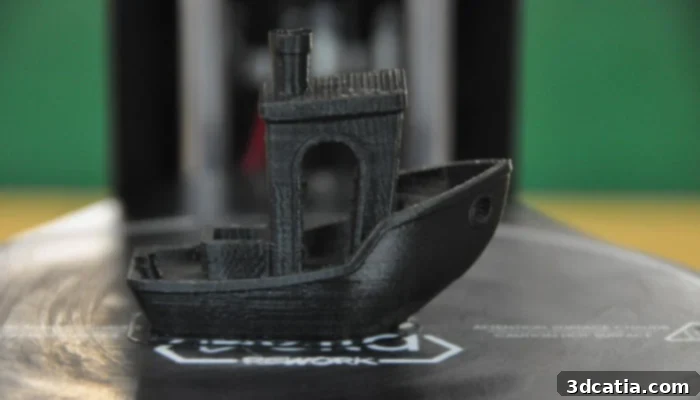
The improvement in the 100-micron print was immediately and dramatically noticeable. The layer lines became significantly less prominent, almost blending into a smooth surface, and intricate details on the Benchy, such as the chimney, windows, and the notoriously difficult small text on the hull, appeared much sharper, cleaner, and more defined. This substantial improvement unequivocally demonstrates the MicroDelta Rework’s strong potential for producing high-quality prints once properly dialed in and optimized. The inherent delta kinematics of the printer further contribute to surprisingly smooth and uniform vertical surfaces, which is often a challenge for many Cartesian-style machines.
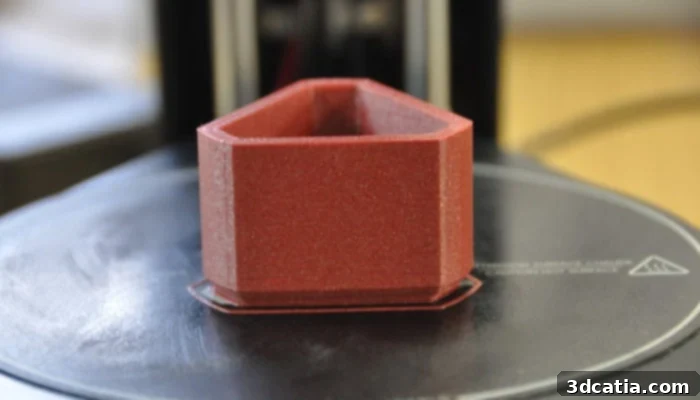
Beyond the ubiquitous 3D Benchy, we experimented with a wide variety of other models to push the printer’s limits and comprehensively evaluate its versatility across different geometries and complexities. These test prints included complex geometric shapes, intricate figurines with delicate overhangs, and functional parts designed for specific uses requiring precise dimensions. In all cases, the MicroDelta Rework performed admirably, consistently delivering results that impressed us given its price point. The adhesion to the standard BuildTak-type surface remained excellent throughout our tests, virtually eliminating the frustrating risk of prints detaching mid-job. Bridging capabilities were respectable, allowing for unsupported spans with minimal sagging, and overhangs were handled with competence, although very steep angles naturally showed some minor degradation, as is common with all FDM technology. The consistent and reliable extrusion from the Hexagon hotend contributed significantly to uniform wall thickness and reliable infill, resulting in robust and aesthetically pleasing parts. The results, as vividly pictured below, unequivocally showcase the printer’s ability to produce detailed, structurally sound, and visually appealing objects that are exceptionally well-suited for hobbyists, educators, students, and even some light professional prototyping tasks. For a DIY kit in this affordable price range, the print quality consistently exceeded our expectations, affirming the excellent value proposition of the MicroDelta Rework as a capable and rewarding 3D printing solution.
Conclusion: Is the MicroDelta Rework the Right DIY 3D Printer for You?
The MicroDelta Rework 3D printer kit truly stands out as a compelling and well-rounded option in the increasingly competitive market of budget-friendly 3D printers. Throughout our extensive and rigorous testing, it consistently demonstrated a strong balance of affordability, robust design, and impressive print capabilities that punches well above its price point. The journey from a box containing over 200 individual parts to a fully functional and capable 3D printer is undoubtedly an investment of both time and dedicated effort, especially for those who are new to the world of DIY kits. However, this assembly process is significantly smoothed and made accessible by the manufacturer’s outstandingly clear, detailed, and comprehensive instruction manual, which transforms what could be a challenging build into an accessible, educational, and ultimately very rewarding experience.
Key strengths that make the MicroDelta Rework shine include its upgraded, precisely engineered aluminum chassis, which ensures exceptional structural integrity and greatly simplifies the assembly process with its perfect fit. The generous build volume of 150x150x200mm, coupled with increased print speeds and the capability for fine layer resolution down to 50 microns, makes it an incredibly versatile tool suitable for a wide variety of projects. The efficient and responsive customer service, vividly demonstrated by the prompt replacement of a missing part, adds another significant layer of confidence for potential buyers, knowing that support is readily available. While the basic package provides excellent results with PLA thanks to its superb BuildTak-type print surface, the optional heated bed greatly expands its material compatibility, making it a viable option for more advanced and demanding filaments like ABS, PETG, and Nylon. Furthermore, the optional LCD screen, though not essential for printing, significantly enhances standalone usability and overall convenience, making it a worthwhile upgrade for a more professional and untethered workflow.
The main considerations for potential buyers are primarily related to the inherent DIY nature of the product. The assembly time, while ultimately rewarding and educational, will likely exceed the advertised 3 hours for beginners who are taking their time to learn. Additionally, the slightly awkward design of the SD card slot, while a minor inconvenience, is a point to note for daily usage. However, these are relatively small trade-offs for a printer that delivers such solid performance, offers an invaluable learning experience, and provides deep insights into the mechanics of 3D printing.
Ultimately, the MicroDelta Rework is an excellent and highly recommended choice for individuals who relish the hands-on building process, are budget-conscious but unwilling to compromise on quality, and are looking for a reliable 3D printer that can consistently produce quality prints. It’s an ideal platform for learning the intricacies of 3D printing from the ground up, providing a deep and practical understanding of how these fascinating machines operate. For hobbyists, students, educators, and makers seeking an affordable yet powerful entry into delta 3D printing with strong community support and capable hardware, the MicroDelta Rework successfully blends the profound satisfaction of a DIY project with the impressive capability of a modern, efficient, and versatile 3D printer.
What do you think of the MicroDelta Rework? We’d love to hear your thoughts, experiences, and any questions you might have! Share your comments below or join the ongoing conversation on our Facebook and Twitter pages. Don’t miss out on the latest advancements, news, and groundbreaking innovations in the additive manufacturing world – sign up for our completely free weekly Newsletter to get all the essential updates delivered straight to your inbox!