
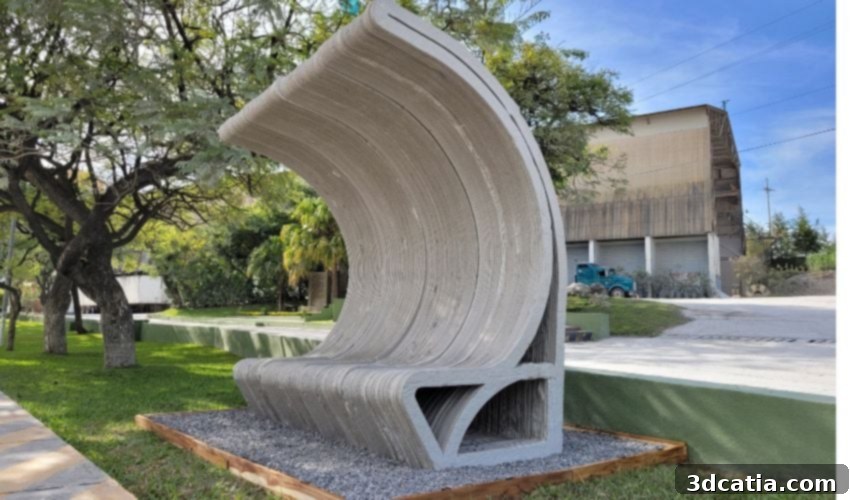
Revolutionizing Construction in Guatemala: Cementos Progreso and COBOD Lead with 3D Printing to Combat Housing Deficit
While the broader landscape of additive manufacturing in Latin America has seen a slower adoption rate compared to other global regions, pioneering companies are emerging, demonstrating the immense potential and tangible growth of 3D printing across the continent. Among these trailblazers, Cementos Progreso stands out as a beacon of innovation. This prominent Guatemalan cement company has forged a strategic alliance with COBOD International, a global leader in construction 3D printing solutions. Their collaborative mission is not just to implement advanced technology but to tackle one of Guatemala’s most pressing socio-economic challenges: a severe housing deficit. By leveraging the speed, efficiency, and sustainability of 3D construction printing, this partnership aims to pave the way for a new era of affordable and accessible housing, potentially transforming countless lives across the nation.
Addressing Guatemala’s Urgent Housing Crisis with Innovation
Cementos Progreso brings over a century of unparalleled expertise in concrete and construction materials to this groundbreaking initiative. With a legacy spanning more than 100 years, the Guatemalan company has not only contributed significantly to the region’s infrastructure but also consistently championed sustainable projects designed to enhance the quality of life in the 11 countries where it operates. Recognizing the urgent need for innovative solutions to pervasive social problems, Cementos Progreso strategically partnered with COBOD International last year. This collaboration marks a pivotal moment for the application of additive manufacturing in Guatemala’s construction sector.
The statistics paint a stark picture: according to Habitat for Humanity, Guatemala faces a staggering housing deficit of 1.8 million homes. This crisis is exacerbated by profound land ownership inequality, where a mere 1% of the population controls approximately 60% of the land. Such disparities underscore the critical need for scalable, cost-effective, and rapid construction methods that can deliver safe and dignified housing to underserved communities. In this context, the move towards construction 3D printing by Cementos Progreso was not merely an technological advancement but a logical and ethical imperative. The technology offers a unique combination of speed, material efficiency, and reduced labor costs, making it an ideal candidate to bridge the enormous gap between housing demand and supply.
Plinio Estuardo Herrera, Head of Concrete at Cementos Progreso, articulated the company’s confidence in this strategic partnership: “COBOD is the world leader in 3D construction printing solutions. We are confident that it is the best technology on the market. We have watched with our own eyes the buildings printed with the technology. That gives us certainty that Cementos Progreso has chosen a globally leading ally in implementing the technology in our country.” This statement reflects not only an endorsement of COBOD’s advanced technology but also Cementos Progreso’s deep commitment to bringing world-class innovation to Guatemala.
Pioneering Research and Development: The Innovation Hub
For over three years, Cementos Progreso’s dedicated Research & Development department has been at the forefront of innovation, diligently working on the development of a specialized 3D printable cementitious material. This long-term commitment highlights the company’s foresight and dedication to mastering the nuances of additive manufacturing for construction. Their extensive efforts are now culminating in the practical application of 3D printing technology directly in Guatemala, setting a new standard for local industry.
Further solidifying their commitment, Cementos Progreso recently announced the grand inauguration of a state-of-the-art Innovation and Development Center. This significant investment is poised to become a vital nexus for advancing the construction printing industry not just in Guatemala, but across the entire Latin American region. The center is meticulously equipped with a cutting-edge COBOD 3D printer, ready to be deployed for immediate impact. Cementos Progreso has ambitious plans to utilize this advanced machinery for upcoming housing projects, which are currently progressing through the crucial 3D modeling phase. This integrated approach—from material R&D to dedicated innovation facilities and immediate project application—demonstrates a comprehensive strategy aimed at rapid deployment and tangible results. Both Cementos Progreso and COBOD International have expressed immense pride and satisfaction with this synergistic partnership, recognizing its potential to create a lasting positive impact.
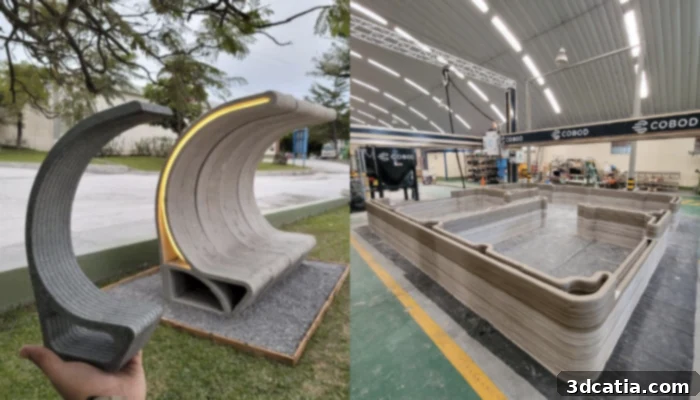
COBOD and Cementos Progreso have joined forces to solve housing shortages in Guatemala through 3D printing technology.
COBOD’s Perspective: Enabling Faster, More Efficient Construction
Philip Lund-Nielsen, co-founder and director of the Americas at COBOD International, shared his enthusiasm for the collaboration, emphasizing the profound impact it is expected to have. “At COBOD International we are proud to have Cementos Progreso among our partners. It is an innovative company which is leading the 3D construction printing industry in Latin America. With our technology, we are excited to see Cementos Progreso enable faster execution of construction projects, as well as more efficient construction at a lower cost.” This statement encapsulates the core benefits that 3D construction printing brings to the table: unparalleled speed, significant cost reductions, and enhanced overall efficiency. These attributes are critical for addressing large-scale housing deficits and delivering sustainable infrastructure development.
The Broader Impact: A Model for Latin America and Beyond
The collaborative efforts between Cementos Progreso and COBOD International represent more than just a technological pilot; they signify a paradigm shift in how Latin America approaches construction and social housing. Additive manufacturing, with its diverse applications across various sectors, is steadily gaining traction and proving its indispensable value. This partnership in Guatemala serves as a compelling testament to the transformative power of 3D printing, illustrating how it can be harnessed to solve complex societal problems. The benefits extend far beyond simply erecting structures; they encompass fostering sustainable development, creating local employment opportunities, and ultimately improving the living standards for a significant portion of the population.
By demonstrating the viability and effectiveness of 3D printed homes, this initiative sets a crucial precedent for other nations in Latin America facing similar housing challenges. The innovative approach taken by Cementos Progreso and COBOD could inspire a wave of similar alliances and collaborations within the 3D printing sector, driving broader adoption of this advanced technology across the region. As countries seek more efficient, economical, and environmentally friendly construction methods, 3D printing emerges as a powerful solution that can accelerate development goals and contribute to a more equitable future. This joint venture is a promising harbinger of many more such partnerships to come, further embedding additive manufacturing as a cornerstone of modern, responsible construction.
Sustainable Solutions for a Sustainable Future
One of the most compelling aspects of 3D construction printing is its inherent sustainability. By minimizing material waste, optimizing resource utilization, and potentially using locally sourced materials, the environmental footprint of construction projects can be dramatically reduced. Traditional construction often generates vast amounts of waste, consumes significant energy, and relies on resource-intensive supply chains. In contrast, 3D printing allows for precise material deposition, building only what is needed, layer by layer. This not only cuts down on waste but also reduces transportation costs and carbon emissions, making it an eco-friendlier alternative. Cementos Progreso’s century-long commitment to sustainable practices aligns perfectly with the principles of additive manufacturing, making this partnership a model for green building initiatives in the region.
Furthermore, the rapid construction capabilities of COBOD’s technology mean that homes can be built faster, reducing the time communities spend in inadequate housing or displacement. This speed, combined with the potential for cost-efficiency, makes a significant difference in humanitarian and social housing contexts. The ability to quickly deploy durable, resilient structures can be life-changing for families, offering security and stability where it was once scarce. The new Innovation and Development Center will not only refine these processes but also serve as an educational hub, fostering local talent and expertise in 3D construction printing, thereby building a sustainable knowledge base for the future.
Looking Ahead: The Promise of 3D Printed Communities
The vision extends beyond individual homes to the creation of entire communities. With the ability to customize designs and adapt to local architectural styles, 3D printing offers flexibility that traditional methods often lack. This means that while homes can be rapidly constructed, they can also be tailored to the cultural and aesthetic preferences of the communities they serve. This personalized approach, combined with the efficiency of the technology, holds the promise of developing vibrant, sustainable neighborhoods that empower residents and foster a stronger sense of belonging. The initial housing projects in their 3D modeling phase are just the beginning, laying the groundwork for what could become a widespread adoption of 3D printing for urban and rural development across Guatemala and neighboring countries.
What do you think of this transformative union between 3D printing and construction to solve the critical housing deficit in Guatemala? We encourage you to share your thoughts and insights! Let us know in a comment below or connect with us on our LinkedIn, Facebook, and Twitter pages! Don’t forget to sign up for our free weekly Newsletter here to receive the latest 3D printing news straight to your inbox! You can also find all our videos and in-depth discussions on our YouTube channel.
*All Photo Credits: COBOD International