
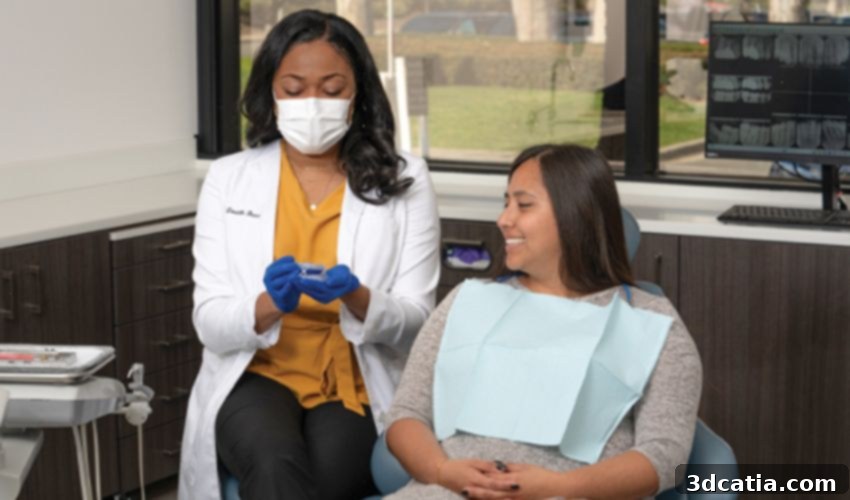
Revolutionizing Sleep: Glidewell’s 3D Printed Appliance for Advanced Sleep Apnea and Snoring Treatment
Imagine a future where effective, comfortable, and personalized treatment for chronic sleep conditions like snoring and obstructive sleep apnea is readily accessible. What once seemed like a distant dream is rapidly becoming a tangible reality, largely thanks to groundbreaking advancements in additive manufacturing. Leading dental solutions innovator, Glidewell, has unveiled a fully digital, 3D-printed sleep appliance, known as the Silent Nite® 3D Sleep Appliance. Available by prescription, this innovative device offers a compelling new option for individuals suffering from bothersome snoring and mild to moderate obstructive sleep apnea, promising a significant improvement in both sleep quality and overall health.
Obstructive sleep apnea (OSA) is far more than just loud snoring; it’s a pervasive and serious health condition characterized by repeated episodes where breathing stops and restarts during sleep. These interruptions can last from a few seconds to more than a minute, leading to significant drops in blood oxygen levels. Over time, this chronic oxygen deprivation and fragmented sleep can have profound negative impacts on various bodily systems, contributing to severe problems related to the brain, heart, kidneys, and metabolic health. Conditions such as hypertension, stroke, heart attack, diabetes, and even increased risk of accidents due to daytime fatigue are commonly linked to untreated OSA. Alarmingly, current estimates from the National Council on Aging reveal that obstructive sleep apnea affects an estimated 39 million adults in the United States alone, with a staggering 936 million adults impacted worldwide. Snoring, often a primary symptom of OSA but also a standalone issue, is even more prevalent, affecting relationships and sleep partners globally.
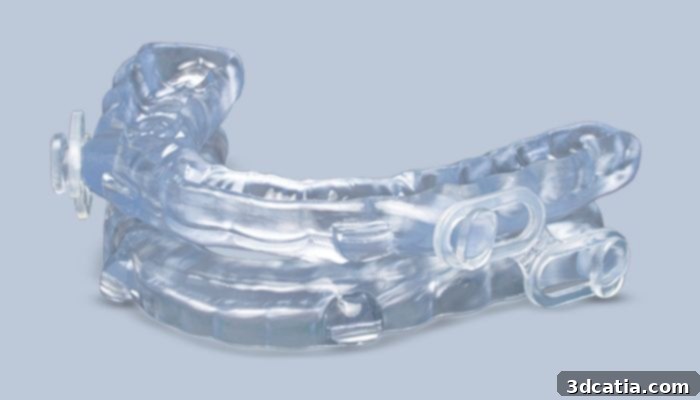
The Silent Nite 3D Sleep Appliance: A Personalized Solution for Better Sleep
Despite the critical nature of sleep apnea, traditional treatments often come with significant drawbacks, leading to poor patient compliance. The most widely prescribed treatment is the Continuous Positive Airway Pressure (CPAP) machine, which works by delivering a constant stream of air through a mask worn during sleep, effectively keeping the airways open. While highly effective, CPAP therapy can be challenging for many patients. Issues such as the machine’s noise, the bulkiness of the device and its tubing, discomfort from the mask, skin irritation, feelings of claustrophobia, and the general inconvenience of traveling with it often lead to patients abandoning their treatment. This non-compliance leaves millions vulnerable to the serious long-term health consequences of untreated sleep apnea. It is precisely these challenges that Glidewell aims to address with its advanced mandibular advancement device (MAD). This type of oral appliance works by gently holding the lower jaw and tongue forward during sleep, thereby creating more space in the airway and preventing its collapse – the root cause of both snoring and obstructive sleep apnea.
The Digital Revolution in Dentistry: Crafting a 3D Printed Device for Superior Sleep Apnea and Snoring Treatment
The dental industry is experiencing a profound transformation driven by digital technology. Digital dentistry, which integrates computer-based components and workflows into various aspects of dental care, has seen an exponential rise in adoption. At the forefront of this revolution is 3D printing, a technology that has proven invaluable for creating highly personalized, precise, and effective solutions for a wide range of dental applications. The Silent Nite 3D Sleep Appliance stands as a prime example of this success, showcasing how digital innovation can lead to superior patient outcomes. With this state-of-the-art device, Glidewell is committed to delivering a custom-fit, lightweight, and exceptionally comfortable solution that promises patients the ability to achieve a “good night’s sleep virtually anywhere,” without the encumbrances of traditional treatments.
The creation of such a sophisticated and patient-friendly device hinges on advanced manufacturing techniques and materials. While the specific proprietary process and exact material formulation were not explicitly detailed, Glidewell has confirmed that the Silent Nite 3D Sleep Appliance is crafted from a durable, medical-grade light-cured resin. This choice of material strongly indicates that the appliance is produced using one of the vat photopolymerization processes, such as Stereolithography (SLA) or Digital Light Processing (DLP). These 3D printing technologies are particularly well-suited for dental applications due to their ability to produce exceptionally exact, smooth, and clear parts with the necessary mechanical properties and, crucially, biocompatibility. This ensures the device is safe for intraoral use and offers a superior finish that minimizes irritation and enhances patient comfort.
Beyond the manufacturing process, the design of the Silent Nite 3D Sleep Appliance incorporates several innovative features aimed at maximizing efficacy and patient comfort. The clear, low-profile devices are meticulously designed to gently and precisely shift the mandible (lower jaw) forward. This advancement is facilitated by robust nylon connectors that are engineered for remarkable adjustability. These connectors allow for precise incremental adjustments of 0.5 mm over an impressive 10 mm span. This fine-tuned adjustability is critical, as it enables dentists to gradually titrate the jaw position to the optimal point where the airway remains open and free from collapse during sleep, effectively treating both obstructive sleep apnea and snoring. The replaceable nature of these connectors further enhances the device’s utility, allowing dentists to continue adjusting the mandibular position over time, ensuring sustained proper care and adaptability to the patient’s evolving needs while consistently prioritizing patient comfort. The ability to make such precise, minute adjustments is a direct benefit of the digital design and 3D printing workflow, which allows for unparalleled customization.
Furthermore, the Silent Nite 3D Sleep Appliance boasts a unique scalloped edge design. This anatomical contouring, a feat made possible by the intricate design freedom offered by 3D printing technology, ensures minimal contact with the gingiva (gums). Reduced contact translates directly into enhanced comfort, fewer pressure points, and a lower likelihood of gum irritation, significantly improving patient acceptance and compliance compared to bulkier, less precisely fitted appliances. This thoughtful attention to detail in design underscores Glidewell’s commitment to patient-centric innovation. Perhaps one of the most compelling advantages, particularly for patients eagerly awaiting relief, is the remarkable speed of production. Thanks to the streamlined digital workflow and advanced 3D printing capabilities, the Silent Nite 3D Sleep Appliance can be fabricated in a mere three days from receiving the digital impressions, dramatically reducing the waiting time for an effective treatment solution.
Glidewell’s Vision: The Future of Digital Dentistry and Patient Care
Robert Brenneise, Chief Growth Officer at Glidewell, succinctly articulates the company’s forward-thinking philosophy: “Glidewell is committed to the digital transformation of dentistry – both in the lab and chairside. Digital dentistry makes quality care more accessible for dentists and patients alike, and the Silent Nite 3D Sleep Appliance is a patient-friendly, digitally produced solution for relieving snoring and mild to moderate sleep apnea.” This statement encapsulates Glidewell’s dedication to leveraging cutting-edge technology to enhance dental practices and improve patient outcomes. The Silent Nite 3D Sleep Appliance is not merely a product; it represents a significant step forward in making advanced, comfortable, and effective sleep dentistry solutions more widely available. By embracing digital workflows and 3D printing, Glidewell is actively contributing to a future where dental treatments are not only more efficient and precise but also significantly more comfortable and personalized for every patient.
The integration of 3D printing into sleep dentistry marks a pivotal shift. It moves away from generalized, “one-size-fits-all” solutions towards highly individualized therapeutic devices that cater to the unique oral anatomy and needs of each patient. This level of customization is paramount for conditions like sleep apnea and snoring, where subtle anatomical differences can have a profound impact on treatment efficacy. Patients are no longer forced to choose between effectiveness and comfort; with devices like the Silent Nite 3D, they can achieve both. The ease of wear, discretion, and portability of this 3D printed appliance stand in stark contrast to the challenges associated with CPAP, fostering greater patient adherence and, ultimately, better health outcomes. This innovation doesn’t just treat symptoms; it enhances quality of life, restoring restful sleep and reducing the myriad health risks associated with chronic sleep disturbances.
What are your thoughts on Glidewell’s innovative 3D printed solution for sleep apnea and snoring? Do you believe this represents a significant leap forward in oral appliance therapy? Would you consider using it or recommending it? We invite you to share your perspectives in a comment below or join the conversation on our LinkedIn, Facebook, and Twitter pages! Don’t miss out on the latest advancements in 3D printing technology – sign up for our free weekly newsletter here for the most up-to-date news delivered straight to your inbox! Additionally, you can explore all our engaging video content on our YouTube channel. Discover more about this innovative device on Glidewell’s official website HERE.
*All Photo Credits: Glidewell