
Revolutionary Week in Additive Manufacturing: Industry Shifts, Medical Breakthroughs, and New Horizons in 3D Printing
The world of additive manufacturing has just concluded an exceptionally dynamic week, brimming with significant developments and groundbreaking announcements that are set to redefine the industry landscape. From the bustling corridors of RAPID + TCT 2024 to critical corporate shifts, the pace of innovation and consolidation shows no signs of slowing. Among the most talked-about news was the audacious announcement of Nano Dimension’s intent to acquire Desktop Metal, a move that could significantly reshape the competitive environment for industrial 3D printing. But that’s just the tip of the iceberg! Our latest #3DExpress deep-dive covers everything you need to know, ensuring you stay ahead in this fast-evolving sector. We delve into major business shifts, including the surprising declaration of bankruptcy by Shapeways and BASF Forward AM’s strategic pivot to independence. In medical 3D printing, we explore Lithoz’s pioneering ceramic dental implant, a testament to additive manufacturing’s growing impact on healthcare. We also recap key highlights from RAPID + TCT, focusing on Creality’s exciting new multicolor printer. Finally, we look at how Scope is leveraging 3D printing for advanced bicycle components. Prepare for an insightful read and a fantastic weekend!
Shapeways Declares Chapter 7 Bankruptcy: An Industry Shockwave
One of the most impactful and somber pieces of news reverberating through the additive manufacturing community this week was the declaration of Chapter 7 bankruptcy by Shapeways, leading to a complete cessation of its operations. This development marks a significant turn for a company that once stood as a prominent leader in the 3D printing service bureau sector, known for democratizing access to additive manufacturing technologies for designers, engineers, and hobbyists alike. Shapeways’ journey into the public market began with an SPAC merger in 2021, a period characterized by a volatile stock market that proved particularly unforgiving to many nascent technology companies. Since then, the company’s shares have experienced a consistent and precipitous decline, reflecting the immense pressures faced in navigating public market expectations while scaling a capital-intensive manufacturing service. Early warning signs of the company’s financial distress emerged clearly in February when Shapeways moved to auction off its Desktop Metal printers. While initially viewed by some as a negative indicator for Desktop Metal, in hindsight, it was a stark precursor to the severe struggles Shapeways was enduring. According to the company’s recent Form 8-K filing, all C-level executives and directors have resigned, and it appears the majority, if not all, other staff have been laid off. A Chapter 7 trustee will now be appointed to manage the dissolution of Shapeways’ bankruptcy estate, handling the liquidation of assets and settlement of debts. This news, while deeply saddening for the employees, customers, and investors, underscores the challenging economic realities and intense competitive pressures prevalent within the 3D printing service industry, serving as a cautionary tale for growth-focused ventures in a rapidly maturing market.
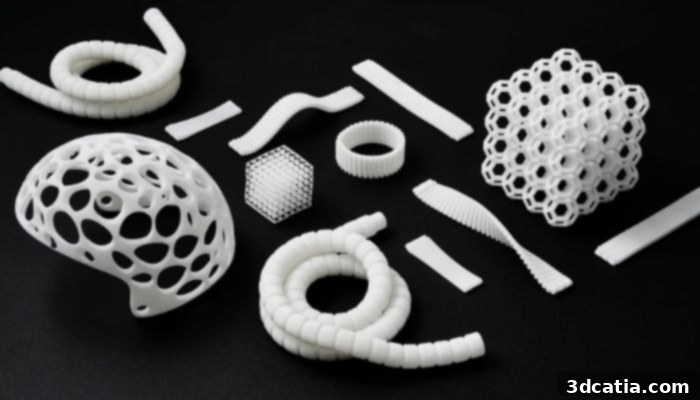
Parts made by Shapeways (photo credits: Shapeways)
Lithoz Pioneers Ceramic 3D-Printed Dental Implants for Atrophied Jaws
In exciting news from the medical additive manufacturing front, Austrian manufacturer Lithoz has achieved a significant milestone with the successful implantation of a 3D-printed ceramic jaw implant in a patient. This innovative development offers a promising solution for individuals suffering from atrophied jaws, a common condition among the elderly, often resulting from long-term tooth loss. When teeth are lost, the underlying jawbone can gradually resorb, making it incredibly challenging, if not impossible, to fit traditional dentures or conventional implants due to insufficient bone structure. Recognizing this critical need, Lithoz has leveraged its advanced ceramic resin 3D printing technology to create highly customized, patient-specific implants. These implants are meticulously designed to conform precisely to the unique anatomical requirements of each patient, ensuring optimal fit and function. For this landmark procedure, a biocompatible zirconia device was carefully fabricated and then implanted into a patient at Kepler University Hospital. The complex operation, skillfully performed by surgeon Dr. Christoph Staudigl, represents a first of its kind, showcasing the immense potential of additive manufacturing in maxillofacial surgery. Post-surgery, the results have been exceptionally encouraging; the implant remained stable after 60 days, with no healing complications reported. This success not only validates Lithoz’s pioneering ceramic 3D printing capabilities but also opens new avenues for treating complex bone deficiencies, offering improved quality of life and functional rehabilitation for patients previously deemed unsuitable for conventional dental solutions. The precision, customization, and biocompatibility offered by ceramic additive manufacturing position it as a transformative force in personalized medicine.
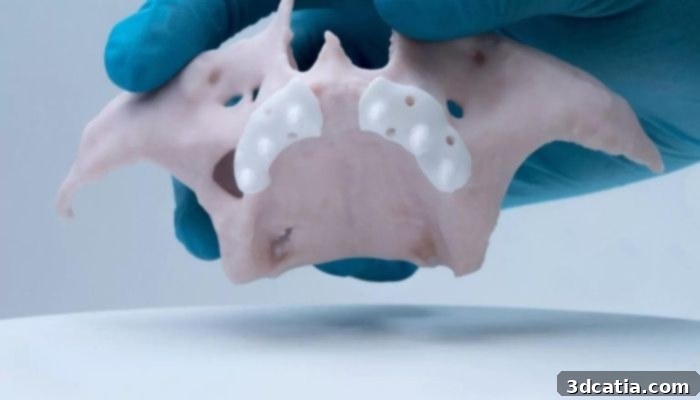
The ceramic implant (photo credits: Lithoz)
Creality Unveils the K2 Plus Multicolor 3D Printer at RAPID+TCT, Redefining Desktop Capabilities
The recently concluded Rapid + TCT event, held in Los Angeles from June 25-27, served as a premier platform for showcasing the latest advancements in additive manufacturing. Among the many exciting product launches, Creality, a prominent name in the desktop 3D printing market, captured significant attention with the unveiling of its groundbreaking K2 Plus multicolor 3D printer. This new addition to Creality’s highly popular K series is designed to push the boundaries of what’s possible with FDM (Fused Deposition Modeling) technology, catering to both hobbyists and professionals seeking enhanced creative freedom and efficiency. The K2 Plus boasts an impressive 350mm cubic print volume, providing ample space for larger projects or batch production, distinguishing it within its class. Beyond its generous build size, the printer is engineered for high-speed multifilament 3D printing, significantly reducing print times without compromising quality. At the heart of its advanced capabilities lies Creality’s innovative Creality Filament System (CFS), a sophisticated solution that supports up to four 1 kg filament spools simultaneously. This system not only facilitates complex 16-color prints but also integrates RFID-enabled automatic filament management. The RFID functionality ensures precise material identification and matching, optimizing print parameters and minimizing errors. This intelligent system enhances print quality, improves efficiency by automating material changes, and simplifies the user experience, allowing for more intricate and vibrant creations. The K2 Plus represents Creality’s commitment to making advanced 3D printing more accessible and user-friendly, setting a new standard for desktop multicolor printing and further solidifying its position as a market innovator.
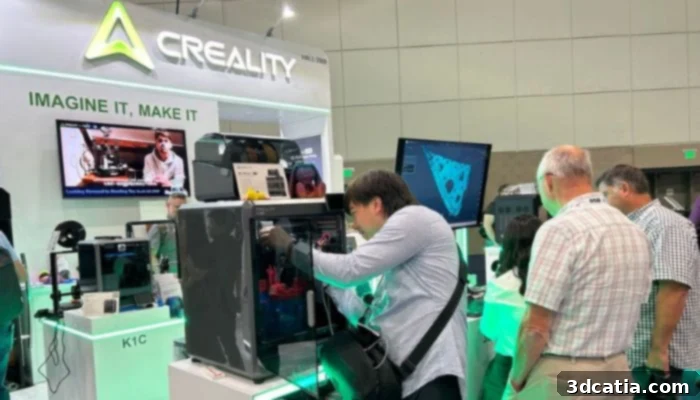
The K2 Plus at RAPID + TCT 2024 (photo credits: Creality)
Scope Cycles Revolutionizes Bike Components with 3D-Printed Wheel Hubs
Innovation in sports equipment is increasingly being driven by advanced manufacturing technologies, and Dutch bicycle manufacturer Scope is at the forefront of this trend. Committed to offering riders more efficient, lightweight, and comfortable products, Scope has strategically integrated additive manufacturing into its production process, specifically for designing its high-performance wheel hubs. Wheel hubs are critical components, serving as the central axis of the wheel, connecting the spokes and rim to the bicycle’s axle and frame. Their design directly influences the wheel’s weight, stiffness, and overall performance. Scope has chosen to 3D print these vital parts from Scalmalloy, an advanced alloy composed of scandium, aluminum, and magnesium. Scalmalloy is highly prized in high-performance applications for its exceptional strength-to-weight ratio, which is comparable to that of titanium, yet offers superior printability. Leveraging the precision and design freedom afforded by 3D metal printing, Scope has achieved remarkable weight reductions. The company proudly reports that its rear hubs weigh a mere 140 grams, while the front hubs tip the scales at an incredibly light 66 grams. This unparalleled lightness is primarily a result of sophisticated topological optimization. This design methodology allows engineers to meticulously remove material from areas where structural integrity is not critical, thereby minimizing mass while maintaining or even enhancing strength. By custom-designing the internal geometries and external forms through additive manufacturing, Scope can produce parts that are not only lighter but also potentially more durable and better performing than those made through traditional methods. This application exemplifies how 3D printing is transforming niche markets, enabling the creation of bespoke, high-performance components that push the boundaries of design and engineering in competitive cycling.
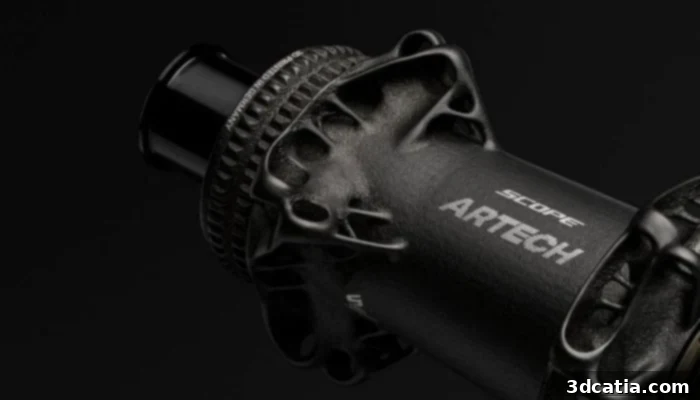
The 3D printed bike hub (photo credits: Scope)
BASF Forward AM Embarks on an Independent Journey as a Standalone Company
Another significant development that has captured the attention of the additive manufacturing sector is the strategic decision for all of BASF’s additive manufacturing activities to transition into an independent entity, now operating as Forward AM Technologies, or simply Forward AM. BASF, a global chemical giant, has long maintained a substantial presence in the AM sector, with Forward AM representing the vast majority of its 3D printing business through the development and supply of advanced materials and solutions. This move signifies BASF’s formal exit from direct involvement in the day-to-day operations and strategic direction of the AM market, allowing Forward AM to forge its own path as a dedicated, standalone company. The newly independent Forward AM will encompass all previous BASF AM materials and solutions, as well as the renowned Sculpteo 3D printing service bureau, which it acquired previously. This consolidation under one dedicated umbrella is expected to provide Forward AM with greater agility, focused investment, and the ability to react more swiftly to market demands and technological advancements. Martin Back, CEO of the newly formed entity, expressed profound gratitude to BASF, stating, “I would like to express my gratitude to BASF for all their support during the MBO (Management-Buy-Out) process. By working together, we could ensure that our team of experts and the innovative tools currently in place can continue to provide leading AM solutions to the manufacturing industry in times of volatility. The team at Forward AM is truly passionate about shaping the future of manufacturing and all the exciting opportunities to build and grow within this innovative AM community. I’m looking forward to this empowering journey ahead.” This management-buy-out process marks a new chapter for a company that has already demonstrated robust performance, boasting a remarkable 30% annual growth rate, as highlighted in a recent press release. The industry will keenly observe how this newly independent and highly focused Forward AM progresses in its mission to drive innovation and expand its footprint in the dynamic additive manufacturing landscape over the coming months and years, free from the broader corporate structure of a chemical conglomerate.
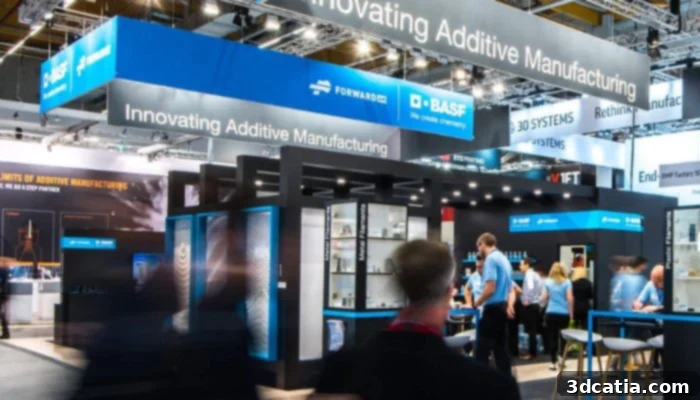
Forward AM has been present in the industry for quite some time (photo credits: BASF Forward AM)
This past week truly underscored the volatile yet vibrantly innovative nature of the additive manufacturing industry. From significant corporate restructuring like Shapeways’ bankruptcy and BASF Forward AM’s independence to groundbreaking product releases such as Creality’s K2 Plus and life-changing medical applications by Lithoz, the sector continues to evolve at a breathtaking pace. We’d love to hear your thoughts: What was the most impactful #3Dexpress news for you this week? What are your predictions for these companies and the industry moving forward? Share your insights in a comment below or join the conversation on our LinkedIn, Facebook, and Twitter pages! Don’t miss out on the latest advancements and market shifts; sign up for our free weekly newsletter here to get all the essential 3D printing news delivered straight to your inbox! You can also find all our comprehensive video content and interviews on our YouTube channel for deeper dives into industry topics.