
Ensuring Precision and Patient Safety: A Deep Dive into Quality Control in Medical 3D Printing with Avinent’s Anna Cortina
In this latest installment of #Working3D, our ongoing series exploring diverse career paths within the dynamic additive manufacturing industry, we focus on an absolutely critical discipline: quality control in 3D printing. The primary objective of this highly specialized field is to meticulously ensure that all 3D printed components and devices consistently achieve the exact physical and mechanical characteristics required for their intended application. This unwavering commitment to precision is paramount, particularly within highly regulated and demanding sectors such as the medical field, where stringent certifications and industry standards must be rigorously met. To gain an invaluable understanding of this vital role, we had the privilege of speaking with Anna Cortina, a distinguished specialist in quality control for additive manufacturing at Avinent. Her insights offer a detailed look into the daily responsibilities and challenges faced by professionals dedicated to upholding the highest standards in medical device production through 3D technologies. Join us as Anna shares her journey and expertise, illuminating the profound impact of quality assurance on patient outcomes.
3DN: Could you please introduce yourself and your professional background?
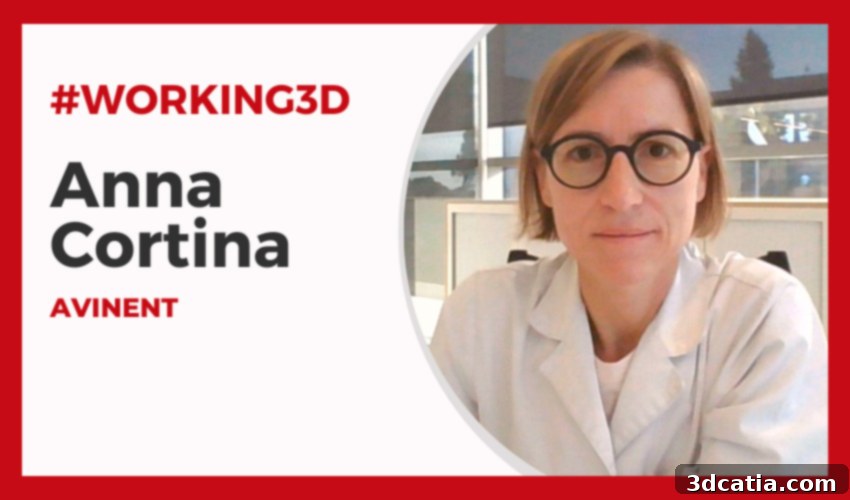
My name is Anna Cortina, and I have been an integral part of Avinent Implant System S.L.U. since 2005. Over these nearly two decades, I have held the demanding and crucial position as the Head of the Research and QA&RA department. This role encompasses both Quality Assurance (QA) and Regulatory Affairs (RA), a combination that is absolutely vital in the medical device industry. My responsibilities span from ensuring the highest quality standards throughout our product lifecycle to navigating the complex landscape of regulatory compliance, both nationally and internationally. My extensive tenure at Avinent has allowed me to witness firsthand the transformative growth of additive manufacturing within our operations and to contribute significantly to the development and safe deployment of innovative medical solutions.

Anna Cortina, head of the Research And QA&RA department at Avinent.
3DN: How did you first encounter and become involved with additive manufacturing?
My introduction to additive manufacturing was closely tied to Avinent’s strategic decision to venture into the realm of customized medical products. It became clear very quickly that conventional manufacturing methods simply could not achieve the intricate geometries and bespoke requirements demanded by patient-specific solutions. Additive manufacturing, or 3D printing, emerged as the only viable and truly transformative technology capable of realizing these highly personalized devices. Our initial focus, and indeed a significant ongoing area, revolves around customized medical devices for craniomaxillofacial surgeries. This encompasses a broad spectrum of products, from highly accurate anatomical models used for pre-surgical planning and education to complex, implantable products designed to perfectly fit a patient’s unique anatomy, alongside precision-engineered surgical guides that enhance the accuracy and safety of procedures. Working collaboratively with Avinent’s exceptional team of engineers and bioengineers has been an incredible journey. It has provided me with the unique opportunity to understand this technology from its foundational principles, allowing me to fully grasp its immense potential. Witnessing the direct impact we can have on healthcare professionals, by enabling them to offer superior, patient-tailored treatments, and ultimately seeing the patient as the ultimate beneficiary of this cutting-edge manufacturing approach, has been incredibly rewarding and truly solidified my commitment to this field.
3DN: Can you describe your current role at Avinent and outline a typical day in your professional life?
My role at Avinent as the Head of Research and QA&RA is multifaceted, demanding constant vigilance and strategic oversight. A typical day for me is dynamic, involving a comprehensive list of actions, all centered around ensuring rigorous compliance and continuous improvement. A significant portion of my time is dedicated to meticulously overseeing compliance with the intricate and ever-evolving regulations pertaining to our medical products, the advanced processes we employ for their manufacture, and the specialized facilities where production takes place. This includes interpreting new guidelines, updating internal procedures, and conducting audits to maintain certification. Beyond internal quality, I am also responsible for the critical task of registering both new and existing products in various national and international markets. This often involves navigating diverse regulatory frameworks, preparing extensive documentation, and engaging with regulatory bodies worldwide to ensure our innovative solutions can reach patients globally. Finally, a crucial and increasingly important aspect of my role involves generating robust clinical evidence for all our products. This is a key requirement of the new Medical Device Regulation (MDR) which mandates sufficient clinical data to support the safety and performance claims of all our products, whether they are custom-made devices or mass-produced items. This responsibility necessitates establishing and nurturing strong connections with industry professionals, clinicians, and researchers who are interested in collaborating on projects that ultimately lead to high-impact scientific publications. These publications not only reinforce the efficacy and safety of our products but also contribute to the broader scientific understanding of additive manufacturing in medicine.
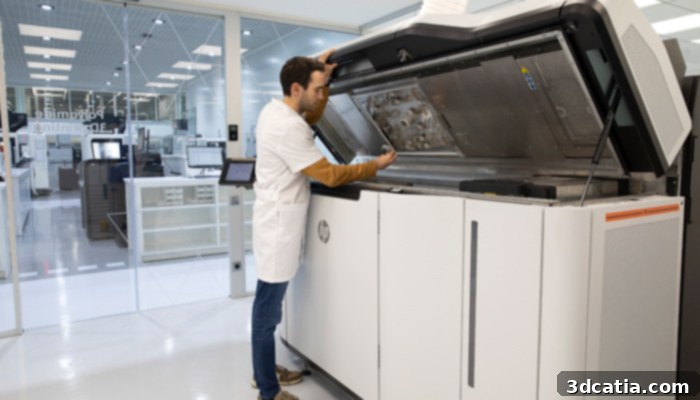
Photo Credits: Avinent
3DN: What qualifications or background are typically required for a position like yours in quality control for additive manufacturing?
The educational and professional background for individuals capable of excelling in this type of quality control role within additive manufacturing, particularly in the medical sector, can be quite varied. Within our department at Avinent, we benefit from a diverse range of profiles, including engineers, bioengineers, and specialists with backgrounds in life sciences or regulatory affairs. While a solid scientific or engineering foundation is undoubtedly beneficial, what consistently stands out as particularly important, and often indispensable, is practical experience. Hands-on experience within the additive manufacturing process, or in medical device quality assurance and regulatory compliance, provides an invaluable understanding of the nuances and critical points of the manufacturing lifecycle. Beyond formal education and initial experience, continuous professional development is absolutely essential. The regulatory landscape governing medical devices and advanced manufacturing technologies is constantly evolving. Therefore, it is imperative to always stay up-to-date with the latest regulations, standards, and best practices. This often involves participating in specialized training programs, attending industry conferences, and engaging with leading professionals and regulatory experts in the sector. The ability to learn, adapt, and proactively seek knowledge is a defining characteristic of successful quality control specialists in this dynamic field.
3DN: What do you consider the biggest challenges you regularly encounter as a specialist in quality control for additive manufacturing?
Working in quality control within the highly regulated medical additive manufacturing sector presents a constant stream of complex challenges. One of the most significant and recurring challenges we face is adapting to fundamental shifts in regulatory frameworks. A prime example is the implementation of the new Medical Device Regulation (MDR) in Europe, which introduced more stringent requirements for clinical evidence, post-market surveillance, and traceability. Navigating such comprehensive changes demands significant resources, re-evaluation of existing processes, and extensive documentation updates, impacting everything from design validation to market approval. Another substantial challenge arises when we need to certify a product that is entirely new or drastically different from our existing portfolio. This isn’t just about applying familiar rules; it often involves deep dives into understanding novel materials, unique printing processes, and innovative functionalities. Each new product typology can necessitate developing bespoke testing protocols, validating new manufacturing parameters, and gaining a thorough understanding of corresponding regulations that might be specific to that device type, requiring substantial training and research. Finally, the strategic imperative of international expansion often brings its own set of demanding hurdles. Registering our products in new countries means encountering diverse and sometimes exceptionally rigorous national regulations. What is approved in one market may require entirely different documentation, testing, or labeling in another. Overcoming these regional regulatory barriers requires meticulous planning, an in-depth understanding of local legal requirements, and often, direct engagement with foreign regulatory authorities. Each of these challenges underscores the dynamic and critical nature of quality control in this cutting-edge industry.
3DN: What advice would you offer to someone aspiring to work in quality control within the 3D printing industry?
For anyone considering a career in quality control within the rapidly expanding 3D printing industry, particularly in demanding sectors like medical devices, I would offer several key pieces of advice. Firstly, it is incredibly important to embrace and value the collaborative spirit of working within a multidisciplinary team. In this field, you will interact with engineers, designers, bioengineers, clinicians, and regulatory experts. The ability to communicate effectively, understand different perspectives, and integrate diverse expertise is crucial for holistic problem-solving and ensuring comprehensive quality. Secondly, you must cultivate an inherent openness to change and a high degree of adaptability. The 3D printing industry is characterized by relentless innovation; new materials, advanced printing technologies, and evolving product designs are constantly emerging. These advancements inevitably lead to new product registrations, necessitate updates to existing certifications, and often require revisiting established quality processes. Being flexible, proactive, and willing to continuously learn and adjust is not just an asset, but a fundamental requirement for success. Finally, I would strongly recommend approaching new challenges with a positive and inquisitive mindset. Instead of simply accepting existing methods, always question the ‘why’ behind current practices. This critical thinking fosters an environment of continuous improvement and innovation. Actively seeking ways to enhance processes, optimize quality checks, and streamline regulatory pathways will not only benefit your organization but also contribute significantly to your professional growth and impact within this exciting industry.
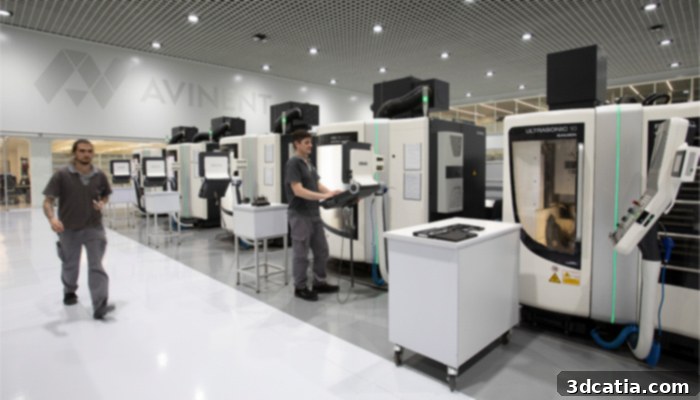
Photo Credits: Avinent
We hope you found Anna Cortina’s insights into her pivotal role as a specialist in quality control for the 3D printing industry, especially within the rigorous medical sector, as informative and inspiring as we did. Her dedication to ensuring precision and patient safety underscores the profound impact of additive manufacturing on modern healthcare. What are your thoughts on the crucial importance of quality control in advanced manufacturing? Do you have questions about regulatory affairs or the future of customized medical devices? We invite you to share your perspectives and engage with our community. Let us know your comments and feedback below, or connect with us on our vibrant social media channels. Find us on LinkedIn, Facebook, and Twitter! Don’t miss out on the latest advancements and breaking news in the additive manufacturing world. Make sure to sign up for our free weekly Newsletter here to receive the most current 3D printing news directly to your inbox! For deeper dives and visual content, you can also explore all our comprehensive videos on our YouTube channel. We look forward to hearing from you and continuing the conversation around the exciting future of 3D printing!