
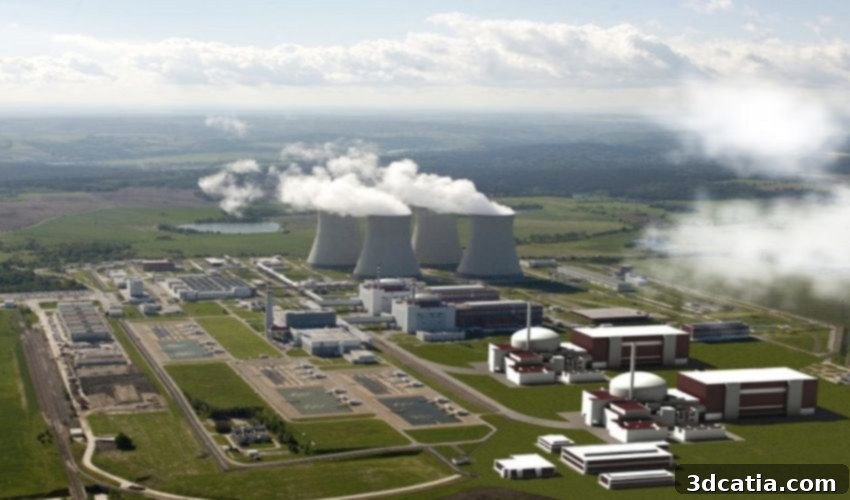
3D Printing Revolutionizes Nuclear Energy: Securing Critical Spare Parts for a Resilient Future
In an increasingly interconnected yet volatile global economy, major multinational corporations face immense challenges in maintaining a consistent and reliable supply chain, particularly for essential components. For industries operating critical infrastructure, such as energy, these challenges are magnified. How can companies like ČEZ, Central and Eastern Europe’s largest utility and a conglomerate of 96 energy firms across several countries, ensure the uninterrupted flow of spare parts? Their innovative answer lies in embracing additive manufacturing, commonly known as 3D printing.
The nuclear division of ČEZ, in collaboration with the renowned Czech nuclear energy firm Škoda JS, has proactively adopted additive manufacturing as a strategic solution to mitigate potential supply chain disruptions and significantly reduce operational downtime. This year alone, their efforts have resulted in the successful production of 4,159 plastic and metal parts using this advanced technology, underscoring a pivotal shift towards localized and resilient manufacturing practices within the critical energy sector.
Addressing Geopolitical Instability Through Localized Manufacturing
The impetus for this transformative adoption of 3D printing became acutely evident in the wake of recent geopolitical events. The profound impact of the Covid-19 pandemic on global logistics, coupled with the ongoing conflict in Ukraine, created unprecedented disruptions in international supply chains. These external pressures highlighted the urgent need for critical infrastructure operators to reduce their reliance on distant, potentially unstable, external sources for vital components.
ČEZ and Škoda JS recognized that traditional procurement methods were no longer sufficient to guarantee the long-term operational stability of their nuclear facilities. They actively sought alternative, high-volume part generation methods that could offer both speed and sustainability. Their comprehensive assessment pointed directly to 3D printing as a robust solution to these supply chain issues. By enabling rapid, on-demand production of replacement parts, additive manufacturing offered a clear pathway to quickly address component defects or obsolescence, thereby minimizing costly downtime and enhancing overall operational resilience.
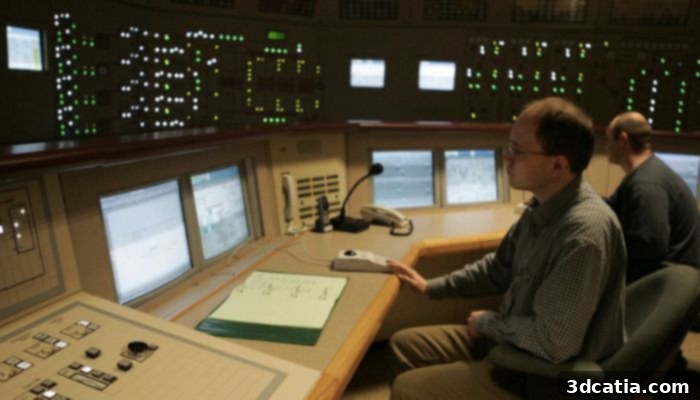
Czech nuclear power accounts for over 30% of the energy supply (Photo credit: CEZ)
Scalability and Material Versatility: Printing Parts Up to 600kg
The scale of the operations at ČEZ and Škoda JS demands industrial-grade additive manufacturing capabilities. The large-scale printers deployed by these firms are capable of producing metal parts weighing up to an impressive 600 kg. This substantial weight potential is critical for manufacturing robust and durable components essential for nuclear power plants. The ability to print both plastic and metal parts demonstrates the versatility of the chosen technology, allowing for a wide range of applications from intricate internal mechanisms to more robust structural elements.
Bohdan Zronek, a ČEZ board member and the esteemed director of the nuclear energy division, articulated the strategic importance of this initiative: “It is another of the steps … to the strengthening of our independence in the supply of spare parts and the planned operation of the nuclear units for at least 60 years. Thanks to 3D technology we can produce new, completely identical components, which is important in the event that the supplier no longer exists or does not produce the part.” This statement underscores the dual benefits of 3D printing: enhancing self-sufficiency and ensuring the long-term viability of critical energy infrastructure, particularly as original equipment manufacturers (OEMs) may cease production of older parts or even go out of business.
Strategic Part Production: Complex vs. Simple Geometries
Mr. Zronek also provided valuable insight into the decision-making process for selecting the appropriate manufacturing method. He highlighted that the choice of technology is fundamentally dependent on the specific part being produced. For geometrically complex components, such as intricate gear wheels, 3D printing offers unparalleled advantages. Its ability to create highly complex internal structures and optimized designs that would be impossible or prohibitively expensive with traditional manufacturing methods makes it the ideal choice.
Conversely, for parts with simpler geometries, traditional manufacturing techniques can often remain more cost-effective and efficient. This pragmatic approach demonstrates a sophisticated understanding of manufacturing economics, leveraging 3D printing where it offers maximum strategic value while optimizing resource allocation for simpler components. This hybrid strategy allows ČEZ and Škoda JS to maximize efficiency and cost-effectiveness across their entire spare parts inventory.
Nuclear Energy’s Pivotal Role and the Long-Term Outlook
Nuclear energy constitutes a significant portion of the energy mix in the Czech Republic, providing 34% of its power. This reliance is higher than in many other developed nations, with the US drawing 20% of its power from nuclear sources and the UK relying on it for 15%. Given this critical dependence, ensuring the long-term operational stability and independence of nuclear facilities is not merely an economic concern but a matter of national energy security.
The advancement and strategic implementation of 3D technology by ČEZ and Škoda JS therefore represent a crucial step towards improving the long-term outlook for nuclear energy. By empowering these firms to produce spare parts in-house, 3D printing directly addresses acute supply chain vulnerabilities. This internal manufacturing capability ensures a stable, sustainable, and reliable energy future for Eastern Europe and sets a precedent for critical infrastructure globally. It provides a robust hedge against global market volatility, political instability, and the challenges of managing part obsolescence in aging but essential infrastructure.
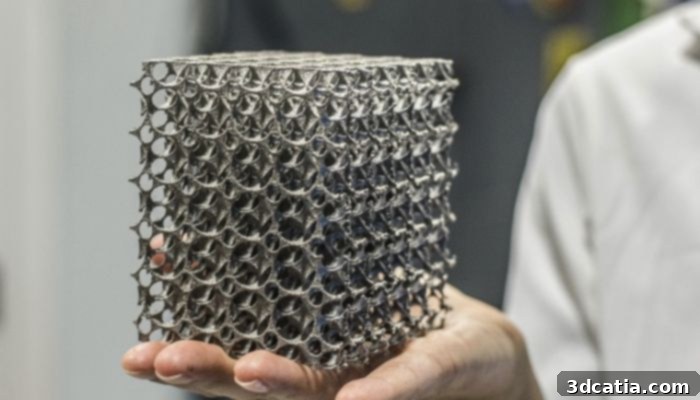
Metal 3D printing, along with plastic, was the method of choice for the nuclear firms (Photo credit: Markforged)
Beyond Resilience: The Broader Benefits of Additive Manufacturing in Nuclear Power
The benefits of integrating 3D printing into nuclear energy operations extend far beyond merely addressing supply chain issues. This technology offers several inherent advantages that are particularly pertinent to such a highly regulated and safety-critical industry. Firstly, it enables rapid prototyping and iterative design, allowing engineers to test and refine components quickly, potentially leading to improved performance and safety features. This agility is invaluable in an industry where component failure can have severe consequences.
Secondly, 3D printing facilitates the creation of optimized designs that are lighter, stronger, or possess enhanced thermal properties compared to traditionally manufactured parts. This design freedom can lead to greater efficiency and extended operational lifespans for critical components. The ability to produce parts on-demand also drastically reduces the need for extensive physical inventories, freeing up valuable storage space and reducing capital tied up in spare parts. This lean inventory management strategy is especially impactful for custom, low-volume, high-value components that are frequently required in nuclear facilities.
Moreover, 3D printing is a powerful tool for managing part obsolescence. Many nuclear power plants have operational lives spanning decades, far outliving the production cycles of their original components. When an OEM discontinues a part, 3D printing provides a viable means to recreate or even improve upon the original design, ensuring that these vital facilities can continue to operate safely and efficiently for their full intended lifespan. This capability is crucial for ensuring the “at least 60 years” operational goal mentioned by Mr. Zronek.
Challenges and the Path Forward
While the advantages are significant, implementing 3D printing in a highly regulated sector like nuclear energy is not without its challenges. Strict qualification and certification processes for materials and parts are paramount to ensure safety and reliability. This requires rigorous testing, validation, and adherence to stringent industry standards. Furthermore, developing a skilled workforce proficient in additive manufacturing processes, from design to post-processing, is essential for successful integration.
Despite these hurdles, the pioneering efforts of ČEZ and Škoda JS demonstrate a clear path forward. Their success in producing thousands of critical parts showcases the immense potential of 3D printing to transform manufacturing strategies in demanding environments. This move towards internalizing production capabilities for spare parts represents a critical step towards greater self-reliance, reduced vulnerability to global disruptions, and a more secure energy future for nations relying on nuclear power.
What are your thoughts on energy firms leveraging 3D printing to enhance supply chain resilience? We’d love to hear your perspective! Share your insights in a comment below or connect with us on our LinkedIn, Facebook, and Twitter pages! Don’t forget to sign up for our free weekly Newsletter here to get the latest 3D printing news delivered straight to your inbox! You can also find all our videos on our YouTube channel.
*Cover photo credit: American Nuclear Society