
The Cutting Edge of Additive Manufacturing: This Week’s Top 5 3D Printing Innovations
Another vibrant summer week concludes, and we are thrilled to bring you our curated selection of the top five most impactful 3D printing videos! Additive manufacturing continues to push boundaries across various sectors, transforming industries and improving lives in unexpected ways. This week’s roundup showcases the remarkable versatility and potential of this technology. We kick off our list with an inspiring story of a non-profit organization utilizing 3D printers to create specialized learning tools for children with disabilities, fostering better educational outcomes. Following this heartwarming initiative, we delve into the fascinating world of food innovation, exploring how 3D-printed meat is being developed using cellular technology, offering a sustainable alternative for future consumption. Next, we take you to Clarkson College, where a brand-new 3D printing lab is poised to revolutionize medical education and patient care. The fourth video highlights groundbreaking advancements in healthcare, demonstrating how realistic 3D-printed models of human organs are empowering surgeons with unparalleled training opportunities. Finally, we journey to the United Kingdom to discover how 3D printing has become an indispensable tool in the innovative development and manufacturing of cutting-edge drones. Prepare to be amazed by these incredible applications and discover how 3D printing is shaping our world. We hope you enjoy watching and wish you a fantastic Sunday!
Top 1: Empowering Learning: How 3D Printing Transforms Education for Children with Disabilities
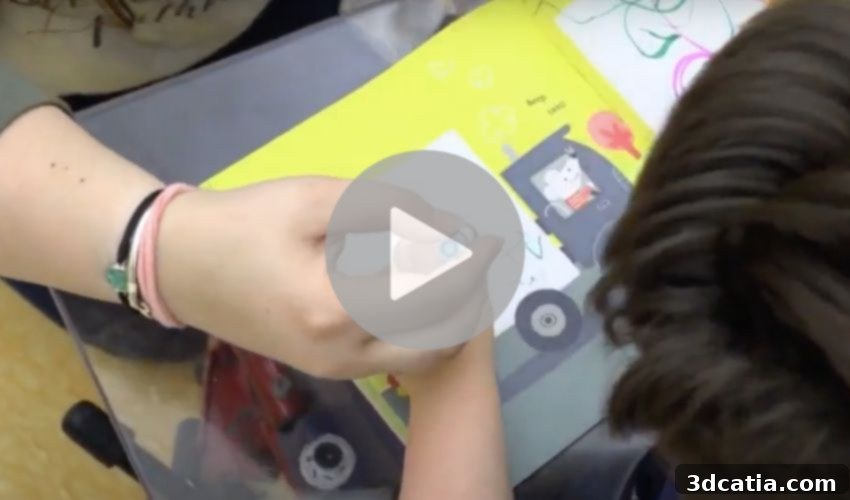
In Louisville, Kentucky, the Home Of The Innocents stands as a beacon of hope, a non-profit organization dedicated to providing essential residential and community services for children facing various challenges. This week, we highlight their incredible initiative made possible by a generous donation: a state-of-the-art 3D printer. This innovative piece of technology has become a game-changer, enabling the organization to craft specialized tools tailored to the unique needs of children with disabilities, particularly those with visual impairments. Traditional learning aids can be prohibitively expensive and often lack the precise customization required for individual children. With their new 3D printer, Home Of The Innocents can now produce bespoke educational pieces that adapt perfectly to each child’s requirements. These custom-designed items, which might cost a fortune if ordered commercially, are now produced at a mere fraction of the price, making personalized learning more accessible than ever. This capability allows for the creation of tactile teaching aids, adaptive grips for writing tools, custom jigs for puzzles, and even specialized communication devices, all designed to enhance engagement and comprehension. By harnessing the power of additive manufacturing, Home Of The Innocents is not just saving money; they are opening new avenues for learning and development, proving that technology, when applied with compassion, can truly make a profound difference in the lives of vulnerable children. It exemplifies how 3D printing can democratize access to essential resources, bridging gaps in education and fostering inclusivity.
Top 2: The Future of Food: 3D Printing Meat Using Cellular Technology
Imagine savoring the taste and texture of your favorite meat dishes without any animal being harmed in the process. This future is rapidly approaching, thanks to groundbreaking advancements in additive manufacturing. 3D-printed meat, often referred to as cultured or lab-grown meat, is emerging as a genuine alternative to traditionally farmed animal products. The escalating global demand for meat, coupled with environmental concerns like greenhouse gas emissions, land use, and water consumption associated with conventional livestock farming, has spurred intensive research into sustainable protein sources. Numerous pioneering companies worldwide are dedicating substantial resources to further develop 3D printing technologies specifically for food production. This revolutionary process involves using animal cells, harvested without harm, and culturing them in a controlled environment. These cells are then mixed with a bio-ink – a nutrient-rich solution – which is subsequently extruded by a specialized 3D printer in precise layers, mimicking the complex fibrous structure of real muscle tissue. The following video provides a compelling look into how this innovative 3D-printed meat is being produced and offers a glimpse into what consumers can expect in the near future. While challenges remain in achieving perfect texture, scalability, and cost-effectiveness, the progress is undeniable. This technology not only addresses ethical concerns regarding animal welfare but also offers a pathway to a more sustainable and resource-efficient food system, potentially feeding a growing global population without further straining our planet’s resources. It represents a significant leap towards redefining our relationship with food and production.
Top 3: Pioneering Medical Education: Clarkson College’s New 3D Printing Lab
Clarkson College, a distinguished private institution nestled in Omaha, Nebraska, has taken a monumental step forward in healthcare education with the recent grand opening of its dedicated 3D printing lab. This state-of-the-art facility is specifically designed to immerse students and professionals in the transformative applications of 3D printing within various medical conditions, illuminating how patients can profoundly benefit from this cutting-edge technology. The lab serves as a vibrant hub for learning, offering hands-on experience in converting complex medical imaging data – such as MRI and CT scans – into tangible, three-dimensional models. This process is invaluable for surgical planning, allowing doctors to practice intricate procedures on patient-specific anatomical replicas before ever stepping into an operating room. Beyond surgical preparation, the lab also focuses on the development of custom prosthetics, orthotics, and adaptive medical devices, all precisely tailored to individual patient needs, offering comfort and functionality often unattainable with mass-produced alternatives. The newly inaugurated lab is instrumental in helping a broader audience understand the myriad ways additive manufacturing can significantly enhance traditional medical practices. It provides innovative alternatives, promotes personalized medicine, and equips future healthcare professionals with the skills necessary to leverage 3D printing for improved patient outcomes. By fostering a deeper comprehension of this technology, Clarkson College is not only preparing its students for the future of healthcare but also actively contributing to a more efficient, patient-centric, and technologically advanced medical landscape.
Top 4: Revolutionizing Surgical Training with Realistic 3D-Printed Human Organ Models
In the demanding field of surgery, preparation is paramount. The ability for surgeons to train and meticulously practice complex procedures before operating on a patient can significantly reduce risks, improve precision, and ultimately lead to better outcomes. Traditionally, training models have been limited in their realism and customization. However, thanks to the revolutionary capabilities of 3D printing, it is now possible to create incredibly authentic anatomical models that not only visually resemble real human organs but also possess the tactile characteristics and material properties of living tissue. These highly realistic models can replicate specific pathologies, tumors, or complex anatomical variations unique to individual patients, transforming pre-operative planning. Surgeons can now hold a precise replica of a patient’s heart, kidney, or liver in their hands, allowing them to visualize and rehearse every step of a surgery, anticipate challenges, and refine their techniques in a risk-free environment. This level of preparation enhances surgical performance, minimizes errors, and builds confidence. The technology employs advanced multi-material 3D printers that can combine different polymers to mimic varying tissue densities, from soft muscle to rigid bone, accurately simulating the feel and response of human anatomy. This video below offers a fascinating insight into the process of 3D printing these lifelike heart models, demonstrating the intricate detail and precision involved. By providing an unprecedented level of realism for surgical practice and medical education, 3D printing is fundamentally changing how medical professionals learn, prepare, and innovate, ultimately elevating the standard of patient care worldwide.
Top 5: Elevating Aerospace: 3D Printing’s Impact on Drone Manufacturing in the UK
The drone industry has experienced an explosive growth over the past decade, with applications ranging from aerial photography and surveying to logistics and defense. In our final video, we explore how additive manufacturing is playing a pivotal role in this high-tech sector, specifically in the United Kingdom. Ross Embleton, the lead product designer at the esteemed British drone manufacturer Heliguy, provides an insightful explanation of how his company harnesses the power of 3D printers from Formlabs to engineer and produce high-quality, advanced drones. Embleton articulates how 3D printing has fundamentally innovated the entire drone development and manufacturing pipeline. Traditionally, creating complex, lightweight, and custom drone components involved lengthy and expensive processes like injection molding or CNC machining. With Formlabs’ sophisticated 3D printing solutions, Heliguy can rapidly prototype new designs, iterate quickly on components, and produce intricate geometries that would be impossible or impractical with conventional methods. He elaborates on the numerous benefits, including significant reductions in development time and cost, the ability to create highly optimized and lightweight parts that enhance flight performance and battery life, and the flexibility to customize components for specific client needs. Formlabs printers, known for their precision and material versatility (e.g., strong resins mimicking injection-molded plastics), allow Heliguy to produce robust, functional parts for their drones, from complex internal structures to aerodynamic casings. This integration of additive manufacturing enables Heliguy to maintain its position as an industry leader, constantly pushing the boundaries of drone technology and demonstrating how 3D printing is an essential tool for rapid innovation, cost-efficiency, and superior product development in specialized manufacturing sectors like aerospace.
What are your thoughts on this week’s incredible top 5 videos showcasing the diverse and impactful applications of 3D printing? We’d love to hear your insights and predictions for the future of additive manufacturing! Let us know in a comment below or connect with us on our LinkedIn, Facebook, and Twitter pages! Don’t forget to sign up for our free weekly Newsletter here to receive the very latest 3D printing news and innovations straight to your inbox every week! You can also find an extensive library of all our engaging videos and educational content on our dedicated YouTube channel. Stay informed, stay inspired, and continue to explore the amazing world of 3D printing with us!