
Innovating Clean Energy: Iowa State University’s Groundbreaking Research in 3D Printing Tungsten for Advanced Nuclear Fusion Reactors
The pursuit of clean, sustainable energy has long been a global priority, and nuclear fusion reactors represent one of humanity’s most ambitious solutions. These extraordinary devices aim to harness the same energy process that powers the Sun, but on Earth. Achieving this requires containing plasma at temperatures exceeding an astonishing 150 million degrees Celsius—more than ten times hotter than the Sun’s core. Such extreme conditions demand materials of unparalleled resilience, and tungsten, a rare and refractory metal, stands out as a prime candidate. Its exceptional melting point and resistance to high temperatures make it highly promising for critical components within nuclear reactors. However, tungsten is not without its challenges; it is notoriously expensive, incredibly hard, and inherently brittle, making traditional manufacturing methods difficult and costly. To overcome these hurdles and unlock tungsten’s full potential, the U.S. Department of Energy has awarded a significant $1 million grant to researchers at Iowa State University. This crucial funding will enable them to explore the innovative possibility of 3D printing tungsten parts specifically designed for nuclear reactors. As a critical material for advanced metal 3D printing applications, tungsten is paving the way for more efficient fusion energy, making the Iowa State research team’s pioneering efforts particularly noteworthy. Their work promises to push the boundaries of materials science and additive manufacturing, advancing the path towards a clean energy future.
This substantial grant forms part of a larger $36 million initiative spearheaded by the U.S. Department of Energy’s Established Program to Stimulate Competitive Research (EPSCoR). This nationwide program is strategically designed to foster and promote cutting-edge energy-related research across various institutions, ensuring that critical scientific advancements are made and leveraged for national benefit. In the United States, nuclear power already plays a vital role in the energy landscape, accounting for 19 percent of the nation’s electricity production, according to the U.S. Energy Information Administration. Despite this, researcher Sougata Roy, the visionary recipient of this grant, sees immense, untapped potential for nuclear energy in the coming decades. Roy’s enthusiasm for the project is palpable: “One of the major things that excites me about this project is working with nuclear energy,” Roy stated. “It’s the largest source of clean power in the United States. This emission-free electricity is incredibly important for our future, offering a sustainable solution to growing energy demands without contributing to climate change.” His perspective underscores the critical role this research can play in diversifying the energy portfolio and achieving ambitious environmental goals through innovative technological solutions.
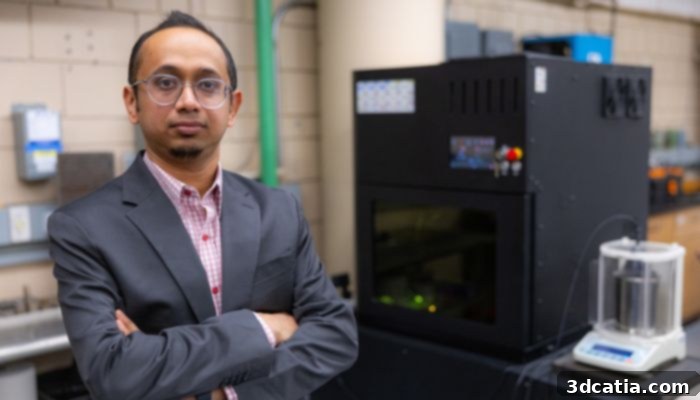
Sougata Roy, leader of the DREAM-TEAM
Sougata Roy, an accomplished assistant professor of mechanical engineering at Iowa State University, is leading this transformative research endeavor. His primary objective is to utilize advanced additive manufacturing techniques, specifically 3D printing, to fabricate high-performance nuclear reactor shields and other essential components. The funding from this prestigious grant will directly support his groundbreaking work. Professor Roy has aptly named his ambitious project the “DREAM-TEAM” initiative, an acronym that eloquently encapsulates its mission: “Developing a Robust Ecosystem for Additive Manufacturing of Tungsten for Extreme Applications and Management.” This name not only highlights the collaborative spirit of the research but also emphasizes the strategic importance of creating a comprehensive framework for working with tungsten in the most demanding environments. The DREAM-TEAM project seeks to address the complex challenges associated with tungsten’s material properties, paving the way for safer, more efficient, and more durable nuclear energy systems through sophisticated manufacturing processes.
The four-year grant will facilitate an extensive, multi-institutional collaboration, bringing together some of the brightest minds and most advanced facilities in materials science and engineering. Professor Roy will be working in close partnership with Yachao Wang, an assistant professor of mechanical engineering at the University of North Dakota, whose expertise will be invaluable to the project. Beyond academic collaborations, the DREAM-TEAM will also engage with leading researchers from three of the U.S. Department of Energy’s most prestigious national laboratories: Ames National Laboratory, conveniently located on the Iowa State campus, Argonne National Laboratory in Illinois, renowned for its diverse scientific research, and Oak Ridge National Laboratory in Tennessee, a hub for advanced materials and energy research. This collaborative network ensures a comprehensive approach, combining academic innovation with the vast resources and specialized knowledge of national labs, thereby maximizing the potential for breakthroughs in metal additive manufacturing for extreme environments. This synergy of institutions is critical for tackling the complex scientific and engineering challenges presented by developing next-generation nuclear reactor components.
Why 3D Printed Tungsten for Nuclear Applications?
The choice of tungsten for nuclear reactor components, particularly in demanding fusion environments, is no accident. While its high melting point makes it exceptionally resistant to extreme heat, tungsten possesses several other crucial properties that make it indispensable for such applications. It exhibits remarkable resistance to erosion even under intense, high-energy neutron irradiation, a common challenge within reactor cores. Furthermore, tungsten is known for its ability to retain only low levels of radioactive tritium, a key isotope used in fusion reactions, which is vital for safety and operational efficiency. These combined qualities make tungsten an ideal material for environments where structural integrity must be maintained under unimaginable stress.
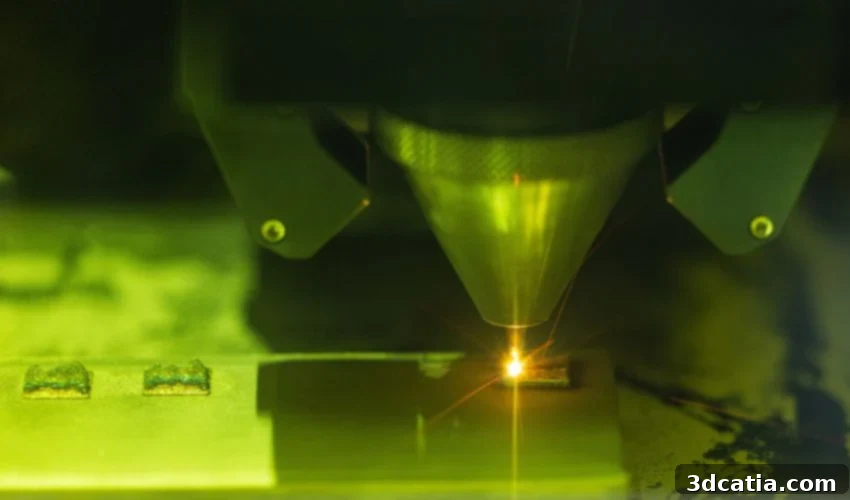
However, the very properties that make tungsten so desirable also make it extraordinarily difficult to process using conventional manufacturing techniques. Its extreme hardness and brittleness lead to significant challenges in machining, casting, or forging, often resulting in high costs, material waste, and limitations in geometric complexity. This is where 3D printing, or additive manufacturing, offers a revolutionary alternative. The DREAM-TEAM researchers are leveraging laser powder-blown directed-energy deposition (DED), an advanced 3D printing method particularly suited for high-performance metals. In this process, a high-powered laser precisely melts tungsten powder as it is simultaneously deposited onto a substrate. The component is then built layer by excruciating layer in a highly controlled, oxygen-free environment, which is crucial to prevent oxidation and maintain the purity and integrity of the tungsten. This additive approach not only allows for the creation of intricate and optimized geometries that are impossible with traditional methods but also offers the potential to customize material properties at a localized level, opening new avenues for designing reactor components with superior performance and longevity. The ability to deposit material precisely where needed also significantly reduces waste compared to subtractive manufacturing, contributing to a more sustainable production process.
A significant part of the grant funding will be allocated to acquiring state-of-the-art instruments for thorough material characterization. Roy’s team will meticulously analyze the mechanical properties of the 3D printed tungsten samples, focusing on critical aspects such as their instrumented indentation characteristics and, crucially, their fracture toughness. These measurements are essential for understanding how the printed components will behave under the extreme stresses and temperatures within a nuclear reactor. Yet, as Roy emphasized in a press release from Iowa State University, the true innovation of the project extends beyond the physical fabrication: “The most unique part of the project isn’t the actual printing, it’s the physics-based modeling and computational simulations of the printing process that will complement the experimental work.” This highlights a sophisticated integration of theoretical and practical approaches.
This blend of experimental validation with advanced computational tools is where the DREAM-TEAM truly differentiates itself. By incorporating cutting-edge machine learning and artificial intelligence algorithms, the researchers will build sophisticated models and simulations that will provide profound insights into the complex physics governing the additive manufacturing process of tungsten. These computational predictions will not only guide their experimental work but also accelerate the establishment of robust scientific theories behind their observations. This data-driven approach will enable the team to rapidly develop and optimize new “recipes” for tungsten alloys specifically engineered to withstand and perform reliably under the incredibly harsh conditions found within nuclear reactors. Starting with pure tungsten, the team aims to systematically address and resolve inherent material challenges, such as cracking, which can compromise component integrity. “We’ll start with pure tungsten,” Roy confirmed. “Eventually we’ll develop new alloys to resolve this cracking challenge, creating materials that are not only strong but also ductile enough for practical application.” The ultimate goal is to create a new generation of high-performance tungsten materials that are tailor-made for the rigorous demands of fusion energy, paving the way for more efficient, safer, and commercially viable nuclear power. This comprehensive approach, blending materials science, advanced manufacturing, and artificial intelligence, positions the DREAM-TEAM at the forefront of innovation in clean energy technology. To delve deeper into the fascinating details of the DREAM-TEAM project and its potential impact, readers are encouraged to consult Iowa State’s official press release here.
The DREAM-TEAM mission at Iowa State University represents a significant leap forward in the quest for sustainable and clean energy. By combining the unique properties of tungsten with the transformative power of additive manufacturing and advanced computational intelligence, this research promises to unlock new possibilities for nuclear fusion technology. The successful development of 3D printed tungsten components could dramatically improve the efficiency, safety, and longevity of future nuclear reactors, bringing humanity closer to a world powered by virtually limitless, emission-free energy. This collaborative effort between academia and national laboratories is a testament to the innovative spirit driving scientific progress in the 21st century.
What are your thoughts on the ambitious DREAM-TEAM mission and its potential to revolutionize nuclear fusion? We invite you to share your perspectives in a comment below or join the conversation on our LinkedIn, Facebook, and Twitter pages! To stay informed about the very latest advancements and news in the exciting world of 3D printing, don’t forget to sign up for our free weekly newsletter here and receive updates directly to your inbox. You can also discover all our insightful videos and engaging content on our dedicated YouTube channel.
*All Photo Credits: Christopher Gannon/Iowa State University