
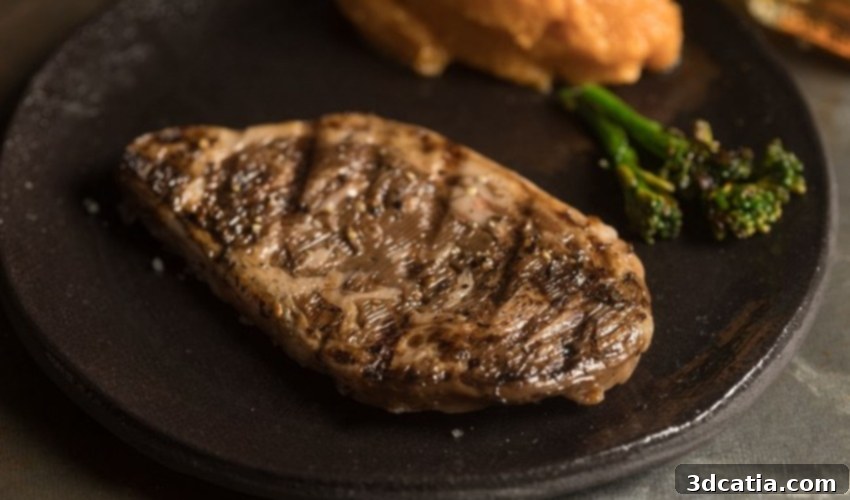
Revolutionizing Culinary Science: Aleph Farms Unveils World’s First 3D Bioprinted Slaughter-Free Ribeye Steak
In a monumental leap forward for the food technology sector, Aleph Farms recently made headlines with the groundbreaking announcement of successfully developing the world’s first slaughter-free ribeye steak. This extraordinary achievement was made possible through advanced 3D bioprinting techniques, utilizing real cow cells to create a meat product that is indistinguishable from its traditionally sourced counterpart. This pioneering feat stands as a testament to the power of collaborative innovation, stemming from a strategic partnership between the visionary Israeli start-up, Aleph Farms, and Technion – the esteemed Israel Institute of Technology, a globally recognized hub for cutting-edge science and technology research. While Aleph Farms had already demonstrated its capacity to produce a slaughter-free thin-cut steak as early as 2018 without the aid of additive manufacturing, their latest proprietary technology marks a significant evolution. It now harnesses the precision of 3D bioprinting, enabling the cultivation of virtually any type of steak, including the much-anticipated, far thicker cut of ribeye.
This development is not merely an incremental improvement; it represents a paradigm shift in how meat can be produced, addressing pressing concerns related to environmental sustainability, animal welfare, and food security. By moving beyond conventional farming methods, Aleph Farms is setting a new standard for the cultivated meat industry, offering consumers a guilt-free alternative without compromising on the authentic sensory experience of eating steak. The ability to create a thick-cut ribeye, complete with the intricate marbling and texture that meat lovers cherish, is a direct result of their commitment to pushing the boundaries of cellular agriculture and food innovation.
The Dawn of Slaughter-Free Ribeye: A Culinary and Scientific Milestone
Didier Toubia, the impassioned co-founder and CEO of Aleph Farms, articulated the profound significance of this accomplishment, stating, “This breakthrough reflects an artistic expression of the scientific expertise of our team. I am blessed to work with some of the greatest people in this industry. We recognize some consumers will crave thicker and fattier cuts of meat. This accomplishment represents our commitment to meeting our consumer’s unique preferences and taste buds, and we will continue to progressively diversify our offerings.” Toubia’s words underscore not only the scientific prowess involved but also a deep understanding of consumer desires. The market for premium, thicker cuts of meat, such as ribeye, is substantial, and for a long time, replicating these complex structures using cultivated meat technologies remained a formidable challenge. Aleph Farms’ success in this area signifies a critical milestone, moving cultivated meat from novelties to mainstream culinary contenders capable of satisfying even the most discerning palates.
The ambition to diversify offerings is central to Aleph Farms’ strategy. By demonstrating the capability to produce a complex cut like ribeye, the company opens the door to a vast array of possibilities, from different steak types to other intricate meat structures. This progressive diversification is key to achieving widespread consumer adoption and truly transforming the global food system. It moves cultivated meat beyond being a niche product to a comprehensive solution that can cater to a broad spectrum of cultural tastes and dietary preferences worldwide, ensuring that the future of food is both innovative and inclusive.
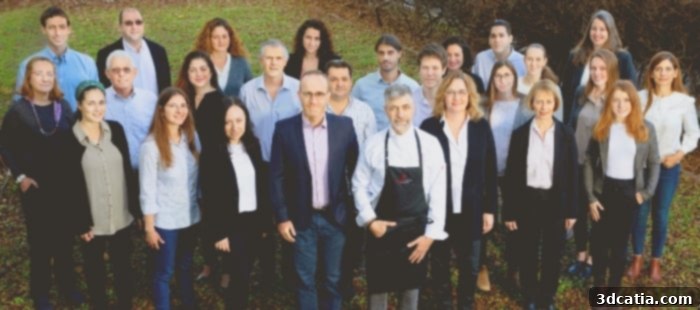
The Aleph Farms Team. (Photo Credit: Aleph Farms)
Unpacking the Technology: How 3D Bioprinting Creates Real Meat
The innovative steak was meticulously fabricated using sophisticated 3D bioprinting technology, directly employing real cow cells as the foundational material. Crucially, this entire process occurs without any genetic engineering or immortalization, ensuring that the resulting product consists of the natural building blocks of meat, indistinguishable from animal-derived tissue at a cellular level. The journey from cell to steak begins with the precise 3D bioprinting of these living cow cells. Once printed into a specific structure, these cells are then transferred to an incubation environment designed to mimic the natural physiological conditions within an animal’s body. This controlled environment allows the cells to grow, differentiate into various cell types (such as muscle and fat cells), and interact with each other in a complex, three-dimensional matrix.
The latter step – facilitating cellular differentiation and interaction – is absolutely essential for achieving the complex texture, marbling, and overall organoleptic qualities that define a real steak. A key challenge in cultivating thick cuts of meat has always been nutrient delivery to the innermost cells. Aleph Farms has ingeniously addressed this by mirroring the naturally occurring process of vascularization in tissues. This advanced technique allows for the efficient perfusion of nutrients and the removal of waste products across the thicker tissue, ensuring all cells within the cultivated steak remain viable and healthy as they develop. This bio-mimicry is what enables the 3D printed steak to precisely resemble the intricate structure and characteristic shape of a steak taken directly from livestock, both before and after being cooked. Consequently, the 3D printed steak integrates similar muscle, fat, and organoleptic attributes – referring to the taste, smell, and texture – that one would expect from a traditionally butchered steak, promising an authentic and satisfying culinary experience.
Aleph Farms’ Vision: A Sustainable and Equitable Global Food System
This breakthrough is not an isolated scientific curiosity but an integral component of Aleph Farms’ expansive mission to establish a robust global platform for local meat production. The company envisions leveraging culturally adaptable and scalable technology to address critical issues facing our planet’s food systems. By enabling meat cultivation closer to consumers, they aim to reduce the environmental footprint associated with traditional livestock farming, including significant reductions in land use, water consumption, and greenhouse gas emissions. This approach also enhances local food security, insulating communities from the volatility of global supply chains and reducing dependence on distant industrial farms.
Toubia further elaborated on the strategic significance of expanding their product portfolio: “Additional meat designs will drive a larger impact in the mid and long term. This milestone for me marks a major leap in fulfilling our vision of leading a global food system transition toward a more sustainable, equitable and secure world.” His statement highlights the understanding that true transformation comes from offering a diverse range of appealing products, not just a single breakthrough. This holistic vision encapsulates a commitment to not only environmental stewardship but also social equity, ensuring that advanced food technologies benefit all segments of society.
Adding to this sentiment, Technion Professor Shulamit Levenberg, who serves as Aleph’s Co-Founder and Chief Scientific Advisor, enthusiastically commented, “With the realization of this milestone, we have broken the barriers to introducing new levels of variety into the cultivated meat cuts we can now produce. As we look into the future of 3D bioprinting, the opportunities are endless.” Professor Levenberg’s insight perfectly captures the expansive potential unleashed by this technological advancement. The ability to control and customize meat structures at a cellular level through 3D bioprinting opens up exciting avenues for creating novel products, enhancing nutritional profiles, and tailoring meat to specific culinary applications. Aleph Farms has consistently demonstrated its innovative spirit, even famously 3D printing meat in space in a previous endeavor. With the successful realization of this fully structured ribeye steak, meticulously 3D bioprinted using real cow cells, the company has only further solidified its position as a visionary leader and provided compelling evidence of the bright and transformative future that lies ahead for cultivated meat.
The Future of Food is Now: Aleph Farms Leads the Way
The creation of the 3D bioprinted slaughter-free ribeye steak represents more than just a scientific accomplishment; it is a profound declaration about the future of food. Aleph Farms, in collaboration with Technion, is not just producing alternative protein; they are redefining what meat can be. This innovation directly addresses the growing global demand for protein, which is projected to increase significantly in the coming decades, while simultaneously offering a viable solution to the environmental and ethical challenges inherent in conventional meat production. By eliminating the need for animal slaughter, this technology offers a compassionate alternative that resonates with a growing number of consumers concerned about animal welfare. Furthermore, the localized production model championed by Aleph Farms has the potential to decentralize meat production, making high-quality, sustainable protein accessible in regions where traditional farming is impractical or environmentally burdensome.
This landmark achievement also signals a maturing cultivated meat industry, moving from laboratory curiosities to tangible, market-ready products. The ability to replicate complex textures and flavors of popular cuts like ribeye indicates that cultivated meat is rapidly approaching, if not surpassing, sensory parity with traditional meat. As research and development continue, coupled with economies of scale, the cost of cultivated meat is expected to decrease, making it a competitive and desirable option for a broader consumer base. Aleph Farms stands at the forefront of this culinary revolution, demonstrating that the future of meat can be sustainable, ethical, and delicious. Their unwavering commitment to scientific excellence and a bold vision for a better world positions them as a true pioneer in the rapidly evolving landscape of food innovation.
*Photos courtesy of Aleph Farms
What are your thoughts on this revolutionary 3D printed steak and the future of cultivated meat? We invite you to share your perspective in a comment below or engage with us on our Facebook, Twitter and LinkedIn pages! For the very latest updates in 3D printing news and innovations, be sure to sign up for our free weekly Newsletter here, delivered straight to your inbox!