
Revolutionary 3D Printed Superfoam: Transforming Defense and Beyond with Additive Manufacturing
Researchers at Texas A&M University have achieved a groundbreaking advancement in materials science by creating a superfoam using the power of additive manufacturing, also known as 3D printing. This innovative composite material boasts the remarkable ability to absorb up to ten times more energy than conventional foams. This 3D-printed marvel holds immense potential to revolutionize the defense sector and, more importantly, save lives across various applications.
Traditional foam manufacturing faces significant challenges, primarily related to the internal structure of the material. Conventional methods often force manufacturers to choose between two less-than-ideal options. They can opt for a random pattern, which unfortunately limits the foam’s energy absorption capacity, or they can invest in more complex materials and intricate lattice structures. While the latter option offers superior performance, it comes at a steep price, making it expensive and difficult to produce on a large scale. Therefore, traditional foam manufacturing often involves a frustrating trade-off between precision and cost-effectiveness.
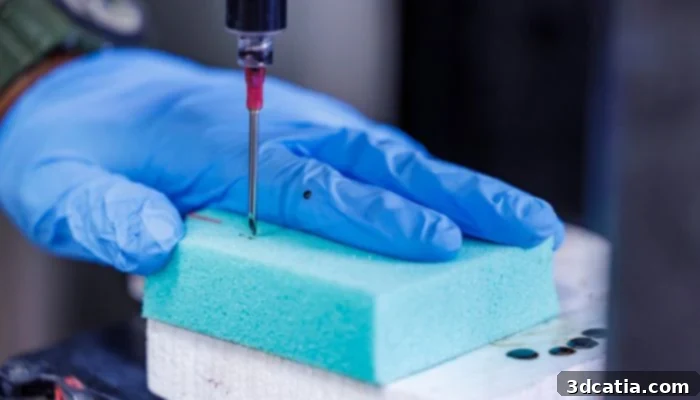
The team strategically places 3D-printed struts within the foam structure.
The Synergy of Foam and 3D Printing: A Game-Changing Approach
The limitations of traditional foam manufacturing are being challenged and overcome thanks to the transformative capabilities of 3D printing. The research team at Texas A&M University has pioneered a novel technique called In-Foam Additive Manufacturing (IFAM). This innovative process allows for the creation of a complex, three-dimensional network of plastic struts meticulously embedded within a conventional block of foam. By strategically combining these two materials, the resulting structure exhibits significantly enhanced resistance to applied pressure. The plastic struts are precisely positioned within the foam to maximize their effectiveness. This integration results in a cohesive unit where the 3D-printed structure becomes an integral part of the foam’s overall architecture.
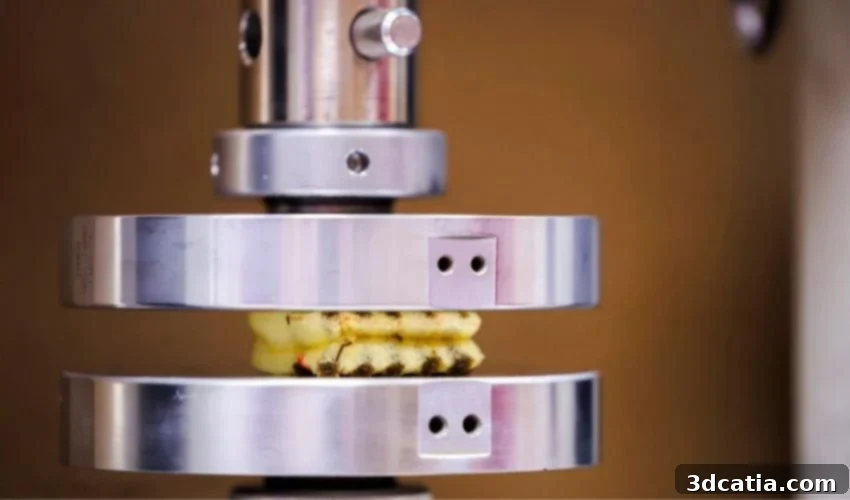
A closer examination of the final product reveals a sophisticated mechanism for energy absorption. Initially, the foam component acts as a primary reinforcement, providing structural integrity to the composite material. When a force is applied to the structure, the strategically placed struts come into play. They effectively redirect the pressure outwards, distributing it throughout the surrounding foam. This ingenious design results in a structure that can absorb substantially more energy and, consequently, withstand significantly heavier loads without compromising its integrity. Dr. Eric Wetzel, the team leader for strategic polymer additive manufacturing at the Army Research Laboratory, elucidates the advantages of this innovative approach:
IFAM is a streamlined, computer-aided manufacturing process that empowers us to construct an elastomeric skeleton within conventional open-cell foam. The diameter, spacing, angle, and elasticity of the elastomer can be precisely selected and tailored to achieve a wide spectrum of desired properties. The IFAM process elegantly combines the best aspects of both materials, offering a customizable, efficient, and highly cost-effective composite energy absorber.
The Multifaceted Applications of 3D Printed Superfoam: A Versatile Material for the Future
The development of this superfoam was primarily driven by military funding, which underscores its initial focus on defense applications. The potential applications within the defense sector are vast and promising. One can easily envision this material being integrated into critical protective gear such as military helmets and blast-resistant seat cushions. The superfoam’s unique combination of being lighter and more effective at absorbing energy and mitigating impacts makes it an ideal solution for a multitude of battlefield scenarios.
By incorporating this advanced material into protective equipment, the risk of injury can be significantly reduced, potentially saving lives in combat situations. However, the applications of this superfoam extend far beyond the realm of defense. Researchers are actively exploring the potential of integrating it into everyday items, such as bicycle and motorcycle helmets, as well as a wide range of sports equipment. Furthermore, it could be implemented in car bumpers, providing enhanced protection to passengers during severe collisions, thereby minimizing the severity of injuries.
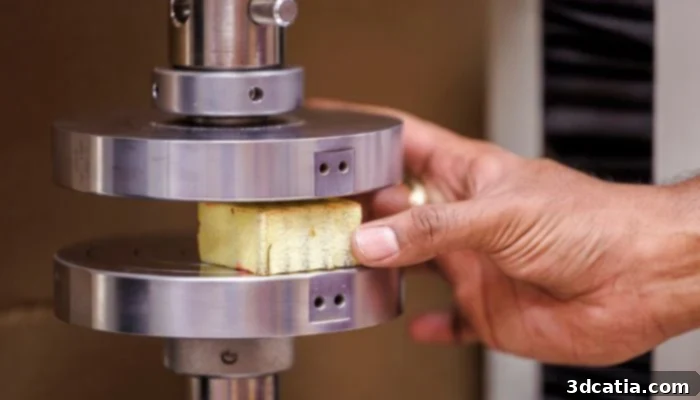
The innovative structure of this superfoam enables it to absorb up to ten times more energy than conventional materials.
Beyond its remarkable energy absorption capabilities, this hybrid foam also possesses the potential to absorb sound and effectively reduce overall noise levels. Dr. Mohammad Naraghi, a professor at Texas A&M University and the lead author of the groundbreaking study, highlights the acoustic possibilities of this material:
It would be feasible to modify the foam’s inherent properties to transform it into an exceptional sound absorber, capable of attenuating, or even completely eliminating, specific frequency bands and targeted vibrations. While acoustic applications are still in the preliminary stages of research and development, we are eager to explore this property further, with the aim of transforming the foam into an active acoustic filter that surpasses the performance of existing materials.
The research team is particularly intrigued by the customization opportunities afforded by additive manufacturing. The ability to tailor the material’s properties to specific needs opens up a world of possibilities. Why not design custom cushions that are perfectly adapted to an individual’s unique needs and physiological characteristics? For example, a cushion could feature a firmer section to provide optimal support for the neck, while incorporating a softer section for enhanced comfort for the legs. The potential applications are virtually limitless. While we eagerly anticipate the opportunity to acquire our own personalized 3D-printed cushion, you can delve deeper into the details of this fascinating project HERE.
What are your thoughts on this innovative 3D-printed foam? We encourage you to share your opinions in the comments section below or on our LinkedIn and Facebook pages. Additionally, we invite you to subscribe to our free weekly Newsletter to receive the latest updates and insights on the world of 3D printing directly in your inbox. You can also discover a wealth of informative videos on our YouTube channel.
*All Photo Credits: Abbey Toronjo/Texas A&M University Division of Marketing & Communications