
Bayer Accelerates Drug Discovery with 3D Bioprinted Heart Tissue: A New Frontier in Pharmaceutical Research
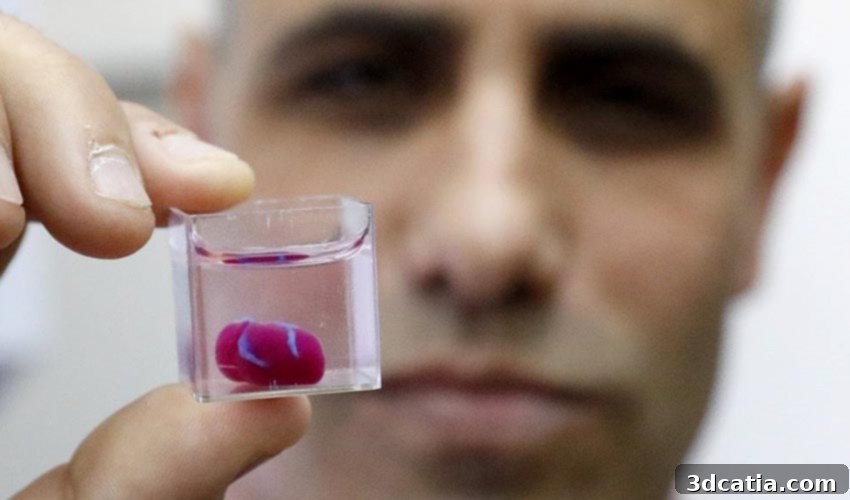
The global pharmaceutical landscape is on the cusp of a revolutionary transformation, spearheaded by advancements in additive manufacturing and regenerative medicine. In a groundbreaking announcement, Bayer, the esteemed German multinational pharmaceuticals and life sciences company, has confirmed its intention to leverage innovative 3D bioprinted heart tissue models for accelerated drug testing. This strategic collaboration is set to significantly enhance the efficiency and safety of pharmaceutical research, moving beyond conventional testing methodologies. The partnership draws directly from the pioneering work of Tel-Aviv University, which last year unveiled a monumental achievement: the world’s first 3D printed heart complete with blood vessels. This very research, heralded as a major breakthrough, is now poised to fast-track drug validation processes, according to Bayer’s official statements.
Ramot, the technology transfer arm of Tel-Aviv University, has further elaborated on this pivotal alliance. Researchers affiliated with the university will engage in a multi-year collaborative effort with Bayer. The primary objective is to meticulously test novel medications for both toxicity and efficacy, utilizing these sophisticated 3D printed heart tissue constructs. The long-term vision of this ambitious project even extends to eventually incorporating full 3D printed human hearts into the drug validation pipeline, representing an unparalleled leap forward in preclinical testing.
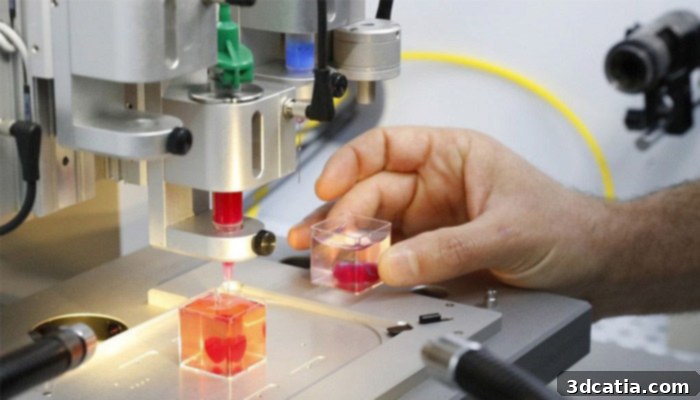
The moment scientists at Tel-Aviv University successfully employed advanced bioprinting techniques to create a functional heart with its intricate network of blood vessels, an array of previously unimaginable applications suddenly became viable. While the ultimate aspiration for many researchers in this field remains the 3D printing of entire, transplantable human organs, the immediate and profound impact on drug screening is undeniable. Experts in the field acknowledge that achieving fully reproducible organs ready for transplantation is still a considerable journey, estimated to require an additional 10 to 15 years of intensive research and development. However, the application of bioprinted tissues for drug validation presents a much more immediate and attainable goal, promising to reshape how new pharmaceuticals are evaluated.
These advanced 3D printed tissues offer a compelling alternative to traditional screening methods, promising to make the process significantly faster, more cost-effective, and considerably more efficient. The conventional journey of a drug candidate, as meticulously outlined by Prof. Tal Dvir’s lab at Tel-Aviv University, involves several rigorous phases of screening before a medication can ever reach pharmacies. Initially, a new chemical compound is tested on human tissue cultures meticulously grown in Petri dishes within a laboratory environment. Subsequently, if these initial tests show promise, the compound is then administered to lab animals for further evaluation. It is only after successfully navigating these extensive stages that a drug is finally approved to proceed to human clinical trials, a process known for its lengthy timelines and high attrition rates.
The benefits of integrating 3D printed tissues into this critical drug development pipeline are multifaceted and profound. Prof. Tal Dvir himself articulates these advantages with clarity, stating, “Our printed tissues contain cardiac muscle, blood vessels and the extracellular matrix which connects the different cells biochemically, mechanically and electrically. Moving away from Petri dishes to 3D printed tissues could significantly improve drug tests, saving precious time and money with the hope of producing safer and more effective medication.” This emphasis on a comprehensive tissue model, encompassing not just cells but also vital vascular and supportive structures, is what distinguishes these bioprinted constructs and makes them exceptionally valuable for preclinical research.
Traditional two-dimensional cell cultures in Petri dishes often fail to accurately mimic the complex physiological environment found within the human body. This limitation frequently leads to discrepancies between in vitro and in vivo results, necessitating extensive animal testing which, while crucial, also presents ethical considerations and species-specific differences that can sometimes complicate data interpretation. The introduction of 3D bioprinted cardiac tissue models promises to bridge this gap, offering a more physiologically relevant testing platform. These models can replicate the intricate cellular architecture, extracellular matrix interactions, and even the mechanical and electrical signaling pathways of human heart tissue, providing a far more accurate representation of how a drug might behave in a living human heart.
For Bayer, a company deeply committed to innovation in healthcare, this collaboration signifies a strategic investment in the future of drug discovery. The ability to rapidly screen drug candidates for cardiac toxicity – a common reason for drug failure in later stages of development – or to gauge their efficacy on human-specific tissue models early on, can dramatically reduce the duration and cost associated with bringing new drugs to market. This also opens avenues for personalized medicine, where in the distant future, drugs might even be tested on patient-specific 3D printed tissues to predict individual responses and minimize adverse effects, tailoring treatments with unprecedented precision.
The potential economic ramifications of this shift are immense. Drug development is an extraordinarily expensive endeavor, with the average cost of bringing a new drug from discovery to market often exceeding billions of dollars. A significant portion of these costs is attributed to the extensive preclinical and clinical trial phases, many of which end in failure. By identifying ineffective or toxic compounds earlier in the pipeline using advanced 3D bioprinted models, pharmaceutical companies like Bayer can save substantial resources, reallocate investments more strategically, and ultimately bring life-saving medications to patients faster. Moreover, the ethical benefits of reducing reliance on animal testing, while not eliminating it entirely, are considerable and align with growing global advocacy for humane research practices.
This alliance between a leading pharmaceutical giant and a pioneering academic institution underscores a broader trend in scientific collaboration, where industry-academia partnerships are accelerating the translation of innovative research into practical applications. Keren Primor Cohen, the CEO of Ramot, Tel-Aviv University’s technology transfer company, eloquently summarized the overarching significance of this initiative. She concluded, “This collaboration with Bayer will support the evaluation and development of new drugs and is a step in building long-term relations with Bayer that we hope will benefit both partners and ultimately patients.” This statement highlights not only the immediate scientific goals but also the foundational nature of this partnership, aiming to foster sustained innovation and mutual benefit.
The implications for patients are perhaps the most compelling aspect of this technological advance. By improving the precision and speed of drug testing, there is a tangible promise of developing safer and more effective medications. Drugs that might have failed due to unforeseen toxicities in animal models, but could be safe and effective in humans, might now have a better chance of advancing. Conversely, dangerous compounds can be identified and discarded earlier, protecting future patients from potential harm. This collaborative effort between Bayer and Tel-Aviv University marks a significant stride towards a future where pharmaceutical development is characterized by greater efficiency, reduced risk, and ultimately, enhanced patient outcomes. It signifies a future where the bridge between laboratory innovation and clinical application is built with the precision of 3D printing.
What are your thoughts on this exciting collaboration between Bayer and Tel-Aviv University and its potential impact on drug development? We invite you to share your perspectives in the comments section below or join the discussion on our social media channels. Follow us on Facebook and Twitter to stay informed. And don’t forget to sign up for our free weekly Newsletter to receive all the latest news and breakthroughs in the world of 3D printing delivered directly to your inbox!