
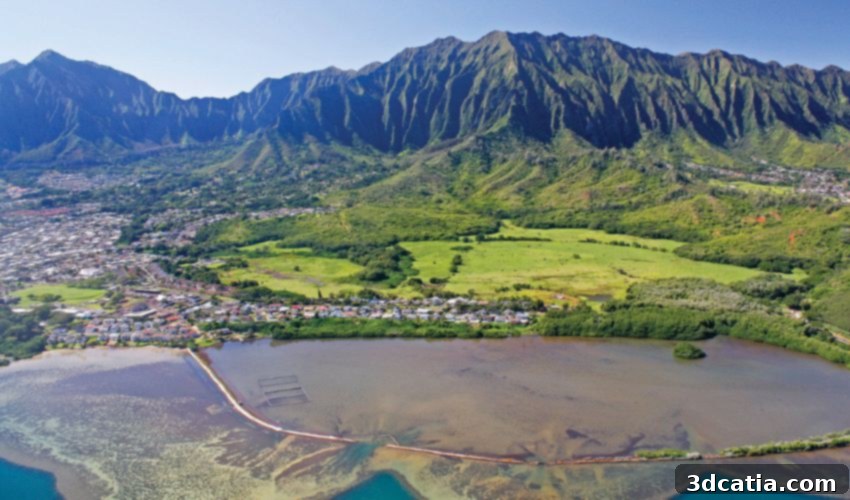
Revolutionary 3D Printed Sensors to Safeguard Hawaii’s Environment
Hawaii, a paradise of unparalleled beauty, faces a growing number of environmental threats. Wildfires, droughts, floods, hurricanes, tsunamis, and water contamination are becoming increasingly frequent and severe due to climate change. These challenges demand innovative solutions to protect both the fragile ecosystems of the islands and the communities that call them home. A critical component of this protection lies in comprehensive data collection, enabling the meticulous tracking of environmental changes and the swift detection of early warning signs before disasters strike.
In a significant step towards bolstering Hawaii’s environmental resilience, the National Science Foundation (NSF) has awarded a substantial $1.25 million grant to a collaborative team of researchers at the University of Hawaiʻi at Mānoa and Georgia Tech. This funding fuels the development of cutting-edge environmental hazard sensors, designed to deliver potentially life-saving data in real-time. These sensors promise to transform the way environmental threats are monitored and addressed across the Hawaiian Islands.
The core objective of this ambitious project is to create a cost-effective, open-source electronics printer. This printer will enable the rapid and affordable production of customized sensors, empowering local communities throughout the state with access to advanced monitoring tools. These sensors can be 3D printed in a matter of minutes and deployed on the same day, providing actionable data for both organizations and residents. The potential applications are vast, ranging from monitoring water quality and detecting soil contamination to tracking a wide array of environmental parameters. Furthermore, the sensors will connect seamlessly to a compact, AI-enabled handheld device—smaller than a smartphone—capable of processing data and uploading it to the cloud for immediate analysis and dissemination.
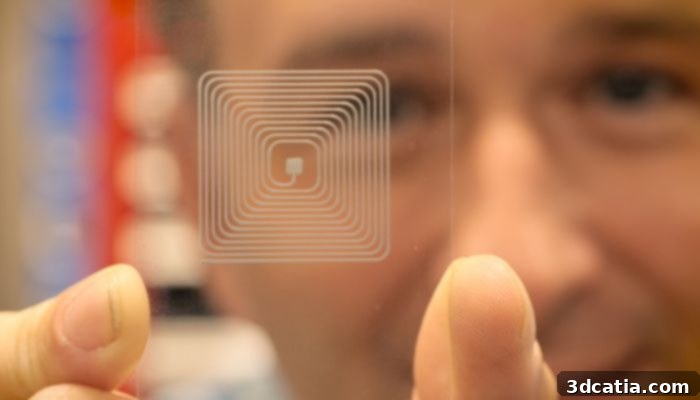
Professor Tyler Ray with a sensor (Photo Credit: The University of Hawai’i)
Harnessing Advanced Technologies for Environmental Monitoring
The research team is exploring a diverse range of 3D printing technologies for printed electronics to develop this advanced sensor system. These technologies include aerosol jet printing, inkjet printing, and direct-ink-writing. The choice of method will be tailored to the specific requirements of each application, ensuring optimal performance and cost-effectiveness. This flexible approach allows for the creation of sensors customized to address specific environmental challenges.
According to Tyler Ray, Associate Professor at the UH Mānoa College of Engineering and the principal investigator of the project, the team is taking a hybrid approach. “This is integrated into a hybrid approach that uses either FDM or SLA, or conventional machining, if geometries are required beyond a simple flat sheet,” he explained. This multi-faceted approach allows the team to leverage the strengths of various manufacturing techniques to create highly functional and adaptable sensors.
The project will also develop an open library of circuits and firmware. This resource will enable partners to quickly customize sensors for measuring a wide variety of environmental parameters, including pH levels, turbidity, heavy metals, and other contaminants. This ease of customization will empower local communities to monitor the specific environmental issues that are most relevant to their needs. Complementing these sensors, the researchers are developing handheld devices capable of capturing and storing energy, running sophisticated machine learning models, and operating reliably even with limited network connectivity. This ensures that the data collected by the sensors can be processed and analyzed effectively, regardless of location or connectivity limitations.
Furthermore, the collected data will be managed through established frameworks that prioritize local control and ensure the confidentiality of sensitive results. This commitment to data privacy and security is essential for building trust and ensuring the long-term sustainability of the project.
“Additive manufacturing gives us the freedom to tailor geometry, integrate multiple materials, and embed functionality in ways that are typically inaccessible for off-the-shelf devices,” Tyler added. “That matters when you’re trying to solve problems that are specific to a place and a community.”
The Central Role of Community Engagement
At the heart of this project is a deep commitment to community engagement. The technology will be designed and refined in close collaboration with groups who have kuleana (responsibility) for communities, land, and water across Hawaii. These partners include land stewardship organizations, Hawaiian-language immersion schools, and community colleges. By working together, ʻāina (land) stewards, kūpuna (elders), residents, and kumu (teachers and educators) will collectively define priorities, experiment with sensor prototypes, and establish the criteria for success. This collaborative approach ensures that the technology is truly responsive to the needs and priorities of the local communities it is designed to serve.
Tyler further explained that the sensors themselves are born from ongoing dialogues with community partners. “The sensors themselves grow out of conversations with community partners,” he said. “They tell us what matters to them, whether it is monitoring pH in local streams, understanding soil contamination, tracking changes over time in places they care about. From there, we’re building around a shared electronics backbone that can push data to a phone or a web portal we’ll stand up. The vision is a library of validated designs that people can actually build and deploy where they see a need.” This emphasis on co-creation ensures that the technology is both relevant and accessible to the communities that will ultimately use it.
The project includes iterative design workshops, peer exchanges between partner sites on Oahu and Maui, and a concluding capstone gathering to synthesize findings and share open designs. These activities will foster collaboration, knowledge sharing, and capacity building among project participants. Moreover, the grant will support training initiatives that connect partner sites with students across K–12, community colleges, and research universities. This investment in education and training will ensure that the next generation of environmental stewards is equipped with the skills and knowledge necessary to protect Hawaii’s precious natural resources.
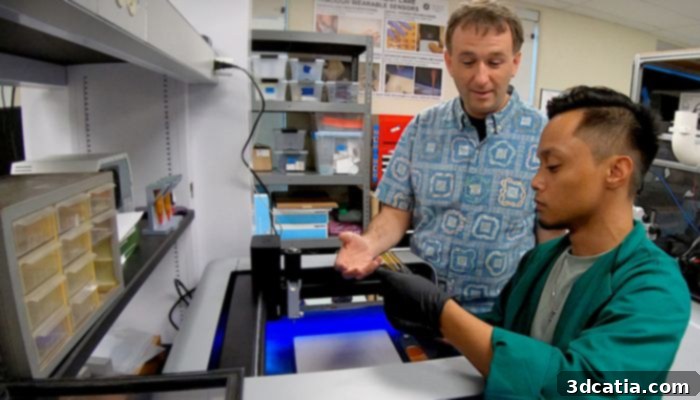
Professor Tyler Ray and Kendall Lorenzo (Photo Credit: The University of Hawai’i)
The project is committed to producing open hardware, software, and design artifacts. These resources will be released for others to adapt and build upon, promoting further innovation and collaboration in the field of environmental monitoring. This commitment to open-source principles ensures that the benefits of the project extend far beyond Hawaii, empowering communities around the world to address their own environmental challenges.
The University of Hawai’i has published an article with further details about the project. Read the full article here.
The NSF funded sensor project holds incredible promise for advancing environmental monitoring efforts not only in Hawaii, but also potentially worldwide, empowering local communities with the tools they need to protect their environment. The utilization of 3D printing offers rapid scalability and customization not typically seen in off-the-shelf solutions, leading to much more effective real-time data collection in vulnerable locations. The emphasis on accessibility for residents is vital for providing them with easily understandable data, so that they can take preventative action, especially in areas prone to hazards. By combining open source technology with a community-first approach, this sensor project is well-positioned to deliver an effective solution for Hawaii’s complex environmental challenges, and pave the way for implementation in other regions as well.
What are your thoughts on this innovative sensor project? Share your opinions in the comments below, or on our LinkedIn or Facebook pages! Don’t forget to subscribe to our free weekly Newsletter to stay informed about the latest news in 3D printing. You can also explore our video content on our YouTube channel.