
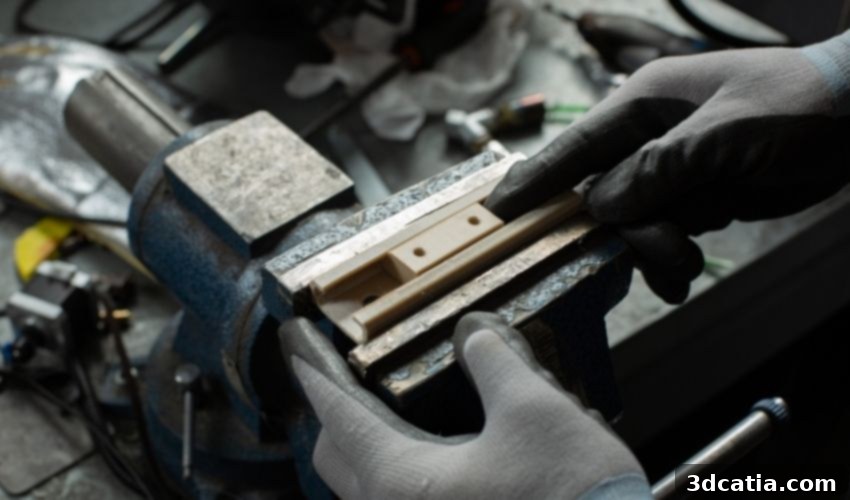
Zortrax Z-PEEK Filament: Propelling 3D Printing into the Final Frontier with ESA Approval
The relentless pursuit of innovation has always been at the heart of space exploration. In this challenging domain, where every gram counts and every component must withstand extreme conditions, flexible and robust technologies are indispensable. Additive manufacturing, commonly known as 3D printing, has emerged as a transformative force, revolutionizing how organizations like NASA, SpaceX, and a growing number of commercial space entities approach the design and production of spacecraft components. Its ability to create complex geometries, consolidate parts, and enable rapid prototyping has made it a cornerstone of modern space engineering, extending its influence far beyond Earth’s atmosphere. Now, the boundaries of what’s possible are being pushed further with a significant advancement: Zortrax’s Z-PEEK filament has officially received clearance from the European Space Agency (ESA) for spaceflight, having successfully met their stringent outgassing requirements. This crucial certification marks a new milestone for high-performance polymers in the unforgiving vacuum of outer space.
Understanding the criticality of this achievement requires a deeper look into the concept of outgassing. Simply put, outgassing refers to “the release of a gas that was dissolved, trapped, frozen, or absorbed in some material.” This phenomenon occurs when volatile compounds, such as residual solvents, plasticizers, or moisture, escape from a material, particularly in low-pressure or high-temperature environments. While this is rarely a concern for materials used in terrestrial settings, it becomes an absolutely vital consideration in high-vacuum conditions, such as those encountered in deep space. In these extreme environments, even minute quantities of released gases can have catastrophic consequences. These gases can condense on delicate spacecraft surfaces, including sensitive optical instruments, thermal radiators, and intricate sensor components, causing contamination and severely degrading their performance. Such degradation can lead to mission failure, reduced lifespan of equipment, or compromise the integrity of scientific data. Therefore, materials destined for space must undergo rigorous testing to ensure they exhibit minimal outgassing. With this official confirmation, Z-PEEK proudly joins an elite and very short list of polymers deemed safe and suitable for manufacturing parts that will ultimately travel into the vast emptiness of space, underscoring its exceptional stability and reliability.
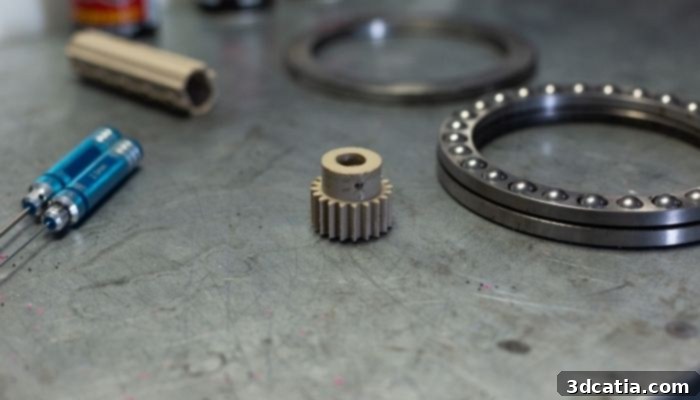
A heavy duty gear made using Z-PEEK, showcasing its structural integrity and potential for demanding applications (photo credits: Zortrax)
Unlocking Space Potential: The Remarkable Properties of Z-PEEK
At the core of Zortrax’s breakthrough is the material itself: Z-PEEK. As its name suggests, this advanced filament is a variant of PEEK (Polyether Ether Ketone), a semi-crystalline thermoplastic often hailed as one of the highest-performing engineering plastics available. PEEK is renowned for its outstanding combination of mechanical strength, thermal stability, and chemical resistance, making it a preferred material in demanding industries like aerospace, medical, and automotive. Zortrax asserts that Z-PEEK boasts a strength-to-weight ratio comparable to that of stainless steel, offering an incredibly robust yet lightweight solution for critical space applications. This characteristic is particularly vital in space missions where reducing mass directly translates to lower launch costs, increased fuel efficiency, and greater payload capacity for scientific instruments or mission-critical equipment. Beyond its exceptional mechanical strength, Z-PEEK exhibits outstanding thermal properties, maintaining structural integrity and performance across a vast range of temperatures, from the intense heat of direct sunlight to the cryogenic cold of deep space shadows. Furthermore, its inherent resistance to radiation and abrasion makes it an ideal candidate for components exposed to the harsh cosmic environment, where materials must withstand solar radiation, charged particles, and potential micrometeoroid impacts without degrading.
The recent confirmation of Z-PEEK’s compliance with the ESA’s ECSS-Q-70-02A standard—a rigorous benchmark specifically addressing outgassing in space materials—solidifies its position as a go-to material for the space industry. This approval extends its usability even to “out of cabin” applications, meaning it can be safely utilized for external spacecraft components that are directly exposed to the vacuum of space. Such external applications demand materials with superior resilience against extreme thermal cycling, intense UV radiation, and atomic oxygen erosion, alongside impeccable low outgassing characteristics. The ability of Z-PEEK to meet these stringent requirements opens up a vast array of possibilities for satellite structures, scientific instrument housings, robust sensor brackets, propulsion system components, and even structural elements for future lunar or Martian habitats. This level of qualification underscores Zortrax’s unwavering commitment to delivering materials that not only perform exceptionally under stress but also adhere to the highest safety and reliability standards mandated by leading international space agencies.
PEEK in Aerospace: A New Frontier for Additive Manufacturing
PEEK has long been a material of choice in the aerospace sector, valued for its exceptional mechanical strength, high-temperature resistance, and chemical inertness. Its inherent properties make it suitable for challenging aircraft and spacecraft components where reliability and durability are paramount. While historically utilized in traditional manufacturing processes such as injection molding or machining, the advent of 3D printing with PEEK filaments has unlocked new design freedoms and manufacturing efficiencies. Though PEEK materials are typically expensive and can be challenging to print due to their high melting points (requiring specialized high-temperature printers) and tendency to warp if not properly managed, they offer an attractive, significantly lighter substitute for metal components. This weight reduction is not merely an incremental improvement; it has profound implications for mission costs and operational capabilities, as every kilogram saved translates into reduced fuel consumption for launch vehicles or increased payload capacity for scientific instruments and crew. Zortrax’s Z-PEEK is a prime example of this paradigm shift, pushing the boundaries of what’s possible with advanced polymer additive manufacturing.
Remarkably, internal testing conducted by ESA confirmed that the mechanical properties of Zortrax’s Z-PEEK filament are among the highest ever reported in scientific literature for a 3D printable material. This stellar performance is particularly significant given the critical nature of space applications where material failure is simply not an option. To leverage these advanced properties and ensure optimal print quality, Z-PEEK is specifically optimized for printing on Zortrax’s Endureal 3D Printer. The Endureal is engineered to handle high-performance polymers, providing the precise thermal control, stable printing environment, and advanced extrusion capabilities necessary to produce parts with Z-PEEK’s full material capabilities, minimizing warpage and ensuring structural integrity. The material is already demonstrating its worth in real-world applications, notably being utilized for components in the WISA Woodsat CubeSat space mission. This project, which aims to test the long-term behavior of wood in the harsh space environment, showcases Z-PEEK’s readiness for mission-critical roles, proving its reliability and performance in an actual space environment as part of the satellite’s structure.
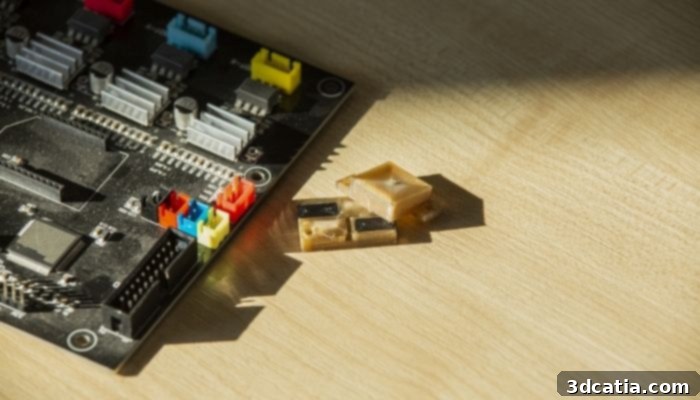
Models crafted from Z-PEEK for the WISA Woodsat mission, demonstrating practical applications in challenging space projects (photo credits: Zortrax)
A Future Forged in Advanced Materials
The successful qualification of Z-PEEK for spaceflight by the ESA represents more than just a product certification; it signifies a pivotal moment for the additive manufacturing industry and its ongoing impact on space exploration. As Michał Siemaszko, Head of Research and Development at Zortrax, succinctly articulated: “Compliance with outgassing requirements is absolutely crucial when it comes to providing materials for space industry. Having those properties confirmed by tests done at ESA’s ESTEC facilities and getting an official report from those tests enable us to provide more value to our most demanding customers.” This statement underscores the rigorous process involved in space material qualification and the profound trust placed in materials that pass such stringent tests.
The implications of Z-PEEK’s approval are far-reaching. It paves the way for increasingly ambitious space missions, allowing engineers to design lighter, more durable, and more complex components than ever before. This could accelerate the development of next-generation satellites with enhanced capabilities, advanced propulsion systems that are more efficient and resilient, and even the foundational elements for permanent extraterrestrial habitats on the Moon or Mars. As humanity sets its sights on returning to the Moon and venturing to Mars, the ability to rapidly produce high-performance parts on-demand, both on Earth and potentially in space, will be paramount. Materials like Z-PEEK will be critical enablers for in-situ resource utilization (ISRU) concepts, where components could be fabricated on lunar or Martian surfaces using locally sourced materials or shipped filaments, drastically reducing the reliance on costly Earth-launches for every single part and fostering self-sufficiency in deep space.
Zortrax’s achievement with Z-PEEK solidifies its position as a key innovator in the additive manufacturing space, particularly for high-stakes applications. By providing a material that meets the exacting standards of the European Space Agency, Zortrax is not only expanding its own market reach but also contributing significantly to the broader advancements in space technology. This development inspires confidence in the reliability of 3D-printed components for the most challenging environments known to humanity. It underscores the incredible potential of advanced polymers to replace traditional metals in applications where performance, weight reduction, and extreme durability are non-negotiable, truly pushing the boundaries of engineering and exploration.
Curious to learn more about this groundbreaking material? You can explore further details regarding Z-PEEK and its comprehensive properties directly on Zortrax’s official website HERE.
What are your thoughts on Zortrax’s Z-PEEK and its potential impact on future space endeavors? We invite you to share your insights in the comments section below! You can also join the conversation and connect with us on our social media platforms: Linkedin, Facebook, and Twitter. Don’t miss out on the latest advancements in additive manufacturing – be sure to sign up for our free weekly Newsletter here, delivering the freshest 3D printing news straight to your inbox! For an even deeper dive, explore all our videos on our dedicated YouTube channel.