
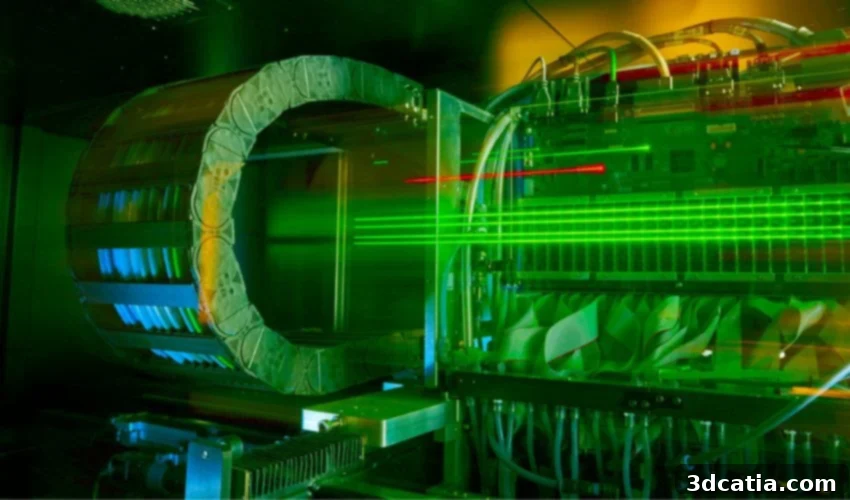
XJet’s NanoParticle Jetting: Revolutionizing High-Quality Metal and Ceramic 3D Printing for Industrial Scale
The landscape of additive manufacturing (AM), commonly known as 3D printing, is undergoing a rapid commercialization surge, particularly within the metal and ceramic sectors. This growth trajectory is nothing short of exponential, fueled by the demand for advanced materials and intricate designs across various industries. Recent market analyses project that the ceramic 3D printing market is poised to reach an impressive $384 million by 2025. Even more significant is the metal 3D printing market, recognized as one of the fastest-growing segments within AM, with forecasts predicting it will exceed $18 billion by 2032. This remarkable expansion is driven by clear advantages that these materials offer in producing highly complex and functional components.
Harnessing the power of these advanced materials, 3D printing enables the creation of parts with unparalleled geometric complexity and superior mechanical properties. Leading this innovation is XJet, a pioneer in the AM sector, with its proprietary NanoParticle Jetting™ (NPJ) technology. This groundbreaking process is uniquely compatible with both technical ceramics and metals, offering an automated, safe, and environmentally conscious pathway to scalable manufacturing of high-quality, intricate components. To delve deeper into this transformative technology, its multifaceted benefits, and XJet’s distinctive approach, we recently engaged in a conversation with the company’s CMO, Guy Zimmerman.
An Introduction to Guy Zimmerman and XJet’s Vision
“My name is Guy Zimmerman, and I recently joined XJet as the Chief Marketing Officer, arriving at a pivotal moment as the company prepares for significant growth and market expansion,” Guy began. “My professional journey has been quite diverse, but my most relevant experience lies in global business development, particularly within the dynamic 3D printing industry. At its core, XJet is a cutting-edge 3D printer manufacturer dedicated to tackling the most formidable challenges in additive manufacturing: namely, the production of high-quality, ready-to-use parts from metals and ceramics. Our ambition is to move beyond mere prototyping, enabling direct manufacturing of functional components through our patented NanoParticle Jetting™ (NPJ) technology.”

Guy Zimmerman, CMO at XJet, leading the charge in advanced additive manufacturing.
Understanding the NanoParticle Jetting (NPJ) Process and its Core Benefits
“NanoParticle Jetting (NPJ) represents a significant leap forward in additive manufacturing, delivering clean, automated production of high-quality metal and ceramic parts,” Guy explained. “A defining characteristic of NPJ is its ability to operate entirely without the use of powders, extensive manual labor, or complex post-processing steps. This breakthrough is made possible by XJet’s unique additive manufacturing approach, which directly jets nano-particles. Unlike conventional methods, both the primary build material and the support materials are specially formulated inks, not powders—a truly revolutionary concept in the AM space.”
He elaborated on the printing procedure: “We simplify our process into three core steps: Print-Wash-Sinter. The fundamental principle involves using a proprietary material based on nanoparticles. This allows us to simultaneously jet both the build material and a very hard, yet water-soluble, support material. Once the printing process is complete, the support material is effortlessly washed away in water through an automatic process, eliminating the need for arduous manual removal. The final sintering phase, which transforms the jetted particles into a dense, solid part, is performed in a standard industrial furnace. Crucially, this is done at significantly lower temperatures compared to powder-based solutions, which preserves part integrity and enables the highest levels of complexity, accuracy, and surface finish. This innovative approach effectively removes traditional design constraints, allowing for the creation of intricate geometries, including internal channels and delicate features, in ways previously deemed impossible.”
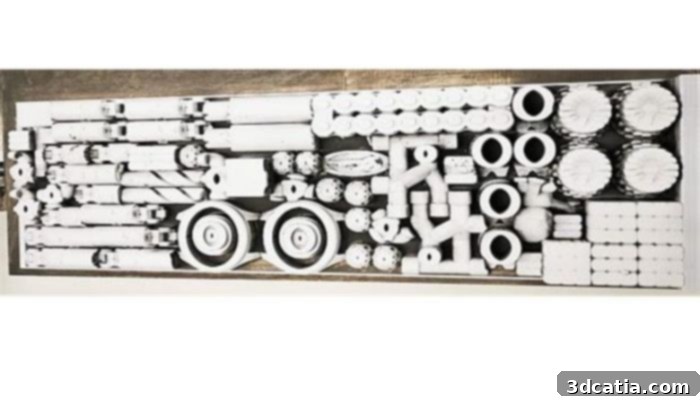
XJet’s NanoParticle Jetting technology excels at producing a range of excellent solutions with high precision.
“The ultimate outcome of this streamlined process is the production of high-quality, highly accurate parts directly off the build tray. These printed components require virtually no additional processing or machining, embodying the essence of XJet’s slogan: ‘Print, Wash, Sinter’ – and you’re done.”
Guy further highlighted the advantages of nanoparticles: “Another significant benefit derived from utilizing nanoparticles is the ability to print remarkably thin layers. This leads to a substantially higher density level in the final parts when compared to other additive technologies, achieving industry-leading levels of material purity, density, and exceptional surface smoothness. These characteristics critically improve the overall performance and longevity of the parts, while also optimizing the subsequent sintering effect.”
“As is well known, the sintering process is essential for consolidating particles into the final material, often leading to significant shrinkage. However, with XJet’s advanced technology, this critical process is conducted at temperatures lower than 200°C. This lower temperature regime yields multiple benefits: it saves considerable time, further boosts the material’s density, and crucially, significantly reduces both isotropic and overall shrinkage. The consistent shrinkage along the x, y, and z axes ensures that there are virtually no distortions in the final part, maintaining dimensional accuracy. This proprietary and groundbreaking technology is housed within a high-throughput manufacturing system, providing a fully digital and automated process. This stands in stark contrast to manual, often unsafe, and environmentally impactful processes that frequently result in lower-quality parts from other methods.”
Diverse Applications for XJet’s Innovative Solutions
“In close collaboration with our market-leading customers, we are strategically targeting specific verticals and applications across three major industry domains: Industrial, Medical, and Consumer Goods,” Guy stated, outlining the broad reach of XJet’s technology.
“Within the ceramics sector, our focus primarily lies on high-performance materials like Alumina and Zirconia. These materials are highly sought after for their exceptional resistance to heat, corrosion, and their superior electrical isolation properties. The unprecedented design freedom our technology brings to this market unlocks vast opportunities in diverse industrial applications. This includes critical components for semiconductor manufacturing equipment, highly efficient heat exchangers, precise electricity connectors, advanced wave-guide antennas, and intricate electrical board parts, where conventional manufacturing struggles with complexity and precision.”
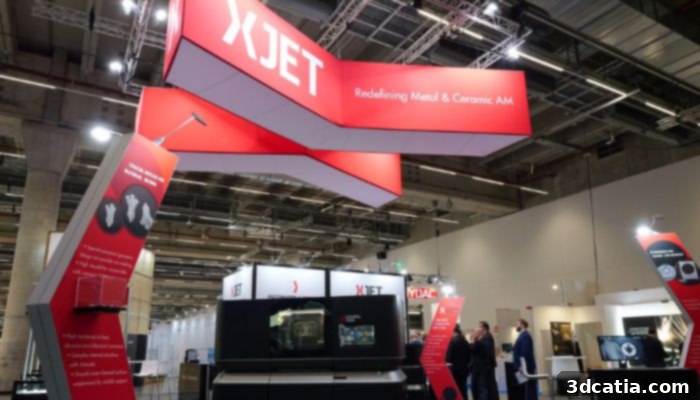
XJet showcased its advanced solutions at Formnext 2022, a premier event in additive manufacturing.
“Moving into the medical field, dental implants and crowns represent another natural and rapidly expanding vertical where our technology offers significant advantages. These applications demand extreme precision, biocompatibility, and customized geometries, which NPJ delivers. In the realm of consumer goods, we concentrate on high-value wearables, such as high-end earbuds. This is a particularly intriguing application because the printed ceramic parts are extremely small, non-conductive, and can be customized to offer superior acoustic qualities. We also cater to the luxury watch market, where intricate ceramic components contribute to both aesthetics and durability.”
“Notably, we even produce several critical ceramic parts for our own high-performance Carmel1400 system using our very own machines, demonstrating the robustness and reliability of our technology. The metal solution, a more recent addition to our portfolio, is rapidly gaining traction as a superior alternative to traditional Metal Injection Molding (MIM) for short production runs and high-variety parts. Its applications are broad, encompassing specialized surgical devices, precision hydraulic system components, and many other areas where flexibility and intricate designs are paramount.”
“Our technology supports a wide spectrum of unique applications that require high quantities of complex parts, effectively replacing several traditional manufacturing methods. This includes not just MIM, but also CNC machining and investment casting. For investment casting, particularly with small parts, our technology becomes a far more economical choice when production volumes fall below 20,000 units, offering unparalleled cost-effectiveness and design freedom.”
The Strategic Decision to Launch XJet’s Metal Solution
“After successfully establishing our ceramic technology among market leaders and technical innovators, our next strategic move was to finalize the development of the metal component of our portfolio,” Guy explained. “We initially focused on two leading stainless steel materials, knowing that the metal market is considerably larger and more diversified. Developing the metal solution presented greater challenges than ceramics, but we ultimately achieved unprecedented performance levels, in some aspects even surpassing our ceramic capabilities. Following a rigorous and extensive evaluation process, we proudly introduced our metal solution to the market in early 2022.”
“This innovative metal printing technology is now fully available and was prominently showcased at Formnext 2022. At the event, we presented compelling testimonials from the technology’s leading beta users, demonstrating its real-world impact. Visitors to our booth gained valuable insights into how this metal solution effectively competes with, and often outperforms, multiple powder-based technologies. Its clear advantages lie in offering an automated, clean, and highly efficient metal additive manufacturing process suitable for a wide variety of industrial sectors.”
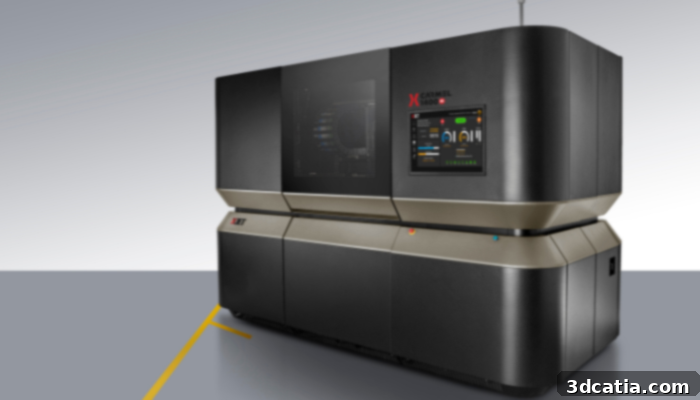
XJet’s metal solution represents a significant advancement in powder-free additive manufacturing.
Guy elaborated on the key benefits of the metal NPJ technology: “Our metal solution offers several distinct advantages. Firstly, we successfully developed soluble support materials that are compatible with metal printing. This is a huge benefit for many users, as it simplifies post-processing and reduces the risk of part damage. Secondly, the technology produces parts with an exceptionally high-quality surface finish directly from the machine, eliminating the need for any additional machining or polishing steps. This ‘ready-out-of-the-machine’ quality is a major differentiator. The third significant benefit is its capability to produce highly complex parts with extraordinary accuracy, which is a massive advantage for a wide array of demanding applications.”
“To illustrate this capability, consider the example of a luxury watch wristband made from stainless steel. With our technology, we can print the entire wristband as a single, cohesive unit. It might require only a minimal amount of polishing, but that’s all. The precision is such that we can even print the intricate wristband bearings *inside* the part during the initial build, completely removing the need for post-assembly. NPJ empowers users to create extremely accurate, high-performance metal parts that are ready for immediate use, thanks to the unique capability of jetting nanoparticles versus traditional powder methods. We are specifically targeting users who demand the highest performance and accuracy for parts across various consumer-facing and industrial verticals.”
The Environmental Responsibility of XJet’s Process
“Beyond performance and precision, we are incredibly proud of the inherent sustainability of our manufacturing process,” Guy emphasized. “First and foremost, it is exceptionally safe. The materials we use are contained within closed bottles, ensuring there are no toxic particles or free-floating powders in the working environment. This provides a significantly safer operating environment for personnel, a critical advantage over many conventional additive manufacturing and traditional processes that often involve hazardous materials.”
“Furthermore, our process exemplifies true additive manufacturing by using precisely the amount of material needed for each part. There is virtually no material waste, contributing to a highly efficient and resource-conscious building process. Our support material is water-soluble and can be safely drained without harmful environmental impact. While it contains some minerals, its composition is so benign that it could, in some regions, pass as drinking water. This not only enhances human safety but also significantly minimizes waste disposal issues, which are often a major environmental concern with other additive manufacturing methods.”
“Last but certainly not least, our sintering process is notably more eco-friendly compared to many alternatives. Sintering is typically the most energy-intensive part of the entire manufacturing process. However, because XJet conducts it at relatively low temperatures and for shorter durations, we achieve substantial energy savings. These combined factors—safety, material efficiency, water-soluble support, and energy-efficient sintering—collectively establish NPJ as one of the most environmentally friendly and sustainable processes available for metal and ceramic additive manufacturing today.”
Concluding Insights and XJet’s Future Vision
“To summarize, XJet’s NanoParticle Jetting (NPJ) technology delivers three primary and compelling advantages,” Guy concluded. “Firstly, the utilization of nanoparticles in our ink-based materials ensures a safer and significantly more accurate process, resulting in parts with higher density and superior material properties. Secondly, the fundamental building process, which prints extraordinarily thin layers, enables unbeatable, virtually unlimited complexities and facilitates true Design for Functionality. This allows engineers and designers to realize geometries and functionalities previously unattainable. And the third, equally crucial, element is the green aspect: our parts can be cleaned easily with water, leaving behind no hazardous residues.”
“The entire process itself is elegantly simple, comprising only three steps: print, wash, and sinter. Moving forward, we firmly believe that XJet’s NPJ technology will play a major, transformative role in the digital evolution of manufacturing for ceramic and metal, leading to the widespread production of industrial-grade, high-quality, and highly complex parts. We invite you to learn more about XJet and our pioneering technology by visiting our official website HERE. Additionally, you can gain a deeper understanding of how our technology works by watching the informative video provided below.”
What are your thoughts on XJet’s innovative NanoParticle Jetting technology? We’d love to hear your insights! Share your comments below or connect with us on our LinkedIn,Facebook, andTwitter pages! Don’t miss out on the latest 3D printing news; sign up for our free weeklyNewsletter here, delivered straight to your inbox. You can also explore all our videos on ourYouTube channel for more engaging content.
*All Photo Credits: XJet