
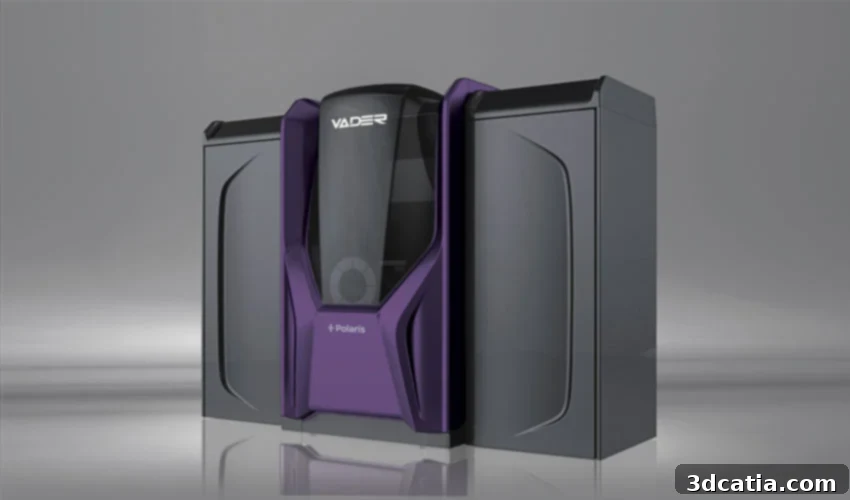
Xerox’s Strategic Leap into Metal 3D Printing: Unpacking the Vader Systems Acquisition and Future Outlook
In a significant move that signals its ambitious re-entry into the forefront of advanced manufacturing technologies, Xerox, the renowned printer and photocopier giant, announced a pivotal acquisition during its 2019 Investor Day. The company officially brought Vader Systems, a New-York based pioneer in metal additive manufacturing, under its wing. This strategic acquisition is poised to empower Xerox to offer groundbreaking, low-cost metal additive manufacturing solutions, extending the range of accessible metals for industrial applications. This development marks a clear statement of intent from Xerox to capture a substantial share of the rapidly evolving metal 3D printing market, leveraging Vader Systems’ innovative liquid metal technology to overcome traditional barriers to adoption, particularly concerning cost and material versatility. The integration of Vader Systems’ patented technology is expected to redefine affordability and accessibility in industrial metal fabrication, positioning Xerox as a formidable player in the additive manufacturing space.
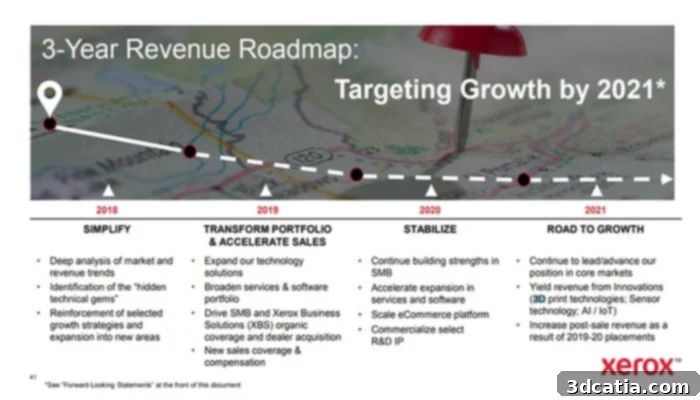
Xerox’s Vision for Innovation: A Three-Year Roadmap and Strategic Goals
Xerox isn’t merely dipping its toes into the additive manufacturing space; it’s making a decisive leap with a comprehensive, multifaceted approach to next-generation technologies. During the Investor Day presentation, the company unveiled an ambitious three-year roadmap, underpinned by five strategic goals designed to significantly expand its service offerings and solidify its position as a technology leader. For years, Xerox’s involvement in 3D printing had primarily focused on the digital manufacturing aspect of producing 3D print heads for Original Equipment Manufacturers (OEMs), rather than directly engaging in prototyping or end-part production. However, this acquisition signals a profound shift. The company’s renewed aim is to focus intensely on developing and deploying lower-cost processes for both plastic and metal 3D printing, directly targeting the burgeoning and highly innovative industrial additive manufacturing market.
This strategic pivot reflects a keen understanding of the market’s trajectory. The demand for industrial 3D printing, especially for end-use parts across sectors like aerospace, automotive, medical, and energy, continues to surge. Companies are increasingly seeking solutions that enable faster iteration, complex geometries, reduced waste, and localized production. By prioritizing cost-effectiveness and material accessibility, Xerox aims to democratize access to advanced manufacturing capabilities, making it viable for a broader spectrum of industries and applications. The acquisition of Vader Systems is not just an opportunistic purchase; it’s the foundational first step in executing this transformative vision to build a new business segment around advanced manufacturing that leverages Xerox’s core strengths while venturing into high-growth adjacencies.
Vader Systems: Revolutionizing Metal 3D Printing with Liquid Metal Technology
The unique value proposition that Vader Systems brings to Xerox is its innovative approach to metal additive manufacturing. Founded in 2013, Vader Systems developed a truly distinctive metal 3D printing process centered around its patented Magnet-o-Jet Technology. What sets this technology apart is its ability to utilize standard, readily available welding wire as feedstock, dramatically reducing material costs compared to the specialized, often expensive, metal powders required by many competing additive manufacturing processes. This cost advantage is a critical factor in lowering the overall barriers to entry and operational expenses for metal 3D printing, aligning perfectly with Xerox’s goal of offering more affordable solutions. The economic benefit of using commodity welding wire is substantial, making metal additive manufacturing more accessible for small and medium-sized enterprises (SMEs) and large corporations alike, without compromising on part quality or performance.
Vader’s Magnet-o-Jet technology enables liquid metal jetting, a process where molten metal is precisely deposited drop by drop to build complex geometries. This method boasts several advantages beyond just material cost. It can potentially offer faster print speeds, reduce porosity in parts, and expand the range of metal alloys that can be processed, as it bypasses some of the limitations associated with powder bed fusion techniques like specific particle size requirements or inert atmosphere needs. The core of Xerox’s plans to offer cheaper, more versatile metal additive manufacturing is indeed powered by Vader’s proprietary processes, which promise to disrupt the traditional cost structures prevalent in the industry by offering a cleaner, more efficient, and safer alternative to powder-based systems.
Source: Xerox
Leadership Commentary: Renewing Xerox’s Innovation Model for 3D Printing
The strategic importance of this acquisition was profoundly underscored by John Giovanni, Vice Chairman and CEO at Xerox, who shared his perspective during the announcement. He articulated a clear vision for the company’s future, emphasizing a departure from conventional innovation approaches:
“As we previously communicated, we are revamping our innovation business model. This is essential to returning Xerox to technology leadership, positioning us for long-term success and ensuring proper monetisation of our innovation.”
Giovanni further elaborated on how Xerox’s inherent strengths position it uniquely for this venture into advanced manufacturing, drawing parallels between its printing heritage and the demands of 3D printing:
“Our leading expertise in technology in printing uniquely positions us to move into adjacencies that share similar core technology requirements. For instance, we are developing a road map to participate in 3D printing. We currently manufacture 3D print heads that we OEM, where we have differentiated capabilities around print technologies, materials, toner and software that will enable 3D printing to move to the next level of adoption for the production of end-use industrial parts.”
These statements highlight Xerox’s belief that its decades of experience in precise material deposition, fluid dynamics, imaging science, and software control – core competencies in 2D printing – are highly transferable and profoundly advantageous in the realm of 3D printing. By leveraging this deep-seated expertise, particularly in print head design and manufacturing, advanced material science (beyond just toner), and integrated software platforms, Xerox aims to elevate the capabilities of additive manufacturing. This push is intended to move 3D printing beyond its traditional role in rapid prototyping into widespread industrial production of functional, end-use components. This vision encompasses a holistic approach, from optimizing material properties and process control to enhancing design and planning tools, all geared towards facilitating a new era of manufacturing efficiency, customization, and capability across various critical industries.
Vader Systems’ Comprehensive Portfolio: Beyond Just Printers
Vader Systems’ contributions extend beyond merely developing a novel metal 3D printing process. Since its founding in 2013, the company has been at the forefront of liquid metal additive manufacturing, not only with its foundational Magnet-o-Jet Technology but also through a diverse and innovative product portfolio designed to address various needs within the additive manufacturing ecosystem. Their flagship offering, the Vader Polaris liquid metal AM system, represents the commercial culmination of their expertise, specifically engineered for high-volume metal manufacturing applications. This system promises to deliver unparalleled speed, material flexibility, and cost efficiency previously unattainable in many metal AM scenarios, making it an attractive solution for industries requiring robust, high-performance parts.
Furthermore, Vader Systems offers the Magnet-o-Jet Subsystem, a testament to their foresight in modular manufacturing. This subsystem is specifically engineered for seamless integration into hybrid manufacturing equipment, allowing existing CNC machines, robotic platforms, or other industrial systems to incorporate advanced liquid metal deposition capabilities. This modular approach significantly broadens the application scope for liquid metal printing, opening doors for diverse manufacturing workflows and enhancing the versatility of current production lines. Completing their innovative suite is the Ares Microsphere Production System, a testament to their comprehensive material science capabilities. This system is dedicated to the efficient production of high-quality spherical metal powders, which are crucial not only for certain types of liquid metal printing but also for other additive manufacturing processes. This demonstrates Vader’s holistic understanding of the additive manufacturing ecosystem and its potential to contribute across various stages of the value chain, from raw material preparation to final part production.
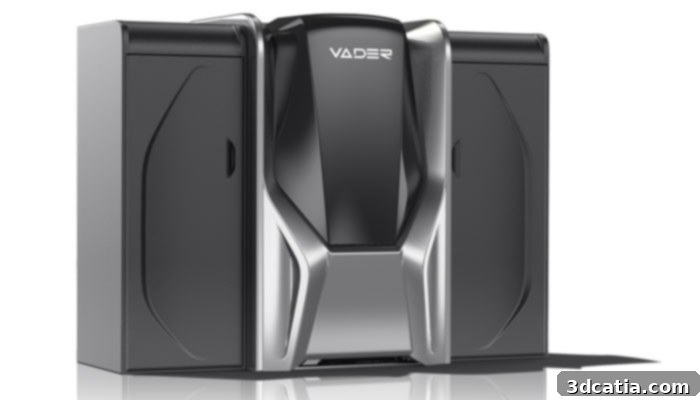
The MK1 Printer from Vader Systems
Anticipated Benefits and Impact on the Manufacturing Landscape
While specific financial details of the Vader acquisition have remained undisclosed, Xerox has been vocal about the transformative impact it expects for its customers and the wider industry. Statements on Xerox’s official website clearly outline the anticipated benefits, promising a paradigm shift in manufacturing capabilities. Customers can look forward to significantly enhanced operational efficiencies and new product development opportunities across various sectors. The primary advantages highlighted include the ability to get complex parts delivered faster, thanks to the inherent speed and design freedom offered by liquid metal 3D printing. This speed can drastically cut lead times for prototypes and short-run production, accelerating innovation cycles.
Furthermore, the technology will enable the utilization of unique materials, potentially new alloys or combinations of existing ones, to enhance part performance, durability, and functionality across various challenging environments, from high-temperature applications in aerospace to biocompatible implants in medicine. A major draw will undoubtedly be the lower costs associated with production, driven by Vader’s innovative use of standard welding wire, reduced post-processing requirements, and potentially optimized printing processes that minimize waste. Finally, manufacturers will gain access to advanced design and planning tools that integrate seamlessly with the printing technology. These tools will allow for optimizing build volumes, fine-tuning part properties at a microstructural level, and intelligently structuring support systems, leading to less material waste, reduced labor costs, and more robust final products with superior mechanical properties.
These promised advancements underscore the profound potential of this acquisition to reshape the industrial manufacturing landscape. Metal 3D printing is widely recognized as a technology poised for massive growth, capable of delivering custom-designed, high-performance components on demand, facilitating supply chain resilience, and enabling lightweighting for improved efficiency. Xerox’s entry, armed with Vader Systems’ distinct technology, positions it not just as a participant but as a potential leader in this charge. By directly addressing the critical industry pain points of cost, speed, material flexibility, and scalability, Xerox aims to accelerate the adoption of additive manufacturing from niche applications to mainstream industrial production, fostering innovation and resilience across global supply chains. The synergy between Xerox’s extensive R&D capabilities, global sales network, and Vader’s pioneering technology creates a formidable force ready to redefine what’s possible in advanced metal fabrication.
The Future of Industrial Metal 3D Printing with Xerox
The acquisition of Vader Systems represents more than just a new product line for Xerox; it symbolizes a strategic reorientation towards becoming a key player in the industrial revolution brought about by additive manufacturing. With its established global presence, deep engineering expertise in precision technologies, and robust R&D infrastructure, Xerox is uniquely positioned to scale Vader’s innovative liquid metal technology, making it accessible to a much broader industrial market. This move could potentially disrupt traditional manufacturing processes by offering a compelling alternative for creating intricate, lightweight, and robust metal components for critical industries such as aerospace, automotive, defense, healthcare, and industrial machinery.
The focus on cost-effectiveness through the ingenious use of standard welding wire is a genuine game-changer, effectively breaking down one of the most significant barriers to wider adoption of metal 3D printing. As the company continues to integrate Vader Systems’ operations, talent, and technologies, we can anticipate further advancements in material science, improved printer performance, and expanded application possibilities that leverage the unique advantages of liquid metal jetting. Xerox’s commitment to leveraging its core strengths in printing technologies, materials science, and software development suggests a holistic approach to nurturing this new venture, promising exciting and transformative developments for the future of industrial metal 3D printing and its profound impact on global manufacturing paradigms.
What are your thoughts on Xerox’s strategic acquisition of Vader Systems and its potential impact on the future of metal 3D printing? We invite you to share your insights in a comment below or join the discussion on our Facebook and Twitter pages! Don’t miss out on the latest advancements and news in the additive manufacturing world – sign up for our free weekly Newsletter, delivered straight to your inbox.