
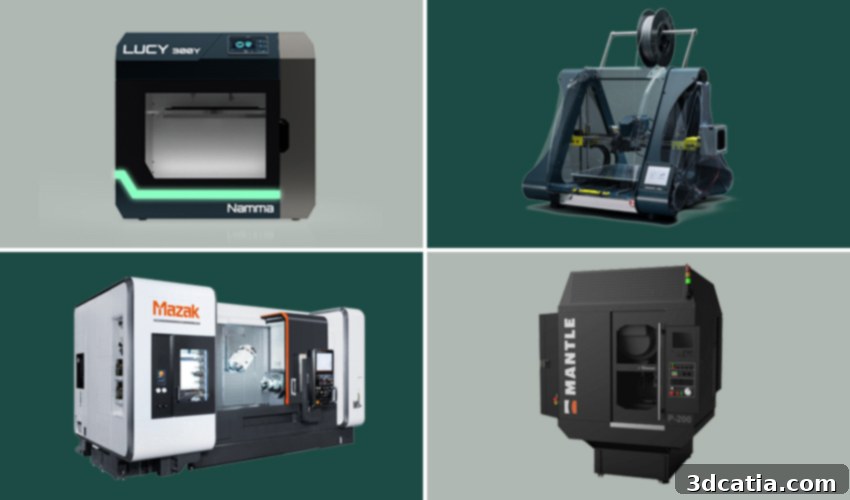
Unlocking Advanced Manufacturing: The Comprehensive Guide to Hybrid 3D Printers
In the rapidly evolving landscape of modern manufacturing, additive manufacturing, commonly known as 3D printing, has emerged as a transformative production tool, adopted by an increasing number of companies and manufacturers. It often works in conjunction with traditional methods like machining or injection molding to produce highly complex and innovative parts. However, a significant leap in manufacturing capability has been achieved with the advent of hybrid machines – systems that integrate multiple processes, often additive and subtractive manufacturing, into a single, cohesive unit. This synergy multiplies possibilities, enabling the design and fabrication of even more intricate and functional components with unparalleled efficiency and precision. These integrated solutions have been a reality since the 1990s, continuously evolving to offer greater versatility and performance.
Hybrid 3D printers represent the pinnacle of this integration, seamlessly blending additive manufacturing (building up material layer by layer) with subtractive manufacturing (removing material to achieve final geometry). This combination addresses many limitations of purely additive or subtractive processes, offering benefits such as enhanced geometric complexity, superior surface finish, tighter tolerances, and reduced post-processing. Some advanced hybrid machines even extend their capabilities to include processes like laser engraving, cutting, or paste extrusion, further expanding their application range. This comprehensive guide delves into a curated list of leading hybrid 3D printers available today, categorized by their typical use cases: desktop solutions for prototyping and smaller-scale production, and industrial machines designed for high-volume, high-precision manufacturing. The machines are presented in alphabetical order within each category, highlighting their unique features and functionalities.
Desktop Hybrid 3D Printers: Versatile Solutions for Makers and Professionals
Desktop hybrid 3D printers offer an accessible entry point into multi-process manufacturing, providing significant versatility without requiring the space or investment of industrial-grade systems. These machines are ideal for hobbyists, educators, small businesses, and engineers engaged in rapid prototyping or low-volume custom part production. They typically combine FDM 3D printing with CNC milling and/or laser engraving, enabling users to experiment with diverse materials and create parts with both intricate internal structures and precise external finishes. The following machines exemplify the innovative capabilities found in the desktop hybrid market.
5axismaker
The 5AXISMAKER solution, launched in 2015 by the UK-based manufacturer 5AXISWORKS, stands out for its comprehensive multi-functionality. Available in two versions, the 5xm400 and 5xm600, distinguished by their maximum manufacturing size, these machines redefine desktop fabrication. Both versions offer broad compatibility with various CAD/CAM software (given a post-processor is available) and conveniently include a one-year commercial subscription to Autodesk® Fusion 360™ Ultimate. The 5AXISMAKER is not just a 3D printer; it’s a complete toolkit that includes a 5-axis CNC router, a touch probe for precise calibration and inspection, 3D scanning and measurement capabilities for reverse engineering or quality control, and even a hot wire cutter for processing softer materials like foam. The ingenious adapter system further allows users to expand its functionalities with additional tools. With printing volumes of 400mm³ or 600mm³ depending on the model, these machines are compatible with a wide array of engineering thermoplastics, such as nylon and polycarbonate (PC), making them incredibly versatile for prototyping, small batch production, and educational applications where complex geometries and multi-material approaches are crucial.
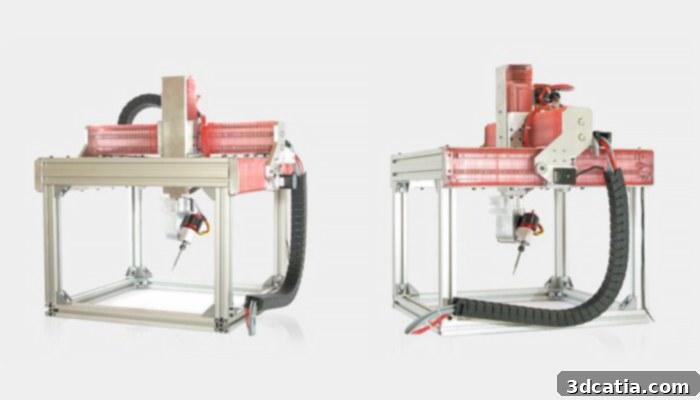
Photo Credits: 5AXISWORKS
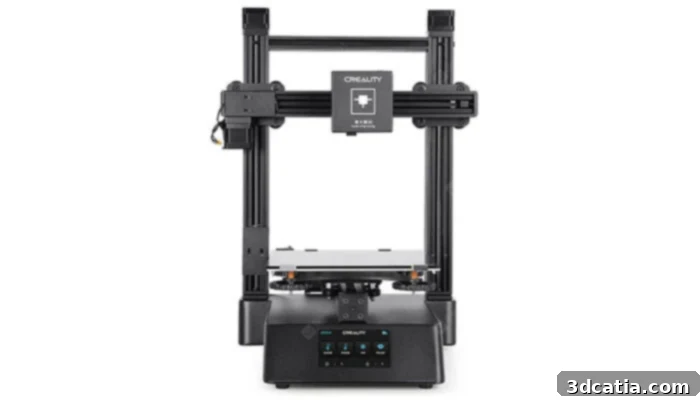
Creality CP-01
Creality 3D, a renowned manufacturer of affordable 3D printers, introduced the Creality CP-01 as an accessible hybrid solution for the mainstream market. This innovative machine consolidates three distinct manufacturing processes into one: FDM 3D printing, CNC milling, and laser engraving. The integrated FDM-based 3D printer supports common materials such as ABS, PLA, PVA, TPU, and wood composites, printing at a respectable maximum speed of 80 mm/sec with a heated plate capable of reaching 100°C. All three functions share a consistent maximum volume of 200 x 200 x 200 mm. The laser engraving module, with a power of 500mW, is suitable for materials like wood, plastic, and paper, while the CNC milling function, operating at a maximum spindle speed of 4,800 rpm, can process these materials along with printed circuit boards. A key feature of the CP-01 is the ease with which its individual modules (extruder, CNC milling unit, and laser engraving unit) can be exchanged, allowing users to switch between functions effortlessly. While the CNC milling and laser engraving units are designed for entry-level performance, making them perfect for basic projects, the CP-01 excels as a space-saving and cost-effective option. It’s an excellent choice for makers, hobbyists, and educational institutions looking for a versatile tool for prototyping and creative projects, rather than heavy industrial use.
Snapmaker Artisan
The Snapmaker Artisan solidifies its position as a leading 3-in-1 hybrid machine, seamlessly integrating 3D printing, laser engraving and cutting, and CNC carving capabilities. Designed for user convenience, its toolheads and platforms feature an intuitive slide-and-click mechanism, allowing for swift and effortless function switching. A hallmark of the Artisan is its incorporation of industrial-grade linear guide rails, which significantly enhance precision, rigidity, and overall durability – critical factors for consistent manufacturing quality. Continuing Snapmaker’s commitment to robust design, the Artisan boasts a signature all-metal construction, complemented by a larger, one-piece die-cast baseplate that provides exceptional stability. For 3D printing, the machine features advanced dual extrusion heads, supporting both dissolvable and breakaway support materials, which greatly simplifies the post-processing workflow for complex prints. Furthermore, the Artisan is equipped with an ultra-wide 7-inch touch screen featuring an updated, more intuitive user interface (UI) design, ensuring a smoother and more efficient operational experience for users of all skill levels. This combination of robust build, versatile functionality, and user-friendly design makes the Snapmaker Artisan an outstanding tool for designers, engineers, and creative professionals.
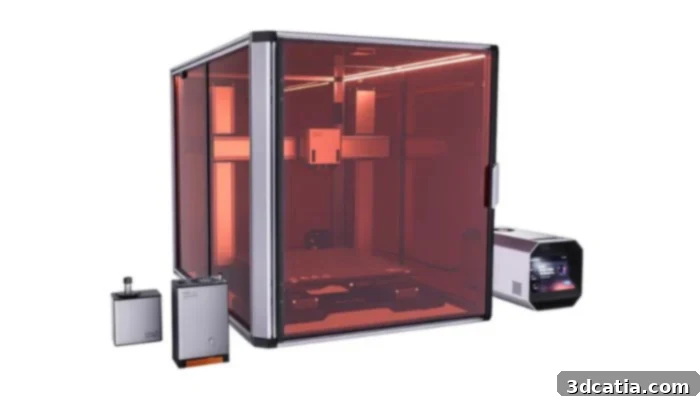
Photo Credits: Snapmaker
ZMorph Fab
The Polish company ZMorph has consistently delivered some of the market’s most celebrated desktop hybrid 3D printers, and the ZMorph Fab continues this tradition with excellence. This highly versatile multitool product supports both single and dual extrusion, providing flexibility for various 3D printing applications, including multi-material or soluble support structures. It features a professional CNC work table with an intuitive solution for material mounting, ensuring stability and precision for subtractive tasks. A unique aspect of the ZMorph Fab is its thick paste extruder, which unlocks a wide potential for experimental applications, enabling users to print with materials like ceramics, food pastes, or custom decorations, fostering research and creative exploration. Recent updates to the machine include a brand-new single extruder toolhead, an integrated HEPA/carbon air filtration system for a safer working environment, quieter operation, an improved cooling fan for better print quality, and enhanced capabilities for printing with flexible materials. Moreover, the ZMorph Fab is compatible with an extensive range of engineering materials, catering to diverse project requirements. To streamline the user workflow, ZMorph developed SMART Toolheads that are automatically detected by the machine, meaning tool switching can be completed in under a minute, maximizing productivity and minimizing downtime. This makes the ZMorph Fab an indispensable asset for R&D, advanced prototyping, and educational settings.
Industrial Hybrid Solutions: Precision and Performance at Scale
Industrial hybrid 3D printers are engineered to meet the stringent demands of high-performance manufacturing, offering robust solutions for producing end-use parts, molds, tools, and complex components for demanding industries like aerospace, automotive, and medical. These machines typically integrate advanced additive manufacturing processes, such as Directed Energy Deposition (DED) or large-format extrusion, with high-precision CNC machining. The synergy allows for the creation of components with internal complexity impossible with traditional methods, combined with the external dimensional accuracy and surface finish required for critical applications. The ability to perform in-situ machining during the additive process further minimizes distortion and improves material properties, while significantly reducing lead times and overall production costs. Below, we explore some of the most innovative industrial hybrid solutions currently transforming the manufacturing sector.
4Shift From 4D Pioneers
4D Pioneers, a French manufacturer, is at the forefront of industrial 3D printing solutions, with their 4Shift hybrid 3D printer epitomizing the combination of CNC and additive manufacturing. What truly distinguishes the 4Shift is its capacity to process both filaments and pellets, which considerably broadens the spectrum of compatible materials, including engineering-grade polymers and fiber-reinforced composites. This flexibility often translates into lower material costs and access to a wider range of mechanical properties. Furthermore, the system is capable of extruding polymers at temperatures up to 500°C, enabling the use of high-performance thermoplastics essential for demanding industrial applications. A patented automatic tool-changing system is a core innovation, allowing operators to switch between additive and subtractive processes seamlessly and rapidly, without manual intervention, which significantly boosts production efficiency and automation. The 4Shift offers a generous print volume of 485 x 485 x 500 mm and achieves a maximum milling speed of 50,000 rpm, ensuring high throughput and precision. Critically, this hybrid 3D printer is equipped with 5-axis capabilities, essential for precise milling and post-processing of complex, inaccessible surfaces, making it ideal for geometrically intricate components and tooling.
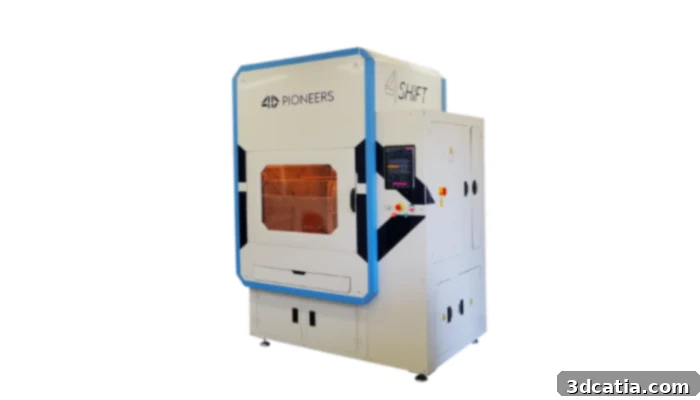
Photo Credits: 4D Pioneers
AconityMIDI
The AconityMIDI 3D printer, introduced by German manufacturer Aconity3D in 2018, was designed with a clear vision: to offer users a highly flexible and efficient production system for metal additive manufacturing. A key feature of the AconityMIDI is its optional second camera, which facilitates parallel setup times while the main system remains in active production, significantly maximizing machine uptime and overall productivity. With a maximum production volume of Ø 170 mm x H 200 mm and the capability to achieve layer thicknesses as fine as 10 μm, the system is suitable for producing high-precision metal parts. Advanced features include integrated process monitoring, which ensures consistent quality throughout the build, and high-temperature preheating options (up to 1200°C), critical for managing thermal stresses in challenging metal alloys and achieving superior material properties. To further enhance productivity, this hybrid 3D printer is also available as a DUAL-Laser system, allowing for faster build rates. Weighing a robust 1450kg, the AconityMIDI can be equipped with a unique vacuum option for processing oxygen-sensitive materials and a Micro-LBM configuration for ultra-fine feature resolution. It truly stands as an advanced solution for professionals in the metal 3D printing industry, catering to R&D and specialized industrial applications.
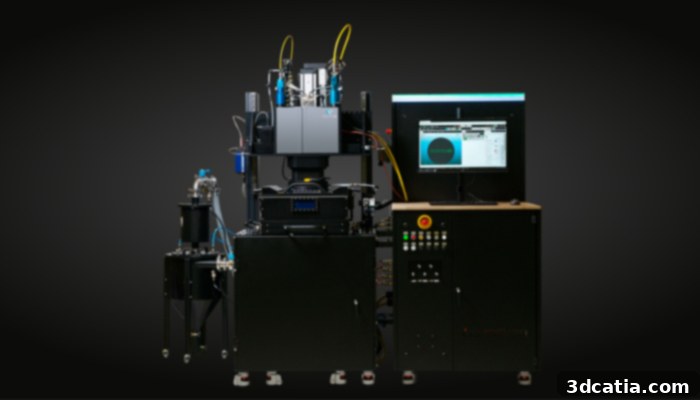
Photo Credits: Aconity3D
AMBIT Series 7
Developed by Hybrid Manufacturing Technologies, the AMBIT Series 7 is a sophisticated multitasking system engineered to unlock new capabilities in metal part production. This system offers unparalleled integration of up to seven production technologies within a single tool, revolutionizing the manufacturing workflow. It robustly integrates Directed Energy Deposition (DED) technology heads, providing reliable performance for depositing metal layers from 0.5 to 3mm thickness, ideal for repairs, cladding, and adding features to existing components. A central column serves as a universal docking station, meticulously monitoring and controlling manufacturing processes to ensure the production of high-quality parts with consistent properties. A standout innovation of the AMBIT Series 7 is its capacity for subsequent verification of manufacturing quality, thanks to an integrated eddy current inspection head. This advanced inspection method allows for the precise detection of both surface and sub-surface cracks and defects, ensuring the integrity and reliability of the manufactured components. The AMBIT Series 7 solution thus offers an incredibly innovative and powerful approach to integrating advanced additive manufacturing directly into conventional machining platforms, paving the way for hybrid production of complex metal parts with integrated quality assurance.
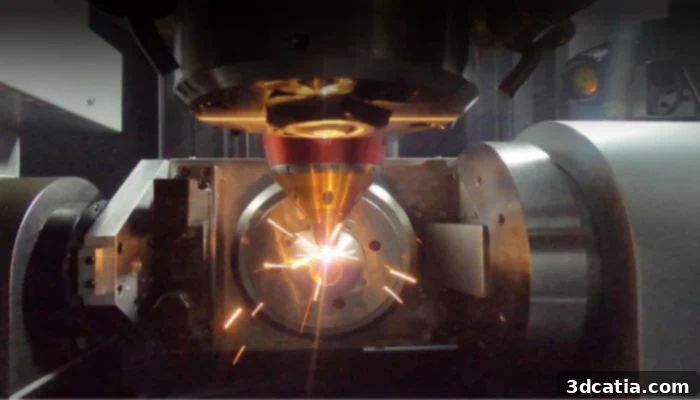
Photo Credits: Hybrid Manufacturing Technologies
BEAD From CEAD
BEAD by CEAD is a cutting-edge industrial solution that masterfully combines large-scale additive and subtractive manufacturing. Designed for optimized production processes, BEAD significantly reduces material waste, minimizes the need for manual intervention, and drastically shortens lead times, making it a highly efficient and economically viable investment for large-format manufacturing. For users, BEAD offers unprecedented design freedom, allowing for the creation of complex geometries that would be challenging or impossible with traditional methods. Its full automation capabilities for industrial 3D printing further streamline workflows and improve consistency. The system boasts compatibility with an extensive range of materials, including common thermoplastics like PP, ABS, PETG, and PC, alongside high-performance materials and advanced fiber-reinforced composites. This broad material palette opens up numerous applications across various industries, from maritime and automotive to construction and aerospace. With substantial dimensions of 6 x 5 meters, BEAD is capable of producing very large components, enabling innovation in areas that require both additive freedom and subtractive precision on a grand scale.
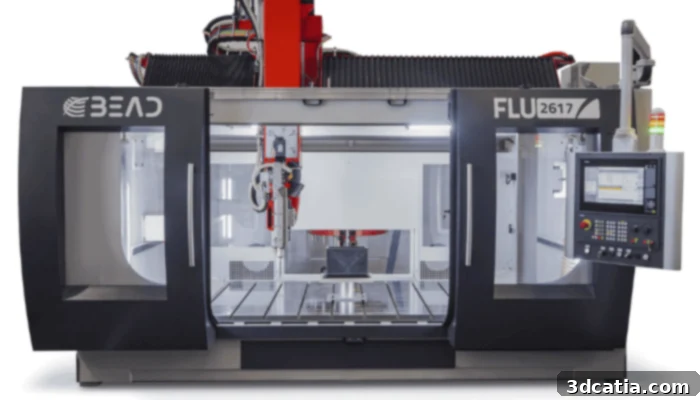
Photo Credits: CEAD
EXT 1270 Titan Pellet from 3D Systems
The EXT 1270 Titan Pellet, formerly known as the Titan Atlas 3.6, represents 3D Systems’ largest and most powerful industrial hybrid 3D printer. This versatile large-format additive manufacturing system is specifically engineered for thermoplastic pellet raw materials, which inherently offer a significant cost advantage over traditional filaments. According to 3D Systems, the EXT 1270’s advanced pellet extrusion technology enables printing speeds up to 10 times faster than conventional filament extrusion, achieving impressive deposition rates of up to 13.6 kg per hour. With a massive print volume of 1270 mm x 1270 mm x 1829 mm (50” x 50” x 72”), the machine is capable of fabricating exceptionally large parts in a single piece, eliminating the need for complex assembly. A key strength of the EXT 1270 is its modularity; it can be upgraded with a second pellet extruder, a filament extruder, and/or CNC milling capability, either at the initial purchase or at a later stage. The integration of the CNC option transforms it into a true hybrid production system, allowing for precise machining of 3D printed parts both during and after the additive process. This capability ensures critical dimensions and surface finishes are met, making it ideal for demanding industrial applications requiring large, high-quality thermoplastic components.
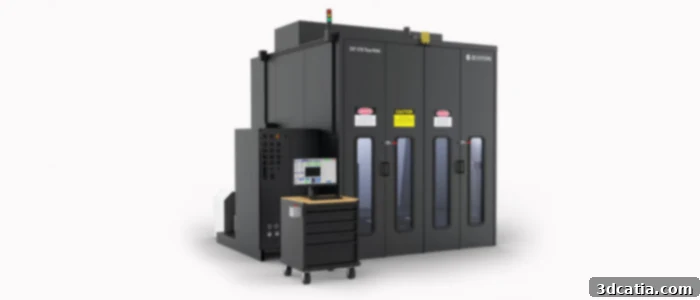
Photo Credits: 3D Systems
The Hybrid3 from ADDiTEC
ADDiTEC, a U.S. company established in 2015, is dedicated to delivering cost-effective and advanced metal additive manufacturing solutions. Among its most prominent hybrid 3D printers is the Hybrid3, a powerful 3-in-1 solution designed to meet diverse industrial needs. This machine uniquely combines the high resolution of Liquid Metal Jetting (LMJ) with the robust performance of High-Power Laser Directed Energy Deposition (LDED), all integrated with precision CNC machining for finishing. Both LMJ and LDED methods utilize inexpensive welding wire to fabricate near-net-shape parts, achieving both high resolution for intricate details and high deposition rates for rapid material build-up. The crucial role of the subtractive CNC machining approach is to provide subsequent finishing, ensuring precise surface finishes and tight dimensional tolerances on parts produced by either additive method. This seamless integration allows for the creation of components with complex internal geometries characteristic of additive manufacturing, combined with the external accuracy and surface quality demanded by high-performance applications. The Hybrid3 operates as a high-precision 5-axis hybrid manufacturing solution, capable of fulfilling a wide variety of end-to-end production requirements on a single, versatile machine, from rapid prototyping to final part production.
HYBRIDX-LT from Hans Weber Maschinenfabrik GmbH
From the Additive Manufacturing System Division of the German manufacturing powerhouse Hans Weber Maschinenfabrik GmbH comes the HYBRIDX-LT, the foundational model in the company’s ECO-Hybrid line. This machine ingeniously combines fused granular fabrication (FGF)-based extrusion with high-precision machining, offering a robust industrial solution. A key feature is its permanent printing plate, which can be heated up to 150°C within a protective cabin, ensuring optimal temperature control for consistent part quality and reduced warping, especially for engineering polymers. The extruder itself is highly versatile, compatible with plastic pellets – a material format gaining significant traction for its broader range of properties and cost-effectiveness compared to traditional filaments. This extruder can reach temperatures up to 450°C and boasts an impressive maximum material output ranging from 8 kg/h to 30 kg/h, enabling rapid large-scale production. For the machining aspect, the HYBRIDX-LT features a milling unit equipped with a cardanic 5-axis working head. This advanced capability allows for precise three-dimensional machining both during and after the 3D printing process, enabling the creation of complex geometries with superior surface finishes and tight tolerances. This integration is crucial for industries requiring functional, high-performance parts. More details on its innovative features can be found in the video below:
INTEGREX i-400 AM by MAZAK
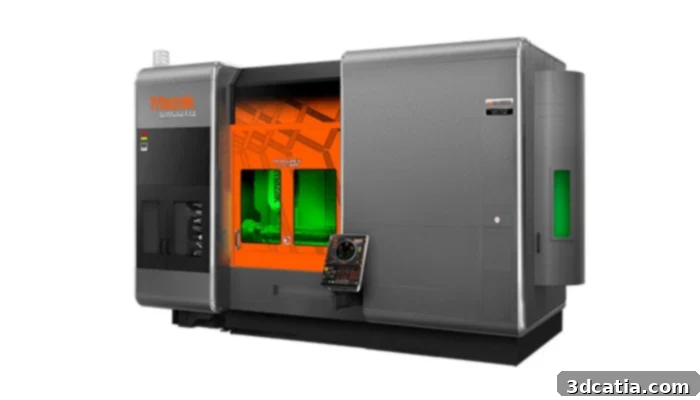
Manufactured by the acclaimed Japanese company MAZAK, the INTEGREX i-400 AM represents a cutting-edge hybrid multi-tasking machine that integrates advanced additive manufacturing technology with high-precision finish machining operations, specifically designed for large-format component production. The additive manufacturing technology employed is based on the Directed Energy Deposition (DED) process, where a nozzle precisely deposits molten metal, layer by layer, to build the part. DED is particularly valuable for repair applications of worn or damaged high-value components, such as aerospace turbine blades, where material is added back to restore the original geometry. In terms of its formidable Multi-Tasking capabilities, the INTEGREX i-400 AM provides full 5-axis machining. This enables it to process a diverse range of part types, including prismatic parts from solid billets or castings, intricate round parts, highly contoured parts, and critically, to perform finish machining on parts previously fabricated using additive manufacturing. This seamless integration ensures that complex internal structures created by DED can be combined with external features requiring the highest levels of accuracy and surface finish, all within a single machine setup.

The LASERTEC 65 3D Hybrid
DMG Mori, a prominent German-Japanese manufacturer formed from the merger of DMG and Mori Seiki, is a global leader in providing industrial manufacturing solutions across various sectors. Their extensive product portfolio includes advanced hybrid manufacturing machines capable of both 3D printing and precision machining parts. Among these innovations is the LASERTEC 65 3D Hybrid, a machine equipped with a spray nozzle that offers robust additive metal fabrication alongside high-performance milling capabilities. Utilizing the Directed Energy Deposition (DED) process, it can create metal parts up to a maximum size of 735 x 650 x 560 mm. The machine features 5-axis capabilities, allowing for the creation of complex geometries and the ability to seamlessly switch between the laser head for additive deposition and a milling tool for subtractive finishing. This dual functionality enables in-situ machining, which reduces internal stresses and ensures higher accuracy for critical features. The LASERTEC 65 3D Hybrid integrates advanced Siemens software solutions, providing operators with comprehensive tools for maximizing design freedom and maintaining precise control over the entire manufacturing process, from initial concept to final part production.
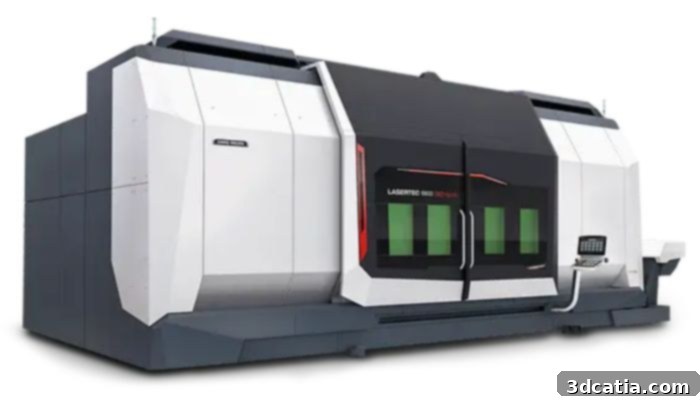
Photo Credits: DMG Mori
LENS 860 Hybrid 3D Printer From Optomec
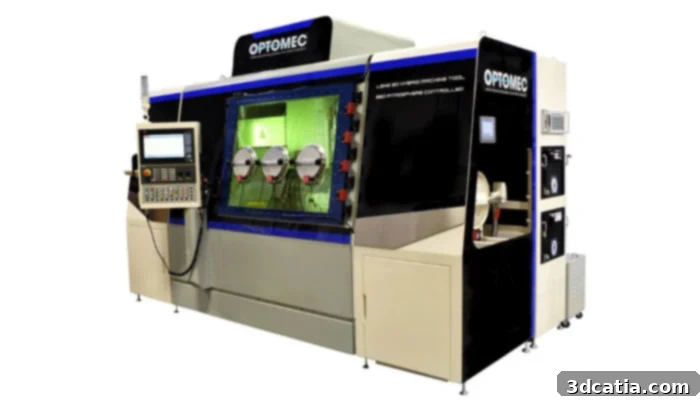
The LENS 860, engineered by Optomec, is specifically designed to provide industrial companies with the capability to produce large metal parts, combining the robustness of a DED process with the precision of a milling spindle for comprehensive finishing work. This powerful hybrid system offers a substantial maximum printing volume of 860 x 600 x 610 mm, suitable for significant industrial components. Its laser reaches a maximum power of 3kW, facilitating rapid and efficient material deposition. The LENS 860 is available in four distinct versions, allowing customers to choose configurations with or without milling capabilities, and with or without a controlled atmosphere. The controlled atmosphere option is particularly critical as it determines the range of compatible metals: specific configurations allow for the printing of non-reactive metals such as steel and Inconel, while others enable the processing of highly reactive metals like titanium, essential for aerospace and biomedical applications. This modularity ensures that the LENS 860 can be tailored to meet diverse industrial requirements, offering versatility for various metal additive manufacturing projects that demand both size and precision.
LUCY, NAMMA’s Range of Hybrid 3D Printers
The LUCY range of 3D printers, developed by the French manufacturer NAMMA, represents an intelligent fusion of FFF (Fused Filament Fabrication) 3D printing and precise CNC machining. Both models within this range offer a generous 300 x 300 x 300 mm manufacturing volume, providing ample space for diverse projects. Key features include a heated enclosure, which is critical for printing with high-performance thermoplastics by ensuring thermal stability and minimizing warping, and a dedicated filament compartment for optimal material storage. A robust chassis forms the foundation of these machines, contributing significantly to greater precision and stability during both additive and subtractive operations. The LUCY printers are capable of producing parts with exceptional surface finishes, down to 0.3 microns, and impressive dimensional tolerances, as tight as 0.05 mm. This level of precision enables users to design and manufacture complex, highly accurate parts, with lead times drastically reduced by a factor of 10 compared to traditional methods. In terms of material compatibility, LUCY supports a wide choice of engineering thermoplastics, including PETG, various PA formulations (filled or unfilled), ABS, and ASA. This makes the LUCY range an ideal hybrid 3D printer solution for a variety of applications, such as manufacturing pre-production molds, custom mounting brackets, precise bearings, and functional prototypes, bridging the gap between design and high-quality functional components.
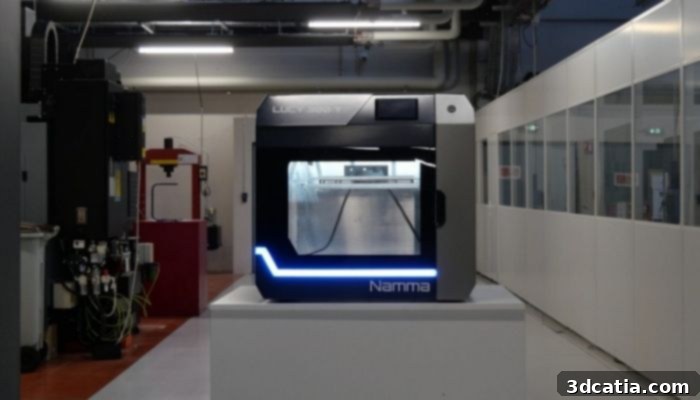
Photo Credits: NAMMA
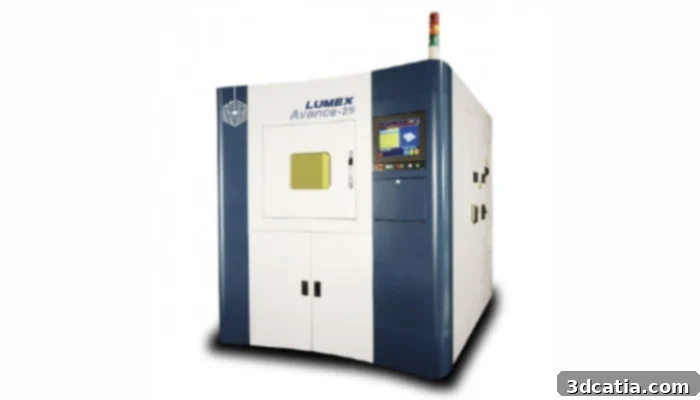
LUMEX Avance-60
The LUMEX Avance-60 is an advanced hybrid 3D printer developed by the Japanese manufacturer Matsuura, renowned for its high-quality machine tools. This innovative system expertly combines metal 3D printing technology with conventional milling and CNC capabilities, offering a truly integrated manufacturing platform. Utilizing a powerful 1 kW laser, the LUMEX Avance-60 boasts a remarkable sintering speed of 35 cc/h*1, enabling efficient production of complex metal components. It features a substantial maximum print volume of 600 × 600 × 500 mm and is capable of producing parts with a maximum weight of 1,300 kg, catering to large and heavy industrial applications. A significant advantage of this machine is its unique Automatic Powder Recovery System (APR). This system fully automates the powder procurement, collection, and reuse process, eliminating the need for operators to come into direct contact with potentially hazardous metal powders. Excess powder remaining after sintering is automatically sieved and seamlessly reused for subsequent builds, which not only improves safety and reduces material waste but also enhances operational efficiency and lowers material costs. The LUMEX Avance-60 is an ideal solution for industries requiring high-precision metal parts with complex internal structures and superior surface finishes, such as molds and dies with integrated cooling channels.
Mantle P-200 Hybrid 3D Printer
Mantle, an innovative company we’ve previously highlighted (Mantle 3D Startup), has carved a niche with its unique approach to metal 3D printing using specialized pastes. Now, the manufacturer offers a full hybrid system, the P-200 printer, which combines this groundbreaking metal paste 3D printing with precision machining via an integrated CNC platform. The P-200 boasts a build volume of 200 x 200 x 150mm, making it suitable for a variety of industrial parts, particularly those requiring high accuracy. To ensure exceptional quality and repeatability, the printer integrates an inspection camera for real-time build monitoring and in-situ machine tool probing and calibration, ensuring parts adhere to strict dimensional tolerances. Available for approximately $250,000, the P-200 provides a comprehensive solution for additive metal component fabrication. For a complete workflow, Mantle also offers an optional F-200 Furnace for an additional $140,000. This furnace is essential for sintering parts produced in the P-200, transforming the printed metal pastes into dense, durable, and highly accurate tool steel components. This integrated system is particularly valuable for tool and mold making, where precise, high-performance metal parts are critical.
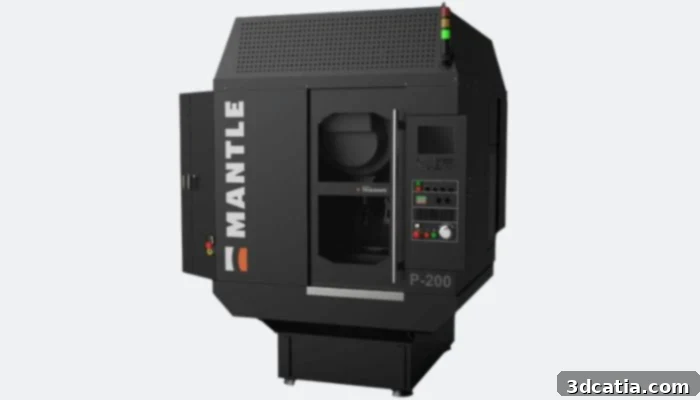
Photo Credits: Mantle
Meltio Engine CNC Integration
The Meltio Engine CNC Integration offers a distinctive approach to hybrid manufacturing, differing from standalone hybrid machines by serving as an advanced add-on for existing CNC machining centers. This innovative solution allows any compatible CNC machine on the market to gain sophisticated metal 3D printing capabilities, thereby enabling the combined additive manufacturing of metal and precise machining of complex geometries within a single, continuous process. The Meltio Engine seamlessly integrates with the existing mechanism of the CNC machine; its laser head mechanism automatically deploys for 3D printing and retracts for subtractive machining, all orchestrated automatically. This intelligent combination facilitates the creation of highly complex metal parts that meet stringent machining tolerances. The technology is currently compatible with a range of industrial metals, including various types of steel, titanium, and nickel alloys. Furthermore, Meltio is actively working to expand its material compatibility to include copper and aluminum, promising even greater versatility in the future. This integration transforms conventional CNC machines into powerful hybrid manufacturing systems, offering a cost-effective pathway for businesses to adopt metal additive manufacturing without investing in entirely new dedicated hybrid machines.
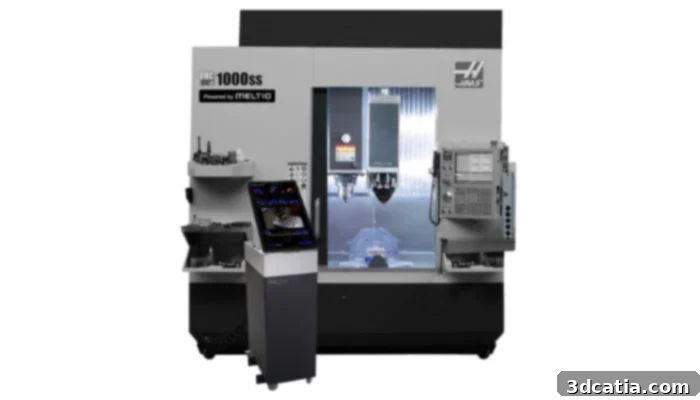
Photo Credits: Meltio
Hybrid 3D printers represent a significant paradigm shift in manufacturing, offering unprecedented levels of complexity, precision, and material versatility. By synergistically combining additive and subtractive processes, these machines enable industries to overcome traditional production limitations, accelerate innovation, and create higher-performing components with optimized workflows. Whether for rapid prototyping and educational purposes on a desktop, or for high-volume, high-precision industrial applications, the range of hybrid solutions continues to expand, promising a future where integrated manufacturing is the norm.
We hope this comprehensive list of hybrid 3D printers has provided valuable insights into this exciting field. What are your thoughts on the future of integrated manufacturing? Let us know in a comment below or connect with us on our LinkedIn, Facebook, and Twitter pages! Don’t forget to sign up for our free weekly newsletter here for the latest 3D printing news straight to your inbox! You can also find all our videos on our YouTube channel.