

Flashforge Guider 3 Plus: A Comprehensive Review of Flashforge’s Professional FDM 3D Printer
Flashforge, a prominent name in the additive manufacturing industry, established its roots in Jinhua, China, in 2011. Over the past decade, the company has solidified its position as a historical leader in the desktop FDM/FFF 3D printer market, earning widespread recognition for its robust and reliable models such as the Creator, Finder, and Dreamer. Expanding its innovative portfolio, Flashforge has also ventured into the resin 3D printing sector with acclaimed models like the Hunter and Foto, demonstrating its commitment to diverse 3D printing technologies. Recently, the company unveiled its latest professional-grade FDM/FFF offering, the Guider 3 Plus. We at 3Dnatives were eager to put this advanced machine through its paces and had the exclusive opportunity to conduct an in-depth review in our lab.
Priced at approximately $6,799 (including VAT and shipping, or €5,500 excluding VAT and shipping), the Flashforge Guider 3 Plus represents a significant step forward in the professional FDM/FFF 3D printer segment. This new machine boasts an impressively large, fully enclosed printing chamber, positioning it as a formidable contender in a highly competitive market. Its introduction underscores Flashforge’s concerted efforts to professionalize and elevate its product range, catering to industrial applications and demanding users. Below, we delve into our comprehensive test, exploring the intricate features, robust performance, and overall user experience of the Guider 3 Plus 3D printer as evaluated within the stringent environment of the 3Dnatives Lab.
Unwrapping the Flashforge Guider 3 Plus: First Impressions and Included Accessories
Upon its arrival, the Flashforge Guider 3 Plus immediately impressed us with its meticulous packaging. The care taken by the Chinese manufacturer to ensure optimal protection during transit was evident from the moment we started unboxing. The printer arrived encased in a thick, rigid cardboard box, offering substantial external defense. Inside, the machine itself was further safeguarded by a protective plastic film and strategically placed foam blocks, preventing any movement or potential damage to critical components. This thoughtful packaging speaks volumes about Flashforge’s commitment to delivering its products in pristine condition, ready for immediate use.
Removing the outer box revealed the true scale of the Guider 3 Plus. Measuring 635.5 x 590.5 x 1060 mm and weighing a substantial 70 kg, moving such a large machine could be a challenge. However, Flashforge has ingeniously integrated a set of robust casters into the base, allowing us to effortlessly roll the printer off its shipping pallet and into its designated spot in the lab. While setting up a machine of this size is typically recommended for two people, the built-in casters significantly simplify the process, enhancing maneuverability and user convenience.
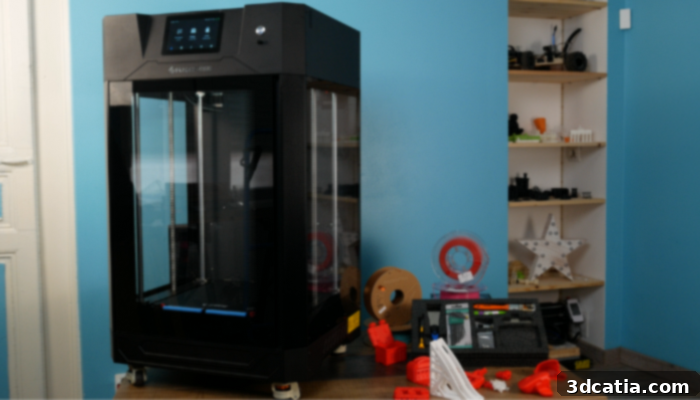
The Flashforge Guider 3 Plus is a large professional 3D printer designed for industrial-grade applications.
Once positioned, we opened the large front door of the enclosure to access the interior. Inside, more protective foam and safety features, essential for securing internal components during transport, were carefully removed. A pleasant surprise awaited us beneath the printing plate: a cardboard box housing a meticulously organized foam tool drawer. This drawer contained an extensive selection of accessories, indicating Flashforge’s dedication to providing users with everything needed for maintenance, operation, and troubleshooting right out of the box. This comprehensive accessory kit streamlines the initial setup and ongoing use, a thoughtful detail for professional users.
The accessory kit is remarkably complete, designed to cover a wide array of user needs. It includes two types of pliers – fine-nose for intricate tasks and cutting pliers for filament management. Eight different Allen/six-sided wrenches ensure compatibility with various fasteners on the machine. A syringe of thermal paste is provided for hotend maintenance, alongside precision tweezers and a flat screwdriver. A glue stick aids in bed adhesion, while a paintbrush helps keep the print area clean. A thin steel strip is included for precise adjustment of the first layer printing height, crucial for print quality. Grease for the maintenance of moving parts extends the machine’s lifespan, and a specialized tool for unclogging the nozzle ensures continuous operation. Finally, two spare fuses are included, demonstrating foresight for potential electrical issues, guaranteeing minimal downtime. This comprehensive toolkit reinforces the professional orientation of the Guider 3 Plus, empowering users with the necessary resources for efficient 3D printing.
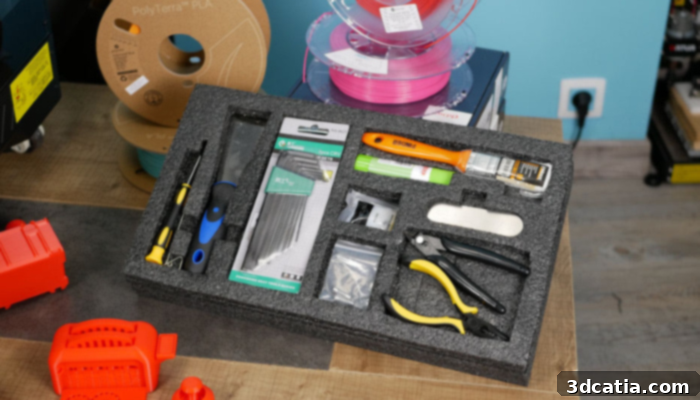
Flashforge provides a comprehensive suite of accessories, essential for both daily operation and long-term maintenance of the 3D printer.
The construction of the Flashforge Guider 3 Plus aligns with the high standards expected of professional FDM/FFF machines. It features a remarkably sturdy aluminum frame, complemented by durable steel and plastic panels that provide both structural integrity and a refined finish. The printer’s design prioritizes visibility and monitoring, incorporating large windows on the front, top, and sides. These transparent panels offer an unobstructed view of the generous printing area, which measures an impressive 350 x 350 x 600 mm, allowing for the production of substantial parts or multiple smaller components in a single batch. To further enhance remote monitoring capabilities, particularly valuable in professional environments, Flashforge has integrated a high-definition camera and a strip of bright LED lights within the enclosure. This setup ensures that users can consistently monitor their prints, even from a distance, facilitating efficient workflow management and immediate identification of any printing anomalies.
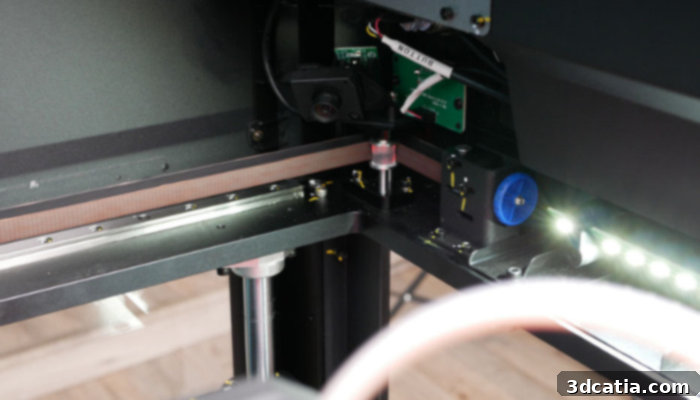
The integrated camera and bright LED strip work in tandem, allowing for effortless and efficient remote monitoring of ongoing print jobs.
The user interface of the Guider 3 Plus is thoughtfully designed for ease of access and control. On the front, the machine is equipped with a responsive 7-inch touch screen, providing an intuitive gateway to all printer functions. Alongside the screen, a convenient USB port allows for direct print file transfers, and a primary power button controls the machine’s immediate operation. The rear of the printer is equally well-appointed, featuring two dedicated slots for material spools, an RJ45 Ethernet port for stable wired network connectivity, a power input port, and a secondary power switch for complete system shutdown. Notably, the back steel panel includes strategically placed cutouts, essential for efficient air circulation. These vents facilitate the cooling of the motherboard and house the advanced air filtration system, which integrates both a HEPA filter and activated carbon. This dual-filtration system is crucial for maintaining optimal air quality within the enclosed chamber, effectively capturing ultra-fine particles and noxious fumes produced during the printing of various materials, thereby creating a safer working environment and supporting print quality.
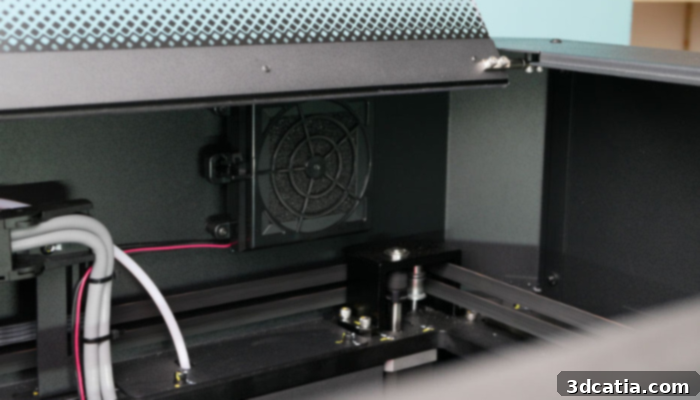
The fully enclosed printing chamber is equipped with a robust HEPA air filter and activated carbon, ensuring a clean and safe printing environment.
To ensure optimal printing conditions for a wide array of filaments, the Guider 3 Plus incorporates two integrated storage bays specifically designed for filament spools. These bays are ingeniously adapted to accommodate most standard material spools, capable of holding up to 1 kg of filament each. More critically, these storage compartments are airtight, a vital feature for preserving the integrity of hygroscopic materials. Each bay includes dedicated spaces for three bags of silica gel (generously provided with the accessories) and features an integrated hygrometer. This allows users to precisely monitor and control the humidity level within the bays, preventing moisture absorption by sensitive filaments such as PA-CF, PC, and ABS, which can significantly degrade print quality and mechanical properties. This meticulous filament management system underscores the printer’s professional capabilities, ensuring consistent material performance and reliable print outcomes.
Mechanically, the Guider 3 Plus is engineered for precision, speed, and durability. It features a single, high-performance hotend, and its motion system is built upon a robust Core XY architecture. This advanced system is driven by two reliable NEMA 17 motors, meticulously synchronized through a network of pulleys and belts. The tension of these belts, crucial for print accuracy, can be effortlessly adjusted via knurled screws, allowing for precise calibration and maintenance. Both the X and Y axes glide smoothly on high-quality linear rails, which are renowned for their exceptional precision and long-term durability, minimizing play and ensuring consistent layer alignment. For the Z-axis, the print bed is guided by two robust worm screws and rests on four precision ball bearings, which in turn move along four sturdy steel rods positioned at the ends of the printing table. This intricate and well-engineered mechanical assembly contributes significantly to the Guider 3 Plus’s ability to achieve high printing speeds without compromising on accuracy or surface finish, making it ideal for professional applications where both speed and quality are paramount.
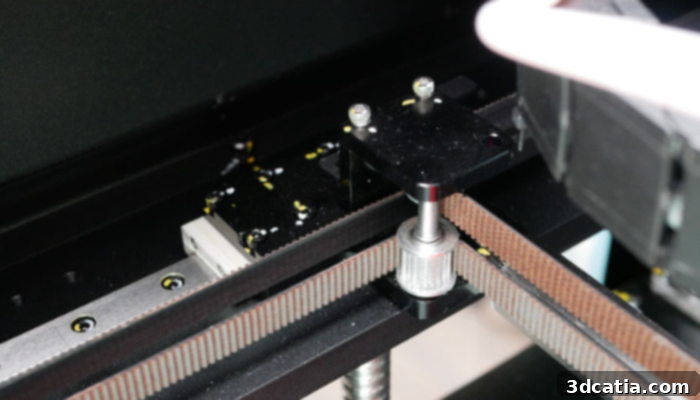
The Guider 3 Plus utilizes a Core XY motion system, built with reliable and high-precision components to ensure exceptional print quality and speed.
Installing and Operating the Flashforge Guider 3 Plus
One of the most appealing aspects of the Flashforge Guider 3 Plus, especially for professional environments, is its minimal setup requirement. The machine is delivered fully assembled, meaning no complex construction is necessary. It arrives ready to print, requiring only the installation of your chosen material. To initiate the Guider 3 Plus, the process is straightforward: simply plug in the printer, connect it to the Ethernet network (with an option for Wi-Fi connectivity later), activate the main switch located at the back, and finally, power on the printer using the button on the front panel. This plug-and-play readiness significantly reduces the time from unboxing to first print, a critical factor for businesses and educational institutions.
Upon startup, the vibrant 7-inch touch screen immediately welcomes the user with its intuitive and clearly organized interface. The main menu is logically separated into five comprehensive sections: Printing, Material, Temperature, Standard Settings, and Advanced Settings. The Advanced Settings menu is particularly useful, encompassing both detailed machine configurations and practical maintenance guides, making it easy for users to troubleshoot or perform routine upkeep. This user-friendly interface is also designed for global accessibility, offering support in 7 different languages, enhancing its appeal to a diverse international user base.
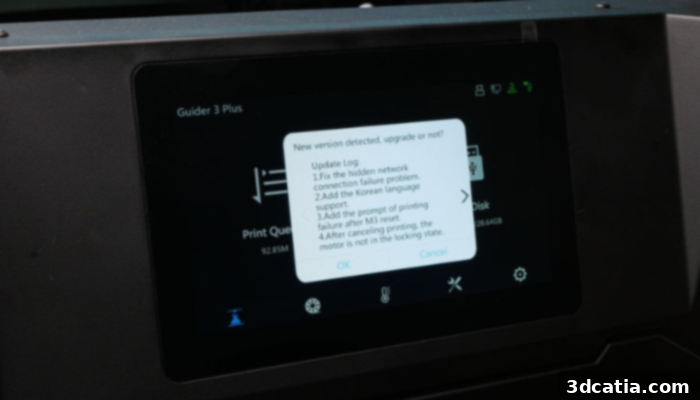
When connected to the internet, the Guider 3 Plus automatically updates its firmware and provides crucial information to the user via its large, responsive touch screen.
Before embarking on any printing tasks, the initial step involves loading the filament. This is easily accomplished through the material menu on the touch screen. After selecting the ‘loading’ option, the machine prompts the user to specify the type of material being used, and then intelligently preheats the print head to the appropriate extrusion temperature. Next, the filament storage bay at the back of the printer is opened – it’s important to note that only the left bay is directly connected to the extruder via a PTFE tube. The filament spool is placed inside the bay, and the filament end is then carefully inserted into the PTFE tube. A gentle push guides the filament towards the extruder, which then automatically takes over, completing the loading process and priming the nozzle. This guided procedure minimizes user error and ensures smooth filament delivery.
While the printer is technically ready to print after filament loading, it is highly recommended to perform a plate leveling procedure for optimal first layer adhesion and print quality. This precise process begins with manual adjustment: the thin steel sheet provided in the tool drawer is placed between the nozzle and the printing plate, and the height of the latter is then finely tuned until a slight drag is felt. Following this manual calibration, the printer automates the final leveling step. It utilizes a sophisticated induction sensor to measure the flatness of the print plate across a detailed mesh of points, compensating for any minute surface irregularities. Once this two-step process is complete, the print bed is perfectly calibrated. The final preparation involves transitioning to a computer to download and utilize the slicing software, which is essential for converting 3D models into printable instructions for the Flashforge Guider 3 Plus 3D printer.
FlashPrint Software & Cloud Interfaces: A Seamless Digital Ecosystem
Flashforge provides its own proprietary slicing software, aptly named “FlashPrint,” tailored specifically for its range of 3D printers. While Flashforge strongly advocates for the use of FlashPrint to ensure seamless integration and optimal performance, the manufacturer also offers flexibility for advanced users. It is possible to utilize other widely recognized third-party slicers such as Cura or Slic3r. However, if opting for alternative software, users will need to manually configure printing profiles or contact Flashforge’s after-sales service to acquire pre-configured profiles, ensuring compatibility and desired print outcomes.
For our comprehensive review, we exclusively used FlashPrint, leveraging its native support and pre-configured profiles for the Guider 3 Plus, as well as its extensive library of material settings. This application, available across various operating systems including PC, Mac, and Linux, is user-friendly and supports 11 different languages, making it accessible to a global audience. It boasts compatibility with a wide array of file formats, prominently supporting 3MF, STL, and OBJ, which are standard in 3D modeling and printing workflows.
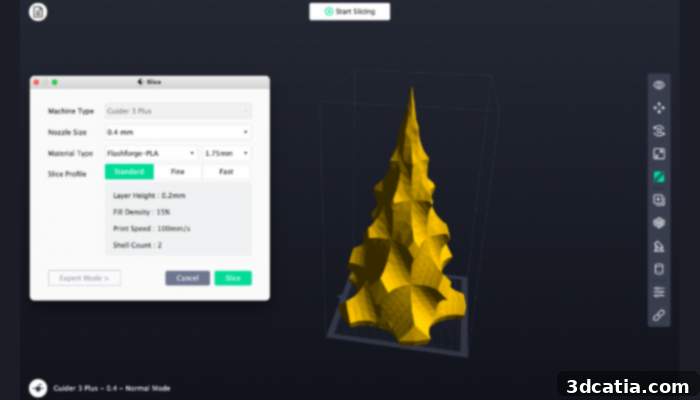
FlashPrint is the proprietary slicer developed by the Chinese manufacturer, offering tailored profiles and advanced features for Flashforge printers.
Beyond standard slicing functionalities, FlashPrint is packed with advanced features designed to enhance user experience and print preparation. These include powerful options for repairing damaged 3D models, duplicating parts, precise mesh cutting, and automatic part layout optimization on the build plate. Once a model is sliced, FlashPrint enables seamless transmission of the print file to the 3D printer over a local Wi-Fi network. Furthermore, the software provides robust remote control and monitoring capabilities within the local network; users can observe prints live via the integrated monitoring camera, capture images, directly control printing parameters, and activate the internal LED lights. To extend these printer management operations beyond the local network, Flashforge offers integration with its own cloud platform, FlashCloud, or the Polar3D cloud, providing unparalleled flexibility for professional users managing multiple machines or off-site operations.
Despite its comprehensive and intuitive interface, we did encounter a minor bug with the proprietary slicer: when used on a 4K screen, the entire interface, particularly buttons and icons, appeared in a reduced size. We promptly reported this screen resolution-related issue to Flashforge, and we anticipate a logical correction in a future software update. However, this minor inconvenience does not overshadow the overall excellence of FlashPrint. With its rich set of built-in features, user-friendly interface, and remarkably fast slicing speeds, FlashPrint stands as a highly competitive and capable application, easily holding its own against other leading slicing software in the market, making the Flashforge Guider 3 Plus a truly integrated solution.
First Prints on the Guider 3 Plus from Flashforge: Performance and Versatility
With the Flashforge Guider 3 Plus fully set up and configured, we eagerly launched our inaugural print over Wi-Fi, directly from FlashPrint. Our first material of choice was the PLA filament supplied with the printer. The chosen model was an intricate “print in place” design, representing the functioning internal mechanisms of an engine. The results were remarkably impressive: the model was reproduced with exceptional fidelity, and all its moving parts sprang into motion smoothly as soon as the crank was turned. This initial print, featuring various cantilevered sections and demanding tight tolerances, was an incredibly promising start, validating the printer’s precision. The pre-configured PLA profile proved to be exquisitely tuned, delivering an almost true “Plug-and-Play” experience right out of the box, a significant advantage for users looking for immediate productivity.
However, during subsequent prints, we noted that the default inclusion of a raft in the pre-configured profiles was often unnecessary. Thanks to the highly effective textured PEI build plate, which provides excellent adhesion, a raft typically adds superfluous time and material without significant benefit. We recommend disabling this option in future print jobs to optimize both production time and material consumption. The reliability of the machine is further bolstered by its induction sensor, which performs a precise mesh leveling of the printing plate. This crucial feature accurately measures and compensates for any potential flatness defects, which could otherwise lead to critical first-layer adhesion issues, ensuring a consistently strong bond between the part and the plate.
The Flashforge Guider 3 Plus is engineered for exceptional material versatility. It is equipped with a high-performance hotend capable of reaching an extrusion temperature of 320°C, opening up possibilities for printing advanced engineering filaments. Complementing this is a flexible, PEI-coated steel magnetic plate that can heat up to 120°C, providing superb adhesion and easy part removal. The standard steel nozzle and direct drive extruder further enhance its compatibility with a broad spectrum of materials. This robust combination allows the Guider 3 Plus to handle everything from common PLA to more demanding technical filaments like PA-CF (carbon fiber filled nylon) and Polycarbonate (PC). This extensive material compatibility is paired with an intuitive and rapid filament change process, facilitated by the two humidity-controlled filament storage bays, which are critical for preserving the integrity of hygroscopic materials. During our extensive testing, we had the opportunity to successfully print with a variety of materials, including PLA for most of our models, and also challenging, high-strength filaments such as ABS, PETG, PA-CF, and finally, PC, all yielding excellent results.
Throughout our printing tests, the pre-configured profiles within FlashPrint consistently delivered the desired results, eliminating the need for intricate readjustments of printing parameters. Features like vase mode and the impressive fast printing capability (up to 250 mm/s) allowed us to significantly reduce production time without compromising the final visual quality or structural integrity of the prints. Indeed, the meticulously engineered Core XY motion system, coupled with the machine’s robust frame, enables it to achieve these high printing speeds while simultaneously guaranteeing exceptional precision and unwavering reliability. Even at speeds of 250 mm/s, we observed no discernible ringing or ghosting artifacts, which are common indicators of insufficient rigidity or precision in less capable machines. This outstanding performance confirms the Guider 3 Plus’s ability to produce high-quality, precise parts rapidly, making it an invaluable asset for professional applications requiring both speed and detail.
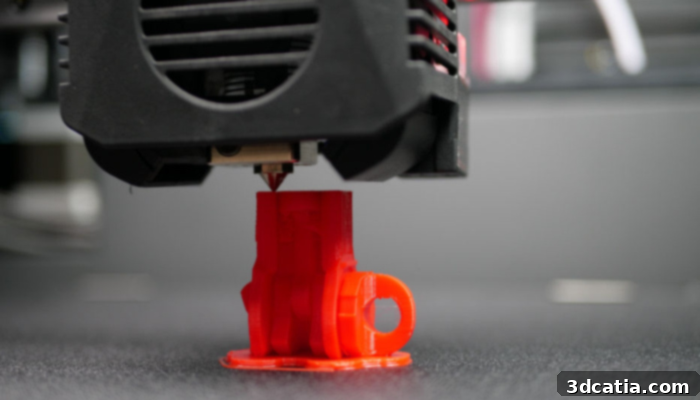
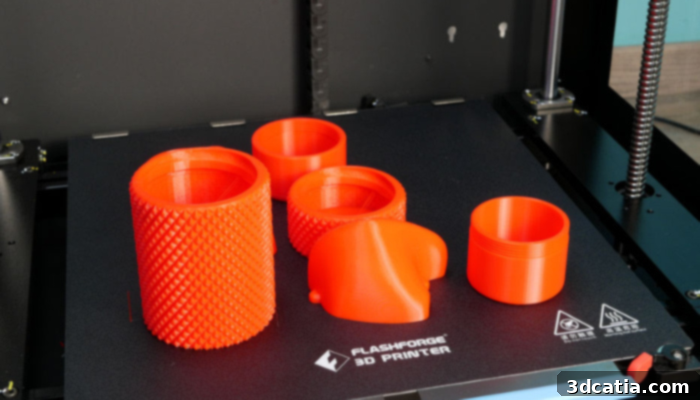
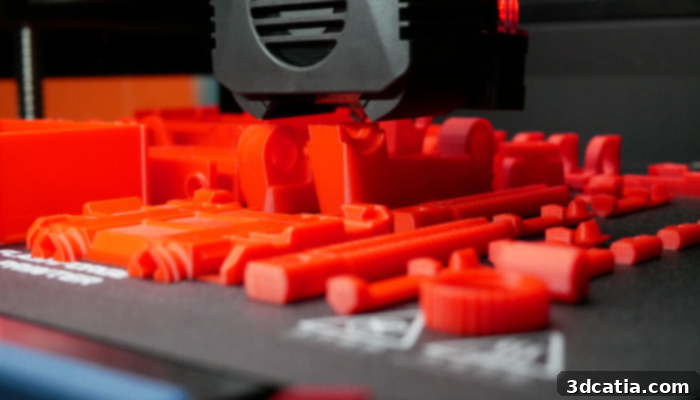
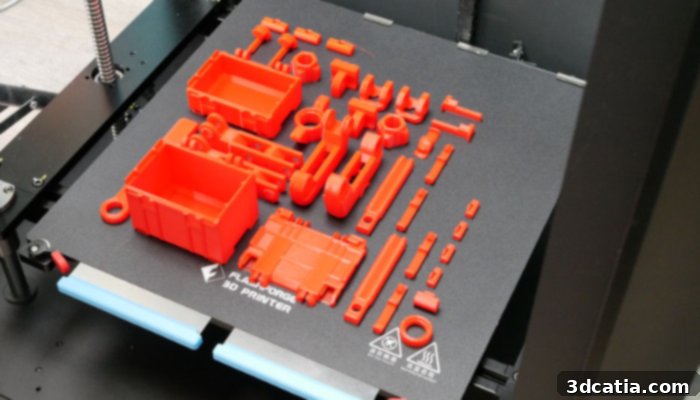
Thanks to its large flexible printing plate and impressive build volume, the Guider 3 Plus is ideally suited for efficient batch 3D printing and rapid prototyping.
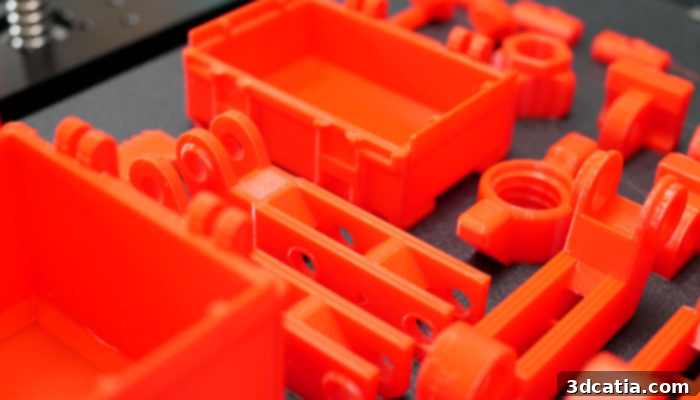
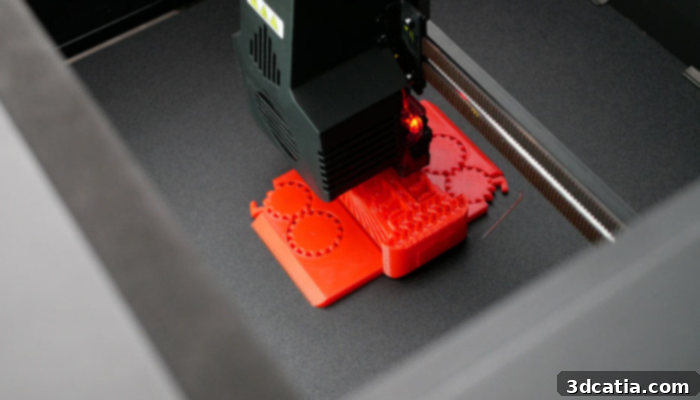
The Guider 3 Plus excels in quickly producing highly precise parts, balancing speed with intricate detail.
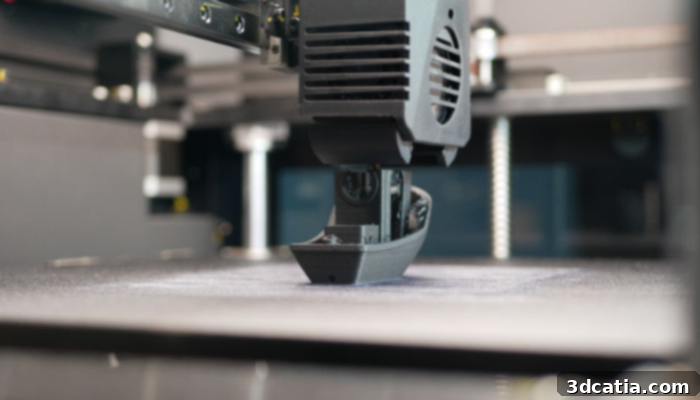
Equipped with a robust steel nozzle, the Guider 3 Plus is fully capable of printing challenging composite materials, such as carbon fiber-filled nylon (PA-CF).
Conclusion: The Flashforge Guider 3 Plus – A Benchmark for Professional FDM 3D Printing
After extensive testing and evaluation in the 3Dnatives Lab, the Flashforge Guider 3 Plus unequivocally stands out as a formidable entry in the professional FDM 3D printer market. Flashforge has clearly channeled its years of expertise into creating a machine that addresses the core demands of industrial and advanced professional users. Its professional-grade build, characterized by a robust aluminum frame and durable panels, promises long-term reliability and consistent performance, essential for demanding production environments. The generously sized build volume of 350 x 350 x 600 mm positions it as an ideal solution for large-scale prototyping, batch production, or manufacturing sizable end-use parts, expanding the scope of what FDM technology can achieve.
The material versatility of the Guider 3 Plus is another significant highlight. With a hotend capable of 320°C, a heated bed reaching 120°C, a direct drive extruder, and humidity-controlled filament storage, it confidently handles a wide array of filaments—from standard PLA and PETG to engineering-grade ABS, PA-CF, and PC. This broad compatibility ensures that professionals are not limited by material constraints, enabling them to choose the optimal filament for specific applications, enhancing functional properties and durability of their printed objects. The integrated air filtration system further underscores its professional utility, safely handling advanced materials that may emit fumes, ensuring a safer workspace.
Ease of use is paramount in professional settings to maximize productivity, and the Guider 3 Plus excels in this regard. The machine arrives fully assembled, minimizing setup time. Its intuitive 7-inch touch screen interface, guided filament loading process, and precise two-step leveling system (manual and automatic) make operation straightforward, even for those new to this caliber of 3D printing. The FlashPrint software, despite a minor graphical bug, offers a comprehensive and efficient slicing solution, complete with advanced features and seamless integration for local and remote management through FlashCloud or PolarCloud. This robust software ecosystem empowers users with granular control and monitoring capabilities, vital for managing complex print jobs and optimizing workflows.
Finally, the printing performance of the Guider 3 Plus truly sets it apart. The high-speed capabilities, reaching up to 250 mm/s, combined with a highly precise Core XY motion system, ensure that parts are produced not only quickly but also with exceptional fidelity, free from common artifacts like ringing or ghosting. The consistency achieved with pre-configured profiles delivers a near plug-and-play experience for a wide range of materials and applications. In conclusion, the Flashforge Guider 3 Plus is more than just a 3D printer; it is a meticulously engineered, user-centric, and highly capable additive manufacturing solution that firmly establishes Flashforge’s prowess in the professional FDM market. For businesses and professionals seeking a reliable, versatile, and high-performance 3D printer that scales with their production needs, the Guider 3 Plus represents an excellent investment and a benchmark for the future of professional 3D printing.