
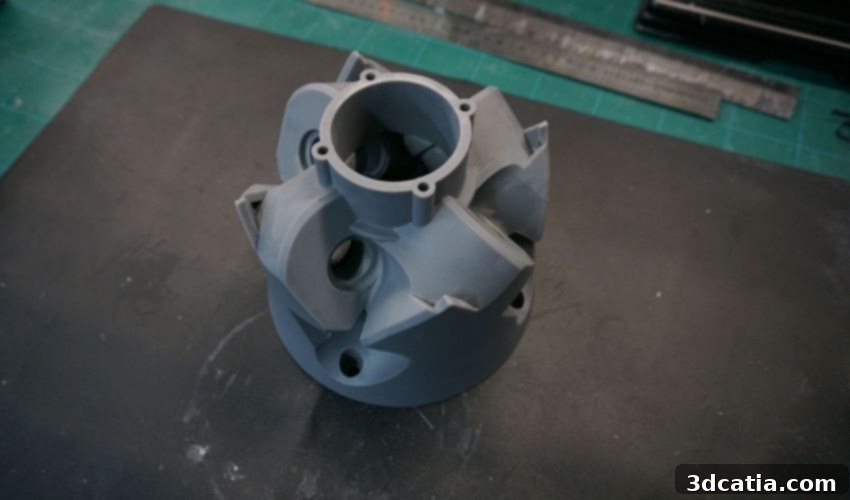
Pioneering Sustainable Sailing: Velettrica’s 3D-Printed SAIL-POD 25 Electric Propulsion System
Additive manufacturing, commonly known as 3D printing, is fundamentally transforming how complex components are designed and produced across various industries. It enables the creation of parts using advanced materials that deliver exceptionally effective and cost-efficient solutions, even in the most demanding and extreme environments – from the vast expanse of the sky to the vacuum of space, and down to the deepest parts of the ocean. A compelling illustration of this technological revolution in action is Velettrica, an innovative Italian startup. Velettrica has harnessed the power of advanced 3D printing techniques to develop crucial components for the functional prototype of its groundbreaking electric sailboat engine, the SAIL-POD 25. To delve deeper into how cutting-edge technologies like 3D printing and biomimetic design are paving the way for “sustainable sailing,” we had the distinct pleasure of speaking with Velettrica’s visionary founder, Roberto Baffigo.
3DN: Can you introduce yourself and tell us about your connection to 3D printing and its impact on your work?
Hello, my name is Roberto Baffigo, and I was born in Rome in 1972. My life has always been deeply intertwined with sports, embracing a wide range of disciplines including rowing, sailing, mountain biking, skiing, and currently, competitive fin swimming. My academic journey led me to study physics, a field that profoundly stimulated my natural curiosity and instilled in me an unwavering desire to experiment and innovate. My initial significant exposure to 3D printing emerged from the jewelry sector. The dramatic shift from traditional manual prototyping methods to digital prototyping was nothing short of a revolution in that industry, especially as increasingly reliable and affordable 3D printing techniques became widely available. This experience was instrumental. Subsequently, 3D printing proved indispensable, allowing me to rapidly test and refine all the innovative inventions integrated into Velettrica’s unique propeller design. This rapid iteration capability was crucial for bringing our complex ideas to life efficiently.
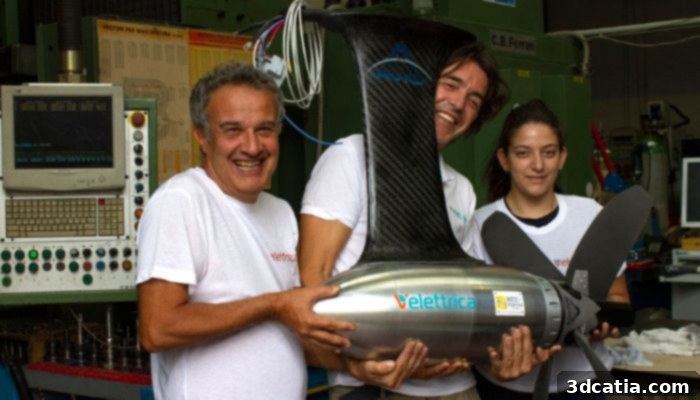
Roberto Baffigo and the Velettrica team proudly showcase the SAIL-POD 25 motor, a testament to sustainable innovation.
3DN: How did Velettrica come about, and what is its overarching mission in the realm of sustainable marine technology?
Velettrica was founded in 2021, born from a profound dream: to explore and pioneer impact-free sailing. This vision matured during cherished family vacations at sea with my wife, Chiara, and our children, Stella and Pietro Noè. I always harbored a deep desire to travel with them in complete harmony with nature, minimizing our environmental footprint. My ambition was to enhance the environmental friendliness of sailboats even further by integrating an advanced electric motor. This motor wouldn’t just provide propulsion; it was ingeniously designed to also generate energy when the sailboat is powered by the wind, essentially turning the vessel into a self-sustaining energy generator. The innovative motor developed as a cornerstone of the Velettrica project is proudly named the SAIL-POD 25.
Velettrica’s mission is crystal clear and incredibly vital: to develop highly energy-efficient propulsion systems that are predominantly powered by renewable energy sources, with the ultimate goal of significantly reducing marine pollution. At the very core of Velettrica’s innovation lies a sophisticated, multifunctional propeller system coupled with an intelligent electronic control unit. This propeller was meticulously designed using a biomimetic approach, drawing profound inspiration from the elegant and efficient fins of whale sharks. When the propeller is not actively in use for propulsion, it intelligently folds and closes into a compact, flower-like shape. This unique design minimizes water resistance, drastically improving the sailboat’s hydrodynamics and thereby optimizing the overall energy efficiency of the entire propulsion system, making it ideal for sustainable marine travel.
3DN: Can you tell us more about the SAIL-POD 25 engine and detail how additive manufacturing was specifically utilized in its production and development?
We extensively leveraged 3D printing for numerous critical components of the SAIL-POD 25. In some instances, additive manufacturing was employed for direct production, meaning the final functional parts were manufactured directly through 3D printing. In other cases, rapid prototyping via 3D printing was crucial for creating molds or cores used in the production of composite components, accelerating our development cycle significantly. The SAIL-POD 25 itself is an exceptionally efficient electric propulsion and recharging system designed specifically for sailboats, featuring a uniquely foldable, variable-pitch propeller. Its design prioritizes ease of installation, requiring no internal space within the boat. Furthermore, it boasts zero emissions, requiring virtually no maintenance, and operates silently, producing no noise, vibration, or heat—all essential qualities for an eco-friendly marine experience.
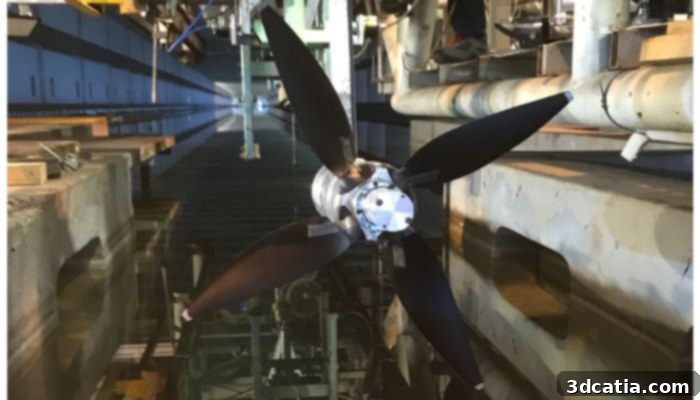
The SAIL-POD 25 was ingeniously designed in Italy by Velettrica, with 3DiTALY collaborating to 3D print several key components for a working prototype of the engine. This involved a strategic combination of multiple materials and various 3D printing technologies to achieve optimal performance and durability. For instance, Formlabs’ Fuse 1 SLS (Selective Laser Sintering) printer, along with robust Nylon 12 powder, was employed to manufacture the core of the propeller blades. Nylon 12 was chosen for its exceptional tensile strength and environmental stability, making it particularly well-suited for producing complex assemblies and durable components with minimal water absorption, crucial for marine applications. The initial prototype of the propeller hub, intended for rigorous dry testing, presented a highly intricate geometric shape. To achieve a high level of detail, a smooth matte surface finish, and optimal mechanical properties, it was manufactured using Formlabs’ Form 3L SLA (Stereolithography) printer with Grey resin. Finally, the “special” mechanical parts, requiring superior strength and resilience, were produced from high-performance alloys like Inconel or aluminum using DMLS (Direct Metal Laser Sintering) technology. The mold for the innovative fin structure was precisely manufactured from HDT (Heat Deflection Temperature) photopolymer, again utilizing the precision of SLS technology. This multi-material, multi-technology approach highlights the versatility of additive manufacturing in bringing complex designs to fruition.
3DN: Why did Velettrica opt for 3D printing over traditional manufacturing methods for such a critical project?
For a significant number of our components, 3D printing wasn’t just an option; it was truly the *only* viable path forward. Given the novel and inherently complex nature of our patented mechanisms, producing these intricate parts using conventional manufacturing technologies would have been either outright impossible or prohibitively expensive and time-consuming. Additive manufacturing provided the design freedom and complexity handling that traditional methods simply couldn’t match.
Beyond necessity, 3D printing offers a multitude of compelling advantages that align perfectly with our innovative and sustainable goals. These benefits include, but are not limited to: the unparalleled ability to produce rapid prototypes in less than 24 hours, significantly accelerating our iterative design process; substantial cost reductions, often up to 90% compared to traditional machining methods, making complex R&D more accessible; the capability to produce highly complex geometries like our uniquely designed propellers and turbine blades for underwater equipment, which are difficult or impossible to create otherwise; the flexibility to utilize advanced materials with highly desirable properties such such as inherent fire resistance, reduced toxic emissions, and superior corrosion resistance – all critical for marine environments. Finally, and crucially for sustainability, 3D printing enables on-demand production. This means designers can obtain parts exactly when and where they need them, which dramatically reduces warehousing costs, mitigates the risk of overproduction and waste, and lessens overall environmental impact. This lean manufacturing approach promotes unparalleled efficiency and significantly contributes to the overall sustainability of our operations.
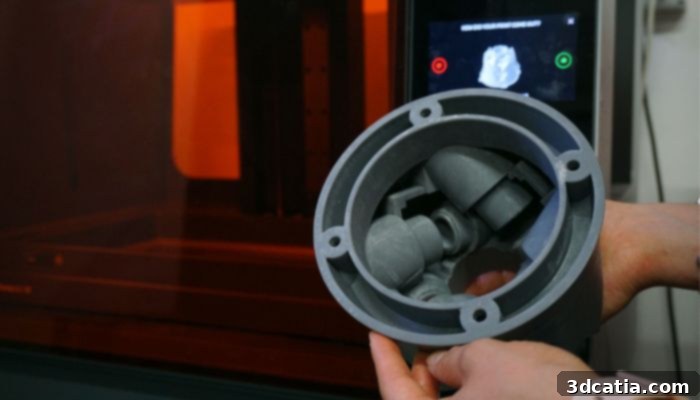
An intricately designed part of the propeller, expertly crafted using advanced resin 3D printing technology.
3DN: How do you envision the evolving role of additive manufacturing within the broader maritime sector, particularly for advancements like electric propulsion?
The naval sector, especially when it comes to cutting-edge electric propulsion systems, is frequently characterized by, and greatly benefits from, customized or semi-customized production requirements. Additive manufacturing, as we’ve discussed, offers unparalleled design freedom, dramatically reducing the costs associated with producing bespoke components. This capability is revolutionary for marine applications where unique designs are often essential for optimal performance and integration. Furthermore, the advantages in terms of sustainability are twofold: firstly, there are significant savings in both raw materials and energy consumption during the production process when compared to many traditional manufacturing techniques. Secondly, and equally important, is the enhanced ease of recycling the materials used at the end of a component’s life cycle, particularly for thermoplastics. This closed-loop approach contributes directly to a circular economy. Finally, polymer materials often exhibit superior dirt-resistant properties compared to metals. For instance, in propeller applications, this means less dispersion of harmful chemicals into the marine environment, reduced biofouling, and sustained efficiency over time, leading to considerable energy savings and a healthier ocean ecosystem. This combination of customization, resource efficiency, and environmental benefits positions additive manufacturing as a cornerstone for future marine innovation.
3DN: Do you have any final thoughts or a message you’d like to share with our readers who are passionate about technology and sustainability?
We at Velettrica are brimming with numerous exciting projects and ambitious dreams for the future. Our long-term vision extends beyond the seas; we aspire to eventually “fly,” embracing the same pioneering spirit that drives our sail-electric innovations, aiming to traverse the skies in the most sustainable way possible. My message to our valued readers is simple yet profound: wholeheartedly embrace 3D printing to “touch” and realize your ideas. It is an incredibly powerful tool that truly makes dreams tangible, transforming concepts into reality with remarkable speed and precision. For anyone with an innovative spirit, 3D printing represents an accessible and impactful pathway to bringing your most imaginative creations to life.
What are your thoughts on Velettrica’s groundbreaking work and the future of sustainable marine technology? We invite you to share your insights in a comment below or engage with us on our LinkedIn or Facebook pages! Additionally, don’t miss out on the latest advancements in 3D printing; remember to sign up for our free weekly Newsletter to receive top news directly in your inbox. You can also explore all our engaging videos on our YouTube channel. If you are interested in more 3D printing news within the dynamic automotive and transportation sectors, please visit our dedicated page HERE.
*All Photo Credits: Velettrica/3DiTALY/Formlabs