
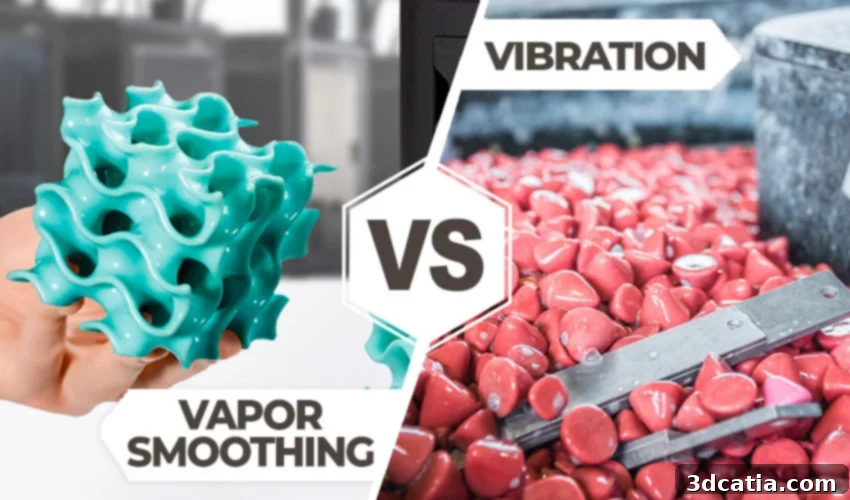
Achieving Flawless 3D Prints: A Comprehensive Guide to Vapor Smoothing and Vibratory Finishing
In the realm of additive manufacturing, the ability to produce intricate and complex geometries has revolutionized numerous industries. However, parts fresh from a 3D printer, especially those created using techniques like Fused Deposition Modeling (FDM), often present an unrefined aesthetic with visible layer lines, rough surfaces, and potential porosity. To transform these raw prints into aesthetically pleasing and functionally superior components, a variety of industrial post-processing and surface finishing techniques are employed. These methods, ranging from coating and sandblasting to meticulous hand finishing, are crucial for enhancing both the appearance and performance of 3D printed parts.
The final stage of 3D print production, known as post-processing, is a critical step that refines the part’s material surface. This can involve either adding material, as in coating, or removing microscopic layers, as in subtractive methods, to achieve a desired finish. This article delves into two prominent and highly effective surface finishing processes for 3D printed parts: Vapor Smoothing and Vibratory Finishing. We will explore the detailed mechanics of each method, highlight their unique advantages and disadvantages, and guide you in determining which technique is best suited for your specific application and material requirements. Understanding these processes is key to unlocking the full potential of your 3D printed creations, ensuring they meet the highest standards of quality and functionality.
The Mechanics of Surface Refinement: Process Overview
Vapor Smoothing
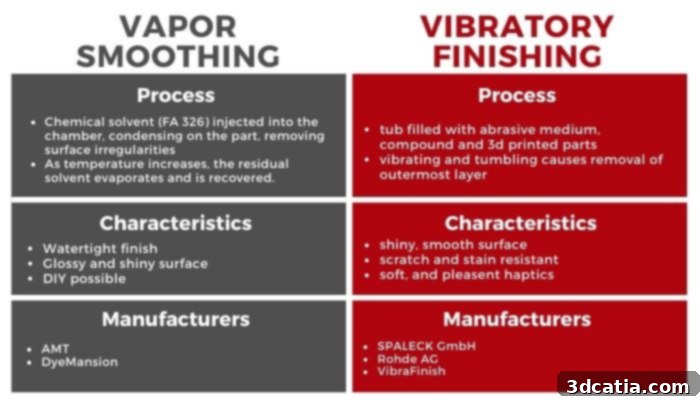
Vapor Smoothing, often referred to as Chemical Vapor Smoothing, is an advanced post-processing technique designed to create exceptionally smooth, sealed, and aesthetically appealing surfaces on 3D printed polymer parts. The core principle involves exposing the printed components to a vaporized solvent within a controlled environment. In an industrial setup, this process typically begins by meticulously suspending one or multiple 3D printed parts within a sealed processing chamber. This ensures maximum and uniform exposure of all surfaces to the solvent vapor.
A precisely formulated chemical solvent blend, such as FA 326 or similar proprietary solutions, is then injected and sprayed into the chamber. As the solvent vapor comes into contact with the surface of the 3D printed part, it condenses. This condensation triggers a controlled surface melt, essentially softening the outermost microscopic layers of the polymer. The surface tension of the softened material causes it to reflow, effectively filling in valleys, smoothing out peaks, and eliminating visible layer lines and surface irregularities. This process happens at a molecular level, allowing for a remarkably even and consistent finish without compromising intricate details or dimensional accuracy if precisely controlled.
Once the desired level of smoothness is achieved, the chamber temperature is carefully increased. This elevation in temperature facilitates the evaporation of any residual solvent, which is then typically recovered for reuse, making the process more environmentally friendly and cost-effective. The end result is a part that boasts a watertight surface, retains its smooth internal cavities, maintains accurate dimensions, and preserves its original material volume. Beyond aesthetics, vapor smoothing often enhances mechanical properties such as elongation and tensile strength, making the parts more robust and durable.
For optimal and consistent results, conducting vapor smoothing in a controlled industrial environment with specialized equipment designed for 3D printing post-processing is highly recommended. These systems offer precise control over temperature, solvent concentration, and exposure time, crucial for achieving repeatable, high-quality finishes. While a DIY approach, sometimes referred to as ‘Solvent Dipping,’ can be attempted using common solvents like acetone or ethanol for compatible materials, it is paramount to exercise extreme caution. Proper safety measures, including adequate ventilation, personal protective equipment, and a thorough understanding of chemical handling, are essential to prevent health hazards and ensure a safe operation.
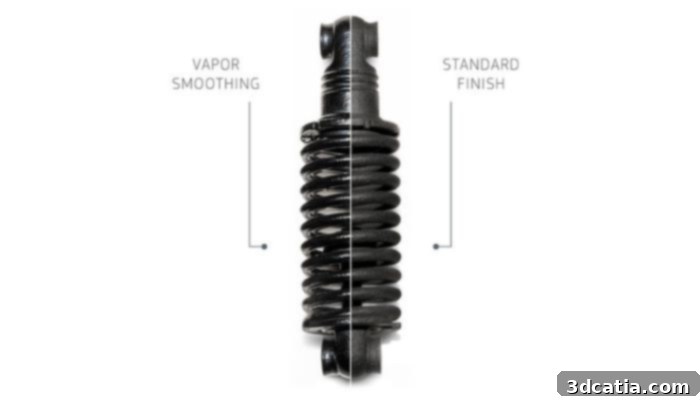
Vapor smoothed part on the left, versus standard finish on the right (Photo credits: ProtoLabs)
Vibratory Finishing
In stark contrast to vapor smoothing, Vibratory Finishing is a mechanical surface treatment method that foregoes chemicals, instead relying on an abrasive medium to refine the surface of 3D printed parts. This versatile process involves placing multiple 3D printed parts into a specialized vibratory tub, which is then filled with a carefully selected abrasive medium (often referred to as ‘chips’) and a lubricating fluid, known as a compound.
When the vibratory finishing machine is activated, the tub begins to oscillate and vibrate in a specific motion. This movement generates continuous mechanical friction between the parts and the abrasive media. As the parts tumble and rub against the chips, the outermost layers of material are gently and subtractively removed. This micro-abrasion effectively deburrs edges, removes support structure marks, smooths rough surfaces, and improves the overall surface quality of the component. The controlled nature of this subtractive process ensures minimal material removal, preserving the part’s critical dimensions while significantly enhancing its finish.
Vibratory Finishing requires specialized equipment and careful calibration and offers two primary operational methods: the **Vibration Method** and the **Tumbling Method**. The Vibration Method is characterized by more vigorous movements and is particularly well-suited for larger, robust objects that require faster processing and deburring. It can achieve desired results efficiently for parts with fewer intricate details. Conversely, the Tumbling Method involves slower, gentler, and more controlled movements, making it ideal for processing delicate, highly detailed, or smaller parts where preserving fine features is paramount. The choice between these two methods depends heavily on the part’s geometry, material, and the desired surface finish.
The effectiveness and outcome of Vibratory Finishing are profoundly influenced by the judicious selection of abrasive media, or ‘chips.’ These chips come in various materials, each engineered for specific finishing objectives:
-
Ceramic Abrasives: Known for their high density and durability, ceramic chips are excellent for heavy deburring, radiusing, and achieving a bright, shiny surface. Their robustness allows them to withstand high pressures, making them suitable for machining hard materials like stainless steel, other metals, and certain rigid plastics. They are particularly effective when a significant amount of material needs to be removed or a high-gloss finish is desired.
-
Plastic Abrasives: Designed for softer, finer surfaces, plastic abrasives provide a gentler machining action. They are ideal for parts requiring a smooth finish without aggressive material removal. Available in various shapes like pyramids and cones, they can reach into complex geometries. Walther Trowal has even innovated nipple-shaped abrasives specifically for extra-small, detailed parts with hard-to-reach internal features, ensuring a uniform finish even in challenging areas.
-
Steel Abrasives: Primarily spherical in shape, steel abrasives are characterized by minimal material removal. Their primary function is polishing, burnishing, and mechanical cleaning. They impart a smooth, lustrous finish to parts made of metal (like aluminum, silver, or brass) without inducing scratches, making them excellent for aesthetic applications where surface integrity is paramount.
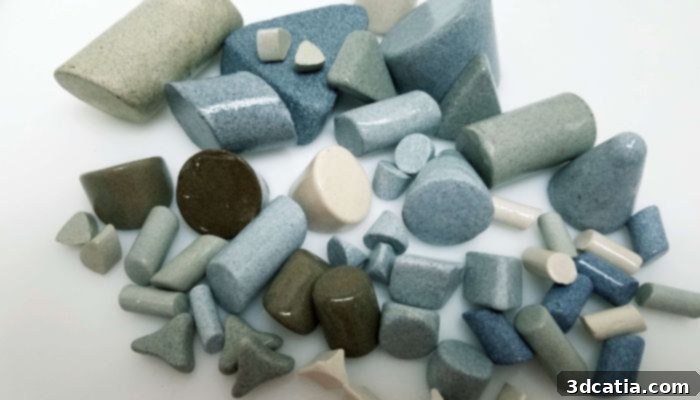
Abrasives made of ceramics can resist high levels of pressure. (Credits: Vibrafinish)
Beyond the abrasive media, the lubricating fluid, or “compound,” plays a critical role in the vibratory finishing process. The compound serves multiple essential functions: it absorbs and carries away the abraded material (swarf) from the parts and media, cleans and degreases the parts, and can even provide rust inhibition for metal components. Specific acidic compounds can be chosen for metal parts to facilitate pickling, which further enhances surface cleanliness and prepares the part for subsequent treatments.
After the vibratory treatment, effective drying processes are indispensable to prevent water spots, corrosion, or contamination. Two common drying methods are:
-
Vibrating Dryer: In this method, parts are placed in a vibratory dryer along with heated drying media, such as corncob meal, walnut shell meal, or specialized wood cubes. The vibration facilitates the efficient absorption of moisture by the media and the rapid drying of the parts, making it suitable for a wide range of component sizes.
-
Belt Dryer: A belt dryer is particularly advantageous for sensitive, bulky, or intricately designed parts with internal channels and holes where traditional drying media might get lodged. The 3D printed parts are conveyed through a hot air system on a continuous belt, ensuring thorough and gentle drying without mechanical impact. This method is often preferred for high-volume production lines due to its continuous operation.
Both Vapor Smoothing and Vibratory Finishing processes can vary significantly in duration. Depending on the quantity, size, complexity of the parts, and the desired finish, treatment times can range from a mere ten minutes to several hours. This flexibility allows for optimization based on specific production needs and quality requirements.
Material Compatibility Across Finishing Methods
Understanding which materials are compatible with each finishing technique is crucial for selecting the appropriate post-processing method.
Vapor Smoothing Compatibility
Vapor Smoothing is primarily compatible with a wide array of 3D printed polymers and elastomers. These materials typically possess characteristics that allow their surfaces to soften and reflow when exposed to specific solvent vapors. Common materials that respond exceptionally well to vapor smoothing include Acrylonitrile Styrene Acrylate (ASA), Acrylonitrile Butadiene Styrene (ABS), High-Impact Polystyrene (HIPS – though machine-dependent), Nylon 11 (PA 11), Nylon 12 (PA 12), Polypropylene (PP), and Polycarbonate/Acrylonitrile Butadiene Styrene (PC-ABS). The efficacy of vapor smoothing on these materials stems from their amorphous or semi-crystalline structures, which allow for a controlled dissolution and reflow of surface molecules.
Each solvent used in vapor smoothing, such as acetone, methyl ethyl ketone (MEK), tetrahydrofuran (THF), dichloromethane (DCM), and ethyl acetate, is effective with specific polymer types and has unique application considerations, including volatility and safety protocols. However, it’s vital to note that not all polymers are suitable. For instance, Thermoplastic Polyurethane (TPU) and certain specialized filaments are generally not recommended for vapor smoothing due to their chemical resistance or tendency to swell excessively, which can lead to undesirable surface imperfections or deformation. Careful material-solvent pairing is essential for successful vapor smoothing.
Vibratory Finishing Compatibility
Vibratory Finishing boasts significantly broader material compatibility, making it a highly versatile post-processing solution. It is effective not only for 3D printed parts made from thermosets, thermoplastics, and elastomers—such as Polyethylene (PE), Polypropylene (PP), or Polyethylene Terephthalate (PET)—but also for a vast range of metals. This includes popular additive manufacturing metals like aluminum, stainless steel, brass, and copper. The mechanical nature of vibratory finishing means it is less sensitive to the chemical composition of the material, relying instead on its mechanical properties and hardness relative to the abrasive media.
This broad compatibility positions vibratory finishing as a valuable post-processing method for various 3D printing technologies, including FDM/FFF and Powder Bed Fusion technologies (like SLS for polymers and DMLS/SLM for metals). Its ability to handle diverse materials, from rigid plastics to robust metals, underscores its utility in multi-material manufacturing environments where a consistent surface finish is required across different components.
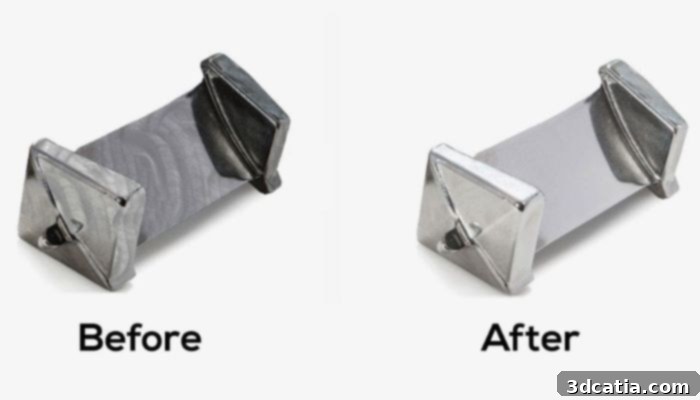
Before and after of a metal part treated with Vibratory Finishing (Credits: Acton Finishing)
Comparing Advantages and Limitations of the Techniques
Both Vapor Smoothing and Vibratory Finishing are indispensable for achieving high-quality surface finishes on 3D printed parts, yet they offer distinct benefits and present different challenges.
Advantages and Limitations of Vapor Smoothing
One of the most significant advantages of Vapor Smoothing is its ability to produce incredibly smooth, sealed, and often watertight surface finishes. The results can be comparable to those of traditional manufacturing methods like injection molded parts, which are known for their pristine surfaces. Beyond aesthetics, vapor smoothing substantially boosts critical mechanical properties such as elongation at break, tensile strength, and flexural performance. It achieves this by reducing surface porosity and stress concentrators, effectively making the part tougher and more durable. Furthermore, it maintains the intricate features, overall strength, and accuracy of the original printed part, provided the process is well-controlled. Parts processed with vapor smoothing typically exhibit a shinier, glossy appearance, which is often desirable for consumer goods or highly visible components.
However, Vapor Smoothing is not without its limitations. Models that are excessively complex, extremely small, unusually large, or very flat can pose challenges. Over-exposure or improper setup can lead to deformations, loss of fine detail, or the appearance of undesirable ‘rack marks’ where the part was suspended. Specific defects such as bridging (solvent accumulating in recessed areas), bubbling (trapped solvent vapor), bite marks (uneven solvent application), edge pooling, speckling, and even incomplete feature resolution can occur. Flexible materials, in particular, are more susceptible to these surface imperfections compared to rigid ones. Therefore, precise timing is crucial, especially for parts with moving components or integrated joints; excessive exposure can compromise joint integrity or cause parts to fuse together, rendering them non-functional.
Advantages and Limitations of Vibratory Finishing
Vibratory Finishing offers a broad spectrum of advantages, particularly its adaptability. It is suitable for a wider range of 3D printed parts and materials than vapor smoothing, primarily because its parameters (abrasive type, media shape, compound, and vibration intensity) can be finely tuned to match individual needs, material properties, and part structures. This flexibility allows for effective deburring, surface smoothing, and polishing across various materials, from robust plastics to hard metals. While it doesn’t typically achieve a watertight finish like vapor smoothing, it provides exceptionally smooth surfaces, effectively removes coating marks and minor imperfections, and produces scratch- and stain-resistant surfaces. Components processed through vibratory finishing yield smooth surfaces with a pleasant tactile experience, often presenting a more matte or satin finish compared to the high gloss of vapor-smoothed parts. When performed professionally by an expert, vibratory finishing is a highly reliable method for almost all 3D printed components.
Nonetheless, Vibratory Finishing does come with its own set of potential drawbacks. The most significant is the risk of geometric loss. During the abrasive action, sharp corners, fine edges, and intricate tips of a component can round off excessively, leading to a loss of their intended shape and critical dimensions. This geometric alteration is a primary concern for parts requiring high dimensional accuracy or sharp features, a limitation not typically encountered with vapor smoothing. Additionally, the process often necessitates subsequent drying procedures, which can prolong the overall post-processing time and add an extra step to the manufacturing workflow. Proper selection of media and process parameters is crucial to minimize these risks.
Diverse Fields of Application
Both Vapor Smoothing and Vibratory Finishing play crucial roles in enhancing 3D printed parts for various industrial applications, each leveraging their unique properties.
Vapor Smoothing Applications
Vapor Smoothing is highly favored by industries where surface quality, hygiene, and mechanical integrity are paramount. The medical sector, for instance, benefits immensely from vapor smoothed parts, which are often watertight, bacteria-resistant, and can be sterilized, making them suitable for prosthetics, surgical guides, and custom medical devices. The automotive industry utilizes vapor smoothing for interior components such as dashboards, door handles, and center console elements, where a smooth, aesthetically pleasing finish enhances driver and passenger experience. In the aerospace sector, it’s applied to intricate airplane parts like wings, air ducts, and engine components, where reduced surface roughness can improve aerodynamic efficiency and prevent particle accumulation, contributing to flight safety and performance. This technique is valuable throughout the entire product development lifecycle, from creating high-fidelity concept models and functional prototypes to producing final, end-use products.
Vibratory Finishing Applications
Vibratory Finishing, due to its versatility and ability to process a wide array of materials, finds extensive application across industries such as medical, automotive, and sports. In the medical field, especially for metal instruments or implants, smooth surfaces are critical for sterilization and reducing friction, ensuring safe and effective functioning. The automotive industry employs vibratory finishing for car parts where deburring, surface strengthening, and aesthetic finishing are required, such as engine components, brackets, or even decorative trim. The sports industry benefits significantly, particularly for items like skate blades, bicycle components, and fitness equipment, where smooth, durable, and scratch-resistant surfaces are essential for performance and user safety.
Beyond these industrial applications, vibratory finishing is also widely used for consumer goods. Examples include the finishing of jewelry, cutlery, and various household items where a polished appearance and smooth tactile feel are desired. Its ability to treat both plastic and metal components makes it exceptionally adaptable for diverse product lines. Like vapor smoothing, vibratory finishing is applicable at all stages of product development, from early prototypes needing basic surface refinement to high-volume production of finished goods.
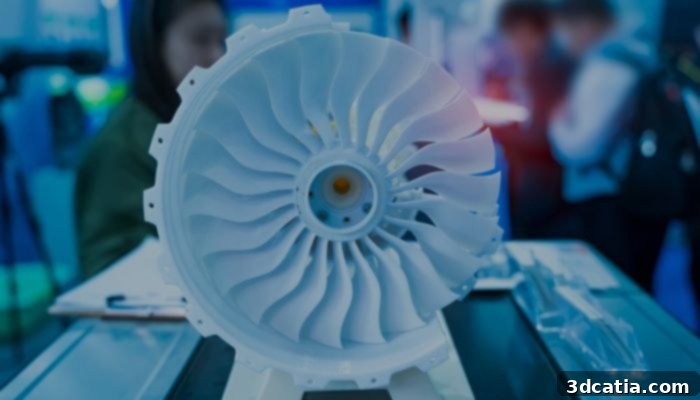
Vapor smoothing is commonly applied to airplane parts within the aerospace industry (Photo credits: Fast Radius)
Key Providers and Cost Considerations
The availability of service providers and the associated costs are crucial factors when deciding between vapor smoothing and vibratory finishing for your 3D printed parts.
Vibratory Finishing Providers and Pricing
Numerous reputable service providers offer Vibratory Finishing services to both private clients and industrial companies. Notable names include SPALECK GmbH, VibraFinish, and Rohde AG, among others. These companies often provide a range of vibratory finishing solutions tailored to specific part geometries, materials, and desired finishes.
For businesses looking to integrate vibratory finishing in-house, large industrial machines from leading manufacturers such as Walther Trowal, AVAtec, or Garant typically range in price from approximately $18,000 to $21,000 (or 17,000 to 20,000 €). The consumables required for the process also contribute to the ongoing costs. Abrasive chips, essential for the mechanical action, generally cost between $21 and $44 (20 – 40 €) for a 2kg quantity. Similarly, the lubricating compound, crucial for cleaning and facilitating the process, amounts to about $21 to $44 (20 – 40 €) for 5 liters. The overall price for vibratory finishing services or in-house operation can vary significantly based on factors such as the quantity and size of the parts to be processed, the complexity of the desired finish, and the chosen abrasive media and compounds.
Vapor Smoothing Providers and Pricing
When it comes to Vapor Smoothing services, several prominent providers stand out in the additive manufacturing landscape. Xometry, AMT, DyeMansion, Protolabs, and Hubs are key players, often offering advanced vapor smoothing solutions either through their specialized post-processing machines or based on specific material compatibility. Companies like 3Faktur in Germany are notable for providing both vapor smoothing and vibratory finishing services, offering a comprehensive post-processing portfolio.
Leading vapor smoothing machine lines include the AMT PostPro3D series and DyeMansion’s Powerfuse S series, which are utilized by service providers like Xometry and DyeMansion respectively. Protolabs and Hubs, for example, frequently apply vapor smoothing to parts made from materials such as SLS and MJF HPA 12, PA 12, and MJF Ultrasint™ TPU-01, showcasing the specialized integration of these machines with specific printing technologies.
The service fees for smoothing a single part can range anywhere from $5 to $15 (approximately 4€ to 14€), depending significantly on the complexity of the part and the desired finish quality. However, many manufacturers or service bureaus may only offer this service as part of a bundle, typically for 10 parts or more, making it more cost-effective for larger batches. For those considering an in-house vapor smoothing solution, the purchase cost of a machine unit can vary widely. Basic, smaller-scale solutions might start at around $1,000 (900€), while advanced industrial-grade systems can easily exceed $100,000 (92,000€). Pricing is also influenced by regional markets, the specific manufacturer, the machine’s capacity, and the level of automation and precision offered.
Choosing the right surface finishing process for your 3D printed parts involves weighing the benefits, limitations, material compatibility, and cost implications of each method. Whether you prioritize a watertight, glossy finish or a durable, tactile surface, both vapor smoothing and vibratory finishing offer distinct pathways to achieving professional-grade results. We invite you to share your experiences and preferences regarding these techniques in the comments below or by engaging with us on our LinkedIn, Facebook, and Twitter pages. Don’t forget to sign up for our free weekly Newsletter here to receive the latest 3D printing news directly in your inbox! You can also find all our insightful videos on our YouTube channel.