
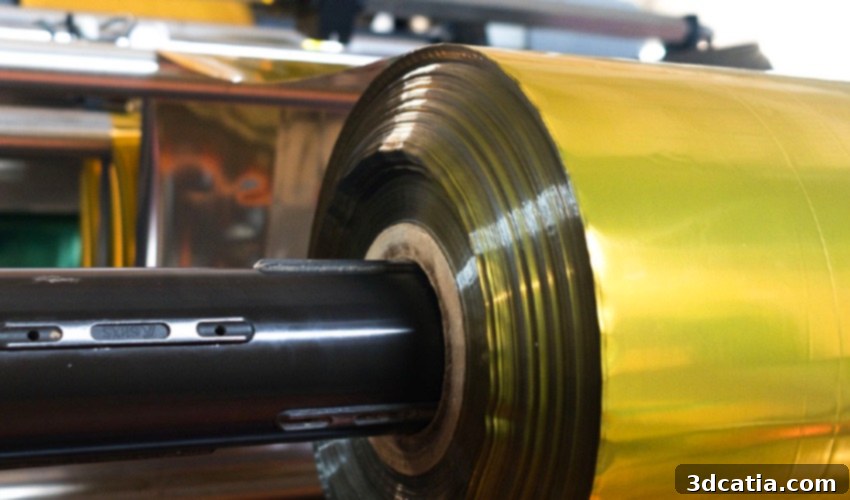
US Army’s Strategic $11 Million Investment in Advanced Polymer 3D Printing for Next-Gen Military Materials
The US Army is continuously pushing the boundaries of innovation, actively exploring the expansive potential offered by additive manufacturing technologies. Recognizing the transformative impact of these advanced processes, the Army has recently committed a substantial sum of $11 million towards the research and development of groundbreaking high-performance polymer materials. This significant investment underscores the military’s strategic imperative to enhance material capabilities for future defense applications. The crucial five-year contract for this cutting-edge research has been awarded to Case Western Reserve University and PolymerPlus, alongside two other sub-contractors, leveraging a powerful blend of academic excellence and specialized industrial expertise. Initially, the US Army Research Laboratory (ARL) has granted $5.4 million to the involved teams, with the potential for the total allocation to ascend to the full $11 million as the project progresses. The Army’s keen interest in developing these advanced polymers stems from their immense potential to produce optimized materials crucial for next-generation weapons systems, superior protective helmets, and a wide array of other essential military equipment, promising enhanced durability, reduced weight, and improved operational efficiency.
This strategic partnership brings together some of the leading minds and institutions in polymer science and technology. Case Western Reserve University, a venerable institution, holds a distinguished position in the academic landscape. It proudly hosts the nation’s first stand-alone polymer department, a testament to its pioneering spirit and commitment to materials science education. Furthermore, the university was the first to offer a Bachelor of Science program specifically in polymer science, demonstrating its long-standing dedication to nurturing expertise in this critical field. Complementing this academic powerhouse is PolymerPlus, a specialized polymeric technology company renowned for its innovative contributions. PolymerPlus excels in providing bespoke services and the fabrication of custom nano-layered polymer products, catering to a diverse clientele that includes both government agencies and corporate entities. The collaborative efforts of these two esteemed organizations will be meticulously coordinated with the Army Research Laboratory at Aberdeen Proving Ground, Maryland. Together, their mission is to design and develop novel materials and pioneering advanced manufacturing approaches specifically tailored for creating high-performance composites, essential for advancing military capabilities.
The drive to innovate in materials science is more critical than ever for defense applications. Traditional materials often reach their limits in terms of strength-to-weight ratio, durability under extreme conditions, or cost-effectiveness. The US Army’s investment in this research aims to overcome these limitations by fostering the creation of materials that are not only superior in performance but also potentially more efficient to produce. This commitment highlights the Army’s forward-thinking approach to leveraging cutting-edge science and engineering to maintain a technological edge. The collaboration ensures that the research is directly aligned with military needs, addressing specific challenges faced by soldiers and equipment in the field.
For this Army-funded project, the innovative team at Case Western Reserve University will embark on a series of experiments, exploring new combinations and configurations of ultra-thin plastics. This foundational research phase is crucial for identifying promising material formulations and understanding their intrinsic properties. Once initial breakthroughs are made, these novel plastic combinations will be transferred to PolymerPlus for larger-scale processing and further development. The core of this novel 3D printing technique involves the sophisticated usage of multilayer co-extrusion. This advanced polymer processing technology is capable of producing exceptionally high-strength fiber films characterized by thousands of micro-scale layers. The precision and control offered by multilayer co-extrusion allow for an unprecedented level of material engineering, enabling the creation of hierarchical structures that impart unique properties. This sophisticated process directly leads to the formation of new materials that are not only significantly stronger and more durable than their predecessors but also remarkably lightweight. These attributes are paramount for military applications, where every gram counts and resilience in harsh environments is non-negotiable.
One of the most compelling aspects of this research is its potential to revolutionize material costs while significantly improving performance. Mike Ponting, President of PolymerPlus, articulated this vision clearly, explaining, “What we’re looking to do is use our process to combine low- to mid-cost plastics—things like milk jugs and trash bags at a cost of about $3 a pound—to create a strong, flexible material equal to things like Super Kevlar, which are about $100 a pound.” This ambitious goal highlights a paradigm shift: moving away from expensive, specialized materials to developing high-performance alternatives from readily available, economical feedstocks. The implications for defense spending are immense, as reducing material costs without compromising, and potentially even enhancing, performance could lead to substantial long-term savings for the military. Ponting further added, “The Army has seen some of the initial samples and technology, but now they want to see how far we can take this.” This statement reflects the Army’s confidence in the initial progress and their eagerness to explore the full capabilities and scalability of this innovative polymer technology. The ability to create materials with strength comparable to advanced composites like Super Kevlar, but at a fraction of the cost, represents a groundbreaking advancement in materials science and a strategic advantage for military procurement.
The transformative potential of this collaboration was echoed by Joseph Lenhart, chief of the Polymers Branch at the Army Lab. He commented, “Case Western Reserve University and PolymerPlus can continuously manufacture complex combinations of materials into unique structures that are difficult to generate even with sophisticated laboratory techniques.” This observation points to the unique manufacturing capabilities and scientific ingenuity brought forth by the partnership. The ability to create intricate material combinations with such precision and on a continuous basis is critical for producing advanced components reliably and efficiently. Lenhart further emphasized the broader impact of this research, stating, “We see tremendous opportunities for improving the performance of protective systems and weapons. Longer term, we are excited about the applications we have not even imagined.” This forward-looking perspective suggests that the project’s benefits extend far beyond immediate applications. It hints at the development of unforeseen military technologies, ranging from ultra-lightweight and durable aerospace components to highly adaptive and resilient soldier systems. Such advancements could fundamentally alter battlefield dynamics, enhancing soldier safety, improving equipment longevity, and enabling entirely new defense capabilities.
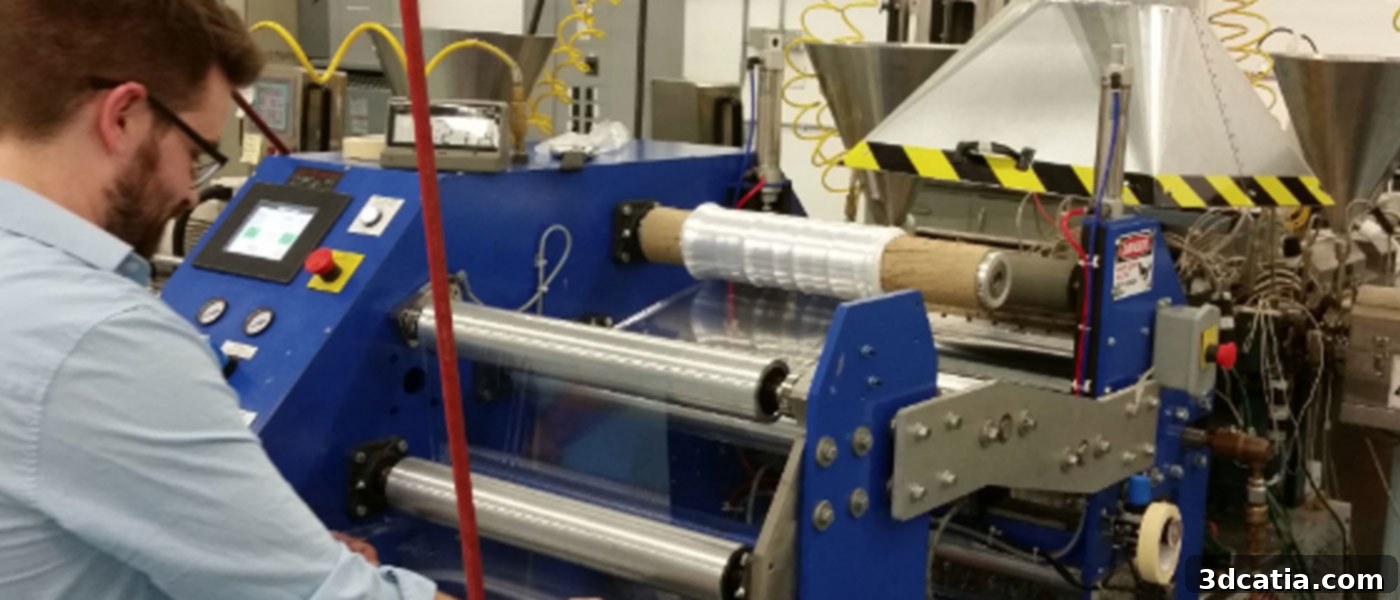
Nanolayer film coextrusion technology for polymers. (Image credits: Case Western Reserve University)
The potential applications of these advanced high-performance polymers are vast and diverse, spanning numerous critical areas within military operations. For protective systems, the development of lighter yet stronger materials could significantly reduce the burden on soldiers, enhancing their mobility and endurance without compromising ballistic protection. Imagine helmets and body armor that offer superior defense against threats while being substantially lighter, thereby mitigating fatigue during extended operations. In the realm of weapons systems, these polymers could lead to components that are more durable, corrosion-resistant, and lighter, improving weapon handling, reliability, and lifespan in challenging environments. Beyond these immediate applications, the innovation extends to structural components for unmanned aerial vehicles (UAVs) and other robotic systems, where weight reduction directly translates to increased payload capacity and extended operational range. Furthermore, customized polymer parts could be rapidly manufactured for field repairs, addressing supply chain vulnerabilities and ensuring operational readiness. This kind of flexibility and material superiority is a game-changer for modern defense strategy, enabling faster prototyping, more agile development cycles, and bespoke solutions for specific mission requirements. The ability to create high-performance materials from common, low-cost plastics also contributes to supply chain resilience, reducing reliance on expensive and potentially scarce raw materials. This strategic advantage is paramount for national security in an increasingly complex global landscape.
This substantial investment by the US Army into advanced polymer development signifies a clear recognition of additive manufacturing’s critical role in future defense strategies. By fostering robust academic and industrial partnerships, the Army is not only seeking to innovate in materials science but also to cultivate an ecosystem of continuous technological advancement. The collaboration between Case Western Reserve University and PolymerPlus, supported by the Army Research Laboratory, is poised to deliver materials that are more than just stronger or lighter; they are set to be transformative. From enhancing the safety and effectiveness of soldiers to revolutionizing the design and functionality of military hardware, the outcomes of this research will undoubtedly have a profound and lasting impact. The focus on multilayer co-extrusion and nano-layered polymers is a testament to the cutting-edge nature of this initiative, pushing the boundaries of what is currently possible in material engineering. As these “unimagined applications” come to fruition, the US Army will be better equipped to face future challenges, ensuring its personnel are protected and its technological capabilities remain unparalleled. This project serves as a compelling example of how strategic investment in fundamental and applied research can yield monumental returns for national security and technological leadership.
What are your thoughts on the US Army’s proactive sponsorship of new polymer manufacturing technologies through additive manufacturing? We invite you to share your perspectives and engage in the conversation by leaving a comment below or by connecting with us on our Facebook and Twitter pages! Stay informed about the latest breakthroughs in 3D printing and advanced materials by signing up for our free weekly Newsletter, delivered straight to your inbox.