
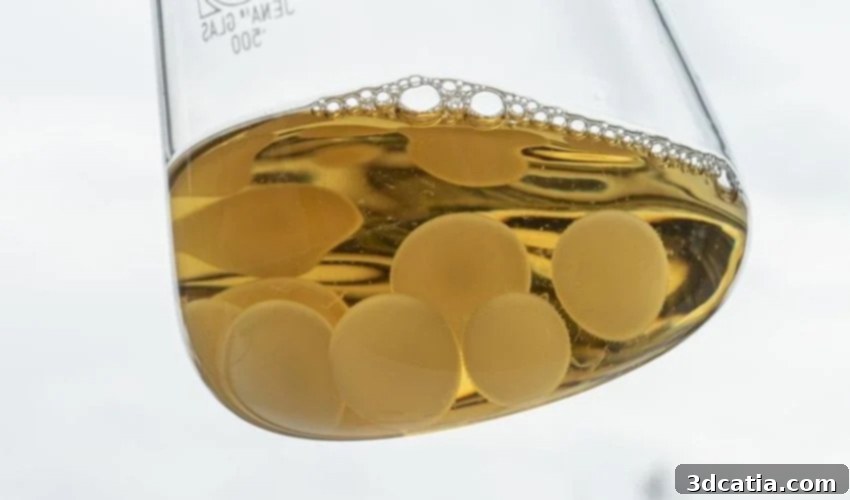
Revolutionizing Sustainable Energy: Empa’s 3D Printed Fungal Batteries Harness Nature’s Power
For centuries, fungi have captivated humanity, not only as a source of medicine, gourmet food, or even as environmental pathogens, but increasingly for their profound potential in various technological applications. From the foundational role of yeast in fermentation to the burgeoning field of mycelium-based materials for 3D printing—used in everything from acoustic panels to architectural tiles—these eukaryotic organisms are proving to be exceptionally versatile. Now, researchers at Empa, the Swiss Federal Laboratories for Materials Science and Technology, have unveiled another groundbreaking capability: fungi as generators of electricity. Their innovative work in developing 3D printed fungal batteries marks a significant stride towards creating a truly sustainable and environmentally friendly power supply, offering a glimpse into a future where energy generation aligns seamlessly with ecological principles.
The Dawn of Fungal Power: A Sustainable Breakthrough
The journey to harnessing fungal electricity began as a three-year ambitious research project, generously supported by the Gebert Rüf Stiftung under its Microbials funding program. The Empa team embarked on a mission to create a biodegradable power source, culminating in a novel fungal battery constructed primarily from cellulose and wood materials. What sets this device apart is its fundamental operational principle: unlike conventional batteries that require charging, this fungal innovation is ‘fed.’ It leverages the natural metabolic processes of microorganisms, converting nutrients into usable energy. While the power output of these initial 3D printed fungal batteries is modest, it is remarkably sufficient to power a temperature sensor for several days. This capability opens up exciting possibilities, particularly for sectors like agriculture and environmental research, where sensors in remote or challenging locations often struggle with power accessibility and the ecological impact of traditional batteries.
Imagine agricultural sensors meticulously monitoring soil conditions in vast, inaccessible fields, or environmental probes diligently collecting data in pristine natural reserves, all powered by a device that simply biodegrades after its useful life. The potential for these fungal biobatteries to provide localized, off-grid power to critical sensing equipment in hard-to-reach areas underscores their transformative promise. They offer a self-sustaining solution that reduces the logistical burden of battery replacement and minimizes ecological footprints, paving the way for more comprehensive and sustainable data collection across various domains.
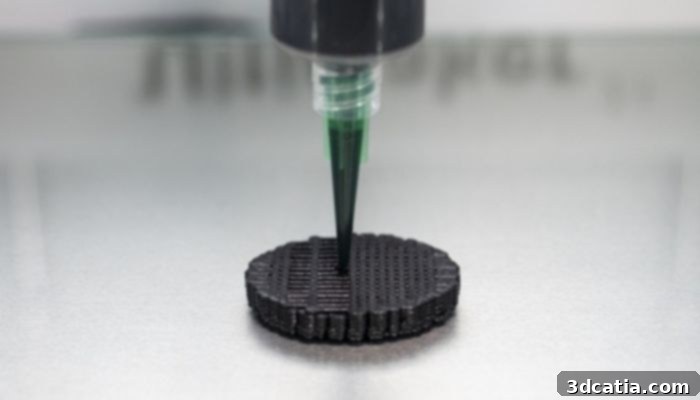
The grid-printed electrode contains the fungi that is used in the anode chamber of the battery (photo credits: Empa)
Understanding the Fungal Biobattery: More Than Just a Battery
To truly appreciate this innovation, it’s essential to understand its underlying mechanism. While commonly referred to as a “fungal battery,” the device is technically a microbial fuel cell (MFC). Microbial fuel cells represent a fascinating class of bio-electrochemical systems that harness the metabolic activities of microorganisms to generate electricity. Just like all living organisms convert nutrients into chemical energy for their survival, MFCs are engineered to capture a portion of this biochemically produced energy as electrical current. In essence, the fungi act as biological catalysts, facilitating redox reactions (reduction-oxidation reactions) that produce electrons. These electrons are then channeled through an external circuit, creating an electric current.
The beauty of an MFC lies in its ability to directly convert organic matter (nutrients) into electricity, offering a clean alternative to traditional energy generation methods. Unlike conventional batteries that rely on chemical reactions of heavy metals or synthetic compounds, MFCs utilize renewable biomass, making them inherently more sustainable. This innovative approach by Empa takes the concept a step further by integrating these microbial powerhouses into a 3D printable, fully biodegradable structure, pushing the boundaries of what’s possible in green energy solutions.
The Synergistic Power of Fungi: Anode and Cathode Innovation
The efficacy of Empa’s fungal biobattery stems from a clever design that employs two distinct types of fungi, each playing a crucial role in the electricity generation process. On the anode side of the fuel cell, a specific yeast fungus is utilized. The yeast’s metabolic processes are harnessed to release electrons as it breaks down nutrients. These electrons are then transported across the system. Crucially, on the cathode side, a white rot fungus is incorporated. White rot fungi are particularly well-known for their potent enzymatic systems, which enable them to degrade complex wood components like lignin. In this context, the white rot fungus produces a specific enzyme that efficiently receives the electrons transported from the anode and conducts them out of the cell, completing the circuit and generating an electrical current. This synergistic relationship between the two fungal species is key to the fuel cell’s operation.
A critical aspect of Empa’s design is that these fungi are not merely implanted into a pre-made battery structure; rather, they are an integral part of the cell from its inception. This means the living organisms are embedded within the very fabric of the biobattery, optimizing their interaction with the material and the nutrient supply. This integrated approach ensures a more stable and efficient electron transfer, maximizing the cell’s power output. This innovative combination represents a significant achievement in microbial fuel cell research.
“For the first time, we have combined two types of fungi to create a functioning fuel cell,” explains Empa researcher Carolina Reyes, highlighting the novelty and pioneering nature of their interdisciplinary work.
3D Printing: Crafting the Future of Biobatteries
The implementation of 3D printing, or additive manufacturing, proved indispensable in the creation of these fungal biobatteries. This advanced manufacturing technique allowed the Empa researchers to precisely structure the electrodes in a way that maximizes the microorganisms’ access to nutrients. Traditional manufacturing methods would struggle to achieve the intricate, porous geometries necessary to support optimal fungal growth and electron transfer. With 3D printing, engineers can design and fabricate bespoke internal architectures that significantly enhance the efficiency and performance of microbial fuel cells.
However, incorporating living organisms into a 3D printing process presented a unique set of challenges. The fungi had to be mixed with a specially formulated printing ink, a task far more complex than it sounds. The ink needed to possess several critical properties simultaneously: it had to be a suitable environment for the fungi to thrive, easily extrudable through the 3D printer nozzle without damaging the delicate cells, electrically conductive to facilitate electron flow, and, crucially, biodegradable to align with the project’s sustainability goals. Balancing these often-conflicting requirements demanded extensive material science expertise and innovative problem-solving.
“It is challenging enough to find a material in which the fungi grow well. But the ink also has to be easy to extrude without killing the cells – and of course we want it to be electrically conductive and biodegradable,” says Gustav Nyström, Head of the Cellulose and Wood Materials lab, underscoring the multifaceted difficulties faced during the development process.
The interdisciplinary nature of this research was another significant hurdle and a testament to the team’s adaptability. Carolina Reyes, the lead researcher, had to bridge the gaps between microbiology, materials science, and electrical engineering, learning and applying new techniques to develop the specialized 3D printing inks. This convergence of diverse scientific fields is often where the most transformative innovations emerge, as researchers are compelled to think creatively and synthesize knowledge from disparate domains.
The Biodegradable Advantage: Cellulose Ink and On-Demand Activation
Leveraging their existing laboratory expertise in 3D printing bio-based materials, the Empa team successfully developed an appropriate cellulose-based ink. This choice was strategic for multiple reasons. Cellulose, being a natural polymer, not only provides the structural integrity for the printed electrodes but also serves as a secondary nutrient source for the fungi. More importantly, its natural biodegradability ensures that once the biobattery reaches the end of its operational life, it can safely and completely decompose, leaving no harmful residues behind. This aligns perfectly with the principles of a circular economy, minimizing waste and environmental pollution—a stark contrast to the disposal challenges posed by conventional batteries.
While cellulose offers some sustenance, the preferred and most efficient nutrient source for activating the fungal metabolism is sugar, which needs to be added to the cells. This brings us to another ingenious feature of these fungal biobatteries: their ability to be stored in a dried state. This ‘shelf-stable’ characteristic is a major advantage for practical deployment, particularly in remote regions or for emergency applications. Instead of worrying about battery degradation over time, users can activate the fungal batteries on-demand by simply adding water and nutrients (sugar) when power is required. This drastically simplifies logistics and expands the potential applications.
“You can store the fungal batteries in a dried state and activate them on location by simply adding water and nutrients,” emphasizes Reyes, highlighting the practicality and user-friendliness of their invention.
Beyond the Lab: Future Prospects and Environmental Impact
The most compelling advantages of Empa’s 3D printed fungal batteries are their non-toxic nature and complete biodegradability. In an era where electronic waste is a growing global concern, a power source that can safely return to the earth without contaminating it is profoundly impactful. This characteristic makes them exceptionally suitable for a wide array of future applications, particularly in sensitive environments where traditional batteries pose significant risks. Imagine wearable electronics that biodegrade with your clothes, or medical implants that safely dissolve in the body, all powered by biological means. The possibilities are vast and exciting.
Looking ahead, the Empa researchers are committed to continuous improvement. Their immediate goals include enhancing the performance and longevity of these fungal biobatteries. This means increasing their power density (the amount of power per unit volume or mass) and extending their operational lifespan. To achieve this, they plan to explore other types of fungi, investigating different metabolic pathways and enzymatic capabilities that might offer superior electron generation or transfer efficiency. Further research will also focus on optimizing the electrode design, nutrient delivery systems, and overall cell architecture. This iterative process of refinement is crucial for transitioning from a promising laboratory prototype to a commercially viable and scalable product.
Empa’s pioneering work with 3D printed fungal batteries not only pushes the boundaries of bio-inspired technology but also offers a tangible pathway towards a more sustainable and circular energy economy. As the demand for portable and environmentally friendly power solutions continues to grow, innovations like these will be vital in shaping a future where technology coexists harmoniously with nature. You can find out more about Empa and the 3D-printed mushroom battery HERE.
Join the Conversation
What are your thoughts on this incredible 3D-printed fungal battery and its potential to revolutionize sustainable power? We’d love to hear your insights! Share your comments below or connect with us on our LinkedIn, Facebook, and Twitter pages. Don’t forget to sign up for our free weekly Newsletter here to get the latest 3D printing news delivered straight to your inbox! You can also find all our compelling videos and further discussions on our YouTube channel.
*Cover Photo Credits: Empa