
Formnext 2024 Review: Unpacking Key Trends in Additive Manufacturing – From Metal Dominance to Global Competition
As the doors closed on yet another successful Formnext last Friday at Messe Frankfurt, the global additive manufacturing (AM) community reflected on four intense days of discovery, networking, and insight. Spanning four bustling halls, the event served as the definitive barometer for the industry, showcasing the latest innovations, emerging trends, and transformative applications. The 3Dnatives team was on the ground, meticulously gathering intelligence and sensing the pulse of a dynamic market. This year, one dominant theme resonated across nearly every exhibitor’s stand: the undeniable surge of metal additive manufacturing. From sophisticated 3D-printed metal parts pushing the boundaries of design and performance, to cutting-edge metal AM machines and integrated post-processing solutions, it was clear that metal technologies are rapidly becoming a cornerstone for numerous manufacturers across diverse sectors. Beyond metal, we also observed a significant and welcome emphasis on qualification solutions for 3D-printed components, a noticeable boom in the Directed Energy Deposition (DED) process, and a widespread proliferation of pellet-based extrusion systems, indicating a strong move towards industrial-scale production and broader material compatibility.
While Formnext 2024 undoubtedly delivered a plethora of interesting launches and technological showcases, a subtle undercurrent of reflection permeated the atmosphere. Many attendees pondered whether the industry had reached a certain “glass ceiling,” possibly signaling a period of market stability, or if this sensation hinted at a broader market stagnation. This sentiment, often discussed in the bustling aisles, was further complicated by the visibly increasing presence of Asian exhibitors, a trend that sparked conversations about future competitive landscapes. It’s an opportune moment to take a comprehensive look back at Formnext 2024 and dissect its implications for the future of additive manufacturing.
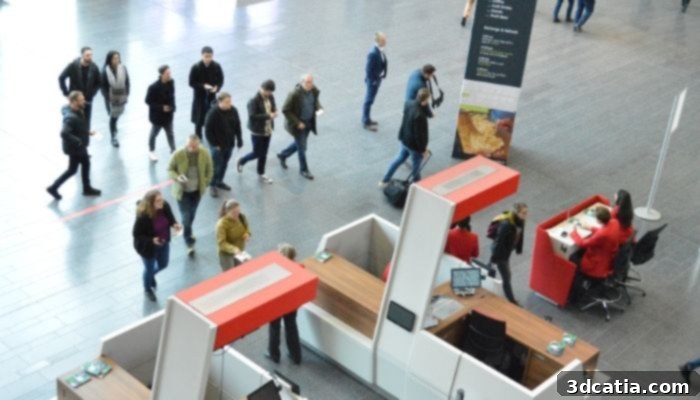
Visitors from all over the world were at the show
A Global Gathering: Exhibitor Presence and Evolving Booth Dynamics
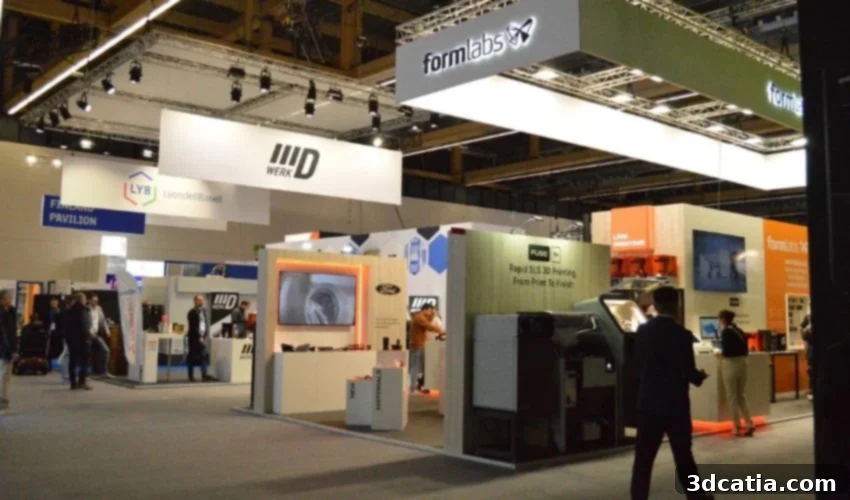
The organizers of Formnext had set expectations high, announcing over 850 exhibitors, and the reality did not disappoint. According to a press release from Messago, a total of 864 solution providers from across the globe converged in Frankfurt, eager to showcase their latest offerings. This marked a notable increase in the sheer number of exhibitors compared to 2023, signaling continued growth in participation. However, a significant observation this year was a subtle shift in the exhibition landscape. We couldn’t help but notice that, for many companies, the physical footprint of their booths appeared less extravagant than in previous years. The iconic two-story stands, once a common sight for major players, were fewer and further between. Instead, there was a greater prevalence of shared exhibition spaces and national pavilions, indicating a possible trend towards optimizing exhibition costs and fostering collaborative environments. This reduction in individual booth size suggests that many companies are becoming more strategic with their marketing budgets, perhaps prioritizing focused discussions and targeted presentations over grand displays, reflecting a maturing industrial approach rather than pure spectacle.
Yet, this shift wasn’t universal. While many opted for more compact setups, a select group of exhibitors embraced the maxim that “bigger is better,” showcasing expansive booths designed to capture maximum attention. Companies such as Bambu Lab, BLT, Caracol, and Supernova stood out with their impressive displays, indicating strong investment in brand visibility and comprehensive product demonstrations. This dichotomy suggests a maturing market where players are strategically positioning themselves; some focusing on efficient, targeted engagement, while others aim for a broader, impactful presence. Overall, there seemed to be a reduced emphasis on elaborate, theatrical demonstrations. The market is increasingly industrializing, and companies appear to have refined their positioning, focusing on concrete solutions and business-oriented conversations rather than just concept showcases. On the visitor front, Formnext 2024 continued its upward trajectory, attracting 34,404 attendees. This represents a healthy 4.7% increase over last year, underscoring the enduring appeal and critical importance of Formnext as the premier global platform for additive manufacturing professionals to converge, exchange knowledge, and forge new partnerships, further cementing its role as a key industry event.
Asia’s Ascendance: Reshaping the Global Additive Manufacturing Landscape
One of the most striking and undeniable trends at Formnext 2024 was the remarkable increase in the number and prominence of Asian exhibitors. Their presence was not merely a subtle increase but a palpable shift, with many Asian companies opting for substantial booth spaces that allowed them to proudly display an extensive range of machines, materials, and innovative applications. To put this into perspective, approximately 150 Asian exhibitors were present, with a significant contingent of 101 companies hailing from China alone. In stark contrast, the United States had just 53 exhibitors. This growing disparity immediately raises critical questions about the future competitive dynamics in established markets like Europe and North America. How will incumbent additive manufacturing giants such as EOS, 3D Systems, and Stratasys respond to the formidable challenge posed by rapidly advancing players like Farsoon and BLT, who are increasingly offering competitive solutions across both metal and polymer platforms? Furthermore, the impressive rise of consumer-oriented brands such as Anycubic, Creality, Bambu Lab, and Elegoo begs the question of whether they can genuinely worry more established prosumer and professional brands like Raise3D, UltiMaker, and Prusa, potentially blurring the lines between different market segments with their cost-effective and increasingly capable offerings.
Conversations with various visitors throughout the show consistently echoed a clear sentiment regarding this shift. An automotive manufacturer candidly shared, “We now have access to Asian machines which are less expensive and offer the same level of quality and repeatability, so inevitably we’re asking ourselves whether or not to invest.” This highlights a direct challenge to traditional market leaders: the value proposition from Asian manufacturers is becoming increasingly compelling, driven by a combination of competitive pricing and improving technological capabilities. A German manufacturer of industrial machinery further elaborated on this dynamic, stating, “We can see that the additive manufacturing market, while not declining, shows signs of maturation, but at the same time Asia is growing and starting to significantly impact our market share. The next few years will be decisive in confirming or shifting this trend. We need to remain extremely attentive and adapt quickly.” This emphasizes the strategic importance of the coming years for the 3D printing sector. Formnext 2025, scheduled for November 18 to 21, will undoubtedly serve as a crucial benchmark, allowing us to assess whether these predictions regarding market shifts and competitive landscapes are indeed confirmed, setting the stage for a truly transformative period in additive manufacturing driven by global competitive forces.
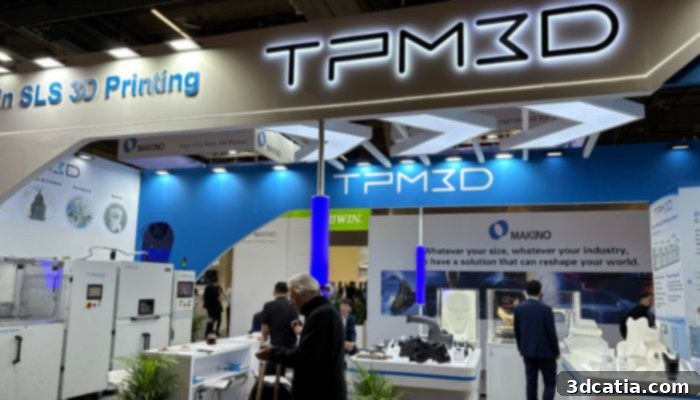
The stand of TPM3D, a Chinese manufacturer of SLS solutions
Ensuring Excellence: The Critical Role of Quality Control in 3D Printed Parts
Another significant and increasingly vital trend observed prominently at Formnext this year was the sheer volume and sophistication of solutions dedicated to controlling the quality of 3D-printed parts and rigorously testing material properties. This emphasis underscores a pivotal shift within the additive manufacturing industry: the focus is now firmly on robust adoption and effective scaling up of AM processes for genuine industrial applications. As manufacturers move beyond prototyping to produce end-use parts, whether for low-volume, highly customized applications or for series production, the imperative for uncompromising quality becomes paramount. Depending on the industry—be it aerospace, medical, automotive, or consumer goods—these parts must meet more or less stringent requirements, often dictated by rigorous regulatory standards and performance demands. Consequently, it is absolutely vital to verify that these components are fit for their intended purpose, consistently meet design specifications, and fulfill user expectations. This complex validation process inherently relies on comprehensive and reliable quality control methodologies throughout the entire value chain.
As we navigated the extensive aisles of the show, it became evident that a substantial number of exhibitors were dedicating significant resources and innovation to this crucial stage of the AM value chain. Companies like GrindoSonic, for instance, showcased their advanced machine capable of precisely measuring the resonance of vibrations within 3D-printed parts. This non-destructive data can then be meticulously converted to analyze and predict critical mechanical properties, such as stiffness and elasticity, ensuring structural integrity and predictable performance. Similarly, Imprintec presented its innovative 3D optical measurement solution, designed to accurately characterize a part’s surface and mechanical properties like tensile strength, ductility, or its complete elasticity curve, providing invaluable insights into material behavior under stress. These types of solutions are not just about defect detection; they are about process understanding and optimization, leading to higher confidence in additive manufacturing for critical, high-stakes applications.
The importance of this trend was eloquently articulated by Richard Freemen, Principal Staff Engineer for Metallic Materials Manufacture & Heat Treatment at the Performance Review Institute (PRI). He explained, “It’s great to be at Formnext because we have seen a lot of interest from AM suppliers in learning more about certification and quality control in the aerospace sector. Additive is where we are really seeing a growing demand for rigorous standards and qualification processes.” This statement highlights the aerospace industry’s leading role in driving demand for stringent quality assurance, which in turn influences best practices and pushes the boundaries of quality control across other sectors adopting additive manufacturing for critical components.
Beyond specialized hardware for material testing and part quality control, Formnext 2024 also featured a strong presence of sophisticated software solutions. The underlying objective remains consistent: to provide users with reliable, intuitive tools that ensure consistent, high-quality, and repeatable 3D printing outcomes. Such tools are indispensable for enhancing productivity, reducing waste, and ultimately making additive manufacturing a more predictable and economically viable production method. Siemens, a perennial innovator in industrial software, presented several compelling tools on its stand, demonstrating how to seamlessly integrate additive manufacturing into existing workflows and simplify its operational use. The company emphasized a “Click and Print” logic, exemplified by solutions like its Partbox, aiming to democratize access to advanced manufacturing capabilities and streamline the entire production process from design to final validated part, thereby accelerating industrial adoption.
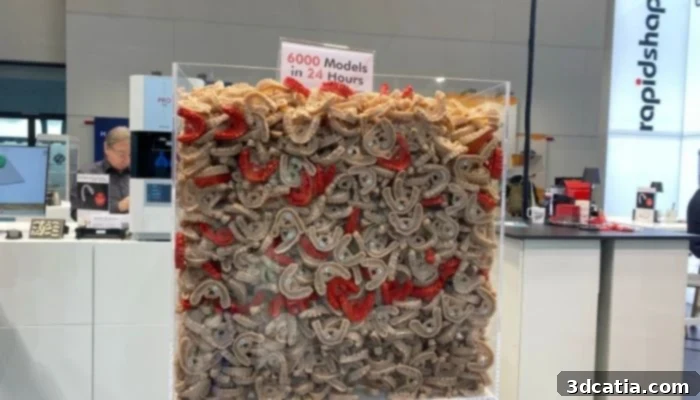
The aim is to print parts in a repeatable way
Machinery, Materials, and Process Innovations at Formnext 2024
Shifting our focus to the core machinery and materials unveiled at this year’s Formnext, there was an unequivocal confirmation that metal additive manufacturing is not just a niche technology but a pervasive and indispensable tool utilized across numerous industrial sectors, with aerospace being a particularly prominent adopter due to its demand for lightweight, high-performance components with complex geometries. Many exhibitors proudly showcased dedicated metal AM solutions, backed by compelling real-world applications that underscored the technology’s maturity and versatility. We have already dedicated separate detailed articles and a video focusing specifically on these remarkable metal applications and metal solutions, highlighting the breadth of innovation in this segment. This year also saw the emergence of several exciting new players, such as France’s ADDIMETAL, which made its debut by exhibiting its K2-2 binder jetting solution. This particular machine, open to public viewing, boasts a generous eight-liter print volume and is strategically positioned to bridge the gap between smaller research-focused machines and high-volume production systems, making metal binder jetting more accessible. We were particularly impressed by the K2-2’s modular design, which features exposed mechanics and a print head engineered to cover a significant portion of the build platen in a single, efficient pass, signaling smart engineering for both performance and serviceability.
The Directed Energy Deposition (DED) market continued its impressive growth trajectory, with a notable increase in the number of sophisticated robotic arms capable of precisely depositing successive layers of material. DED, a process often used for repairing high-value metal components, creating large structures, or adding features to existing parts with enhanced material properties, was championed by companies such as Caracol, VLM Robotics, AMFree, and MX3D, with some showcasing their DED systems for the very first time. These systems highlight the ongoing expansion of additive manufacturing into areas requiring large-scale fabrication and material customization, often for demanding industrial applications. While robotic solutions were a highlight for metal, they were certainly not exclusive to it. Polymers, too, demonstrated significant advancements, particularly in large-format printing. In Hall 12.1, a dedicated aisle drew considerable attention, featuring an array of large-format, pellet-compatible extrusion solutions. This trend, which we first observed with growing momentum last year, has clearly continued, underscoring the industry’s drive towards more cost-effective materials, higher throughput, and the ability to produce larger polymer components for industrial applications, leveraging the economic advantages and material flexibility of thermoplastic pellets over traditional filament-based systems.
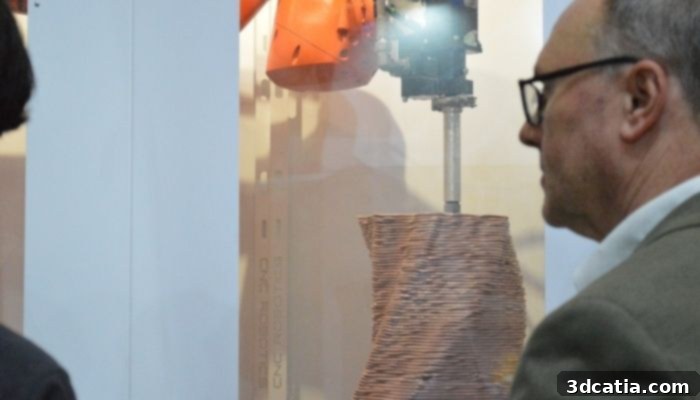
Robotic solutions were once again in the spotlight
Addressing the Bottleneck: Innovations in Post-Processing for Additive Manufacturing
Last but certainly not least, the critical and often challenging stage of post-processing continued to be a significant talking point throughout Formnext 2024. In numerous discussions with both end-users and manufacturers, it was clear that post-processing remains a major hurdle and a significant bottleneck in the additive manufacturing workflow. Fundamental questions persist: How can these essential but often labor-intensive and manual tasks be automated as much as possible, without incurring prohibitively high costs? How can manufacturers ensure consistent, high-quality finishes and optimal part performance across batches, meeting stringent industry standards? And crucially, how can valuable time be saved in post-processing so that engineers and technicians can dedicate themselves to more strategic tasks, such as design optimization, process development, and new application exploration? These are all pressing issues that manufacturers are actively grappling with, and while significant progress is being made, universally applicable and cost-effective solutions are still very much in demand, especially as AM scales to higher production volumes.
At Formnext 2024, we witnessed the presentation of several promising new initiatives aimed at tackling these post-processing challenges head-on. Notably, AM Solutions, in collaboration with EOS, unveiled a comprehensive automated depowdering solution, coupled with an advanced automatic powder sieving and mixing system. This integrated approach aims to streamline powder management, improve safety, and enhance the efficiency of powder-bed fusion processes by automating traditionally manual and time-consuming steps. Another standout innovation came from Cold Jet, a renowned specialist in dry ice blasting technology. Cold Jet demonstrated how the precise application of dry ice can significantly facilitate various post-processing steps. This versatile method can be effectively used for depowdering intricate geometries, achieving specific surface finishes through controlled sandblasting, or simply for cleaning parts without compromising their integrity. A key advantage of dry ice blasting is its non-abrasive nature, which protects the delicate surfaces of 3D-printed parts, coupled with the fact that it produces no secondary waste, as the dry ice sublimes directly into gaseous CO2, leaving behind only the removed debris. Such innovations are crucial for making additive manufacturing more scalable, repeatable, and ultimately, more cost-effective for mainstream industrial adoption.
Formnext 2024: Stability, Growth, and a Glimpse into the Future
In conclusion, Formnext 2024 reaffirmed its status as an indispensable, must-attend event for the entire global additive manufacturing community. It provided a vital platform for showcasing advancements, fostering dialogue, and setting the tone for the coming year. However, as noted earlier, a subtle sense of anticipation lingered, perhaps because attendees had grown accustomed to previous editions marked by a rapid succession of truly disruptive innovations. This slight feeling of “unfinished business” could be closely linked to the current global economic situation, which often encourages consolidation and refinement over radical new ventures, leading to incremental improvements rather than revolutionary breakthroughs. The market, in our opinion, has been navigating a phase of intense maturation over the past several months. But what does this truly signify? Is the industry experiencing a temporary lull, a “stagnation” as some suggested, or have we, perhaps, finally reached a more stable equilibrium where 3D printing is unequivocally recognized and integrated as an established and reliable manufacturing process? This equilibrium, if sustained, would mark a significant milestone, shifting the narrative from experimental technology to proven industrial capability, which can be interpreted as a sign of maturity rather than stagnation.
Nevertheless, the hope for renewed growth and an accelerated boom in the sector remains strong. Many anticipate the next wave of breakthroughs that will enable additive manufacturing technology to push even further, expanding its applications, reducing costs, and increasing accessibility for a broader range of industries. The continued focus on industrialization, quality control, automation, and new material systems suggests that the groundwork is being laid for significant future expansion. One thing is abundantly clear: the additive manufacturing landscape is continually evolving, demanding constant vigilance and engagement from all stakeholders. Stay tuned for all the latest news and developments as the industry progresses! And for those planning ahead, don’t forget to mark your calendars for next year’s event: Formnext 2025 is scheduled to take place from November 18 to 21, promising another essential gathering for the AM world, where we hope to witness further acceleration of these exciting trends.
Were you among the thousands who attended Formnext 2024? What were your impressions and key takeaways from the show? We encourage you to share your thoughts and insights in a comment below or engage with us on our LinkedIn, Facebook, and Twitter pages! For the latest 3D printing news delivered straight to your inbox, don’t forget to sign up for our free weekly Newsletter here. You can also explore all our insightful videos and content on our YouTube channel.
*All Photo Credits: 3Dnatives