
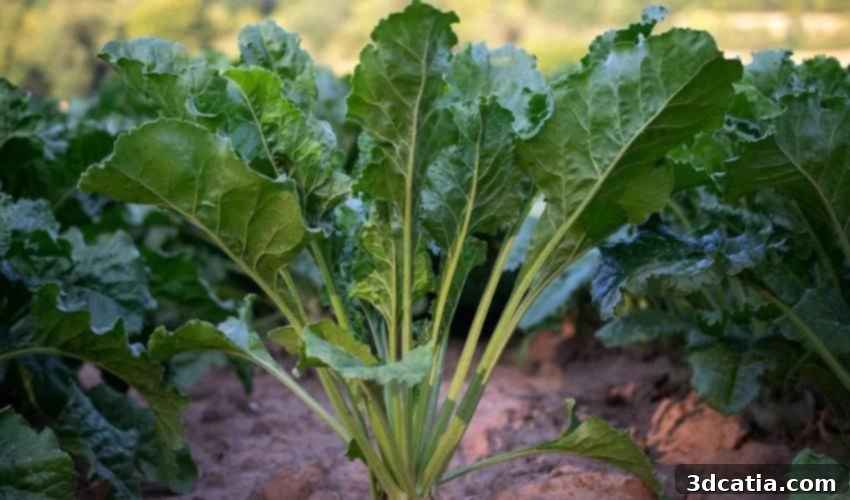
Revolutionizing Agriculture: How 3D Printed Sugar Beets Optimize Crop Phenotyping and Yield
The agricultural sector is undergoing a profound transformation, driven by relentless technological advancements. Over recent years, we’ve witnessed an accelerated integration of sophisticated tools such as autonomous drones for aerial monitoring, advanced agrarian robots for precision tasks, high-resolution scanners for detailed data collection, intelligent precision planters, and the transformative power of artificial intelligence (AI). These innovations have been instrumental in significantly boosting crop yields, streamlining operational efficiencies, and enabling more intelligent and data-driven management practices across farms worldwide. Amidst this technological surge, 3D printing technology has emerged as a particularly versatile tool, introducing substantial benefits, especially in the rapid and cost-effective manufacture of specialized agricultural tools and components. The potential applications of additive manufacturing in this vital industry are vast and continually expanding, a fact vividly illustrated by a recent groundbreaking study where a precisely engineered 3D-printed sugar beet model was developed with the explicit goal of revolutionizing plant phenotyping processes.
This pioneering research, a collaborative effort between the esteemed scientists at the Sugar Beet Research Institute and the University of Bonn, marks a significant leap forward in agricultural science. Together, they have successfully developed and utilized a sophisticated 3D-printed plant model specifically designed to enhance the accuracy, reliability, and standardization of plant phenotyping. But what exactly is phenotyping, and why is it so crucial for modern agriculture? In essence, phenotyping in agriculture involves the systematic observation, measurement, and comprehensive analysis of a plant’s observable characteristics – its phenotype – to accurately predict its performance and status within a specific environment. This intricate process delves into the complex interplay between a plant’s genetic information (genotype) and the environmental conditions it experiences. By meticulously studying these interactions, researchers and farmers can identify plants possessing the most desirable attributes, such as disease resistance, drought tolerance, or superior yield potential, thereby allowing for optimized plantings and more effective breeding programs.
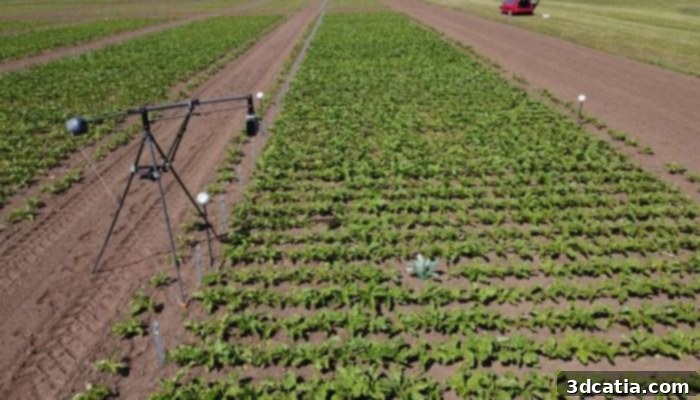
(Photo Credits: Phys.Org)
The Evolution of Phenotyping: From Manual Labor to Digital Precision
Historically, plant phenotyping was an incredibly labor-intensive and often invasive endeavor. Researchers and agronomists had to rely on tedious manual measurements and visual inspections, a process that was not only time-consuming but also prone to human error and potential damage to the crops being studied. These traditional methods severely limited the scale and frequency of data collection, thus hindering the pace of agricultural research and breeding improvements. However, with the advent of various advanced technologies over the past few decades, this bottleneck has been largely overcome. The process of phenotyping has undergone a remarkable automation revolution. Today, sophisticated sensors, high-resolution spectral cameras, and advanced artificial intelligence algorithms are commonly deployed in the field and laboratories to collect vast amounts of precise data non-invasively and efficiently. These cutting-edge tools are now poised for a further breakthrough through their combination with a tangible 3D model of a sugar beet, serving as a pivotal example to further refine crop yields, enhance genetic research, and drive agricultural efficiency to unprecedented levels.
Creating the Blueprint for Success: The 3D Printed Beet Production Process
The development of this innovative 3D-printed sugar beet model began with a meticulous data acquisition phase, leveraging the precise characteristics of an actual sugar beet plant cultivated under controlled greenhouse conditions. To ensure the highest level of accuracy and detail, a state-of-the-art LiDAR (Light Detection and Ranging) scanner was employed. This advanced scanning technology works by emitting pulsed laser light to measure distances, creating a highly accurate and dense point cloud representation of the plant’s surface. Data was meticulously acquired from 12 different angles around the living plant, capturing every nuance of its structure. This comprehensive dataset was then processed to generate a robust 3D digital file, which served as the blueprint for the physical model. Finally, the model was brought to life using an FDM (Fused Deposition Modeling) 3D printer, a widely accessible and reliable additive manufacturing technology. While the initial creation of this specific model might appear straightforward, the profound advantages and implications of utilizing such a precise, reproducible 3D physical model in agricultural research are truly transformative and far-reaching.
Unlocking Precision Agriculture: How the 3D Model Enhances Crop Predictions
One of the most significant benefits of this 3D-printed plant model lies in its ability to dramatically improve the accuracy and reliability of crop predictions. To truly obtain a complete and actionable understanding of a crop’s health and potential, the agricultural industry requires sophisticated sensor systems capable of digitizing an array of critical physiological and morphological data points. This includes measurements such as individual leaf size and area, the quality and development of fruits or root crops, the precise angle of inclination of leaves (which impacts light interception), overall plant shape, and much more. Once this rich, high-fidelity data is diligently collected, specialized agricultural software, often powered by advanced artificial intelligence, processes it to generate comprehensive reports and highly predictive models. These insights empower farmers to make timely, informed interventions, whether it’s optimizing irrigation, applying targeted nutrients, or detecting early signs of disease or pest infestations. However, for these sophisticated sensor systems and AI algorithms to perform optimally and deliver truly accurate predictions, they require a reliable reference point – a benchmark of what constitutes an “exemplary” or ideal plant under various conditions. This is precisely where the 3D-printed model becomes indispensable.
Indeed, having a physical, precisely replicated model of a plant provides a tangible and highly accurate reference that significantly enhances the reliability of sensor calibration and data interpretation, surpassing the limitations of purely digital data, which was often the sole reference point in the past. Jonas Bömer, the lead author of this seminal study, articulates the critical importance of this innovation: “In the field of three-dimensional plant phenotyping, the referencing of the sensor systems used, the computer algorithms, and the morphological parameters captured represents a challenging but fundamentally important task. The application of additive manufacturing technologies to generate reproducible reference models presents a novelty for developing standardized methodologies for objective and accurate referencing, thereby benefitting scientific research and practical plant breeding.” This statement underscores the core value proposition: 3D printed models offer a standardized, highly reproducible physical object against which sensor systems can be precisely calibrated and validated, ensuring that the data collected from living plants is consistently accurate and comparable across different experiments and environments. This level of standardization is vital for advancing scientific understanding and accelerating the development of improved crop varieties.
Beyond Sugar Beets: A Universal Tool for Crop Monitoring and Research
The transformative principle behind this innovative research extends far beyond the specific case of sugar beets. The powerful synergy created by combining advanced artificial intelligence, sophisticated sensor technology, and precise 3D printing techniques can be universally applied to virtually any plant species. This opens up unparalleled opportunities to monitor a vast array of crops with unprecedented accuracy, optimize growth conditions, and facilitate more targeted interventions for improved crop health and yield. The researchers behind this groundbreaking study have emphasized that their entire body of research is published as open access, a testament to their commitment to collaborative scientific advancement. They actively invite other laboratories, agricultural research institutions, and interested parties worldwide to implement and adapt these methodologies for developing reference models for different plant varieties and agricultural challenges. By fostering an open-source approach, the scientific community can collectively accelerate the pace of innovation in precision agriculture, leading to more sustainable farming practices and enhanced food security globally. To delve deeper into the full scope of this significant study and access its comprehensive findings, please click here.
This fusion of cutting-edge technologies represents a significant step forward in modern agricultural practices, promising a future where farming is more efficient, sustainable, and responsive to environmental changes. As 3D printing continues to evolve, its integration into agriculture will undoubtedly expand, creating custom tools, replacement parts, and, as demonstrated by this study, crucial reference models that propel plant science and crop management into a new era of precision. The implications for global food production and environmental stewardship are immense, making this research not just a scientific curiosity, but a practical solution for the challenges of feeding a growing population sustainably.
What are your thoughts on these innovative 3D printed sugar beets and their potential impact on agriculture? We encourage you to share your insights and comments below, or engage with us on our social media channels: LinkedIn, Facebook, and Twitter. For the very latest updates and breaking news in the world of 3D printing delivered straight to your inbox, don’t forget to sign up for our free weekly newsletter here. You can also explore all our informative videos and groundbreaking content on our dedicated YouTube channel.