
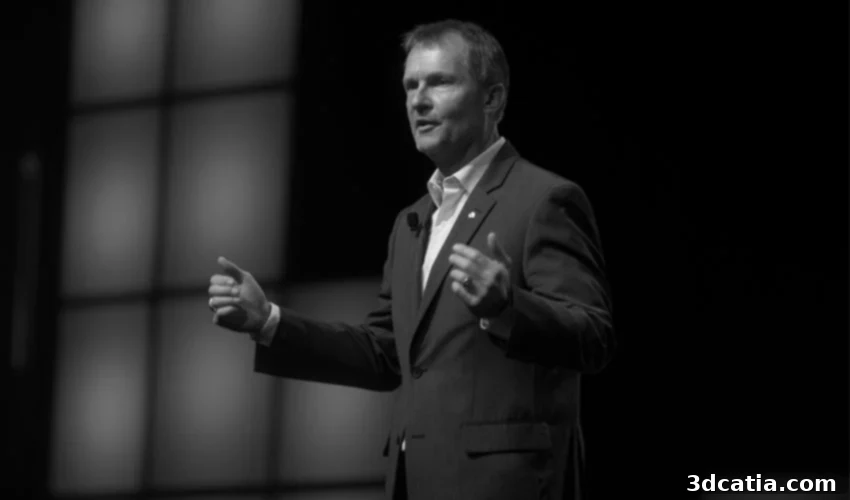
Terry Wohlers Unpacks the Transformative Journey and Future Horizons of Additive Manufacturing
Following in the footsteps of distinguished figures such as Avi Reichental, Hanan Gothait, and Gil Lavi, our ongoing series spotlighting influential personalities in additive manufacturing (AM) now turns to Terry Wohlers. As a luminary in the AM industry for over three decades, Terry Wohlers stands as the visionary force behind the globally recognized Wohlers Report, an indispensable resource for understanding market trends and technological advancements. Given his profound expertise, we at 3Dnatives were keen to explore his perspectives: How does he assess the current burgeoning growth within the additive manufacturing sector? What critical challenges lie ahead for the industry? Our exclusive interview with Terry Wohlers aimed to delve into these pivotal questions and gain deeper insights from this unparalleled expert.
3DN: Could you introduce yourself and elaborate on your extensive work within the realm of Additive Manufacturing?
 I am the founder and president of Wohlers Associates, Inc., a company I established back in 1986. Our firm has been dedicated to providing comprehensive consulting services, market intelligence, and strategic guidance across the additive manufacturing landscape for many years. A significant part of my work involves serving as a principal consultant and a key author for the Wohlers Report, an annual publication that has become the definitive state-of-the-industry analysis. The Wohlers Report 2019, for example, marked its 24th annual edition, reflecting nearly a quarter-century of continuous tracking and analysis of the AM sector’s evolution. Beyond the report, I am actively engaged in a diverse array of other initiatives. These include leading specialized design for additive manufacturing (DfAM) courses, which are crucial for educating the next generation of engineers and designers on how to fully leverage AM capabilities. I also frequently present at major industry events worldwide, sharing insights and fostering discussions on the future of additive manufacturing. Furthermore, I contribute to the industry by serving on various committees and editorial boards, helping to shape the discourse and direction of AM development and adoption. This multi-faceted involvement allows me to maintain a holistic view of the industry, from technological breakthroughs to market dynamics and educational needs.
3DN: Having been a central figure in the AM industry for such an extended period, can you provide us with a vivid impression of what it was like 10-20 years ago, compared to today?
It’s surprising, but the underlying technologies and fundamental principles of additive manufacturing did not appear dramatically different 10 or 20 years ago. However, the most profound and impactful change we are witnessing today is the impressive and unprecedented amount of investment flowing into the industry. In earlier decades, additive manufacturing, then often referred to as rapid prototyping, was largely viewed as a niche technology, primarily for prototyping and creating conceptual models. It operated on the fringes of mainstream manufacturing, grappling with higher costs, limited material options, and slower processing speeds. Awareness was lower, and the potential applications were not as widely understood or appreciated by industries at large. Funding for research and development, while present, was modest compared to today’s landscape. Startup companies were few, and the ecosystem of supporting software, materials, and services was still very nascent.
Today, AM is finally receiving the respect, attention, and significant financial backing it truly deserves. This shift in perception has been transformative. It has led to a major escalation in the number and scale of industry events, academic programs, government initiatives, publications, and the formation of numerous consortia and collaborative efforts across various sectors. This influx of investment has served as a powerful catalyst, propelling the launch of countless startup companies focused on developing innovative AM software tools, advanced materials, and a wide range of specialized services. We are seeing established industrial players making substantial commitments to AM, integrating it into their core manufacturing strategies. This level of broad-based engagement, both financially and intellectually, is a stark contrast to the scenario many years ago, indicating a clear maturation and mainstreaming of additive manufacturing as a vital industrial process.
3DN: What do you consider to be the most crucial changes and developments within the industry over these past years?
The past few years have been marked by truly phenomenal growth and diversification within the additive manufacturing sector. A key indicator of this expansion is the dramatic increase in the number of industrial AM system manufacturers. For the Wohlers Report 2019, our research identified 177 manufacturers of industrial AM systems – defined as those selling for over $5,000 – which was a significant jump from 135 companies just one year prior. Looking at a broader timeframe, since 2014, the number of system manufacturers has surged by an astounding 360%. This proliferation of hardware providers underscores a healthy, competitive, and innovative market. We are observing a similar, impressive growth trajectory in the number of companies offering a diverse range of materials specifically tailored for additive manufacturing, signaling a crucial step towards expanding application possibilities and enhancing part performance.
On the demand side, a steadily increasing number of product development and manufacturing organizations are actively purchasing AM products and services to fulfill their evolving needs. This demand isn’t just confined to initial prototyping anymore. Critically, we are seeing a transformative shift where some companies are transitioning to the use of AM for series production applications. This move from prototyping and tooling, which typically requires lower volumes, to full-scale production, demands substantially more capacity, improved reliability, and higher throughput from AM systems. This transition is a clear testament to the technology’s growing maturity and economic viability for end-use parts. Furthermore, our research for the Wohlers Report 2019 highlighted the exceptional performance of metal additive manufacturing; revenue derived from metal materials experienced an estimated growth of 41.9% in 2018. This impressive figure continues a remarkable five-year streak where metal AM materials have consistently achieved over 40% growth each year, emphasizing the strong industrial uptake and increasing importance of metal 3D printing in high-value applications across sectors like aerospace, automotive, and medical devices.
3DN: Could you elaborate on the specific technologies and materials you anticipate will experience the most significant growth in the coming years?
When considering which processes will drive future growth, certain technologies stand out for their current impact and future potential. For series production volumes, especially for creating functional end-use parts, powder bed fusion technology, applicable to both metals and polymers, currently holds the most popular position. Its ability to produce complex geometries with high precision and good material properties makes it ideal for a wide range of industrial applications, from aerospace components to intricate medical implants. On the other hand, for fundamental concept modeling and rapid design validation, material extrusion remains the most widely adopted and accessible process. This is particularly true for smaller organizations, educational institutions, and individual users, largely due to its relatively lower cost, ease of operation, and versatility with a broad spectrum of thermoplastic materials. We firmly believe that both powder bed fusion and material extrusion will continue to be foundational processes and will thrive and evolve significantly in the years to come, each serving distinct but equally important segments of the market.
Beyond these established methods, binder jetting processes, particularly for metal parts, are rapidly gaining substantial momentum. This technology offers several compelling advantages, including the potential for faster production speeds, lower material costs, and scalability for higher volumes compared to other metal AM processes. Companies like ExOne and Digital Metal have been pioneering and offering binder jetting solutions for many years, continuously refining the technology. More recently, major players have entered or are poised to enter this space, signaling a pivotal shift. Desktop Metal, for instance, has already installed its first metal binder jetting system at a customer site, marking a crucial step towards broader commercialization. Additionally, industrial giants such as GE Additive and HP are both making significant strides and preparing to commercialize their own advanced binder jetting systems. This increased investment and entry of prominent industry players into the binder jetting segment strongly suggest that this technology is on the cusp of experiencing explosive growth, poised to revolutionize how metal parts are manufactured for diverse industrial applications by offering a more economical and efficient pathway to production.

Latest edition of the Wohlers Report
3DN: What are the primary remaining challenges hindering the widespread global adoption of Additive Manufacturing, and how are these challenges currently being addressed?
Despite the remarkable progress, several significant challenges continue to impede the broader global adoption of additive manufacturing. Among the most prominent obstacles are the substantial costs associated with AM machines and materials. Both the initial investment in industrial-grade AM systems and the recurring expense of specialized powders, resins, and filaments remain considerably higher compared to traditional manufacturing equipment and raw materials. This cost barrier can be prohibitive for many small and medium-sized enterprises, limiting their ability to integrate AM into their operations.
Another critical challenge lies in Design for Additive Manufacturing (DfAM). Designing parts optimally for AM can be fundamentally different from designing for conventional manufacturing processes like machining or injection molding. DfAM requires a distinct mindset, specialized tools, and a deep understanding of the unique capabilities and limitations of various AM technologies, such as designing with lattice structures, topology optimization, or part consolidation. The scarcity of engineers and designers proficient in DfAM techniques poses a significant bottleneck for companies looking to fully leverage AM’s potential for innovation and performance improvements.
Furthermore, post-processing time and expense, coupled with the current lack of widespread automation, represent major hurdles to scalability and efficiency. Many AM parts require extensive post-processing steps, including support material removal, surface finishing, heat treatments, and quality inspection. These steps are often manual, labor-intensive, and time-consuming, adding significantly to the overall production cost and lead time. The absence of integrated, automated post-processing solutions makes it challenging for AM to compete with highly automated traditional manufacturing lines for high-volume production.
Lastly, the additive manufacturing supply chains and the broader AM ecosystem are still relatively underdeveloped. This encompasses a lack of standardized production workflows, quality control protocols, and comprehensive certification processes. The absence of a robust network of specialized suppliers for materials, software, and post-processing services, as well as a limited skilled workforce, collectively slows down the adoption of the technology across diverse industries. Companies often struggle to find reliable partners or must invest heavily in developing these capabilities in-house.
Many companies, both large industrial corporations and innovative startups, are dedicating significant resources to proactively address these complex problems. While it’s clear that these issues won’t be resolved overnight, continuous progress is being made. AM system manufacturers are increasingly integrating automated features and developing more user-friendly software. Third-party organizations are emerging to offer specialized solutions for DfAM training, material development, and automated post-processing. However, these solutions often tend to address only specific parts of the broader challenge. Consequently, companies that are running AM equipment for series production frequently find themselves needing to develop partially or entirely custom solutions to overcome these limitations and optimize their specific AM workflows. This bespoke approach highlights the industry’s ongoing evolution and the collaborative effort required to mature the entire additive manufacturing ecosystem.
3DN: Finally, have any particular news, companies, or applications captured your attention or imagination in the last few months?
Indeed, the additive manufacturing landscape has been buzzing with an incredible amount of interesting news and groundbreaking developments in recent months. It’s a dynamic and exciting time for the industry. Among the many organizations that have particularly caught my attention are America Makes, which continues to drive collaborative research and development in AM; Divergent 3D, with its innovative approach to digitally manufactured, high-performance structures for automotive applications; SPEE3D, pushing the boundaries of high-speed cold spray additive manufacturing; and the U.S. Marine Corps, demonstrating the critical role of AM in field logistics and rapid part replacement. Velo3D is making significant strides in ensuring quality and consistency for critical metal AM parts, while Wiivv exemplifies the potential for mass customization with its tailored insoles. This list, however, is merely a small sampling of the impressive innovation taking place. In fact, it’s always a bit risky to name specific organizations because I am sure I have inadvertently omitted several others that are equally deserving of recognition and are making substantial contributions to the field. The breadth of progress is truly remarkable.
Beyond specific companies, I must also highlight the significant investments that have been channeled into AM-related companies this year, which further underscores the industry’s growing maturity and investor confidence. For instance, Desktop Metal secured a substantial $160 million in January, reinforcing its leadership in metal additive manufacturing technologies. Markforged, known for its composite and metal 3D printing solutions, raised an impressive $82 million in March. Carbon, a pioneer in digital light synthesis (DLS) technology, attracted a massive $260 million in June, indicating strong belief in its production-ready platforms. And Made In Space, focused on leveraging AM for extraterrestrial applications, received $73.7 million in July. These substantial financial injections are not just headlines; they represent crucial capital that will fuel further research, product development, and market expansion, ultimately accelerating the broader adoption and technological advancement of additive manufacturing across various industries. Such investments are powerful indicators of the robust future that lies ahead for AM.
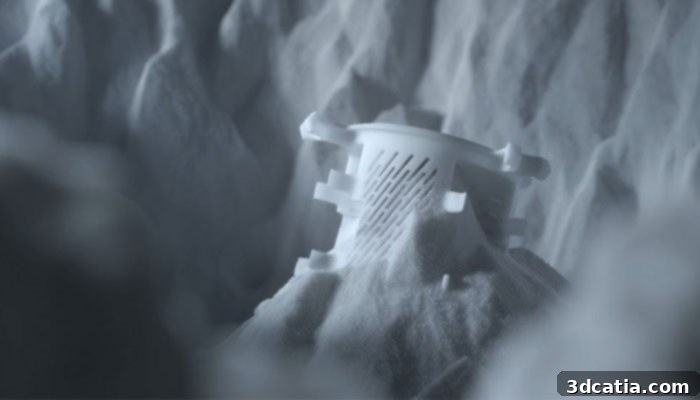
Powder bed technologies for both metals and polymers are predicted to grow
What are your thoughts on Terry Wohlers’ profound impact on the additive manufacturing industry, and what insights from this interview resonated most with you? Let us know what you think in a comment below, or engage with us on our Facebook and Twitter pages! Don’t forget to sign up for our free weekly Newsletter to receive all the latest news and updates in 3D printing delivered straight to your inbox, ensuring you stay at the forefront of this rapidly evolving industry!