
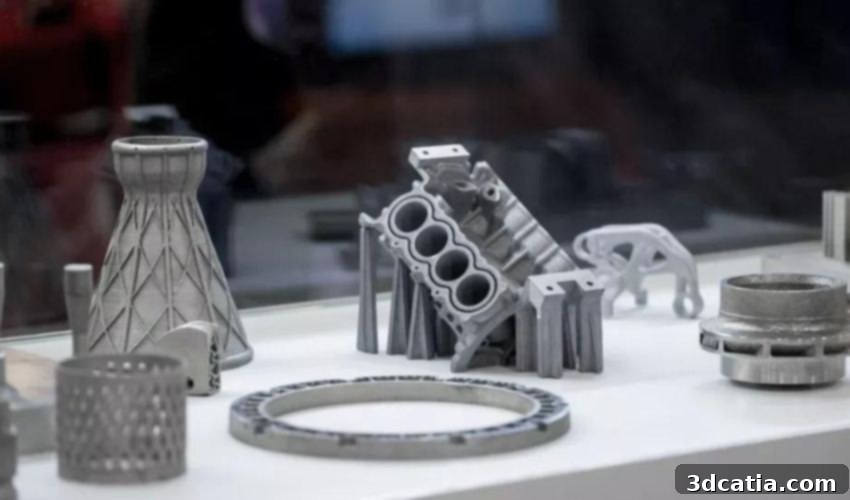
UK Ministry of Defence Pioneers Metal Additive Manufacturing for Enhanced Defense Capabilities
The UK’s Ministry of Defence (MoD) is demonstrating a profound and ongoing commitment to embracing cutting-edge technologies, with a particular focus on additive manufacturing. This interest is solidified by the recent launch of a significant contract offer specifically targeting 3D printing firms. The United Kingdom has historically maintained a robust investment in its defense and military capabilities, consistently ranking among the top global spenders, placing fourth worldwide after the US, China, and India. This latest strategic initiative, officially designated as Project Tampa, represents a crucial further investment designed to modernize and optimize defense operations.
Under Project Tampa, selected firms will be tasked with producing sophisticated 3D printed metal parts for critical applications within the defense industry. This long-term engagement is projected to span a period of up to seven years, reflecting the MoD’s vision for sustained innovation. The lucrative contract is valued at between £3 and £5 million, a sum indicative of the strategic importance placed on this endeavor. Furthermore, the MoD has expressed keen interest in potential future collaborations, signaling that successful initial phases could pave the way for deeper, more expansive partnerships. Through the strategic employment of advanced additive manufacturing techniques, the MoD aims to critically address and mitigate perennial challenges such as ‘excessive’ project durations, which often hamper defense development and deployment. Equally important, this initiative seeks to compensate for the increasing problem of currently obsolete parts, ensuring the continued operational readiness of vital equipment and platforms.
The MoD anticipates a multitude of transformative outcomes from this forward-thinking project. A primary goal is the production of “certified metallic parts” accompanied by digitally transmissible designs. This digital approach is crucial, as it will enable these designs to be securely and efficiently shared across the MoD’s extensive network, fostering greater interoperability and standardization. The expectation is that this digital framework will significantly enhance collaboration among various defense departments and commands, leading to the optimal deployment and utilization of these newly manufactured components. In turn, this heightened collaboration and efficiency are expected to generate increased interest and widespread adoption of additive manufacturing solutions throughout the broader defense industry and its command structures.
The deliberate focus on metal as the material of choice for Project Tampa is particularly noteworthy and strategic. The MoD candidly acknowledges that a specific lack of metallic parts is currently contributing to resource constraints and operational challenges. Beyond addressing this deficit, metal additive manufacturing offers distinct advantages. For many defense applications, metallic components provide unparalleled strength, durability, and resistance to extreme environmental conditions, which are non-negotiable requirements for military equipment. Furthermore, the MoD notes that for certain applications, metal parts produced via additive manufacturing may require less extensive certification processes compared to some traditional manufacturing methods, potentially accelerating deployment without compromising safety or performance. This dual benefit—addressing critical material shortages while streamlining approval—underscores the strategic rationale behind prioritizing metal 3D printing.
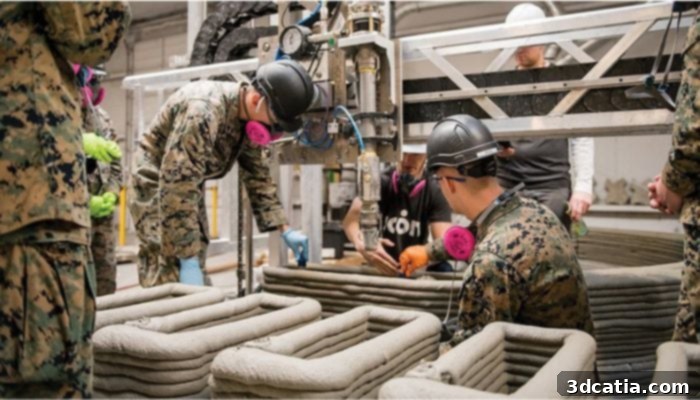
US soldiers perform 3D printing. Photo credit: National Defense Magazine
The Global Trend: US Department of Defense and Additive Manufacturing
This pioneering strategy by the UK MoD mirrors, and indeed builds upon, similar initiatives already underway within other leading defense organizations globally. Notably, the USA’s Department of Defense (DoD) has introduced a comparable and ambitious scheme, recognizing the immense potential of additive manufacturing. The US strategy is multifaceted, aiming to dramatically improve material readiness across all military branches and to fundamentally ‘modernize’ defensive structures. A key objective is to empower servicemen and women to leverage 3D-printing solutions directly on the battlefield, enabling on-demand production of critical spare parts, specialized tools, or even custom medical devices in austere environments. This capability drastically reduces logistical burdens and enhances operational autonomy.
The advantages of additive manufacturing for military applications are undeniably significant and far-reaching. Beyond the immediate benefits of on-site production, the technology allows for the rapid creation of identical, high-quality parts in a remarkably short timeframe, without any compromise on structural integrity or performance standards. This capability is paramount in dynamic military scenarios where speed and reliability are critical. Furthermore, additive manufacturing fosters innovation by enabling quicker prototyping of new designs, facilitating iterative improvements, and allowing for the customization of equipment to suit specific mission requirements or individual soldier needs. It introduces unparalleled flexibility into the notoriously rigid defense supply chain, moving towards a more agile and responsive manufacturing paradigm.
Transforming Defense Logistics and Supply Chains
The adoption of additive manufacturing by defense ministries like the UK MoD signifies a paradigm shift in how military logistics and supply chains are managed. Traditionally, defense organizations rely on vast, complex, and often geographically dispersed supply chains, which are vulnerable to disruptions—whether from natural disasters, geopolitical tensions, or manufacturing delays. 3D printing, particularly for metal parts, offers a compelling solution to many of these vulnerabilities. By enabling on-demand, localized production, it dramatically reduces lead times, cuts down on transportation costs, and minimizes the need for extensive physical inventories. This ‘just-in-time’ manufacturing model not only improves efficiency but also significantly enhances strategic autonomy and resilience, critical for national security.
Furthermore, the ability to produce custom or obsolete parts extends the lifespan of existing equipment and weapons systems, providing substantial cost savings over procuring entirely new platforms. For specialized defense components, where demand might be low or highly sporadic, additive manufacturing eliminates the economic disincentive of traditional mass production methods that require significant upfront tooling costs. This flexibility allows the MoD to maintain readiness for a diverse array of assets, from legacy vehicles to advanced aerospace components, ensuring that critical defense capabilities are not hampered by supply chain bottlenecks or the unavailability of replacement parts.
The Future Impact of Digital Manufacturing in Defense
While Project Tampa’s initial contract value, ranging from £3 to £5 million, represents a relatively small percentage of the UK’s overall military budget, its strategic significance is immense. It unequivocally signals a clear and growing trend towards the widespread adoption of additively manufactured parts within the defense sector. More broadly, it indicates a strong willingness from governmental departments to actively utilize advanced digital technologies to optimize their industries and operations. This forward-thinking approach positions the UK at the forefront of defense innovation, paving the way for other organizations and allied nations to follow suit.
The integration of digital designs that are ‘transmissible’ across networks is a cornerstone of this future vision. It implies a move towards a fully digital workflow, from design to production, which offers numerous benefits including enhanced security for intellectual property, simplified version control, and the potential for rapid deployment of design updates globally. Such a framework could revolutionize how defense technology is developed, shared, and maintained across international alliances, fostering greater interoperability and collective security. The emphasis on “certified metallic parts” also highlights a commitment to ensuring that these innovative manufacturing methods meet the stringent quality and performance standards required for critical military applications.
Looking ahead, the successful implementation of Project Tampa could serve as a powerful case study, demonstrating the tangible benefits of metal additive manufacturing in a highly demanding environment. It could encourage further investment not only in 3D printing hardware but also in associated digital infrastructure, material science research, and workforce training. Although specific companies have not yet been publicly selected for this crucial contract, the defense and additive manufacturing communities are eagerly anticipating the outcomes of this project. The insights gained from Project Tampa will undoubtedly shape future defense procurement strategies and potentially accelerate the adoption of these technologies across a broader spectrum of governmental and industrial applications.

3D printed weaponry is one use of additive manufacturing. Photo credit: additivenews.com
What are your thoughts on this significant integration of 3D printing within the defense industry? We invite you to share your perspective in a comment below or join the conversation on ourLinkedIn,Facebook, andTwitter pages! Don’t forget to sign up for our free weeklyNewsletter here to receive the latest 3D printing news directly in your inbox! You can also find all our compelling videos on ourYouTube channel.