
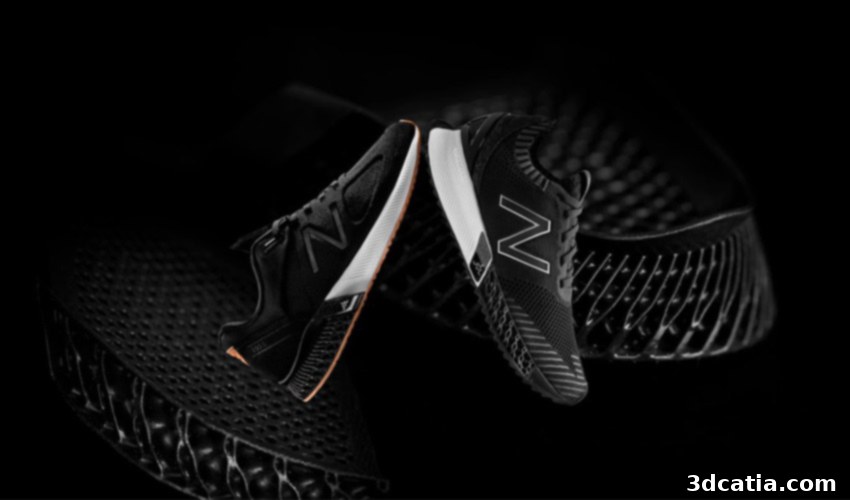
Revolutionizing Athletic Footwear: New Balance and Formlabs Lead with TripleCell 3D Printing Technology
The athletic footwear industry is constantly striving for innovation, pushing the boundaries of material science, design, and manufacturing processes to deliver unparalleled performance and comfort to athletes worldwide. At the forefront of this revolution stands the strategic partnership between global athletic leader New Balance and 3D printing pioneer Formlabs. This powerful collaboration, which officially launched its groundbreaking TripleCell platform in early July, marks a significant milestone in how high-performance athletic shoes are conceptualized, developed, and produced. The announcement of the TripleCell platform was initially met with excitement, signaling a new era for footwear production, enabling the creation of advanced designs like the highly anticipated 990 Sport and FuelCell Echo Triple trainers.
This visionary partnership isn’t a recent phenomenon; its roots trace back to 2017. For two years, New Balance and Formlabs have been meticulously working behind the scenes, pooling their expertise in athletic wear innovation and additive manufacturing. Their shared objective was ambitious: to jointly develop state-of-the-art high-performance materials, sophisticated hardware, and a streamlined manufacturing process specifically tailored for cutting-edge athlete footwear. This long-term commitment underscores the depth of their collaboration and their shared vision for transforming the traditional footwear production paradigm through the power of 3D printing technology. The TripleCell platform is the culmination of these extensive efforts, representing a tangible outcome of their dedicated research and development.
Following the public unveiling of the TripleCell platform, the immediate impact was evident. The highly anticipated 990 Sport trainer, one of the first products to leverage this innovative technology, made its debut during the summer months. Its launch was met with tremendous enthusiasm from consumers and quickly sold out, demonstrating the market’s readiness for truly advanced footwear. Building on this success, the spotlight has now shifted to the FuelCell Echo Triple trainer, which is poised to make its mark on the market. Like its predecessor, the FuelCell Echo Triple is a testament to the capabilities of 3D printing, specifically utilizing advanced Stereolithography (SLA) 3D printers and a custom-engineered, high-performance material known as Rebound Resin.
The development of Rebound Resin is intrinsically linked to the genesis of the New Balance and Formlabs partnership. Recognizing the limitations of existing materials and the unique demands of athletic footwear, the two companies embarked on a collaborative journey to create a material that could withstand extreme conditions while offering superior performance characteristics. Rebound Resin is not just another material; it’s a bespoke solution designed from the ground up to address critical challenges in footwear. Its core advantage lies in its significantly higher resistance to wear and tear compared to conventional materials, coupled with properties that enhance energy return and overall durability. This innovative resin is central to the TripleCell platform’s ability to produce midsoles and other components that are both robust and exceptionally responsive.
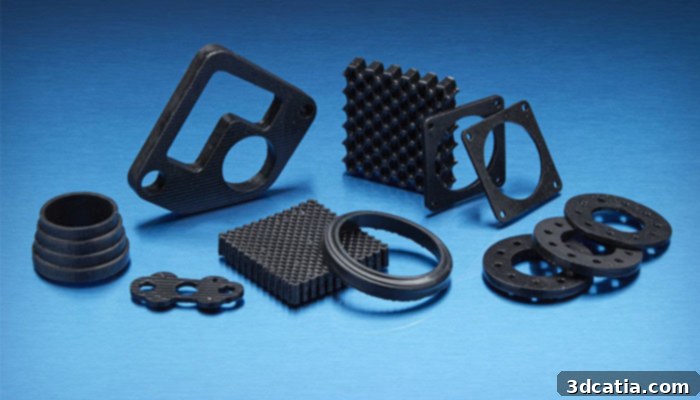
3D printed pieces using the Rebound Resin from Formlabs | Image via Formlabs
Formlabs proudly details the capabilities of this revolutionary material on its website, highlighting its suitability for the rigorous demands of footwear. As stated: “Shoe materials experience a variety of environments, with the additional need to withstand various levels of pressure thousands of times per day. Designed to create springy, resilient lattice structures, Rebound Resin has a much higher energy return, tear strength, and elongation than any other Formlabs material. Rebound Resin is strong enough to be used in gaskets, seals, and automotive interiors, but light and flexible enough for the sole of a shoe. New Balance has exclusive rights to use Rebound Resin in footwear, but the material was designed for a wide range of applications.” This description underscores the multifaceted nature of Rebound Resin, emphasizing its exceptional ability to maintain integrity and performance under repetitive stress, a critical factor for athletic footwear. The material’s unique viscoelastic properties allow it to absorb impact effectively and then return energy, providing a springy feel crucial for running and other high-impact sports. Furthermore, its impressive tear strength and elongation ensure that the shoe components can endure significant deformation without failing, contributing to the longevity and reliability of the footwear.
Redefining Footwear Manufacturing Through Additive Innovation
The collaboration between New Balance and Formlabs extends far beyond just developing a new material; it fundamentally re-imagines the entire footwear manufacturing process. One of the most significant advantages of integrating 3D printing, particularly with the TripleCell technology, is the dramatic reduction in development time. Traditionally, the creation of footwear components like midsoles involves intricate molding processes, which are not only time-consuming but also costly. By eliminating the need for these expensive and lengthy molds, New Balance has been able to shave months off its product development cycles, accelerating the time to market for innovative designs. This efficiency gain is a game-changer in the fast-paced athletic footwear industry, allowing New Balance to respond more swiftly to consumer demands and market trends.
Moreover, the TripleCell technology has revolutionized the approach to rapid prototyping and design iteration. In conventional manufacturing, producing multiple design variations for testing is a laborious and expensive undertaking. However, with additive manufacturing, designers can effortlessly produce numerous prototypes simultaneously, each with subtle variations, allowing for extensive iterative testing. This capability fundamentally reinvents the traditional iterative testing approach, making it possible to experiment with intricate lattice structures and complex geometries that would be impossible or prohibitively expensive to create with traditional methods. This agility in design and prototyping empowers New Balance to push creative boundaries, optimize performance characteristics with unprecedented precision, and bring truly innovative products to consumers more rapidly and efficiently.
The Substantial Impact of 3D Printing on the Footwear Industry
While the full ramifications of 3D printing on the footwear industry are still unfolding, it is increasingly evident that its impact will be substantial and transformative. The advantages of additive manufacturing — including design freedom, material optimization, speed of production, and potential for mass customization — are perfectly aligned with the evolving demands of the athletic footwear market. Consumers are increasingly seeking personalized products that offer superior performance tailored to their unique biomechanics and preferences. 3D printing provides the technological backbone to deliver on these expectations, enabling footwear manufacturers to move beyond standardized sizes and designs towards a future of bespoke, high-performance shoes.
Leading research firm SmarTech Analysis has underscored this paradigm shift with compelling forecasts. Not long ago, the firm revealed that the adoption of additive manufacturing within the footwear industry is projected to generate an astonishing market value exceeding $6.5 billion by 2029. This represents an impressive anticipated annual growth rate of 19.5%, signaling a robust and accelerating trend towards 3D printing integration across the sector. New Balance and Formlabs, through their pioneering TripleCell platform and proprietary Rebound Resin, are strategically positioning themselves at the absolute forefront of what promises to be an entire industry shift. Their collaborative efforts are not merely incremental improvements but rather fundamental changes that will likely redefine the benchmarks for footwear design, production, and consumer experience for years to come.
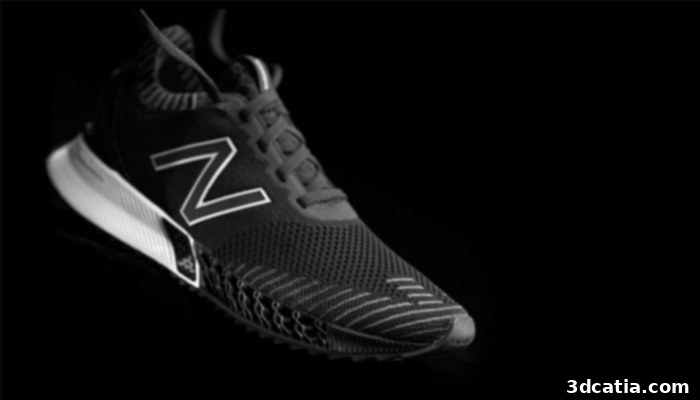
The forefoot midsole of the FuelCell Echo Triple was printed on a Formlabs 3D printer | Image via Formlabs
A Dynamic and Competitive Landscape of Innovation
While New Balance and Formlabs are certainly trailblazers in this space, they are not alone in recognizing the immense potential of 3D printing in footwear. The industry is witnessing a vibrant and competitive landscape of innovation, with several major players actively exploring and implementing additive manufacturing technologies. A notable example is the high-profile partnership between Adidas and Carbon, which captured headlines with their ambitious project to create the innovative FUTURECRAFT 4D trainer. This collaboration, like that of New Balance and Formlabs, demonstrated the feasibility of producing complex, high-performance midsole structures using advanced 3D printing techniques, setting a new benchmark for customization and energy return in athletic footwear. Other brands are also investing heavily in similar research and development, indicating a collective move towards a future where customized, performance-driven footwear is the norm, rather than the exception.
Katherine Petrecca, New Balance General Manager of Footwear at the Innovation Design Studio, eloquently encapsulates the significance of these developments. She states: “TripleCell is on the forefront of a broader industry shift. This is just the beginning, 3D printing is going to reshape how we all think about the design to manufacturing process for products. Formlabs has been an integral partner in this process, expect to see more from this partnership in the near future.” Her words resonate deeply with the transformative potential of 3D printing. It’s not merely about producing parts differently; it’s about fundamentally rethinking the entire product lifecycle, from initial concept to final production. This involves greater design freedom, faster iteration cycles, reduced waste, and the ability to create highly individualized products at scale. The synergy between New Balance’s deep understanding of athletic performance and Formlabs’ mastery of additive manufacturing hardware and materials creates a powerful engine for continuous innovation, promising exciting developments for athletes and everyday consumers alike.
The Future Steps of New Balance and Formlabs
As New Balance and Formlabs continue to strengthen their collaboration, the prospects for future innovation appear limitless. The success of the 990 Sport and the impending launch of the FuelCell Echo Triple trainers are just the initial steps in a much larger journey. We can anticipate the integration of TripleCell technology and Rebound Resin into a wider array of New Balance footwear products, potentially expanding across various athletic categories, from running to basketball and beyond. This expansion would not only deliver enhanced performance benefits to a broader customer base but also solidify New Balance’s position as a leader in innovative footwear solutions. Furthermore, the advancements in material science driven by this partnership could lead to the development of even more specialized resins, each tailored for specific performance requirements, such as ultra-lightweight structures for speed or exceptionally durable components for rugged terrains.
Beyond specific product lines, this partnership is also paving the way for advanced customization options. Imagine a future where athletes could have their footwear precisely tailored to their individual foot mechanics, running gait, and performance goals, all enabled by on-demand 3D printing. This level of personalization would offer unprecedented comfort, injury prevention, and performance enhancement. The ongoing research and development within the New Balance Innovation Design Studio, in conjunction with Formlabs’ material scientists and engineers, will undoubtedly explore these avenues, pushing the boundaries of what is possible in footwear design and manufacturing. The long-term vision is clear: to leverage additive manufacturing not just for niche, high-end products, but to scale it for broader market adoption, making truly customized and high-performance footwear accessible to more people. This strategic alignment promises a future where design innovation is no longer constrained by manufacturing limitations, ushering in an exciting era for the entire footwear industry.
Conclusion: Paving the Way for Performance and Customization
The strategic alliance between New Balance and Formlabs exemplifies the transformative power of additive manufacturing in the athletic footwear industry. By combining cutting-edge 3D printing technology with advanced material science, they have not only launched groundbreaking products like the 990 Sport and FuelCell Echo Triple but have also initiated a paradigm shift in how footwear is designed, developed, and produced. Their commitment to innovation, epitomized by the TripleCell platform and Rebound Resin, positions them as key architects of the future of performance footwear, one that is faster, more customizable, and ultimately, more impactful for athletes worldwide.
What are your thoughts on this pioneering partnership and the future of 3D printed footwear? We invite you to share your insights in a comment below or join the conversation on our Facebook and Twitter pages! And don’t forget to sign up for our free weekly Newsletter to receive all the latest news in 3D printing directly in your inbox!