
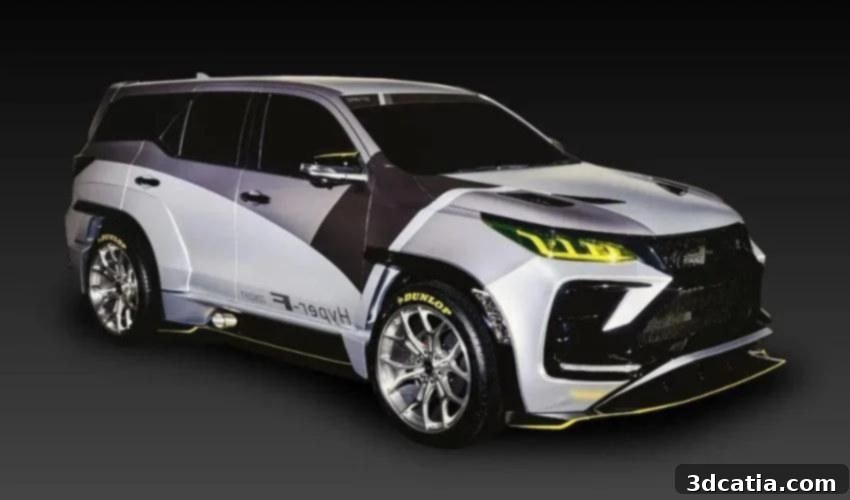
Toyota Hyper-F Concept: Revolutionizing Performance SUVs with 3D Printing and Advanced Materials
The automotive industry is a relentless arena of innovation, where standing out from the competition demands pioneering approaches and exceptional features. The continuous evolution of development methods, cutting-edge materials, and visionary design are the pivotal factors driving this race for supremacy. At the forefront of this pursuit is Toyota, whose customization and development department consistently strives to introduce and rigorously test novel innovations. TCD Asia (Toyota Customizing & Development), a key player in producing vehicle accessories for a diverse range of Toyota models, has recently unveiled a groundbreaking high-performance SUV concept. This remarkable vehicle, dubbed the Hyper-F, integrates 3D printed parts and state-of-the-art materials, showcasing a bold vision for the future of automotive design and engineering. These significant advancements are made possible through strategic collaborations with esteemed Japanese companies, Mitsui Chemicals and ARRK Corporation. Join us as we delve deeper into the intricacies and exciting features that define the Toyota Hyper-F concept car.
The Hyper-F concept car represents a radical transformation, built upon the sturdy and reliable foundation of the Toyota Fortuner, a model also developed by TCD Asia. Drawing heavily on their extensive motorsport experience and a profound understanding of performance dynamics, TCD Asia meticulously engineered this new SUV concept to deliver not just raw power but also an unparalleled and truly unique user experience. Departing significantly from the conventional two-seater sports car paradigm, this innovative model distinguishes itself by featuring four specially designed sports seats, offering a high-performance experience to more occupants. This commitment to both exhilarating performance and enhanced passenger comfort underscores TCD Asia’s holistic approach to vehicle design. The vehicle’s performance capabilities are further amplified and refined through the strategic incorporation of advanced 3D printed components and innovative, lightweight materials, pushing the boundaries of what is achievable in a modern SUV.
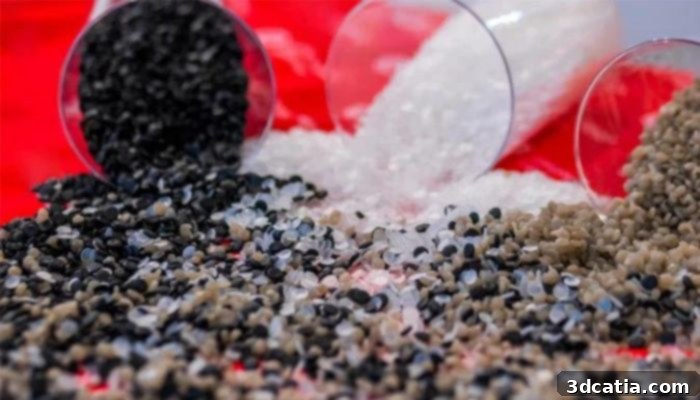
Some components of the new Toyota Hyper-F concept car were printed with pellets. (Photo Credits: DEKRA Industrial)
The increasing adoption of 3D printing in automotive manufacturing is a trend that is rapidly gaining momentum, and the Toyota Hyper-F concept car serves as a compelling testament to this technological shift. In this particular instance, TCD Asia judiciously leveraged the sophisticated additive manufacturing technology developed by Mitsui Chemicals. This pioneering company specializes in 3D printing using pellets, a method that enables the production of robust parts from plastic granulate at remarkably low costs. This innovative approach offers a multitude of benefits, most notably a significant reduction in development times and a substantial decrease in overall investment costs. Beyond these economic advantages, the resulting 3D printed parts boast exceptional stability and durability, ensuring high performance and longevity. Furthermore, the technology’s capacity to print large-format components allows for greater design flexibility and the creation of larger, complex structures. On the Toyota Hyper-F concept car, these advanced 3D printed components are prominently featured, adorning the intricately designed panels of the hood air ducts, not only for their functional benefits but also for their contribution to the vehicle’s aggressive and futuristic aesthetic. This demonstrates how additive manufacturing is not just about efficiency, but also about enabling new design possibilities and material optimization.
However, 3D printed components are just one facet of the Hyper-F’s innovative design. The SUV concept boasts another remarkable feature that truly sets it apart: Tafnex. This extraordinary material is a unidirectional polypropylene resin sheet, meticulously reinforced with high-strength carbon fibers, and it is prominently integrated into the vehicle’s front bumper. Manufactured with precision by Mitsui Chemicals, Tafnex embodies a perfect synergy of advanced material science and engineering excellence. Its exceptional properties include a remarkably low weight, coupled with outstanding strength and rigidity, making it an ideal choice for high-performance applications where structural integrity is paramount. Furthermore, Tafnex exhibits excellent moldability, allowing designers to sculpt complex and aerodynamically efficient shapes. Visually, it features a distinctive marble-like pattern, lending a unique and sophisticated aesthetic appeal to the vehicle. While its application in the Hyper-F concept car highlights its automotive potential, Tafnex’s versatility extends far beyond the automotive industry, finding diverse applications in fields such as the manufacturing of high-performance drones and various sporting goods. The strategic incorporation of Tafnex significantly reduces the overall weight of the vehicle, a critical factor in enhancing its dynamic performance, improving fuel efficiency, and ultimately delivering a more agile and responsive driving experience. This focus on lightweighting, driven by advanced materials like Tafnex, is a cornerstone of modern high-performance vehicle design.
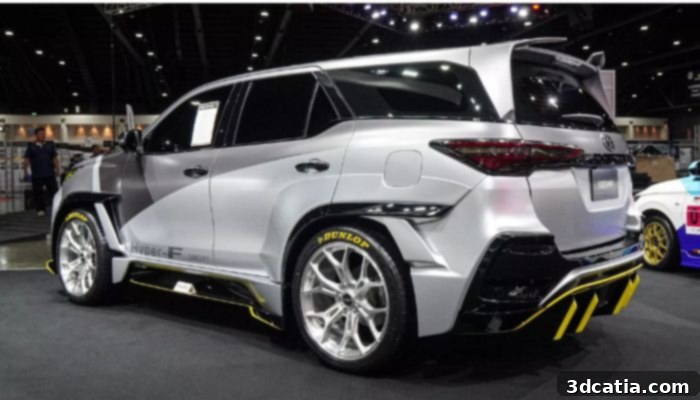
(Photo Credits: TCD Asia)
The development of the Toyota Hyper-F concept car is a powerful illustration of the synergy achieved through strategic collaborations. The partnership between TCD Asia, known for its automotive customization expertise and motorsport heritage, and Mitsui Chemicals, a leader in advanced materials and additive manufacturing, along with ARRK Corporation, specializing in product development, has been instrumental in bringing this ambitious vision to life. Such alliances are crucial in today’s rapidly evolving technological landscape, allowing companies to pool resources, share specialized knowledge, and accelerate the pace of innovation far beyond what individual entities could achieve alone. These partnerships enable the seamless integration of cutting-edge technologies like pellet-based 3D printing and advanced composite materials like Tafnex directly into new vehicle concepts, pushing the boundaries of design, performance, and manufacturing efficiency. The Hyper-F is not just a car; it’s a showcase of what collaborative innovation can achieve in redefining the future of automotive engineering.
For those eager to catch an exclusive first glimpse of this pioneering vehicle, the new Toyota Hyper-F concept car is scheduled to make its public debut at the prestigious Bangsaen Grand Prix 2024. This highly anticipated racing event, slated to take place from July 3 to 7 in the vibrant city of Bangkok, Thailand, is expected to draw a massive influx of motoring enthusiasts, industry professionals, and curious visitors from across the globe. The unveiling at such a prominent motorsport event underscores the Hyper-F’s performance credentials and its alignment with Toyota’s legacy of racing excellence. Concept cars like the Hyper-F play a vital role in the automotive industry; they serve as a canvas for showcasing future technologies, gauge public and media reaction to radical new designs, and signal the potential direction for upcoming production models. The Hyper-F not only highlights Toyota’s commitment to pushing technological boundaries but also offers a tantalizing preview of what’s to come in the exciting world of high-performance SUVs and personalized vehicle experiences.
What are your thoughts on the groundbreaking Toyota Hyper-F concept car and its innovative use of 3D printing and advanced materials? We encourage you to share your opinions and insights in a comment below or join the conversation on our LinkedIn, Facebook, and Twitter pages! Don’t miss out on the latest advancements in additive manufacturing by signing up for our free weekly newsletter here to receive the newest 3D printing news directly in your inbox! You can also explore all our fascinating videos and technological insights on our YouTube channel for more in-depth content.
*Cover Photo Credits: Toyota