
The Future of Flight: Revolutionizing Drones with 3D Printing Technology
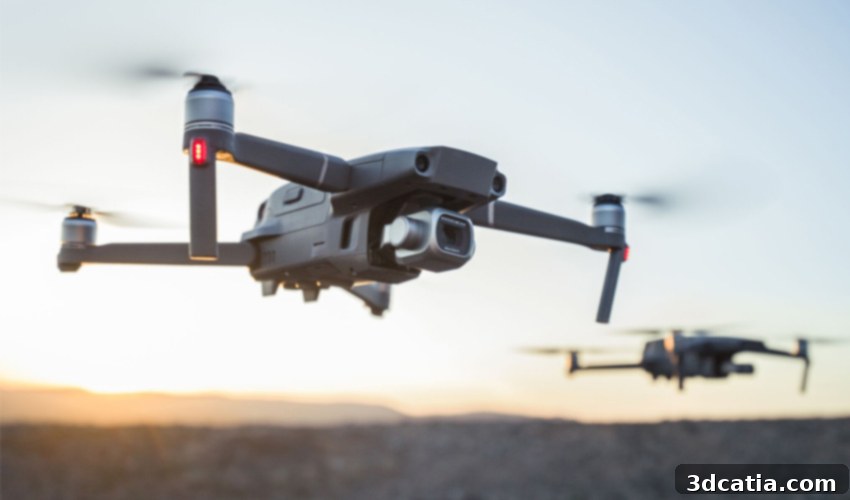
Unmanned Aerial Vehicles (UAVs), commonly known as drones, have rapidly evolved from specialized military tools into versatile devices impacting numerous sectors. Traditionally, acquiring a high-performance drone could represent a significant financial outlay, especially for models equipped with advanced features. However, the landscape of drone development is undergoing a profound transformation, thanks to the exponential advancements in the additive manufacturing industry. This innovative approach allows virtually anyone with access to a 3D printer to design and create their own custom drones, opening up unprecedented opportunities for personalization, cost reduction, and rapid prototyping. The inherent flexibility and efficiency of 3D printing technologies make them exceptionally well-suited for the complex demands of drone fabrication, enabling hobbyists, educators, and commercial enterprises alike to push the boundaries of aerial technology. Drones, with their varying degrees of autonomy—ranging from remote human operation to sophisticated onboard computer control—are increasingly becoming indispensable tools across a multitude of industries.
One of the most compelling advantages of utilizing additive manufacturing for drone construction is the ability to 3D print nearly every physical component of the assembly. This capability significantly reduces reliance on traditional manufacturing processes, which often involve expensive tooling and lengthy production cycles. Critical structural and aerodynamic parts such as the frame, propellers, motor mounts, antenna housings, prop protectors, battery compartments, and even intricate landing gear systems can all be precisely fabricated layer by layer. While electronic components like motors, circuit boards, and sensors still need to be integrated separately, the freedom to design and produce custom airframes and enclosures provides immense benefits. This innovative approach isn’t limited to DIY enthusiasts or academic projects; established commercial entities like Blue Robotics are also leveraging 3D printing to develop and refine their advanced drone systems, demonstrating its viability for professional-grade applications. Furthermore, the versatility of 3D printing extends beyond core drone components, allowing for the creation of various accessories, including specialized mounts for cameras or sensors, performance-enhancing boosters, and protective cases for storage and transport, thereby enhancing the overall utility and adaptability of the drone platform.
Unlocking Potential: The Transformative Benefits of 3D Printing for Drones
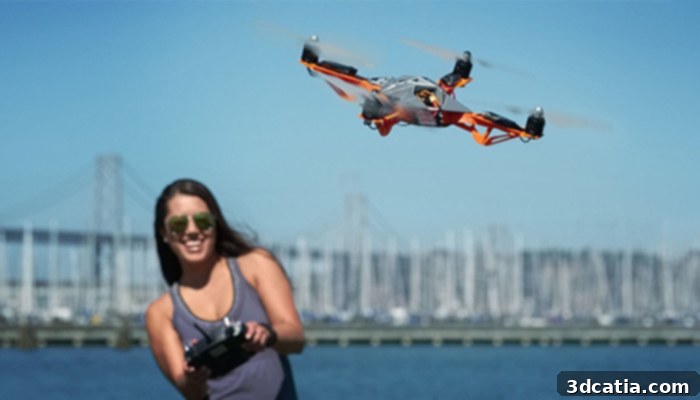
Additive manufacturing offers a myriad of advantages that are particularly impactful in the realm of drone development, from conceptual prototypes to fully functional devices. The ability to rapidly iterate designs, test them in real-world conditions, and make swift modifications is a game-changer. Svarmi, a company specializing in custom-built drones and remote sensing data for scientific and industrial applications, has fully embraced 3D printed drones in its research endeavors. In a revealing interview with Sculpteo, Svarmi highlighted significant gains: “With 3D printing, we were able to save 40% of time in the product design and development process. The total weight of the drone was also reduced by a factor of 20%.” These statistics underscore the profound impact of additive manufacturing. It facilitates high-speed manufacturing, enabling engineers to quickly produce parts, subject them to rigorous testing, and implement necessary design adjustments without the prohibitive costs and delays associated with traditional production methods. Beyond speed, the additive manufacturing process dramatically lowers production costs for specialized parts, especially for small to medium batch sizes, a stark contrast to the expensive tooling and economies of scale required by conventional manufacturing techniques. These cumulative benefits have elevated 3D printed drones from mere hobbyist gadgets to sophisticated, professional-grade devices capable of excelling in a wide array of demanding applications.
Soaring into Education: Empowering Learning with 3D Printed Drones
Beyond their professional utility, the development of custom drones through 3D printing serves as an incredibly engaging and interactive pathway to learning about technology, engineering, and design. This hands-on approach is increasingly being integrated into educational curricula worldwide, forming a vital component of STEM (Science, Technology, Engineering, and Mathematics) learning programs. It offers students a tangible way to understand complex principles of aerodynamics, electronics, programming, and mechanical design. Companies like Bonadrone, a pioneering startup based in Catalonia, are at the forefront of facilitating this educational shift by offering comprehensive drone kits specifically designed for 3D printing. Josep Tomàs Vergés, CEO of Bonadrone, eloquently states: “3D printing is the beginning and also part of the whole journey of a Bonadrone kit. With these robots we wanted to empower students to create and design their own drone from scratch, learning all the electronic parts and components.” This initiative not only teaches students how to assemble a drone but also encourages them to engage with the entire design process, from conceptualization to fabrication. Complementing these kits, online platforms such as Cults3D provide a vast repository of STL files, offering a diverse range of open-source and entirely free drone models that can be downloaded and printed at home, making drone creation accessible to a wider audience and fostering a vibrant community of makers and learners. This accessibility ignites creativity and problem-solving skills, preparing the next generation for technological innovation.

Guarding Our Communities: 3D Printed Drones for Public Safety
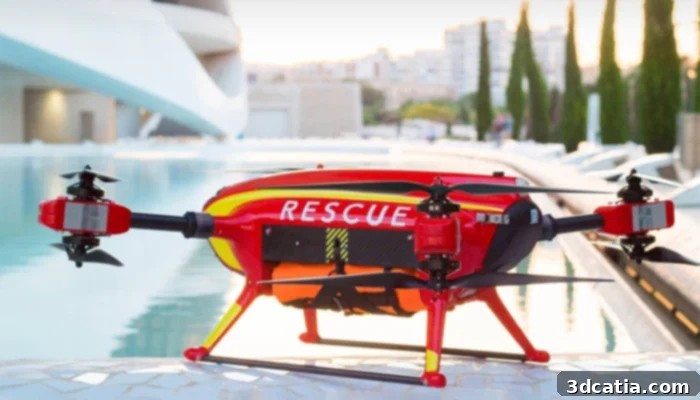
The application of 3D printed drones extends profoundly into the critical domain of public safety, where their unique capabilities can save lives and enhance situational awareness. General Drones, for instance, specializes in manufacturing emergency response drones and provides essential training for pilots and instructors. Their commitment to leveraging cutting-edge technology is exemplified by their use of FDM technology to create the Auxdron Lifeguard. This sophisticated drone is specifically designed for monitoring and controlling beaches, capable of swift deployment and operation. In an emergency, such as a swimmer in distress, the Auxdron Lifeguard can rapidly assess the situation, accurately locate the victim, and intervene with unprecedented speed—often significantly faster than human responders. Its advanced sensing capabilities also allow it to detect various potential hazards to bathers, including the presence of jellyfish swarms or other dangerous marine fauna, providing crucial early warnings. Engineered for resilience, the drone is built to withstand challenging environmental conditions, including strong winds, heavy rain, corrosive salt spray, sand ingress, and extreme temperatures, ensuring reliable performance when it matters most.
Another compelling case study in public safety and defense emerged from the Perdix project. This experimental initiative, spearheaded by the Strategic Capabilities Office (SCO) of the United States Department of Defense, explored the potential of autonomous micro-drones. Additive manufacturing played a pivotal role in the rapid prototyping and production of these devices, which were envisioned for unmanned aerial surveillance and intelligence gathering in complex environments. William Roper of the SCO highlighted their groundbreaking swarm intelligence: “Since each Perdix communicates and collaborates with any other Perdix, the group has no leader and can easily adapt to other UAVs integrating the team.” This decentralized, adaptive intelligence makes the Perdix drones exceptionally resilient and effective for missions such as perimeter monitoring, reconnaissance, and the precise location of enemy radar systems. The success of this project underscored the strategic value of 3D printing in developing agile, cost-effective, and highly adaptable defense technologies, leading to increased budgetary allocations for further advancements in this critical sector.
Driving Innovation: 3D Printed Drones for Business Solutions
The versatility of 3D printed drones is also creating significant opportunities within the business landscape, offering tailored solutions for diverse industrial and commercial needs. A notable recent innovation is the Lidardrone XL, developed by Aeromedia, a company dedicated to providing specialized industrial and audiovisual services. This impressive drone is capable of lifting substantial payloads, up to 13 kilograms, demonstrating its robust capacity for heavy-duty tasks. With an operational autonomy ranging from 25 to 45 minutes, depending on the carried weight, the Lidardrone XL is designed to enhance efficiency across various sectors. Its potential applications span from transporting heavy equipment in construction sites to expediting logistics within warehouses or factories, significantly speeding up operational activities. Aquilino Abeal, managing partner of Aeromedia, emphasized the material science behind its performance: “We use the highest quality materials, the predominant one being carbon fibre. This allows the Lidardrone XL to increase the compromise between weight and strength.” This strategic material choice ensures the drone’s durability and reliability, enabling it to operate effectively even in adverse conditions such as rain and strong winds, which would ground less robust systems.
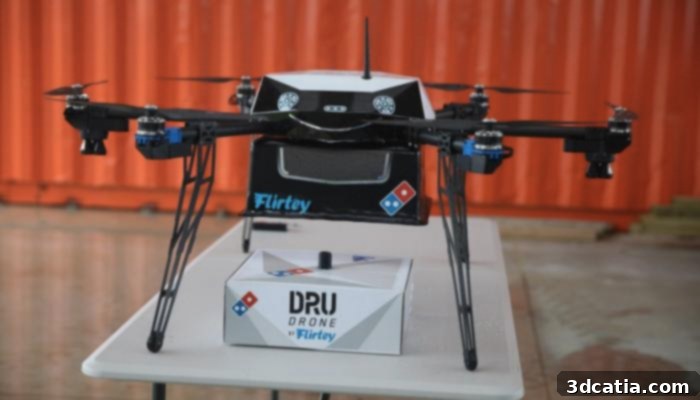
In another groundbreaking collaboration a few years prior, the partnership between drone delivery firm Flirtey and fast-food giant Domino’s captured global attention. This visionary project, initially trialed in New Zealand, aimed to revolutionize food delivery through autonomous drones capable of transporting pizzas directly to customers’ homes. Flirtey’s innovative technology was central to the creation of the “Dru” drone, which was engineered to be both lightweight and highly autonomous. Its construction involved a sophisticated blend of materials, including aluminum, various high-strength fibers, and crucial 3D printed components that optimized its structural integrity and aerodynamic performance. The Dru drone incorporated a precise GPS navigation system to execute deliveries efficiently, all while strictly adhering to air rules and regulations governing unmanned aircraft. While seemingly a futuristic concept, this drone delivery system has already transitioned from experimental trials to practical implementation for certain services, showcasing the commercial viability and transformative potential of drones in everyday business operations, particularly in last-mile logistics.
Beyond the Horizon: Diverse Applications of 3D Printed Drones
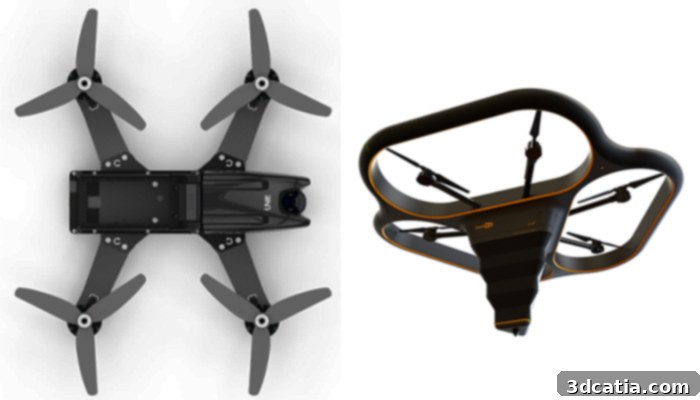
The utility of 3D printed drones extends far beyond the professional and educational spheres, permeating into more recreational and even speculative, futuristic applications. For enthusiasts and competitors, companies like UVify and Nano-Racing are at the forefront of developing high-performance 3D printed drones specifically designed for exhilarating air races. These customizable racing drones allow pilots to tweak designs for maximum speed, agility, and durability, creating a vibrant competitive scene. On a much grander scale, the integration of drones with robotic technology is paving the way for revolutionary urban development and infrastructure maintenance. Imagine flying machines equipped with scanning and 3D printing capabilities, autonomously identifying and repairing cracks in streets or damage to buildings. This incredible vision of “self-repairing cities” is gradually becoming a reality, propelled by pioneering projects such as those from the University of Leeds and the company DediBot. DediBot’s innovation, dubbed the “Fly Elephant,” stands out as the world’s first machine capable of 3D printing structures while airborne, showcasing an unprecedented level of mobility and construction capability. Both projects hold immense promise for optimizing infrastructure management, enabling swift identification and repair of construction defects or wear and tear in urban environments and large-scale building projects, thereby enhancing safety, longevity, and efficiency.
Building Your Own: A Guide to Creating a 3D Printed Drone
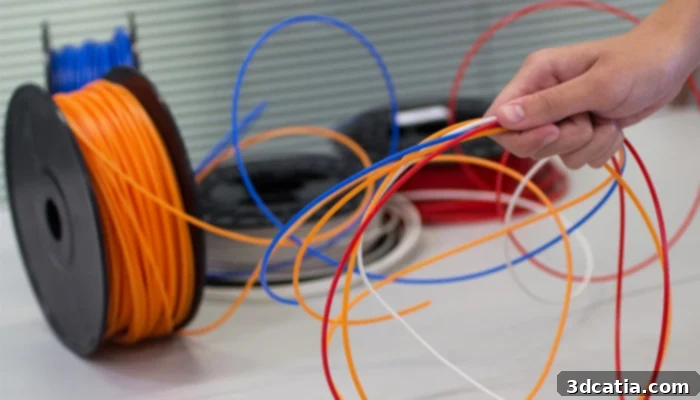
Embarking on the journey of creating your own 3D printed drone requires careful consideration of several key factors, with material selection being paramount. The vast array of available materials for additive manufacturing means that choosing the ideal one, perfectly suited to the drone’s specific needs and your printing capabilities, can be a complex decision. The material’s properties directly influence critical performance metrics such as weight, structural integrity, energy consumption, and ultimately, flight duration. A heavier drone will inevitably require more power, leading to shorter flight times and reduced payload capacity. Therefore, understanding the intended functionality of your drone—whether it’s for racing, carrying a camera, or simple recreational flight—is crucial in guiding your material choice. To further enhance resistance and achieve optimal strength-to-weight ratios, incorporating composite fibers into your design or using reinforced filaments can provide significant advantages. For drone production, several common additive materials are typically employed, each with distinct characteristics:
PLA (Polylactic Acid) is often the material of choice for beginners entering the world of 3D printing due to its ease of use and affordability. It is an odorless, readily available material offered in a multitude of colors, making it aesthetically versatile. However, its primary disadvantage lies in its relatively low heat resistance and brittleness, which can limit its use in demanding drone applications. On the other hand, ABS (Acrylonitrile Butadiene Styrene) is a polymer that shares PLA’s benefits of low cost and wide availability but offers significantly enhanced mechanical properties. ABS is considerably more resistant to impact and higher temperatures, and it is lighter than PLA, making it more efficient for drone components. However, users must be mindful of the toxic fumes emitted during printing and the requirement for a heated build platform to prevent warping. For those seeking more robust options, PETG (Polyethylene Terephthalate Glycol) presents a stable and impact-resistant alternative, offering good chemical resistance. While it can be heavier and potentially more expensive to print than PLA or ABS, its durability often justifies the cost. TPU (Thermoplastic Polyurethane) materials are characterized by their exceptional flexibility and elasticity, making them ideal for parts that require vibration absorption, such as landing gear or protective bumpers, enhancing the drone’s resilience. Finally, Nylon stands out as a lightweight polymer boasting incredible strength, abrasion resistance, and high-temperature stability, making it excellent for performance parts, although it can be challenging to print due to its hygroscopic nature and tendency to warp.
Once you have carefully selected the most suitable material for your specific drone project, the next crucial step involves acquiring an STL (stereolithography) file containing the 3D model of the drone you intend to create. For those who are new to 3D printing or seeking inspiration, a plethora of websites offer free and paid models. Many platforms specialize in providing diverse STL files, ranging from simple designs for beginners to complex models for advanced users. If you’re unsure where to begin your search, consulting our dedicated listing of top websites for STL files can guide you to a wealth of resources. After successfully 3D printing all the necessary structural components, the final and most exciting phase involves the assembly of these parts and the integration of the drone’s electronic heart. This includes fitting the motors, propellers, flight controller, battery, and any desired sensors or cameras. This hands-on process not only brings your creation to life but also provides invaluable insights into the intricate mechanics and electronics of aerial vehicles. So, what are you waiting for? The world of custom 3D printed drones awaits your innovation!
Have you embarked on the exciting journey of making a 3D printed drone? We’d love to hear about your experiences, challenges, and successes! Share your thoughts and projects in a comment below or connect with us on our Facebook and Twitter pages. Stay ahead of the curve with all the latest advancements in additive manufacturing by signing up for our free weekly Newsletter, delivering the freshest news in 3D printing directly to your inbox!