
Revolutionizing Healthcare: Expert3D Bridges the Gap in Medical 3D Printing, AI, and Advanced Imaging Training
In the rapidly evolving landscape of healthcare technology, specialized training has become paramount. A few months ago, we first introduced you to Expert3D, a pioneering postgraduate course meticulously designed for a diverse group of professionals. This includes doctors, various healthcare practitioners, engineers, and technicians actively engaged in the healthcare sector. Developed collaboratively by the esteemed Hospital Sant Joan de Déu Barcelona (SJD) and several other prominent European medical centers, and proudly accredited by the Polytechnic University of Catalonia with valuable ECTS credits, Expert3D offers a comprehensive curriculum.
The program features robust theory-based modules that delve into critical areas of focus, notably artificial intelligence (AI), advanced 3D printing, and sophisticated medical image post-processing techniques. These fields represent the forefront of healthcare innovation, driving significant improvements in diagnostics, treatment planning, and patient-specific solutions. The escalating demand for cutting-edge 3D applications in medicine has spurred numerous organizations to launch professional training initiatives and courses. This surge reflects the urgent need for healthcare professionals to adapt to and master new technologies in medicine, ensuring they remain at the vanguard of patient care.
Within this dynamic context, we recently had the privilege of meeting with two of the principal architects and representatives of Expert3D: Dr. Josep Munuera and Arnau Valls. Our conversation aimed to gain deeper insights into the profound importance of specialized training within the healthcare sector. We also explored the critical need for technical proficiency in the additive manufacturing industry, a thorough understanding of artificial intelligence applications, and expertise in other emerging medical technologies. This year marks the third successful iteration of the Expert3D course, and for 2021, it proudly benefits from the additional support of EIT Health, further solidifying its reputation as a leading educational program in medical innovation.
3DN: Can you introduce yourselves and discuss your connection to 3D printing and medical innovation?
We are Dr. Josep Munuera, the Head of the Diagnostic Imaging Department at Hospital Sant Joan de Déu (SJD), and Arnau Valls, an engineer within the R&D department at the same Hospital. Together, we serve as the co-directors of the Expert3D course. Our journey into medical 3D printing began in 2015 when, alongside a dedicated multidisciplinary team—comprising two surgeons, one bioengineer, two simulation experts, and a finance manager—we established the 3D Planning Unit of the Hospital Sant Joan de Déu. This unit, known as 3D4H Unit, was a groundbreaking initiative, being one of the first 3D planning units in Spain and among the pioneering units in Europe specifically focused on pediatric applications.
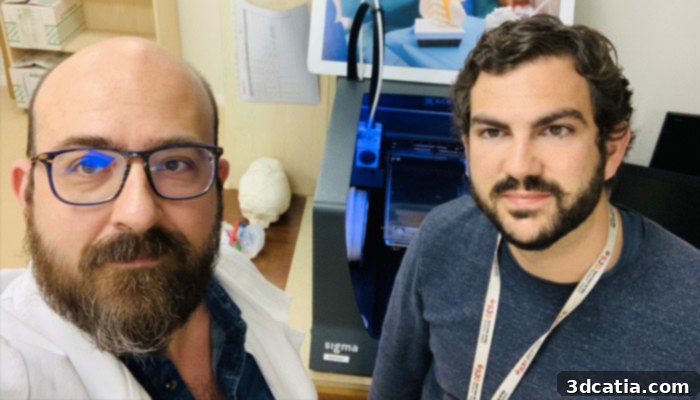
On the left, Dr. Josep Munuera, and on the right, Arnau Valls, Co-Directors of the Expert3D Course.
The establishment of the unit and our initial engagement with 3D technology felt incredibly natural, stemming from a shared passion and common interest across our respective areas of specialization. Medical 3D planning, at its core, emerges from a synergistic convergence of deep knowledge in radiological imaging, comprehensive understanding of anatomy and diagnostic imaging principles, expertise in intricate surgical procedures, and a solid grasp of technology for the production of custom medical devices. This powerful conjunction of diverse specialties, coupled with our inherent curiosity to continuously learn and rigorously explore the expansive possibilities offered by 3D printing and other emerging fields, served as the primary catalyst for this impactful collaboration.
Since its inception, our unit has been actively involved in numerous complex surgical planning projects and cutting-edge R&D initiatives. These projects span both national and international levels, focusing on advanced medical image post-processing and sophisticated 3D applications. Approximately four years ago, we recognized a significant void in the educational landscape: there were no specific, well-structured training programs dedicated to 3D planning as applied to medicine. This glaring absence motivated us to develop our own comprehensive course, Expert3D, meticulously designed to embody the ideal training we envisioned for professionals entering this critical field, ensuring a blend of theoretical knowledge and practical, real-world application.
3DN: What does the Expert3D training encompass, and what motivated your decision to launch such a specialized program?
Expert3D is a distinguished postgraduate course, offering 20 ECTS credits, meticulously accredited by the Polytechnic University of Catalonia (UPC). Furthermore, its quality and relevance are recognized by the Academy of Medical Sciences of Catalonia and an additional seven prominent Spanish universities, underscoring its broad academic acceptance and rigorous standards. Our fundamental mission with Expert3D is to equip professionals with advanced skills in medical image post-processing, with a strong emphasis on 3D reconstruction and cutting-edge artificial intelligence methodologies. The course is thoughtfully tailored for a wide array of professionals across health-related sectors. This includes biomedical engineers, specialists in medical imaging, surgeons, product engineers, and other technical and clinical experts who possess a keen interest in thoroughly exploring and mastering these complex subjects.
The genesis of this ambitious project stemmed directly from our own institutional need to both acquire and standardize a profound understanding of these novel fields within the domain of medical image post-processing. This area is unique in that it inherently blends critical knowledge derived from diverse disciplines such as radiology, surgery, and engineering, creating a rich interdisciplinary challenge. At SJD, our initial forays into 3D planning and AI commenced between 2014 and 2015, culminating in the official establishment of our dedicated 3D planning unit in 2015. Through this pioneering work, we quickly identified a significant educational gap: there was a distinct lack of practical, hands-on training programs specifically designed to foster and support multidisciplinary teams grappling with these intricate technologies and the unique challenges they present. Expert3D was therefore conceived as a direct response to this need, providing a comprehensive platform for collaborative learning and skill development in these vital areas of medical innovation.
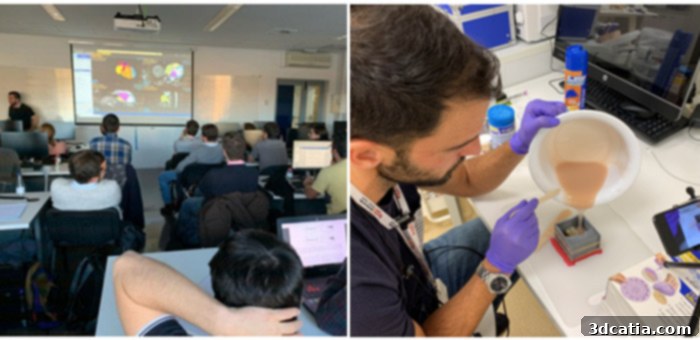
On the left, medical image post-processing class with Prof. Gerard Blasco; On the right, simulation class with Prof. Carlos Alaez, from the Expert3D course.
3DN: What are the distinct benefits of integrating 3D printing with artificial intelligence within the medical sector, and how comprehensively is this vital topic addressed in your Expert3D courses?
Both 3D printing and artificial intelligence stand as truly disruptive technologies, fundamentally aimed at significantly enhancing diagnostic and therapeutic accuracy across the medical spectrum. We are witnessing an accelerating trend where these innovative technologies are being increasingly adopted in hospitals worldwide, leading to tangible improvements in clinical outcomes and patient follow-up care. Furthermore, they are transforming the patient experience by offering personalized solutions and streamlining the daily work of healthcare professionals. At Expert3D, our curriculum provides a robust framework for understanding and applying these synergies. Starting from raw medical images, students are expertly guided through the processes required to meticulously transform this data. This includes generating highly accurate 3D surgical planning models, which are invaluable for complex procedures, and developing advanced techniques to quantify critical results with precision.
Moreover, the course delves into the practical application of artificial intelligence, teaching participants how to create sophisticated automatic image classifiers using advanced AI algorithms. These classifiers can significantly aid in early diagnosis and disease identification, offering invaluable support to clinicians. The medical sector is experiencing an unprecedented demand for clinical and technical specialists who possess a strong foundation in both 3D planning and artificial intelligence technologies. This growing need is not merely a trend; it is actively shaping the future of healthcare and is anticipated to generate a wealth of new, specialized job opportunities within the industry. Expert3D is strategically positioned to prepare professionals for these emerging roles, ensuring they are at the forefront of medical technological advancements.
3DN: In your informed opinion, what is the overarching importance of specialized training in the medical 3D sector? What recommendations would you offer to individuals or institutions considering this area?
The medical 3D sector is characterized by its inherent newness and an incredibly rapid pace of evolution and improvement. This dynamic environment, especially when applied to healthcare, necessitates the seamless integration of multiple specialties and diverse knowledge bases. Consequently, it compels professionals from a wide array of disciplines to collaborate closely, breaking down traditional silos. We confidently predict that we will witness an exponential increase in the adoption of 3D printing and AI applications and solutions within hospitals in the coming years. Diagnostic imaging, in particular, has emerged as one of the pioneering specialties to enthusiastically embrace both 3D planning and artificial intelligence, recognizing their transformative potential.
However, a significant challenge remains: these transformative technologies are not yet routinely incorporated into the standard curricula of traditional medical schools. Furthermore, the vital skill of working effectively within integrated technical and clinical teams is often overlooked in conventional education. To truly maximize the vast potential of these technologies in practical applications, it is absolutely critical for professionals to possess a solid, foundational knowledge. This foundation must encompass not only a deep understanding of the technology itself but also a profound grasp of imaging principles, intricate human anatomy, and a comprehensive awareness of the extensive possibilities that these technologies offer. Without such comprehensive training, the ability to fully leverage and innovate with medical 3D printing and AI remains significantly constrained. Therefore, dedicated training programs like Expert3D are indispensable for fostering the necessary expertise and multidisciplinary collaboration to advance patient care.
3DN: How do you envision the adoption and widespread integration of additive manufacturing within the medical sector over the next five years?
We have already observed an exponential growth of additive manufacturing across nearly all industries, but its impact in the healthcare sector has been particularly profound and transformative. We are increasingly seeing the establishment of specialized 3D units directly within hospitals, a clear indicator of this accelerating adoption. Europe, recognizing this trend, has proactively developed directives that will meticulously guide the broader adoption of this technology. A prime example is the new Medical Devices Regulation (MDR), which came into full effect this May. This regulation specifically addresses and accounts for the in-house manufacturing of medical devices within hospitals, and crucially, it classifies 3D printed anatomical models or surgical support parts as legitimate medical devices, categorizing them into Class I, II, and III based on their risk profile. This legislative framework provides essential clarity and legitimization for additive manufacturing in clinical settings.
Furthermore, the unprecedented global challenge posed by the COVID-19 pandemic vividly demonstrated the immense utility and critical importance of additive manufacturing and advanced 3D image post-processing techniques, alongside the strategic use of artificial intelligence. These technologies proved invaluable in enhancing treatment strategies, facilitating the rapid development of customized medical devices, and significantly streamlining diagnostic processes during a time of immense pressure. We witnessed firsthand how 3D printing showcased its maturity and resilience by enabling the on-demand production of crucial personal protective equipment (PPE) and essential respirator parts, directly contributing to saving lives when conventional supply chains failed. Similarly, artificial intelligence played a pivotal role in the early diagnosis of COVID-19 by effectively identifying and quantifying its spread in the lungs, quickly becoming a commonly utilized tool in patient triage systems.
These compelling examples unequivocally illustrate that these disruptive technologies have reached a sufficient stage of maturity to consistently deliver practical and scalable solutions for production within the medical field. However, this raises a crucial question: Will the professionals who are expected to live and work with these advanced tools be adequately prepared? Will hospitals readily embrace and facilitate the creation of the essential multidisciplinary teams required to leverage these technologies effectively? This is precisely why we firmly believe that continuous, specialized training in the competencies demanded by highly specialized professionals – particularly clinical and engineering profiles – is not just important, but absolutely vital. This kind of advanced training is not yet adequately provided in undergraduate courses, yet these skills are increasingly becoming indispensable requirements in modern medical roles. Expert3D aims to bridge this critical knowledge gap, empowering the next generation of healthcare innovators.
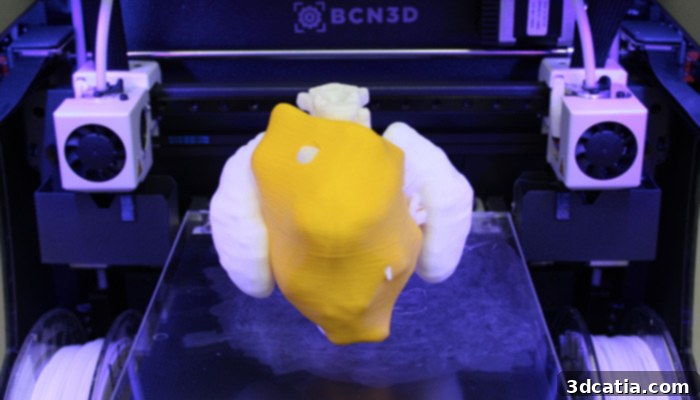
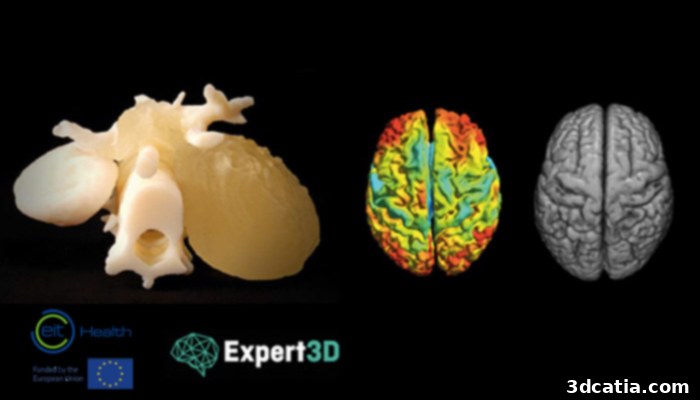
Examples of 3D printed anatomical models used for surgical planning and patient education.
3DN: Do you have any final words or insights you’d like to share with our readers regarding the future of medical technology and training?
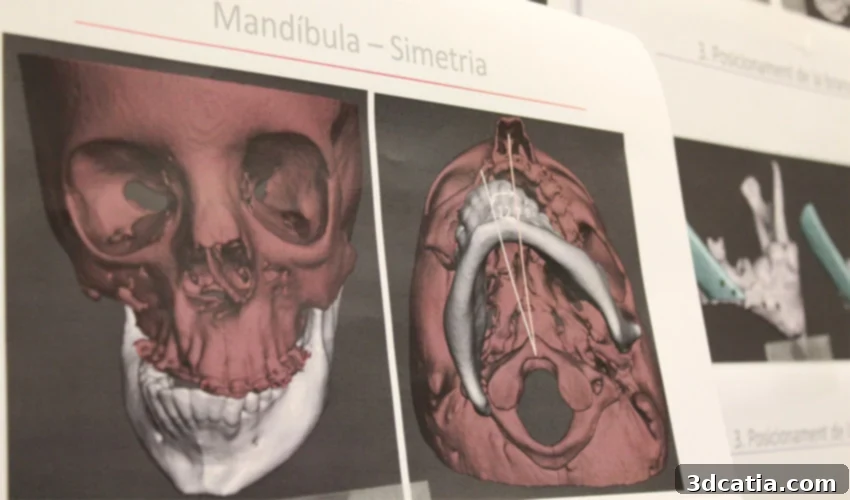
The entire world of medical imaging, precise diagnosis, and advanced treatment strategies is undergoing a profound and rapid transformation, largely catalyzed by the seamless integration of groundbreaking new technologies such as 3D printing and sophisticated artificial intelligence. We can already point to numerous examples that are becoming common practice in many leading medical centers. These include the meticulous planning of complex orthognathic surgeries using highly accurate 3D models, or the powerful combination of radiomics with other ‘omics’ data in the nuanced field of oncology to gain deeper insights into cancer progression and treatment responses. These innovations are not just theoretical; they are actively reshaping how healthcare is delivered.
Despite these significant advancements, there remains a discernible knowledge gap between the normative competencies taught in traditional undergraduate courses and the highly specialized, practical training that professionals genuinely need for their day-to-day work in an increasingly tech-driven medical environment. With Expert3D, our primary objective is to decisively close this critical gap. We achieve this through a highly practical, competency-based approach, ensuring that the skills and knowledge acquired are immediately transferable and applicable from day one after completing the course. The aim is to empower professionals to make an instant impact in their respective fields. Therefore, if you possess a keen interest in these transformative subjects, or if you are already embarking on a career path that involves working with these cutting-edge technologies, we strongly encourage you to explore and sign up for the acclaimed Expert3D course. We are pleased to announce that we still have available places for our upcoming Barcelona, Naples, and the combined Heidelberg-Riga-Coimbra editions scheduled for October. This is a unique opportunity to gain expertise that will truly define the future of medical care.
What are your thoughts on Expert3D’s innovative training approach? We invite you to share your insights in a comment below or engage with us on our Facebook, Twitter, and LinkedIn pages! For the very latest updates in 3D printing news delivered straight to your inbox, be sure to sign up for our free weekly Newsletter here.
*All photo credits: Expert3D