
The Ultimate Guide to 3D Printing Resins: Types, Applications, and Expert Selection Tips
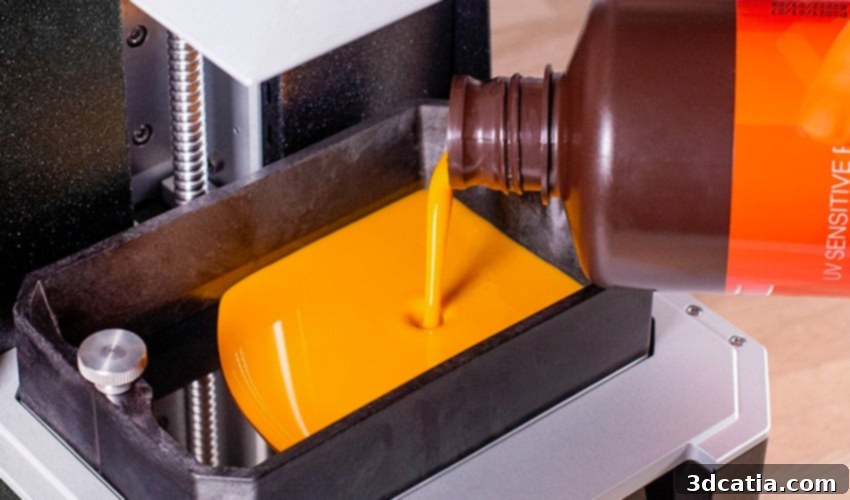
In the dynamic world of additive manufacturing, the selection of the right material is paramount, serving as the foundational step for any successful project. This principle holds particularly true in the realm of resin 3D printing, a sophisticated process where photosensitive liquid materials are meticulously cured, layer by layer, through light polymerization until a final, often highly-detailed, physical part emerges. The choice of resin is not arbitrary; it is intimately linked to the specific photopolymerization technology being utilized. Broadly, these technologies include Stereolithography (SLA), which employs a precision laser to solidify the resin, and display-based methods such as Digital Light Processing (DLP) and Liquid Crystal Display (LCD) technologies, which use an entire screen to project light and cure layers simultaneously. To navigate the extensive landscape of available material options and make informed decisions, we will delve into the various types of 3D printing resins, exploring their unique characteristics, ideal applications, and essential considerations.
A critical factor influencing resin performance and curing efficacy is the optimal polymerization induced by the light source, which can emit light at single or multiple wavelengths. This is where the concept of resin wavelength compatibility becomes crucial. Each resin formulation is designed to react optimally to a specific range of light wavelengths. Generally, resins with a lower wavelength rating demand higher light output power for effective curing, ensuring proper solidification and mechanical properties. Consequently, manufacturers meticulously specify the compatible wavelength range for their resins, making it essential for users to match their resin to their printer’s light source. For instance, DLP and LCD resins typically operate with longer wavelengths (often around 405nm) compared to some SLA resins, though advancements mean many resins are now formulated for broad compatibility within popular 3D printing systems. Understanding this interplay between resin chemistry and light technology is fundamental to achieving high-quality, reliable 3D prints.
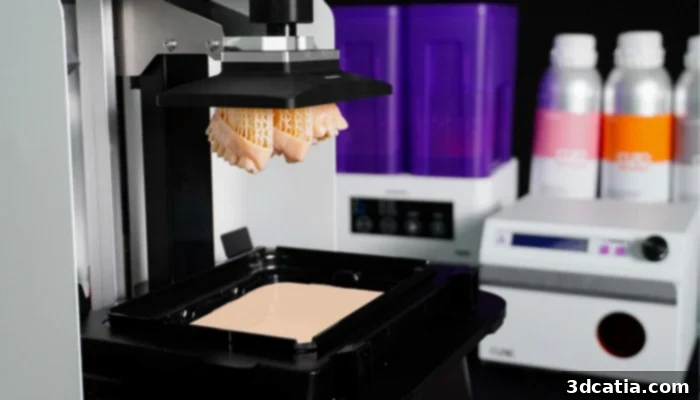
Photo Credits: Ackuretta
Understanding Standard 3D Printing Resins
Standard resins represent the most common and accessible category of photopolymer resins available on the market. Nearly all 3D printer manufacturers and third-party suppliers offer standard resins, making them widely available, typically at an affordable price point, and in an impressive array of colors. This versatility makes them an excellent choice for a broad spectrum of applications, particularly for those new to resin 3D printing. They excel at producing parts with smooth surfaces and intricate details, achieving a commendable balance between aesthetic quality and moderate hardness. Post-processing steps like support removal, cleaning, sanding, and painting are generally straightforward, enhancing their user-friendliness. However, it’s important to note that standard resins can be relatively brittle; parts printed with them may be susceptible to breaking or cracking under stress or impact. Despite this limitation, their accessibility, ease of use, and ability to capture fine features make them ideal for educational purposes, rapid prototyping, creating decorative objects, artistic figurines, game pieces, and other non-functional models where extreme durability is not the primary requirement.
Clear Resins for Transparent 3D Prints
Clear resins share many characteristics with standard resins, making them suitable for producing small objects with exceptional detail. Their defining property, however, is their translucency and often colorless nature, allowing for light to pass through. This unique attribute enables the creation of parts that mimic glass or transparent plastics, opening up possibilities for a distinct range of applications. Beyond simply facilitating sanding and subsequent painting, clear resins are invaluable for aesthetic and functional prototypes where visual inspection of internal components or fluid flow is necessary. They are perfect for crafting decorative items that require a glass-like effect, such as intricate ornaments, artistic sculptures, or light-diffusing elements. While achieving perfect optical clarity often requires additional post-processing like extensive sanding, polishing, and sometimes a clear coating, the inherent transparency of these resins provides a beautiful foundation. It is crucial to remember that despite their appearance, transparent resins are generally not recommended for direct food contact applications. However, a significant advantage is their resistance to water contact, meaning printed parts will not degrade when exposed to moisture.
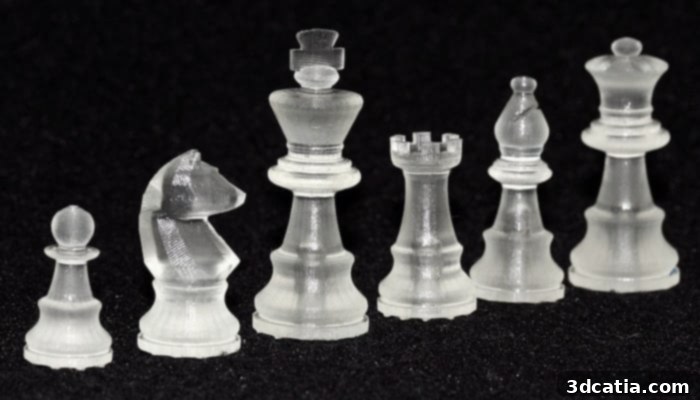
3D printed chess pieces made using clear resins
Water-Washable Resins: Simplicity in Post-Processing
Traditionally, 3D printed resin parts necessitate thorough post-treatment to meticulously remove excess uncured resin and support structures. This crucial cleaning phase is typically performed using solvents like isopropyl alcohol (IPA), which requires careful handling and disposal. However, a revolutionary category of 3D printing resins has emerged: water-washable resins. As their name suggests, these resins can be effectively cleaned simply with water, eliminating the need for harsh chemical treatments like IPA. This significantly streamlines the post-processing workflow, making resin 3D printing more accessible and environmentally friendlier for hobbyists and professionals alike. Cleaning parts with water often results in a smoother, more pleasant tactile texture, free from the residual stickiness or excessive viscosity sometimes associated with IPA-cleaned parts. Furthermore, the strong odor commonly linked with standard resins and IPA is substantially reduced, contributing to a more agreeable working environment. The primary consideration with water-washable resins is that, in some formulations, the mechanical properties or the ultimate resolution/detail might be slightly different compared to traditional resins, although continuous advancements are rapidly narrowing this gap. They are particularly well-suited for educational settings, home use, and applications where ease of cleaning and reduced chemical exposure are priorities.
Flexible 3D Printing Resins: Engineering for Resilience
Flexible 3D printing resins are engineered to mimic the properties of rubber and elastomers, offering an impressive blend of elasticity and durability. Characterized by a Shore hardness typically ranging around 80A (though variations exist), these resins enable the creation of robust objects capable of bending, compressing, and deforming without suffering permanent damage or breaking. Parts produced with flexible resins will exhibit excellent resilience, consistently recovering their initial shape even after significant deformation, much like rubber. This unique attribute makes them incredibly valuable for applications requiring impact absorption, dampening, or movement. Thanks to their extended lifespan and inherent ability to withstand constant use and repeated stress cycles without degradation, flexible resins are the material of choice for prototyping shock absorbers, ergonomic grips, functional gaskets, seals, living hinges, custom footwear components, and other movable or stress-bearing parts. Their ability to provide both tactile softness and mechanical robustness opens up new avenues for functional prototyping and even end-use parts in demanding environments where flexibility and durability are paramount.
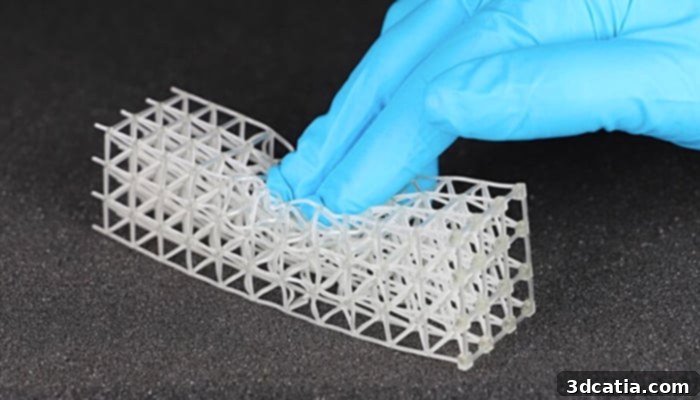
3D printed part made with BASF’s Ultracur3D EL 4000 flexible resin (photo credits: Zortrax)
Industrial 3D Printing Resins: High-Performance Photopolymers
Industrial photopolymers, often referred to as engineering-grade or hard resins, represent a class of materials specifically formulated for the most demanding and rigorous applications across various industries. These advanced resins are distinguished by their superior mechanical properties, including exceptional strength, rigidity, and resistance to stress, impact, and abrasion. Unlike standard resins, industrial photopolymers are designed to withstand significant forces and harsh operating conditions without breaking, cracking, or deforming, making them suitable not only for advanced prototyping but also for producing functional end-use parts. Their enhanced capabilities allow them to be integrated into manufacturing processes and perform tasks that require high levels of strength, durability, and reliability. This expansive category encompasses specialized resins such as heat-resistant resins for high-temperature applications and burnout (castable) resins for precision casting. We also include dental resins within this broad group due to their specialized properties and critical importance in the medical and dental sectors, where biocompatibility and precision are non-negotiable.
Heat-Resistant Resins for Extreme Environments
When applications demand parts that can maintain their structural integrity and mechanical properties under elevated temperatures, heat-resistant 3D printing resins are the ideal solution. These industrial-grade resins are specifically engineered for thermal stability, meaning they can be exposed to high temperatures, often exceeding 200°C (with some formulations reaching up to 230°C or even higher), without undergoing significant deformation, softening, or degradation of their essential properties. This makes them indispensable for a wide array of industrial applications where thermal performance is critical. Examples include the manufacturing of foundry tools, jigs, and fixtures that operate in hot environments, components exposed to hot fluids or gases, electrical connectors, and parts for machinery that experience intense operational heat. Utilizing heat-resistant resins allows engineers to rapidly prototype and produce functional components for automotive under-hood applications, aerospace components, and custom tooling that withstands challenging thermal cycles, offering significant advantages over traditional manufacturing methods for specialized, low-volume production.
Burnout Resins: Precision for Casting Applications
Burnout resins, often categorized under industrial resins, are specialized materials designed for investment casting, also known as the “lost wax” process. The application of these resins begins with the precise 3D printing of a highly detailed model, capturing intricate geometries and fine features with exceptional accuracy. This printed model then serves as a pattern for a mold. During the metal casting process, the burnout resin pattern is placed within a ceramic or plaster shell and subsequently heated. A key characteristic of high-quality burnout resins is their ability to evaporate completely, or “burn out,” without leaving behind any ash, residue, or carbon deposits within the mold cavity. This clean burnout is paramount, as any residue could compromise the surface quality and dimensional accuracy of the final metal object. This type of resin is extensively utilized in industries such as jewelry manufacturing, where intricate designs like rings, pendants, and other adornments are cast in precious metals, and in the dental sector for creating precise frameworks for crowns, bridges, and partial dentures. The result is a flawlessly smooth and imperfection-free surface on the cast metal part, making burnout resins indispensable for achieving superior quality in precision casting applications.
Dental Resins: Biocompatible Solutions for Oral Health
Distinct from many other resin types, dental resins are specifically formulated with biocompatible organic elements, ensuring they are free from toxins and safe for direct contact with human tissues, particularly within the oral cavity. This stringent requirement for biocompatibility, often certified by standards like ISO 10993, allows them to be safely used for a broad spectrum of dental applications without posing health risks to patients. Dental resins enable the creation of parts with exceptionally smooth textures and a very high level of detail and accuracy, crucial for perfect fit and function in dental prosthetics and devices. This specialized option is ideal for manufacturing a wide array of dental products, including custom retainers, precise crowns and bridges, highly accurate surgical guides for implant placement, orthodontic models, custom impression trays, partial and full dental prostheses, and anatomical models for educational or diagnostic purposes. Beyond their clinical safety and precision, dental resins considerably reduce the production costs and lead times associated with traditional dental fabrication methods, ushering in a new era of efficiency and customization for dental laboratories and clinics worldwide.
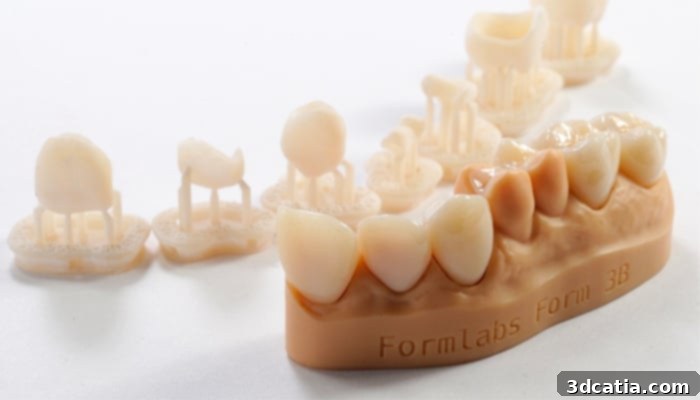
An example of a dental resin application (photo credits: Formlabs)
Conclusion: Navigating the World of 3D Printing Resins Safely and Effectively
While resin 3D printing offers unparalleled versatility and the ability to produce incredibly detailed parts, it is imperative to acknowledge and address certain inherent characteristics and potential disadvantages of resins before initiating any printing process. Foremost among these is the consideration of toxicity. With the notable exceptions of dental and other certified biocompatible resins, most photopolymer resins exhibit some level of toxicity in their uncured liquid state. Therefore, it is strongly advised to wear appropriate personal protective equipment (PPE) such as chemical-resistant gloves and safety masks (or respirators) when handling liquid resins, and continue these precautions until the final printed part is thoroughly cleaned and fully cured. Maintaining a well-ventilated manufacturing space is equally crucial to prevent the accumulation of toxic vapors, which can be irritating or harmful if inhaled over prolonged periods. Proper disposal of uncured resin and contaminated cleaning agents (like IPA) must also follow local hazardous waste regulations.
Another critical consideration is the susceptibility of cured resin parts to ultraviolet (UV) rays. Prolonged exposure to direct sunlight or other sources of intense UV light will cause the polymers to continue curing, leading to material degradation. This can manifest as yellowing, increased brittleness, cracking, and ultimately, deformation of the printed figure. To preserve the integrity and longevity of your 3D prints, it is highly recommended to store finished parts in a cool, dark place, shielded from direct light. Similarly, uncured resin should always be stored in opaque containers away from light sources. Finally, it is vital to understand that, generally, these materials are not suitable for direct contact with food, particularly liquid beverages. As highlighted, most resins are toxic materials, and even after curing, micro-porosities within the printed part can harbor bacteria or leach chemicals into food items over time, posing significant health risks. Unless a resin is explicitly certified as food-safe by relevant regulatory bodies and accompanied by specific guidelines for use, it should never be used for food-related applications.
Despite these necessary precautions, the immense versatility offered by the diverse types of 3D printing resins makes them invaluable tools for an astonishing array of applications. From the rapid creation of prototypes and intricate artistic figures to the precision manufacturing of dental prostheses, exquisite jewelry, and robust industrial tools, resin 3D printing continues to expand its reach. The key to unlocking this potential lies in accurately identifying which type of resin best aligns with your specific application requirements – considering factors like mechanical properties, thermal resistance, optical clarity, flexibility, and biocompatibility – and subsequently pairing it with the most suitable resin 3D printer for optimal results. By understanding these materials deeply, users can harness the full power of resin additive manufacturing to innovate and create.
What are your thoughts on the wide variety of resins available for 3D printing? We invite you to share your experiences and insights in a comment below or connect with us on our LinkedIn, Facebook, and Twitter pages! Don’t miss out on the latest 3D printing news – remember to sign up for our free weekly Newsletter here, delivered straight to your inbox! You can also explore all our informative videos on our dedicated YouTube channel.
*Cover Photo Credits: Prusa