
Unlocking Sustainable 3D Printing: The Surprising Potential of Termite Droppings for Eco-Friendly Manufacturing
The world of additive manufacturing (AM), commonly known as 3D printing, has long been lauded for its transformative potential across numerous industries. One of its most significant advantages over conventional production methods is the ability to create complex geometries with minimal material waste, often resulting in more efficient use of resources. This inherent characteristic positions 3D printing as a seemingly more sustainable alternative. However, it’s an open secret within the industry that while AM offers a considerable step forward, there remains substantial room for improvement in its overall environmental footprint. The quest for true sustainability in 3D printing encompasses various factors, including the direct and indirect energy consumption required for operating the machines, as well as the intensive processes involved in the production of the printing materials themselves. For instance, the preparation of specialized printing materials for powder-based processes, widely utilized in metal 3D printing and other high-performance applications, often demands significant energy and raw material resources. This resource-intensive nature contributes to the ecological impact, driving researchers and innovators to explore more environmentally benign material alternatives. It is within this context that groundbreaking projects emerge, dedicated to uncovering sustainable filament and powder solutions. A recent report from the German Federal Institute for Materials Research and Testing (BAM) highlights such an initiative, delving into the fascinating potential of using termite droppings as an innovative 3D printing material, a concept that could significantly reshape the future of sustainable additive manufacturing.
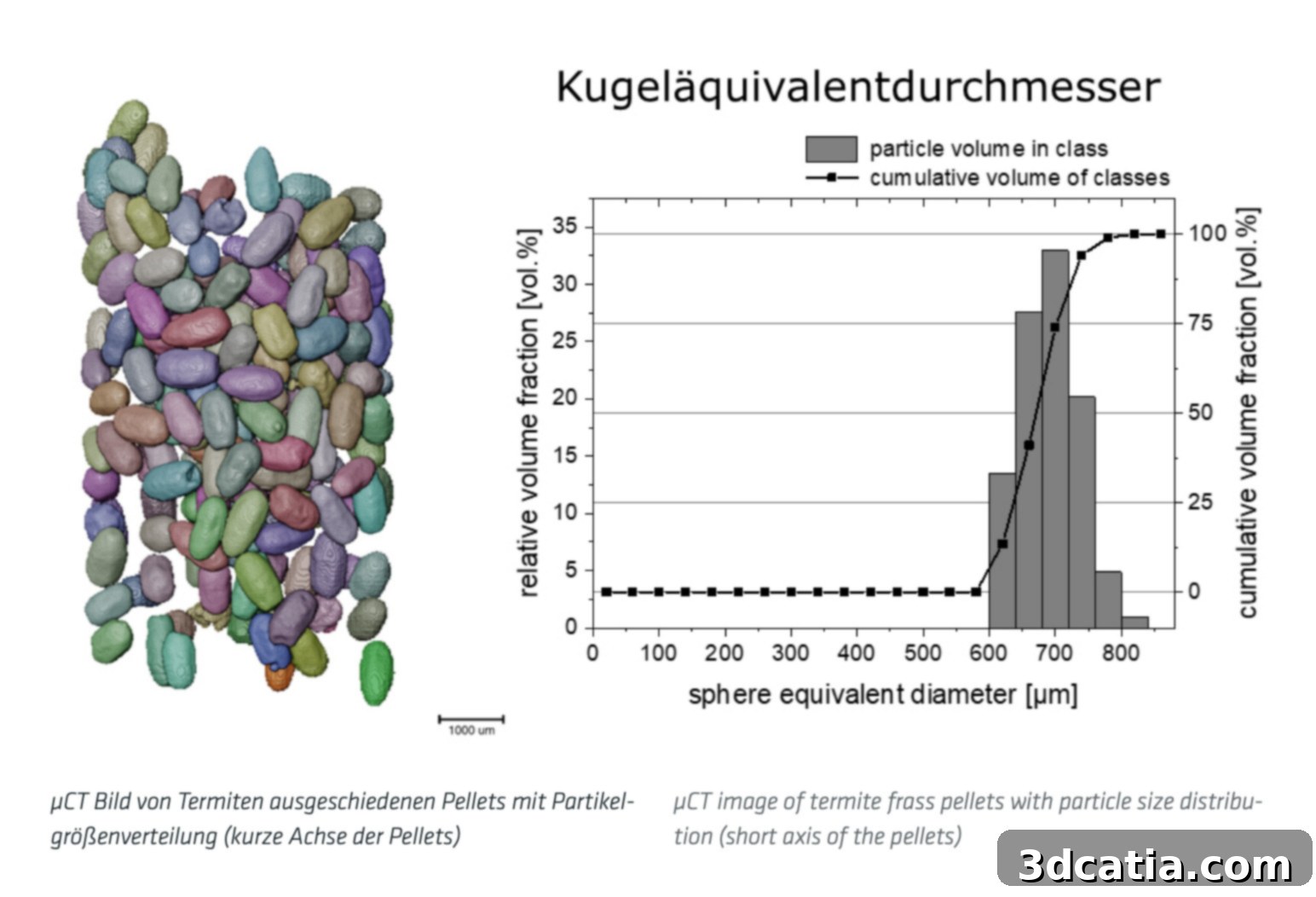
Photo Credits: Federal Institute for Materials Research and Testing (BAM)
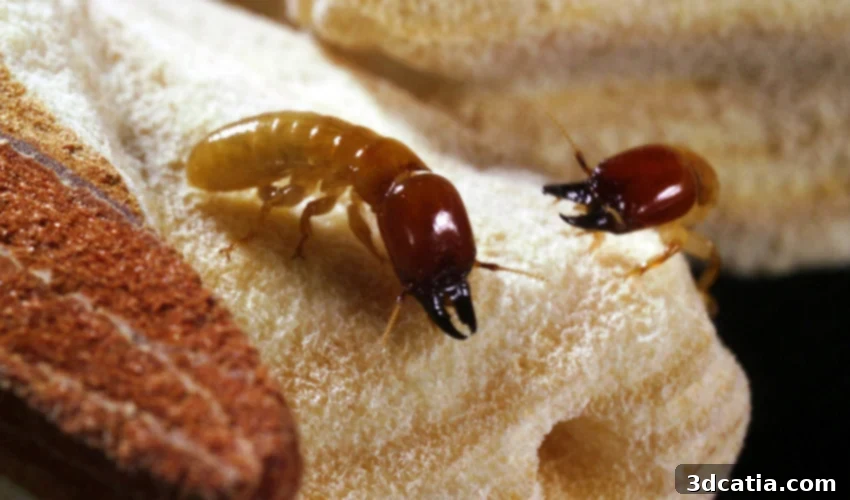
The material under scrutiny, which BAM researchers are investigating, isn’t just any generic excrement; it specifically comprises the droppings of the European house borer (Hylotrupes bajulus) and dry wood termites (Incisitermes marginipennis). These particular insects are known for their wood-eating habits, and consequently, their excretions are primarily composed of digested wood fibers, cellulose, and other organic matter. According to BAM’s comprehensive analysis, these termite droppings naturally form small, uniform pellets. A key characteristic of these pellets is their excellent flowability, a critical attribute for powder-based 3D printing technologies. This natural morphology makes them inherently suitable for processing in such systems without extensive pre-treatment. The most compelling aspect of this unconventional material source lies in its sustainable origin. These droppings are a naturally produced byproduct, offering a readily available and continuously renewable resource, unlike many conventionally manufactured plastics or metal powders which rely on finite fossil fuels or energy-intensive refinement processes.
Beyond the obvious environmental benefits of utilizing a sustainable, bio-derived raw material, the adoption of termite droppings could lead to substantial reductions in both production costs and greenhouse gas emissions associated with traditional material synthesis. Furthermore, and perhaps more crucially for worker health and safety, this bio-based material offers a potential solution to a significant issue plaguing the current 3D printing landscape: the generation of hazardous emissions. Conventional powder-based 3D printing processes, especially those involving metal powders, frequently release fine dust particles and even nanoparticles into the atmosphere. These airborne contaminants, particularly metal dust, pose considerable health risks to individuals working in proximity to the machines. The small size and persistent airborne nature of these hazardous particles make them easily inhalable, potentially leading to respiratory issues and other long-term health concerns. By contrast, the natural composition of termite droppings, combined with their larger particle size, significantly mitigates these risks, paving the way for safer, cleaner manufacturing environments.
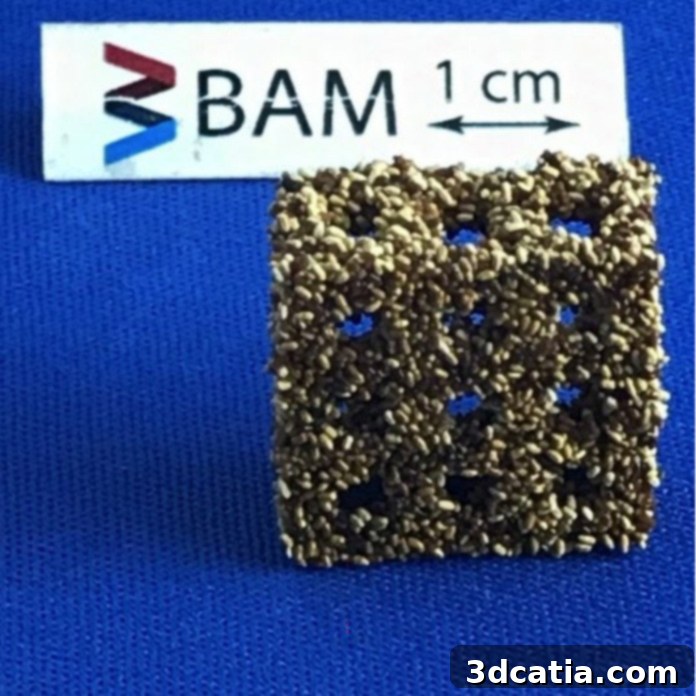
Photo Credits: BAM
A closer examination of the physical characteristics of these termite excretions, or “pellets,” reveals further advantages. With an average size ranging from 0.6 to 1 millimeter, these pellets are notably larger than the typical fine powders used in many conventional powder-based 3D printing processes, which often measure in micrometers. This larger particle size, far from being a disadvantage, presents a unique benefit for certain applications. Specifically, coarser powders facilitate the production of parts with higher layer thicknesses. In the context of 3D printing, higher layer thicknesses directly translate into significantly faster build rates, enabling quicker production cycles and increased throughput. This efficiency gain can be particularly valuable for manufacturing larger components or for accelerating prototyping phases, making the technology more economically viable for a wider range of industrial applications.
To transform these bio-sourced pellets into functional, durable products, such as furniture – an application explicitly mentioned by BAM – they require a binding agent. Consistent with their overarching commitment to circular economy principles, the Federal Institute for Materials Research and Testing has strategically opted for another natural raw material as a binder: tree resins. The choice of tree resins further solidifies the sustainable profile of this innovative material system. Tree resins are biodegradable, non-toxic, and can be sustainably harvested, ensuring that the entire material lifecycle, from raw material sourcing to the final product, aligns with eco-friendly practices. This holistic approach to material development underscores BAM’s dedication to pioneering truly sustainable solutions for additive manufacturing, moving beyond mere waste reduction to encompass every stage of the production pipeline. This fascinating research is detailed in BAM’s complete publication, which can be accessed HERE for those interested in a deeper dive into the scientific specifics.
This innovative research into termite droppings is not an isolated endeavor but rather a shining example of a broader trend within the additive manufacturing industry. In recent years, we have frequently reported on numerous innovations that are collectively propelling AM towards realizing its full potential, and increasingly, the issue of sustainability has moved from a fringe concern to a central focus as these technologies mature. This heightened emphasis is evident across various sectors, from large-scale construction projects leveraging recycled materials to the development of eco-friendly sporting goods. The underlying philosophy driving many of these advancements is the concept of the circular economy – a model of production and consumption that involves sharing, leasing, reusing, repairing, refurbishing, and recycling existing materials and products for as long as possible. BAM’s research into termite droppings perfectly embodies this principle by transforming a natural waste product into a valuable resource, closing the loop on material consumption.
The transition towards more sustainable practices in additive manufacturing involves a multifaceted approach. It encompasses not only the discovery of novel, eco-friendly materials like those derived from insects or agricultural waste but also optimizing energy consumption in printers, improving post-processing techniques, and enhancing the recyclability of finished 3D printed objects. The integration of bio-based materials like termite pellets and natural binders like tree resins represents a significant stride towards reducing reliance on petrochemicals and diminishing the overall carbon footprint of manufacturing. This project signals a promising future where manufacturing processes are in harmony with natural cycles, offering environmentally responsible alternatives without compromising performance or design freedom. It reinforces the idea that innovation in this industry is far from exhausted, and we eagerly anticipate what other ingenious initiatives and material breakthroughs will emerge to surprise and inspire us in the years to come. The pursuit of sustainable solutions is not merely an option but a necessity for the continued growth and acceptance of additive manufacturing as a truly disruptive and responsible technology.
The pioneering work conducted by the Federal Institute for Materials Research and Testing (BAM) in transforming termite droppings into a viable 3D printing material is a testament to the boundless creativity and persistent dedication within the additive manufacturing community. This project not only offers a novel, eco-friendly material source but also addresses critical challenges related to cost reduction, emission control, and health safety in manufacturing environments. By embracing natural byproducts and integrating them into advanced manufacturing workflows, researchers are demonstrating that sustainability and innovation can indeed go hand-in-hand, paving the way for a new generation of green technologies. This development marks an exciting chapter in the evolution of sustainable materials science, pushing the boundaries of what is considered a suitable raw material for industrial applications.
What are your thoughts on utilizing termite droppings as a sustainable 3D printing material? Do you see this as a viable path forward for eco-friendly manufacturing, or are there challenges you believe need further exploration? We invite you to share your perspectives and engage in the conversation by leaving a comment below or by connecting with us on our social media platforms: Facebook, Twitter and LinkedIn pages! For those eager to stay abreast of the latest advancements and breaking news in the rapidly evolving world of 3D printing, remember to sign up for our free weekly Newsletter here, ensuring the freshest insights and updates are delivered directly to your inbox. Join our community and be part of the discourse shaping the future of additive manufacturing.
*Thumbnail Photo Credits: BAM