
Revolutionizing Space: How 3D Printing and Bioprinting on the ISS are Shaping the Future of Exploration and Medicine
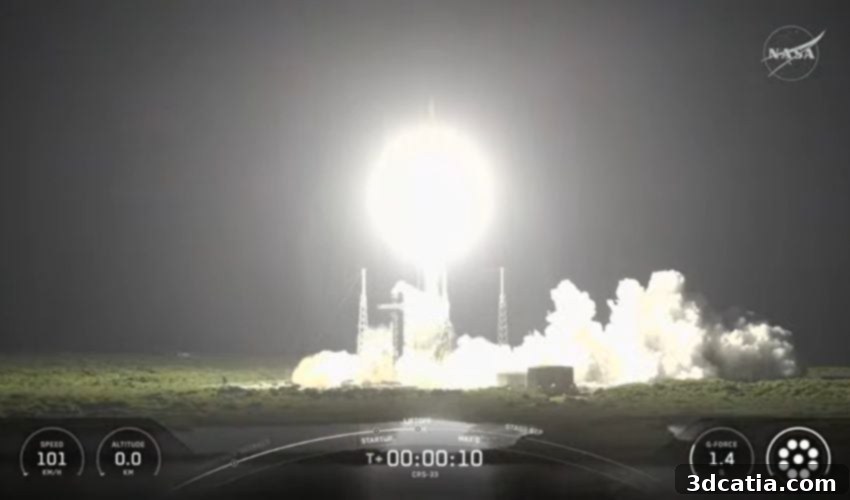
In a monumental stride for scientific innovation and space exploration, the 33rd commercial resupply mission to the International Space Station (ISS), orchestrated by NASA and SpaceX, recently delivered a vital payload of supplies and, more importantly, a diverse array of cutting-edge scientific experiments. Utilizing the highly reliable Dragon capsule, this mission was far more than a routine delivery; it represented a critical step forward in leveraging advanced manufacturing techniques, particularly 3D printing technologies, for both medical breakthroughs and aerospace engineering applications in the unique environment of microgravity. The implications of these experiments could redefine humanity’s presence in space and revolutionize regenerative medicine on Earth, fundamentally changing how we approach long-duration space travel and critical medical treatments.
Pioneering Medical Frontiers: 3D Bioprinting and Regenerative Medicine in Space
One of the most compelling and potentially transformative experiments onboard the recent mission involves the ambitious endeavor to produce sophisticated medical implants through 3D bioprinting. The unique conditions of microgravity, characterized by the absence of significant gravitational forces, offer an unprecedented opportunity to explore biological processes in ways impossible on Earth. Researchers harbor significant hopes that nerve cells, vital for intricate biological functions, may regenerate with remarkable effectiveness in this weightless environment. The implant specifically developed for these rigorous tests, often referred to as a “Nerve Bridge,” is designed with the explicit purpose of mending nerve pathways that have been severely damaged by accidents or trauma. By creating stable bridges across injured nerve gaps, this innovative technology aims to significantly accelerate and enhance healing processes within the human body, addressing a critical need for advanced regenerative therapies.
On Earth, the complexities of gravity and other physiological factors have historically presented formidable challenges to creating stable and functional connections between injured nerves. Traditional methods frequently struggle to form robust, long-lasting ‘bridges’ that can effectively facilitate nerve regeneration and restore function. The hypothesis is that the microgravity environment, by eliminating gravitational stress and allowing cells to aggregate and organize differently, could enable the production of superior quality implants. Such implants might possess more uniform cellular structures and better integration capabilities than those produced under terrestrial gravity. Furthermore, the insights gained from observing nerve cell behavior and regenerative processes in space could unlock entirely new understandings of neural repair, paving the way for advanced therapies not just for astronauts facing medical emergencies in orbit but for millions suffering from nerve damage globally, offering hope for conditions currently deemed untreatable.
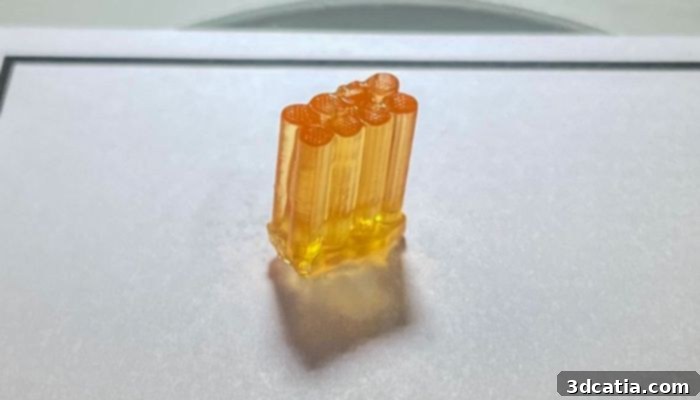
The Nerve Bridge: A breakthrough in 3D bioprinting for enhanced nerve regeneration in space, potentially revolutionizing medical implants.
Beyond nerve regeneration, another pivotal component of this mission’s bioprinting agenda is the ongoing study of 3D-printed liver tissue. Previous tests conducted in space have already demonstrated the remarkable resilience of these engineered tissues, proving their ability to withstand the harsh conditions of the space environment, including radiation exposure and thermal fluctuations. Building upon this foundational success, scientists are now embarking on the next critical phase of research. This includes meticulously monitoring and documenting the active cell growth behavior within the 3D-printed liver tissue, as well as observing the intricate formation and functionality of blood cells. A primary focus, as articulated by James Yoo of the Wake Forest Institute for Regenerative Medicine, is to significantly “accelerate the development of vascular networks in the tissue.” The successful formation of a robust vascular system is paramount, as it is essential for the delivery of nutrients and oxygen, and the removal of waste products, ensuring the long-term viability and functionality of any engineered organ. This advanced research brings us closer to the monumental, albeit still distant, dream of 3D printing fully functional human organs, a feat that would undeniably revolutionize transplant medicine and provide critical solutions for organ shortages on Earth, with significant implications for patient care and longevity.
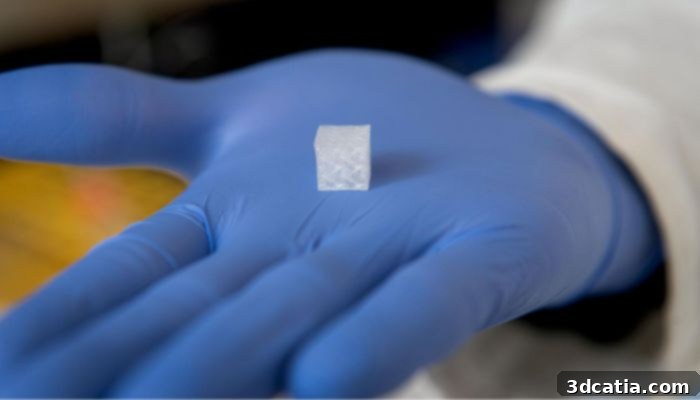
Monitoring active cell growth and vascular development within 3D-printed liver tissue on the ISS, a key step towards functional organ printing.
Advanced Manufacturing in Orbit: Metal 3D Printing for Aerospace Engineering
Alongside these groundbreaking biotechnological experiments, the mission also underscores the indispensable role of technical 3D printing in advancing aerospace engineering. As humanity ventures further into the cosmos, undertaking missions that stretch beyond low Earth orbit and towards distant celestial bodies like the Moon and Mars, the logistical challenges of delivering necessary spare parts or complex components become exponentially more difficult and costly. The ability to manufacture on demand in space is not just a convenience; it is of crucial importance for the autonomy, safety, and economic viability of long-duration space missions. Developing local manufacturing capabilities in orbit or on other planetary surfaces will dramatically reduce reliance on Earth-based supply chains, enabling missions to be self-sufficient and adaptable to unforeseen challenges, thus paving the way for sustainable deep-space exploration.
In a concerted effort to realize this vision, the European Space Agency (ESA), in close collaboration with industry leaders such as Airbus Defence and Space SAS and CADMOS in France, is rigorously testing various strategies for metal 3D printing in microgravity. Metal additive manufacturing, with its ability to create complex geometries and high-strength parts from powdered metals, is a game-changer for space applications, offering unprecedented flexibility and efficiency. Rob Postema, a leading figure in this research, explains the meticulous approach: “We will print several small cubes with different strategies to identify the optimal approach for metal printing in space, as well as two small nozzles to examine the quality of spacecraft parts printed in microgravity.” These “strategies” likely involve testing different printing parameters—such as laser power, scan speed, powder bed temperature, and layer thickness—to determine how these variables influence the material properties and structural integrity of the printed parts in the absence of gravity. The small cubes serve as standardized test specimens to evaluate mechanical properties like tensile strength, ductility, and hardness, while the nozzles, critical components in propulsion systems, allow for the assessment of functional performance and geometric accuracy for real-world aerospace applications.
The success of metal 3D printing in space holds immense potential. Imagine an astronaut on a distant lunar outpost needing a replacement part for a life-support system or a Mars rover requiring a new gear. Instead of waiting years for a resupply mission, these parts could be fabricated on-site using local resources or materials brought from Earth, often within hours. This capability for on-demand manufacturing would not only enhance mission resilience by providing rapid repair options but also open doors for customized tool fabrication, rapid prototyping for scientific instruments, and even the eventual construction of larger space structures directly in orbit, using minimal launch mass. The ability to print robust, flight-qualified metal components will be pivotal for establishing permanent human outposts and enabling ambitious interplanetary journeys, dramatically reducing launch mass and associated costs, thereby democratizing access to space and expanding its commercial potential.
Addressing Astronaut Health: Counteracting Bone Loss in Space
Beyond the fascinating realm of 3D printing technologies, the current mission also includes vital research aimed at understanding and mitigating a significant physiological challenge faced by astronauts: severe bone loss. Prolonged exposure to microgravity profoundly impacts the human musculoskeletal system, leading to a rapid decrease in bone density, similar to advanced osteoporosis, at a rate far exceeding what occurs on Earth. This phenomenon poses a considerable risk to astronaut health during long-duration space flights and upon their return to Earth, increasing the likelihood of fractures and long-term health complications. To address this critical issue, researchers are meticulously studying bone cells themselves, specifically focusing on bone-forming cells, known as osteoblasts. These experiments are designed to better understand the precise impact of microgravity on their growth, differentiation, and overall metabolic activity. By unraveling the cellular and molecular mechanisms behind space-induced bone loss, scientists hope to develop effective countermeasures, ranging from targeted pharmaceutical interventions to optimized exercise regimes and nutritional supplements, ensuring the long-term well-being of future space travelers. The insights gained from this research could also have profound implications for treating osteoporosis and related bone conditions here on Earth, demonstrating the bidirectional benefits and shared scientific goals of space research.
The SpaceX-33 mission thus stands as a beacon of innovation, providing an unparalleled research environment for forward-looking technologies that will shape the future of both space exploration and terrestrial medicine. All participating partners—NASA, SpaceX, ESA, Airbus Defence and Space SAS, CADMOS, and the Wake Forest Institute for Regenerative Medicine—are collaboratively setting a new benchmark for the strategic and transformative use of 3D printing in space. These pioneering efforts underscore a global commitment to pushing the boundaries of what is possible, enabling more ambitious missions, fostering greater astronaut safety, and ultimately improving human health across the globe. More comprehensive information on NASA’s contributions to this mission can be found HERE.
What are your thoughts on the groundbreaking experiments and the future implications of the SpaceX-33 mission? Share your insights and join the conversation by leaving a comment below, or connect with us on our LinkedIn or Facebook pages! Don’t miss out on the latest advancements in additive manufacturing; remember to sign up for our free weekly Newsletter to receive the most current 3D printing news directly in your inbox. For a comprehensive look at all our video content, check out our YouTube channel. Furthermore, for those deeply interested in the application of 3D printing across the aerospace and defense sectors, we invite you to explore our dedicated resource page HERE.
*All Photo Credits: NASA