
Advancing Brain Health: How 3D Printed Acoustic Holograms Are Opening New Doors for Neurological Disease Treatment
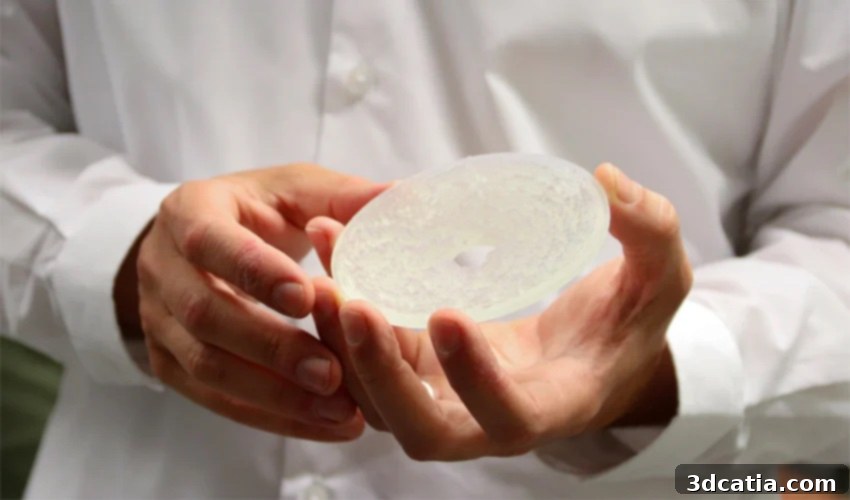
In a groundbreaking development that promises to revolutionize the treatment of nervous system diseases, a dedicated research team has successfully leveraged 3D printing technology to create innovative acoustic holograms. This ambitious project, born from a collaborative effort between the Polytechnic University of Valencia (UPV) in Spain, the Spanish National Research Council (CSIC), and Columbia University in the USA, represents a significant leap forward in medical science. These sophisticated 3D printed devices are designed to precisely and selectively open the blood-brain barrier (BBB), an essential but often challenging step in administering therapeutic drugs to target various nerve pathologies.
Neurological conditions pose a formidable global health challenge, impacting millions of lives and accounting for a substantial number of deaths annually. According to data from the Pan American Health Organization (PAHO), these conditions were responsible for a staggering 533,172 deaths in 2019 alone, translating to approximately 32.9 deaths per 100,000 people. This broad category encompasses a range of devastating diseases, including Alzheimer’s, Parkinson’s, multiple sclerosis, and schizophrenia, each presenting unique complexities in diagnosis and treatment. The inherent difficulty in delivering therapeutic agents directly to the brain due to the protective blood-brain barrier has long been a significant impediment to effective treatment. While advancements in treating neurodegenerative diseases with 3D printing have been noted previously, such as a device developed by Renishaw in 2020, this new research from the UPV, CSIC, and Columbia University team demonstrates a continued commitment to harnessing additive manufacturing’s unparalleled advantages for medical device innovation and enhancing patient outcomes.
Photo Credits: UPV
The Blood-Brain Barrier: A Fortified Defense and Therapeutic Hurdle
Before delving deeper into the mechanics of 3D printed acoustic holograms, it’s crucial to understand the critical role and inherent challenges presented by the blood-brain barrier (BBB). The BBB is a highly selective semipermeable border that separates the circulating blood from the brain and extracellular fluid in the central nervous system (CNS). Formed by specialized endothelial cells lining the capillaries of the brain, it acts as a protective shield, preventing harmful substances, pathogens, and toxins from entering the delicate brain tissue. While vital for maintaining brain homeostasis and protecting against infection, this natural defense mechanism inadvertently poses a significant obstacle for drug delivery. Many potential therapeutic compounds, particularly large-molecule drugs, cannot cross the BBB in sufficient concentrations to be effective, rendering numerous promising treatments for neurological disorders inaccessible to the brain. Overcoming this barrier in a controlled, non-invasive, and precise manner has been a holy grail in neuropharmacology for decades.
3D Printed Acoustic Holograms: A Precise Solution for Neurological Diseases
According to the project’s leading experts, focused ultrasound technology holds immense promise for the treatment of neurological diseases. Its capacity to generate localized therapeutic effects in a precise and non-invasive manner makes it an ideal candidate. However, applying focused ultrasound effectively to the intricate structures of the nervous system has historically been fraught with difficulties. These challenges primarily stem from the distorting effects of the skull bones, which cause acoustic aberration and attenuation, as well as the inherently complex and often irregularly shaped spatial distribution of critical brain structures. To circumvent these formidable obstacles, the researchers ingeniously turned to additive manufacturing, specifically utilizing 3D printing to fabricate highly customized acoustic holograms.
The process begins with patient-specific medical imaging, fundamentally transforming how treatment areas are targeted. If a physician needs to deliver a drug to a specific region of a patient’s brain, such as the amygdala, they would first obtain high-resolution computed tomography (CT) and magnetic resonance imaging (MRI) scans of the individual. This detailed anatomical information allows for the precise identification and three-dimensional segmentation of the target area. From this personalized data, a unique acoustic hologram is meticulously designed. This custom hologram is essentially an acoustic lens engineered to precisely shape and focus the ultrasound waves to the exact area requiring treatment, compensating for individual skull variations and targeting complex brain geometries with unprecedented accuracy. The beauty of this approach lies in its personalization; each hologram is tailored to the patient’s unique anatomy, maximizing therapeutic efficacy while minimizing off-target effects.
The creation of these customized devices is made possible through advanced 3D printing techniques. Additive manufacturing offers the flexibility and precision required to produce intricate, patient-specific geometries that would be impossible or prohibitively expensive to create using traditional manufacturing methods. A significant advantage highlighted by the researchers is the low cost of these holograms, estimated to range between 40 and 300 euros, depending on the complexity of the application. This cost-effectiveness makes the technology potentially accessible to a wider range of patients and healthcare systems. The operational mechanism involves an ultrasound emitter, which functions much like a specialized loudspeaker, vibrating at an incredibly high frequency of 500,000 oscillations per second. The 3D printed acoustic hologram is carefully positioned in front of this emitter, acting as a sophisticated acoustic filter. As the ultrasound wave passes through the precisely engineered structure of the hologram, it is shaped and focused with exceptional accuracy. Once these focused waves reach the targeted area of the blood-brain barrier, the epithelial tissue temporarily gives way, creating transient openings that allow drug molecules to gain access and begin treating the underlying pathology. This project represents a monumental achievement, marking the first time that the blood-brain barrier has been successfully opened simultaneously in both hemispheres of the brain, offering broad therapeutic potential.
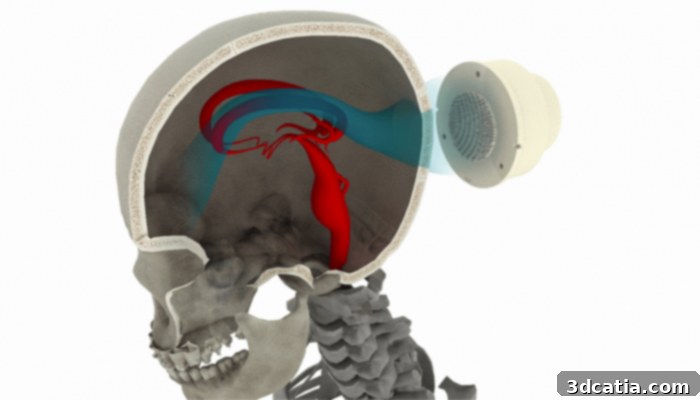
Photo Credits: UPV
The Power of Personalization: Tailoring Treatment for Complex Brain Structures
The ability of 3D printing to create patient-specific medical devices is a game-changer, especially for complex anatomical structures like the human brain. Traditional medical devices are often designed for a “one-size-fits-all” approach, which can be less effective when dealing with the unique variations in human anatomy and pathology. For neurological conditions, where precision is paramount, generic solutions can fall short. The acoustic holograms represent the pinnacle of personalized medicine, leveraging individual CT and MRI data to design devices that perfectly conform to a patient’s specific skull shape and brain topography. This level of customization allows for an unparalleled degree of control over the ultrasound beam, enabling researchers and clinicians to target even the most irregularly shaped or deeply situated brain regions with therapeutic precision. The materials used for printing these holograms are typically biocompatible polymers, selected for their acoustic properties and ability to be processed with high resolution by 3D printers, ensuring both effectiveness and safety.
Looking Ahead: Clinical Translation and Future Prospects
Noé Jiménez, a leading researcher from UPV, expanded on the significance of their creation, stating, “Thanks to our holograms, the ultrasonic beam focuses and adapts bilaterally and very precisely on parts of the brain that are of great therapeutic interest, such as, for example, the two nuclei composed of the hippocampus, related to Alzheimer’s disease, and which has a whimsical three-dimensional shape.” This quote underscores the profound impact this technology could have on treating diseases affecting complex brain structures. The hippocampus, crucial for memory and learning, is a primary target in Alzheimer’s research, and the ability to precisely deliver drugs to its intricate, non-uniform geometry represents a monumental advantage. Beyond Alzheimer’s, this method holds promise for a myriad of other neurological conditions where targeted drug delivery or neuromodulation is critical, including Parkinson’s disease, brain tumors, stroke rehabilitation, and even mental health disorders like depression and anxiety. The non-invasive nature of this treatment also means fewer risks and potentially faster recovery times for patients compared to surgical interventions.
While the initial results are exceptionally encouraging and hold immense promise for people suffering from nervous system diseases, it is important to note that tests on humans have not yet been performed. The next crucial steps involve rigorous preclinical validation, comprehensive safety assessments, and ultimately, human clinical trials to confirm the efficacy and safety of this innovative approach. However, the potential for this technology to transform neurotherapeutic strategies is undeniable. By providing a precise, non-invasive, and cost-effective method for breaching the blood-brain barrier, these 3D printed acoustic holograms could unlock new avenues for drug development and delivery, fundamentally altering the landscape of neurological disease treatment. The collaborative spirit demonstrated by the Polytechnic University of Valencia, the Spanish National Research Council, and Columbia University in bringing this complex project to fruition exemplifies how interdisciplinary and international partnerships are driving the future of medical innovation. Further information on this pioneering research can be found in the official publication HERE.
What are your thoughts on the groundbreaking potential of 3D printed acoustic holograms for neurological treatment? We invite you to share your insights in a comment below or join the conversation on our LinkedIn, Facebook, and Twitter pages! Don’t forget to sign up for our free weekly Newsletter here to receive the latest 3D printing news directly in your inbox. You can also discover all our fascinating videos on our dedicated YouTube channel, showcasing the forefront of additive manufacturing innovation.
*Cover Photo Credits: UPV