
Shapeshift 3D: Pioneering Hyper-Personalization in Medical and Sports Equipment with AI and 3D Printing
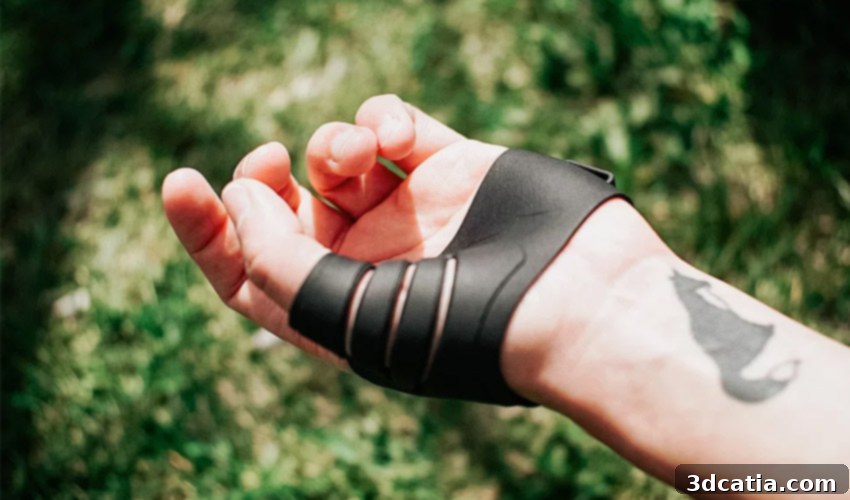
Emerging from Canada, Shapeshift 3D stands as an innovative startup at the forefront of digital transformation within the medical and sports equipment industries. The company has developed a groundbreaking, integrated platform specifically designed to enable unparalleled customization of products, leveraging the power of advanced 3D scanning, artificial intelligence, and additive manufacturing. This sophisticated software solution is meticulously optimized by artificial intelligence, allowing for the efficient and precise personalization of a vast array of items—from essential medical orthoses and prostheses to performance-enhancing sports gear like bicycle helmets. The process begins when users upload their individual 3D scans onto the intuitive Shapeshift 3D platform. The software then intelligently reconstructs these scans, accurately defines critical benchmarks, rectifies any imperfections in the digital file, and meticulously customizes it to ensure optimal form, function, and fit. To delve deeper into the mechanics and vision behind this transformative solution, we had the distinct pleasure of speaking with the company’s visionary founder and CEO, Jonathan Borduas.
The Journey into Additive Manufacturing: An Interview with Jonathan Borduas
3DN: Can you introduce yourself and tell us about your connection to additive manufacturing?
My profound journey into the world of additive manufacturing commenced during my undergraduate studies in physics engineering. It was an era of burgeoning possibilities, significantly inspired and empowered by the revolutionary open-source RepRap project, which aimed to create self-replicating 3D printers. This fascination led me to become one of the very first individuals in Canada to own a 3D printer at home, a tool I eagerly integrated into a diverse range of personal and academic projects. What truly ignited and consistently fueled my passion for this technology were the myriad benefits it offered: the unparalleled freedom in design, the remarkable rapidity of manufacturing, and the extraordinary capability to transform abstract ideas into tangible realities. It was, for me, a direct conduit to materializing pure creativity.
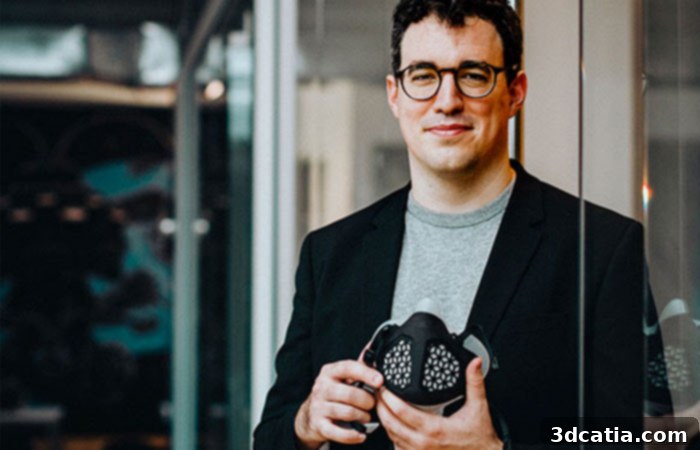
Jonathan Borduas, CEO de Shapeshift 3D
I inherently view myself as a generalist in science; my interests are expansive, my skills are broad, and my ultimate ambition is to make a tangible, positive impact on society in various meaningful ways. Additive manufacturing, with its boundless applications spanning an enormous spectrum of disciplines, presents an exceptional avenue for achieving this goal. It holds the profound promise to fundamentally transform society as a whole. After completing my bachelor’s degree and engaging in deep reflection about my future path, it became unequivocally clear to me that 3D printing was the perfect field to channel my aspirations and talents.
As I recognized the immense potential of this technology to instigate a profound paradigm shift in manufacturing methodologies, my thoughts naturally turned to how I could contribute to enhancing the industry and, crucially, facilitating its widespread mass adoption. My initial enthusiasm blossomed into a focused determination to address the existing bottlenecks and pave the way for a more accessible and efficient future in personalized manufacturing.
Ultimately, what most compellingly drew me to additive manufacturing was its stark contrast to previous manufacturing technologies, particularly concerning its inherent ability to optimize the functionality of products by creating incredibly complex structures and intricate mechanisms. Beyond mere utility, it empowers the creation of aesthetically beautiful products that are truly differentiated, unique, and perfectly adapted to the individual wearer. This is where we profoundly touch upon the critical triumvirate of function, form, and fit – elements that additive manufacturing brings into perfect harmony.
The Genesis of Shapeshift 3D: Overcoming Customization Challenges
3DN: How did the Shapeshift 3D adventure start?
The inception of Shapeshift 3D can be traced back to 2014 when I established a 3D printing consulting firm. During this period, our team rapidly identified a significant opportunity to apply additive manufacturing specifically to the production of custom knee braces. What became immediately apparent was that the most formidable obstacle in this customization process was not the printing itself, but rather the underlying software responsible for design and adaptation. Conventional CAD tools, while exceptionally powerful and suitable for designing large-scale structures like buildings, aircraft, and intricate mechanical components, proved largely inadequate when it came to accurately setting up models that needed to conform precisely to unique, organic human shapes. The nuances of human anatomy presented a challenge that traditional CAD was not built to handle effectively for bespoke products.
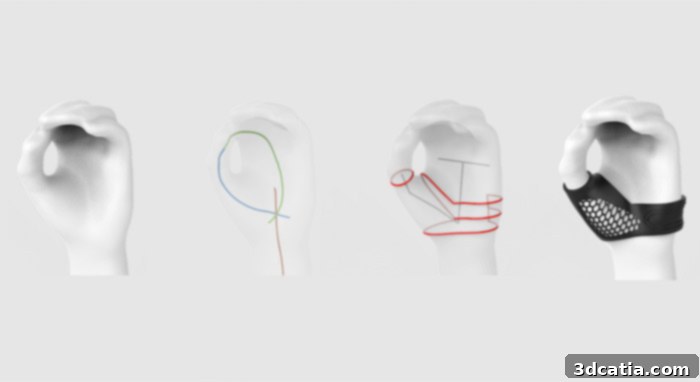
The platform workflow. (Photo Credit: Shapeshift 3D)
Through our extensive work within the nascent 3D printing industry, we stumbled upon what we termed the ‘barrier of subtleties’ – the inherent difficulty, and often impossibility, of optimizing all three critical aspects: function, form, and fit, without making significant compromises. The costs associated with achieving a high level of tailoring for complex, organic shapes tend to increase exponentially with the desired level of detail and personalization. This often limits the commercial viability of a truly bespoke product, thereby preventing it from reaching its full potential in the market. The elusive ideal scenario, which became our guiding star, was to create a product that is perfectly optimized for both functionality and aesthetic form, while simultaneously maintaining the economic viability of a custom fit for every individual.
Recognizing that traditional CAD software was not the optimal solution for this nuanced problem, we embarked on developing our own proprietary solution, initially tailored for custom knee braces. Our inspiration for this novel approach came from an unexpected source: the morphing capabilities embedded within video game algorithms. We adapted these sophisticated algorithms and ingeniously applied them to our specific engineering situation, subsequently combining them with stringent engineering constraints to ensure that the resulting designs were not only perfectly fitted but also structurally sound and functional. Shapeshift 3D is a direct spinoff from this pioneering original project. Today, we are proud to be applying this advanced customization technology to an extensive and ever-growing range of projects, addressing the bespoke tailoring needs across multiple industries, as further detailed below.
Inside the Shapeshift 3D Platform: Technology and Workflow
3DN: How does the platform work?
Our platform operates on a hybrid model, seamlessly functioning across both desktop environments for robust processing and cloud infrastructure for scalability and accessibility. At its core, it employs our patent-pending paradigm, which we have named ‘Constrained Template Morphing.’ Our business model is exclusively B2B, focusing on serving manufacturers, brands, and specialized manufacturing centers involved in producing medical, sports, or protective equipment. The typical workflow begins when a technician receives an order along with the user’s unique 3D scan file. This file is then uploaded to our platform, either through a direct API integration for automated workflows or via manual upload for individual cases. Upon upload, our system automatically initiates a series of critical processes: automatic scan correction and personalized adjustment. A key innovation is that whenever a technician’s manual intervention is required to refine the bespoke product, our integrated algorithms learn from these adjustments, gradually reducing and eventually eliminating the need for such manual interventions over time. This continuous learning process drives increasing efficiency and automation.
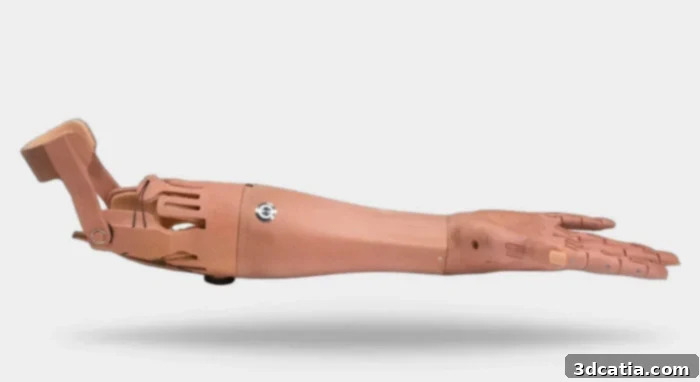
Unlimited Tomorrow today uses the platform to better personalize its prosthetic arms.
The ultimate utility and primary benefit of our platform lies in its ability to significantly reduce time-consuming, repetitive steps in the customization process, while crucially leaving the most important, decision-making steps and professional judgment to the skilled technician. This strategic division of labor ensures that precision and expertise are maintained where they matter most, complemented by the efficiency of automation.
For critical speed and responsiveness, manual adjustments to the design file are primarily executed on the desktop component of our platform. While these desktop operations ensure swift iteration, they are synchronized with the cloud to maintain data consistency and accessibility. The final output is a fully optimized, printable 3D file, immediately ready for manufacturing by one of our trusted service center partners. Beyond just software, we also collaborate closely with leading 3D scanning companies. This collaboration allows us to offer a comprehensive, end-to-end suite of solutions, facilitating a complete digital transformation to 3D printing – from initial scan to final print. This holistic ‘scan-to-print’ approach streamlines the entire workflow for our clients.
Shapeshift 3D’s Target Sectors and Diverse Applications
3DN: What sectors is Shapeshift 3D targeting? Can you give us some examples of applications?
Our primary target sector is the vast and critical medical equipment industry, with a particular focus on the sub-sectors of orthotics and prosthetics. Our range of orthotic applications is exceptionally broad, extending beyond traditional foot orthotics to encompass custom braces for knees and wrists, and virtually any portable medical device designed to support or enhance human movement. For instance, we facilitate the creation of custom-fitted ankle-foot orthoses (AFOs) and spinal braces, ensuring maximum patient comfort and therapeutic effectiveness. In the realm of implants and assistive devices, our platform significantly facilitates the intricate tailoring of artificial limbs, covering everything from highly personalized prosthetic fingers to complete, advanced prosthetic arms and legs. This deep level of customization is crucial for improving patient mobility, comfort, and quality of life.
Beyond the medical field, we are experiencing a rapidly growing demand from manufacturers of high-performance sports equipment. The pursuit of marginal gains and injury prevention through perfect fit is paramount in competitive sports. We currently have exciting ongoing projects in various sports, including custom-fitted gear for hockey, specialized components for football, and even highly precise equipment for speed skating. For example, our technology can be used to create custom-molded helmet liners, shin guards, or even parts of specialized footwear, all designed to perfectly match an athlete’s unique biomechanics for enhanced performance and protection.

Apex Skates make Olympic speed skates and have used the Shapeshift 3D platform to customize their products (Photo Credits: Shapeshift 3D)
The Transformative Role of 3D Technologies in Mass Personalization
3DN: In your opinion, what role can 3D technologies play in mass personalization?
3D technologies are unequivocally poised to play a pivotal and arguably indispensable role in the realization of mass personalization. With their unprecedented capabilities for the on-demand manufacture of intricately custom-made products, these technologies serve as the primary catalyst for this impending paradigm shift. Unlike traditional manufacturing methods that favor economies of scale through standardization, additive manufacturing thrives on complexity and individual uniqueness without significant cost penalties. This inherent flexibility allows for each product to be tailored precisely to the individual’s requirements, ushering in an era where personalized goods are not a luxury but a standard expectation. However, this profound revolution requires more than just the printers themselves; it necessitates a new generation of design technologies to seamlessly facilitate the entire ‘scan-to-print’ process. This is precisely where our platform at Shapeshift 3D becomes crucial. It serves as the vital bridge, connecting the raw data from 3D scans to the sophisticated design adjustments needed, thereby streamlining and democratizing the design process essential for the widespread adoption of mass customization across industries. Without intelligent software to handle the complexities of individual variations, the promise of mass personalization would remain largely unfulfilled.
Shapeshift 3D’s Vision for the Future
3DN: What are the future projects of Shapeshift 3D?
Our overarching goal at Shapeshift 3D is to firmly establish ourselves as the preferred and leading provider of custom software solutions, thereby actively promoting and enabling the widespread adoption of the mass customization economy. To achieve this ambitious vision, we are dedicated to continuously developing the necessary cutting-edge tools and platforms. Through these advancements, we are committed to eliminating the long-standing need for compromise between optimal function, perfect form, and individualized adaptation in product design and manufacturing. Our aim is to ensure that customers no longer have to sacrifice one aspect for another, but can achieve all three seamlessly.
In line with this commitment, we are actively developing a groundbreaking platform-as-a-service (PaaS) called We3D. This innovative offering will allow users to access and utilize various modular features available in our current sophisticated software, tailored precisely to their specific needs. For instance, a client who primarily requires advanced tools for scan reconstruction will be able to leverage that specific functionality without being compelled to adopt our entire end-to-end solution. This modularity provides unparalleled flexibility and cost-effectiveness. Furthermore, we are in the process of developing a centralized marketplace. This marketplace will serve as a hub, aggregating and showcasing the personalized products of our participating customers. Through this platform, their end-users will not only be able to browse and purchase highly customized products but also securely upload their individual 3D scans, thereby streamlining the entire personalization and procurement process from start to finish.
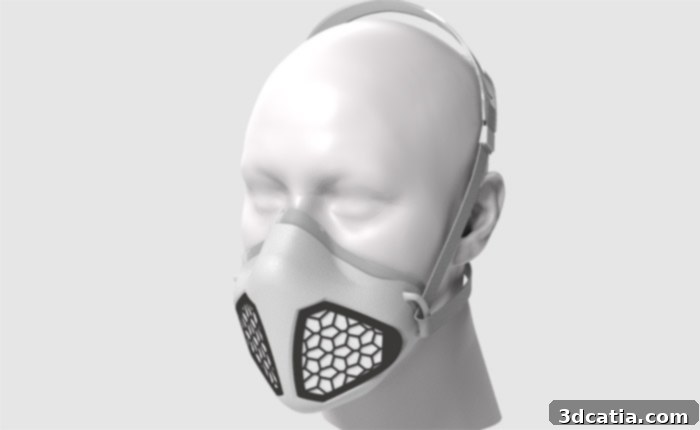
Shapeshift 3D has also developed PPE.
Final Thoughts from Jonathan Borduas
3DN: Any final words for our readers?
We are in an exciting phase of continuous growth and are always actively recruiting and striving to attract incredible talent to join our dynamic team. The demand for our innovative solutions is surging, and we have several new, impactful projects underway with a diverse range of clients. We are genuinely thrilled about the progress we are making and are very eager to share our latest news and significant developments with the broader community in the upcoming weeks. We encourage everyone to stay tuned for these announcements. In the meantime, please do not hesitate to visit our website to learn more about Shapeshift 3D, our mission, and the transformative solutions we offer. We believe the future of manufacturing is personalized, and we are building the tools to make it a reality.
What are your thoughts on Shapeshift 3D’s intelligent software solution and its potential impact on mass customization? We invite you to share your insights in a comment below or engage with us on our Facebook and Twitter pages. To stay fully informed about all the latest advancements and breaking news in the exciting world of 3D printing, remember to sign up for our free weekly newsletter, delivered directly to your inbox!