

GRYP: Revolutionizing Classic Car Restoration with On-Demand 3D Printed Parts
In the vibrant world of automotive heritage, the preservation of classic cars often faces a formidable adversary: the scarcity and exorbitant cost of original spare parts. This critical challenge can deter even the most dedicated enthusiasts from restoring their beloved vintage vehicles. Enter GRYP, a pioneering French startup that is boldly addressing this issue head-on by harnessing the transformative power of 3D printing. They are innovating solutions to fabricate essential car components for classic automobiles, effectively breathing new life into these mechanical treasures. By creating new parts on-demand, GRYP is not only reducing the prohibitive costs associated with classic car restoration but also ensuring the longevity and accessibility of automotive history for future generations. We recently had the opportunity to speak with the founders of GRYP, delving into their groundbreaking ideas, profound motivations, their perspective on the rapidly evolving 3D printing industry, and their vision for the future of additive manufacturing in the automotive sector.
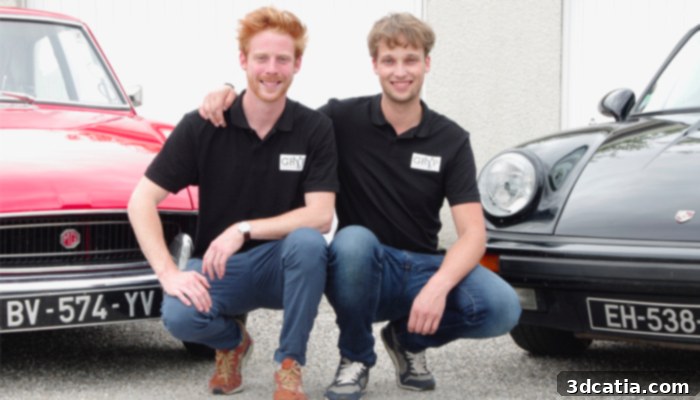
Bastien Vanlathem and Gauthier Laviron, the visionary founders of GRYP.
3DN: Could you please introduce yourselves and elaborate on your personal connection to 3D printing and the automotive world?
Bastien Vanlathem: My passion for vintage cars ignited at a very young age, largely fueled by a family fascination with motor sports. This early exposure to the thrill and elegance of classic vehicles shaped my interests profoundly. After completing my international business studies, specializing in business management during my master’s degree, the entrepreneurial path naturally called to me. However, it was crucial for me to integrate my professional aspirations with my personal passions. During my discussions and subsequent meeting with Gauthier, it became strikingly clear that the rampant speculation within the collector car market was creating significant barriers. Collectors were frequently unable to restore their cherished vehicles at a reasonable or predictable cost, leading to many beautiful machines sitting in disrepair. It was this observation that prompted us to seek innovative solutions. We then discovered the immense possibilities that 3D printing offered, particularly through our involvement in a local FabLab. This hands-on experience revealed how this cutting-edge technology could be applied to a sector we hold dear: classic cars. We recognized that 3D printing could offer a viable, cost-effective, and efficient method to produce parts that were either out of production or prohibitively expensive, thereby making classic car ownership and restoration more accessible and sustainable.
Gauthier Laviron: Like Bastien, I too am a deeply committed classic car enthusiast. My journey began at the age of 17 when I acquired my first collector car, dedicating countless holidays and weekends to its meticulous restoration. This hands-on experience instilled in me a profound understanding of the intricacies of vintage mechanics and the challenges of sourcing authentic parts. My academic path led me to studies in mechanical and production engineering, providing me with a solid theoretical foundation. Subsequently, my professional experiences at major automotive players like Valeo and Renault further honed my skills in 3D modeling, advanced manufacturing techniques, and efficient production management. These were incredibly enriching and formative periods that equipped me with practical expertise crucial for our venture. Combining my technical acumen with Bastien’s sharp entrepreneurial insights creates an exceptional synergy, forming the robust foundation necessary for GRYP’s innovative development and sustained growth. Together, we bring a comprehensive understanding of both the passion driving classic car ownership and the technical precision required to bring these vehicles back to their former glory.
3DN: What are the primary challenges you encounter in the restoration of vintage cars, and how has 3D printing provided a critical solution to these hurdles?
The landscape of vintage vehicle restoration is fraught with two particularly significant challenges that deeply impact collectors and enthusiasts. Firstly, there is the undeniable scarcity of certain spare parts. As these vehicles age, the original manufacturers cease production of many components, rendering them virtually impossible to find through conventional channels. This often leaves restorers at a dead end, unable to complete projects simply due to a missing, small, yet crucial piece. Secondly, this scarcity directly fuels rampant speculation in the secondary spare parts market. When a part becomes rare, its price can skyrocket, transforming a passion into an incredibly expensive endeavor, often pricing out many genuine enthusiasts. These two formidable difficulties – unavailability and excessive cost – were the precise motivations that led us to establish GRYP.
For us, 3D printing wasn’t just *a* solution; it was *the* definitive solution to these systemic problems. Additive manufacturing fundamentally changes the paradigm of parts production. Instead of relying on dwindling inventories or prohibitively expensive tooling for small batch manufacturing, we can now create parts on demand, directly from digital designs. This means that even a single, obscure component that hasn’t been produced in decades can be accurately replicated and manufactured without the enormous overheads associated with traditional methods. We leverage various 3D printing technologies and a range of materials, from durable polymers to robust metals, carefully selected to match the original specifications and performance requirements of each part. This capability allows us to bypass the issues of scarcity and market speculation entirely. Our core desire and mission at GRYP are to empower collectors to restore their vintage cars at a consistent, transparent, and genuinely affordable cost, thereby ensuring that the rich and vibrant heritage of classic automobiles continues to thrive and remains accessible for all who appreciate it. 3D printing allows us to preserve not just the cars, but the stories and craftsmanship they represent.
3DN: Who constitutes your customer base today, and with whom do you actively partner?
Currently, our customer base is quite diverse and growing. We proudly serve a wide array of classic car collectors located throughout France, assisting them with their specific restoration needs. Beyond individual enthusiasts, we also collaborate closely with numerous automobile clubs and associations. These organizations play a vital role in the classic car community, and by partnering with them, we can reach a broader audience and contribute to collective preservation efforts. Furthermore, we work with some specialized spare parts distributors who recognize the value and necessity of additive manufacturing for unique or obsolete components, helping them broaden their offerings to clients. Our commitment extends to fostering a strong ecosystem of partners within the additive manufacturing and classic car sectors.
To enhance our capabilities and reach, we have forged strategic partnerships with local 3D printing companies. A prime example is our collaboration with Ideokub, with whom we are engaged in various development projects aimed at refining our processes, exploring new materials, and expanding our production capacity. These collaborations are crucial for pushing the boundaries of what’s possible with 3D printed classic car parts. Additionally, we actively partner with established players in the collector’s and prestige car market, such as Following Members and Art of Detailing. These partnerships allow us to integrate our specialized 3D printing services seamlessly into the broader classic car restoration value chain, providing comprehensive solutions to a discerning clientele who prioritize authenticity, quality, and precision. Through these synergistic relationships, GRYP aims to build a robust network that supports the long-term sustainability of classic car ownership and restoration.
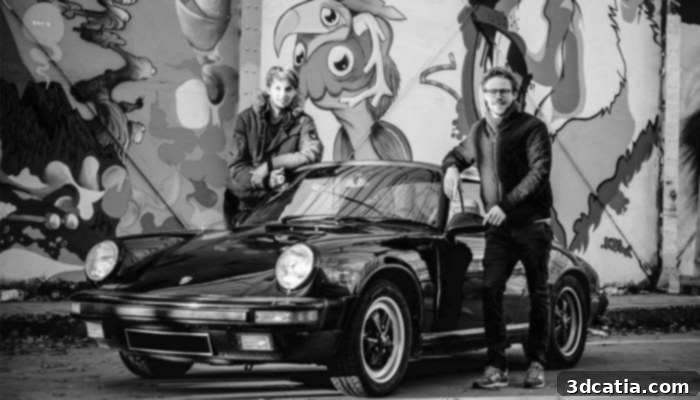
GRYP’s ambitious vision: to fundamentally revolutionise the classic car parts sector through advanced additive manufacturing.
3DN: What is your perspective on the future trajectory of 3D printing within the broader automotive sector?
The future of 3D printing in the automotive sector, in our opinion, is not just promising but set to become incredibly expansive and transformative. We are already witnessing a significant shift, with some major automotive manufacturers beginning to take a very close and serious interest in additive manufacturing technology. This isn’t merely for prototyping anymore; it’s moving rapidly towards end-use parts and even production line integration. As we understand the complexities of the industrial sector, we foresee a strong evolution where 3D printing will be increasingly internalized within large-scale production structures. This internalization offers multiple strategic advantages for manufacturers. It will ultimately lead to significant savings on inventory and stock holding costs, as parts can be produced on demand rather than stored in vast warehouses. Moreover, 3D printing enables unparalleled design freedom, allowing manufacturers to innovate new models with complex geometries that optimize performance and, crucially, gain weight reduction – contributing to better fuel efficiency and electric vehicle range.
Beyond modern vehicle production, GRYP’s specific vision is to firmly integrate 3D printing into the classic cars and heritage automobiles sector, driven by our unwavering passion for quality and perfection. This means not only replicating obsolete parts but also potentially improving upon original designs where functionality can be enhanced without compromising authenticity, using advanced materials that offer superior durability or performance. The ability to scan existing components, reverse engineer them, and then produce them with digital precision opens up entirely new possibilities for preservation and customization. We anticipate a future where a digital blueprint for every classic car part exists, ensuring that no vehicle is ever permanently sidelined due to a missing component. This technological shift will democratize restoration, making it more accessible, sustainable, and capable of preserving the automotive legacy for generations to come, truly revolutionizing how we interact with and maintain our cherished classic vehicles.
3DN: Do you have a final message or word of advice for our readers?
Indeed. We firmly believe in the adage: “It is often necessary to undertake to hope and persevere to succeed.” This philosophy lies at the very heart of GRYP’s journey. For every classic car enthusiast who dreams of restoring a vintage automobile, or for any innovator looking to overcome challenges in traditional industries, this sentiment resonates deeply. With the dedicated GRYP team, and our commitment to leveraging cutting-edge 3D printing technology, your dream of preserving automotive history is no longer a distant fantasy but a tangible reality, now within reach. We are here to help turn those aspirations into beautifully restored vehicles.
What are your thoughts on GRYP’s pioneering work in 3D printing car parts for classic vehicles? Do you believe this technology will fundamentally change the landscape of classic car restoration? We encourage you to share your insights in a comment below or join the conversation on our Facebook and Twitter pages! For all the latest news, innovations, and stories from the world of 3D printing, remember to sign up for our free weekly Newsletter, delivered straight to your inbox.